
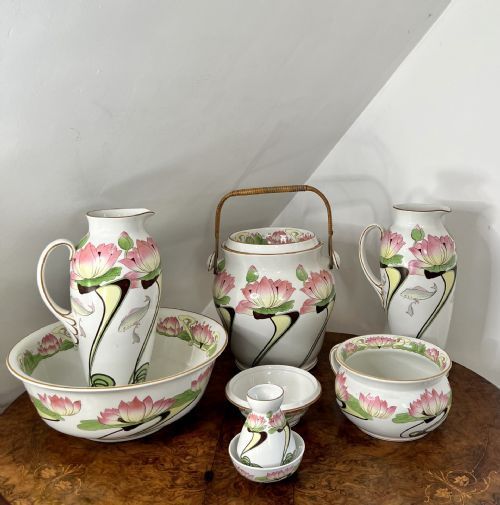


Antique Washstand Pitcher Set
An antique washstand pitcher set brings heavy earthenware pottery and generous basins from the bedroom before indoor plumbing.
Antique Washstand Pitcher Set
An antique washstand pitcher set comprises a large jug and a deep basin designed for washing in the bedroom before plumbed bathrooms became standard. These sets span periods from the early nineteenth century through the Edwardian era and into the 1930s.
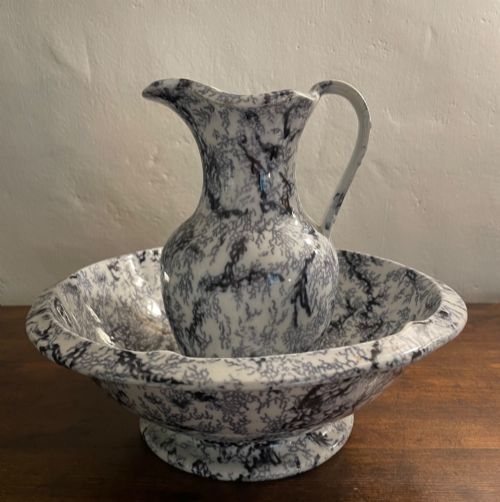
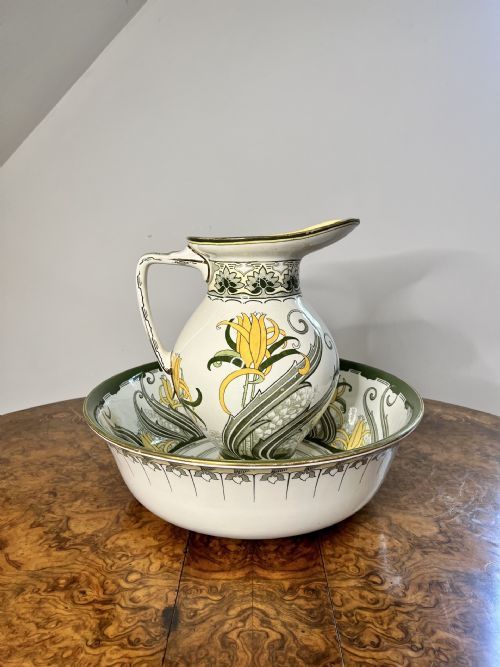
The version most commonly met on this page is the Edwardian bathroom set, often pairing a tall jug with a matching bowl in earthenware or ceramic. Alongside these come robust ironstone examples and occasional porcelain or glass sets.
Forms vary from standard wash sets and basin combinations to bentwood stands fitted with their own ceramic ware. Victorian and Art Nouveau examples appear frequently, alongside earlier Staffordshire pieces.
How they were made
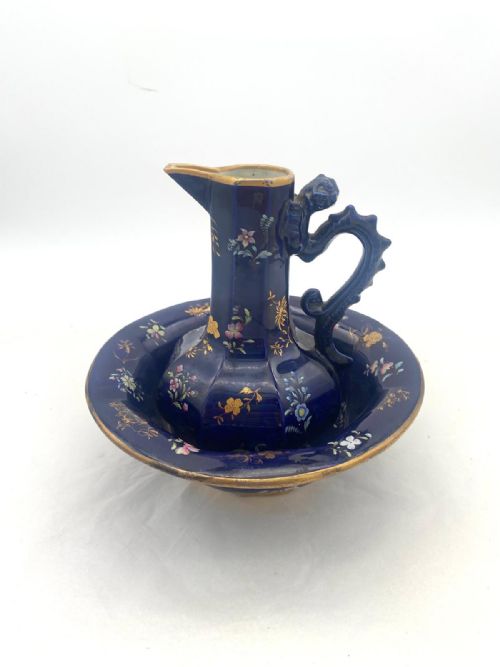
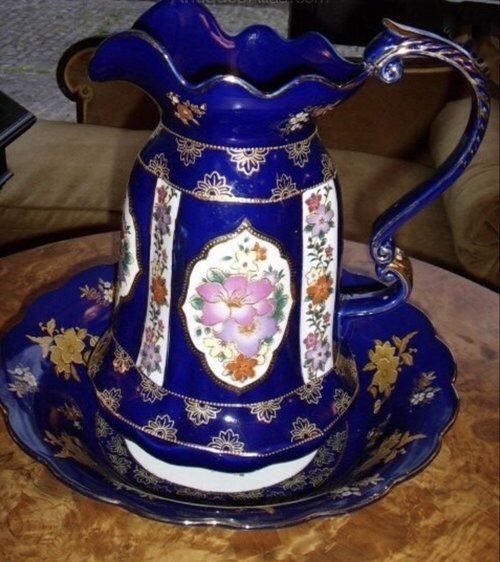
Potters shaped these earthenware and ironstone pieces on the wheel or in moulds before applying glazes and underglaze transfers. Cobalt blue decoration and floral patterns required careful kiln firing to fix the colours beneath the final glossy coat.
Some finer porcelain and ironstone items received hand-painted details or gilt touches like gold leaf highlights. Glass sets required hot blowing and moulding techniques to achieve the substantial weight needed for daily use.
Some miniature sets survived completely intact, proving that Victorian children scrubbed their dolls just as thoroughly as their parents.
What varies in quality
Quality shows in the crispness of the transfer printing and the weight of the ceramic body. Ironstone pieces offer a dense, heavy fabric that resists chipping better than lighter earthenware.
Artistic execution sets finer sets apart, particularly where hand-painted floral motifs or cobalt blue glazes are applied with precision. The presence of makers with established reputations adds further distinction to a matching suite.
Masons Ironstone·Doulton Burslem·Mark Jones And Sons·Shelley
The Antique Washstand Pitcher Set Glossary
- Ironstone
- A heavy, durable type of earthenware patented in the nineteenth century. It provides a robust body well suited for large jugs and basins.
- Flow blue
- A ceramic printing technique where cobalt blue colour bleeds slightly into the surrounding glaze during firing. This creates a soft, blurred outline popular on nineteenth-century tableware.
- Earthenware
- Porous pottery fired at lower temperatures than porcelain. It forms the standard body for the majority of washstand jugs.
- Colbalt blue
- A metallic oxide pigment used to produce a deep blue glaze on ceramics. It withstands high kiln temperatures without losing its intensity.
- Gilt
- A thin layer of gold applied to the surface of ceramic or porcelain. It highlights rims, handles and decorative borders.
Antique Washstand Pitcher Set: Frequently Asked Questions
Were these sets actually used for washing?
These sets served as the primary washing equipment in bedrooms before running water became common. Servants filled the tall pitchers with warm water from the kitchen so people could wash their face and hands at the washstand.
After use, the soiled water emptied into the deep basin or a slop bucket kept underneath. They were purely functional items until bathrooms took over the task.
How do I display a jug and basin set?
These sets work best placed on low wooden furniture, sideboards or sturdy display tables where the deep basin can safely hold the heavy jug. Placing them near natural light allows the cobalt blue glazes and floral designs to stand out.
Avoid high shelves or narrow ledges because the combined weight of the ceramic pieces requires a solid, stable surface.
How do I date an antique wash set?
Dating relies on the ceramic body, the manufacturing style and any maker marks stamped underneath the base. Heavy ironstone and flow blue decoration typically point to the nineteenth century, while lighter floral earthenware often dates to the Edwardian period.
Comparing the handle shape and floral patterns against known period designs helps narrow the decade.
Can I use these for fresh flowers?
The large basins and tall pitchers make excellent vessels for holding cut flowers or decorative branches in a hallway or living room. The wide openings allow for generous arrangements.
Care should be taken when moving the heavy ceramic pieces filled with water, as ironstone and earthenware add considerable weight.