



Antique Pharmacy Bottles
These antique pharmacy bottles hold the quiet alchemy of past centuries, offering collectors tactile history through hand-blown glass and fitted wooden chests.
Antique Pharmacy Bottles
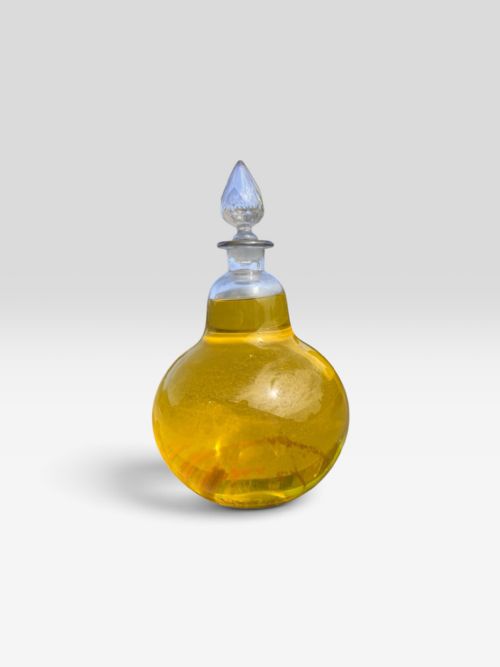
When you search for antique pharmacy bottles, you encounter a specialised range of glass vessels, ceramic jars, and fitted wooden travel cases designed for medicinal use. The selection spans utilitarian storage containers from the nineteenth century alongside decorative apothecary carboys and boxed chemist sets.
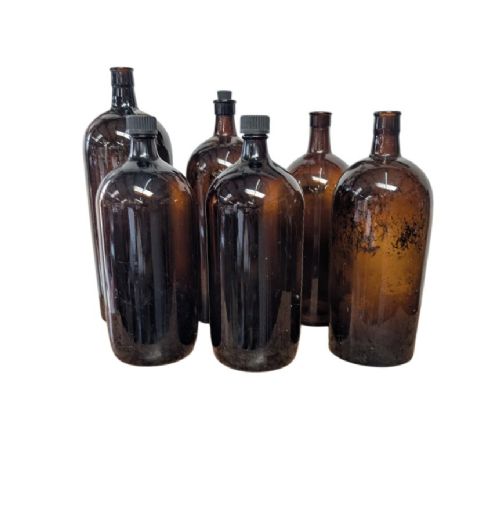
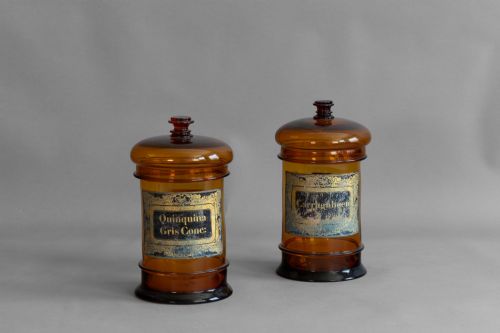
You are most likely to meet clear or amber glass pharmacy bottles originating from the Victorian period and the wider nineteenth century. These frequently appear alongside mahogany travelling cases and larger chemist jars bearing paper or gold leaf labels.
Quality factors in pharmacy pieces
Quality rests on the original completeness of the object, particularly whether glass stopper lids remain paired with their correct bottles or if fitted travelling boxes retain their internal glass vessels and drawers.
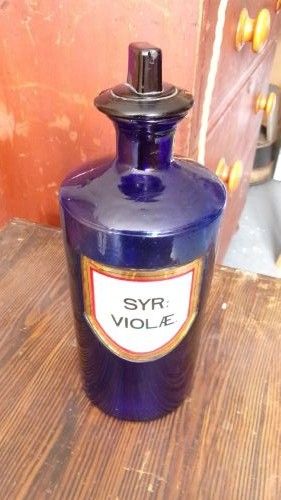
Artisanal execution distinguishes standard utility ware from finer examples, such as deeply saturated Bristol blue glass, intricate inlay on mahogany chests, or hand-painted Italian majolica ceramics.
Listings feature mahogany, brass, paper, and gold leaf alongside clear, amber, and Bristol blue glass across multiple centuries.
The Antique Pharmacy Bottles Glossary
- Carboy
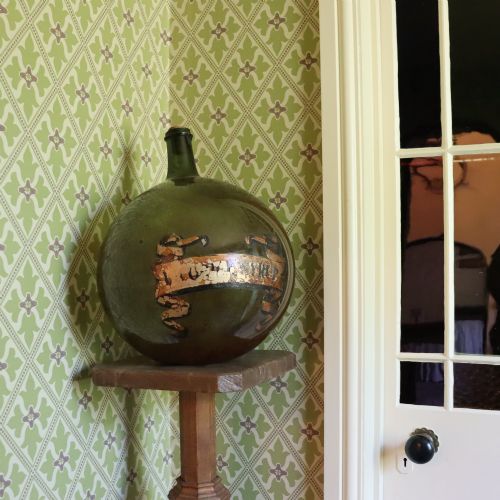
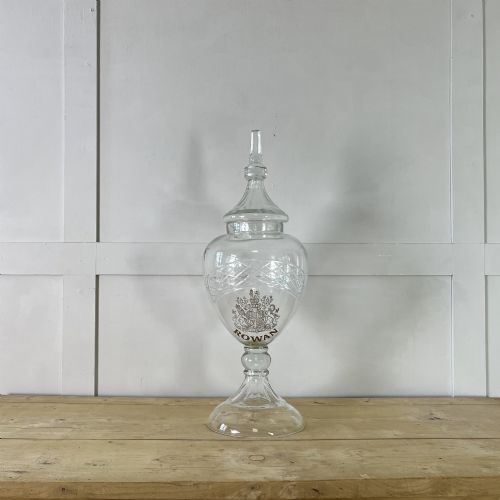
- A large glass vessel used in dispensaries and shop windows to hold liquids or display coloured water.
- Albarello
- A cylindrical ceramic drug jar, often waisted, originating in the Near East and produced in European potteries.
- Tincture bottle
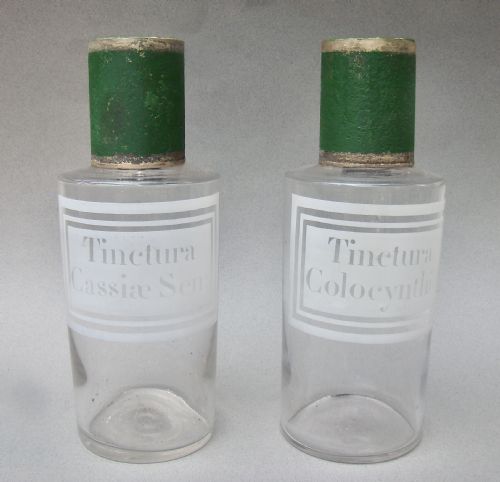
- A smaller glass container specifically designed to store alcohol-based medicinal solutions and extracts.
- Lollipop stopper
- A flat, circular glass closure shaped like a confectionery sweet, commonly found on chemist bottles.
Antique Pharmacy Bottles: Frequently Asked Questions
What were apothecary bottles used for?
Apothecaries and chemists utilised these vessels to store dry herbs, liquids, and prepared medicines in a dispensary setting.
Smaller bottles travelled inside fitted mahogany boxes for home visits or military campaigns, while large carboys sat on shelves or in shop windows.
How do I date an antique pharmacy bottle?
Dating relies on manufacturing marks, glass colour, and associated storage cases such as Georgian or Regency mahogany chests.
Hand-blown vessels with pontil marks generally indicate earlier nineteenth-century or eighteenth-century origins, whereas uniform moulded glass points towards later decades.
Are bottle labels original?
Many surviving bottles retain their original paper, painted, or gold leaf labels detailing the specific compound stored within.
Labels add historical context and value, though plain utility bottles also appear frequently without any surface text.
How should I display apothecary chests?
Complete mahogany travelling cases display effectively when opened to reveal their internal arrangement of glass bottles and drawers.
Individual jars benefit from placement on shelves near natural light to highlight the depth of coloured glass varieties such as Bristol blue and amber.