


Antique Pembroke Occasional Table
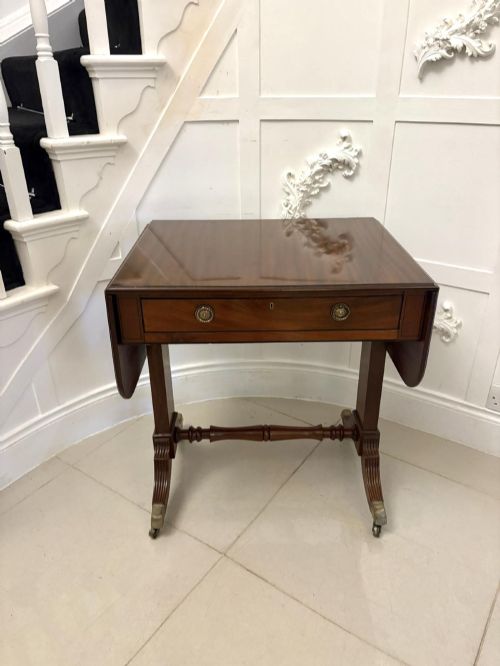
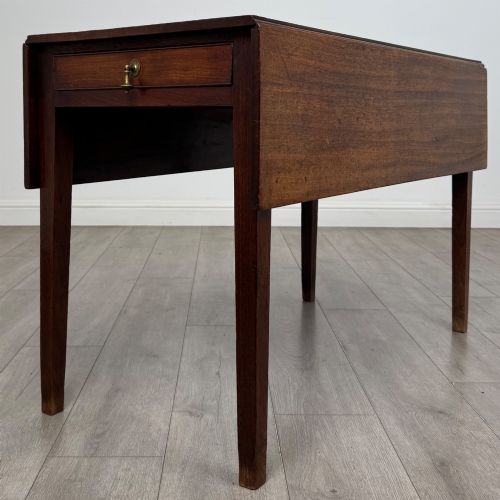
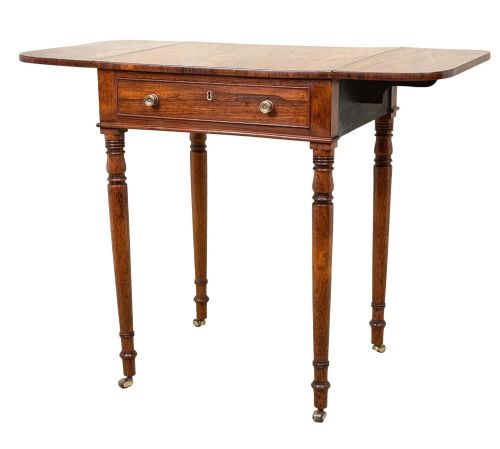
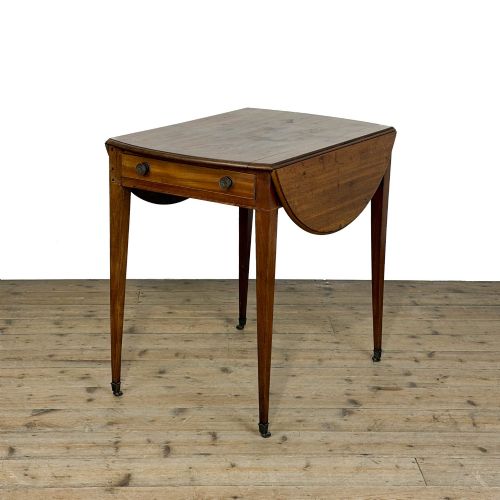
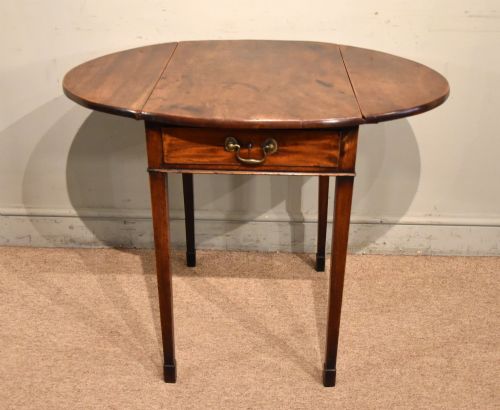
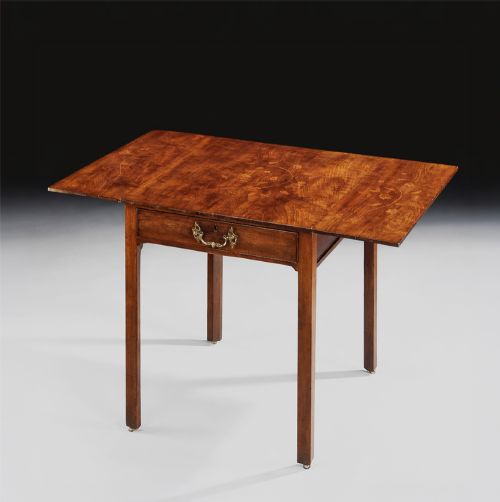
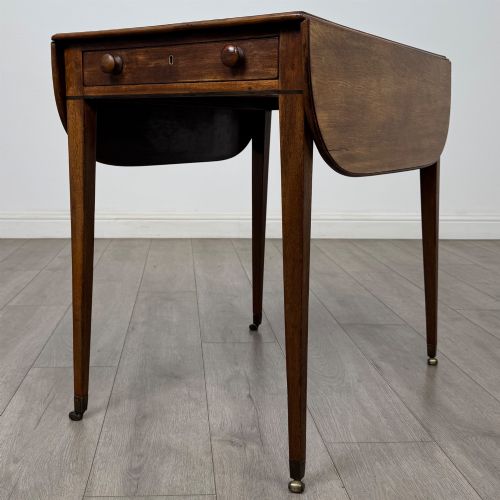
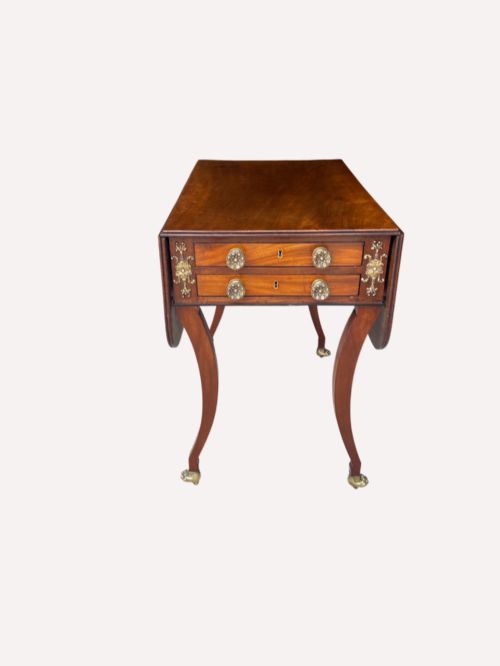
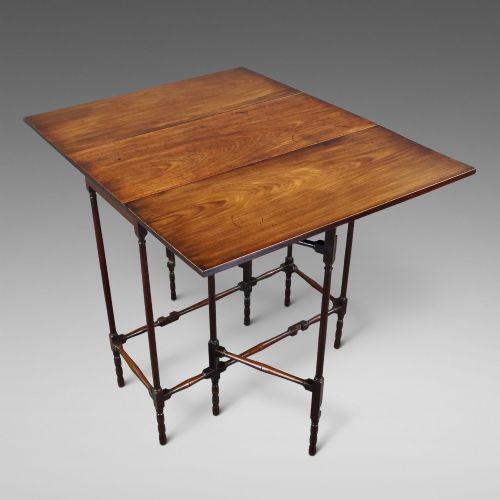
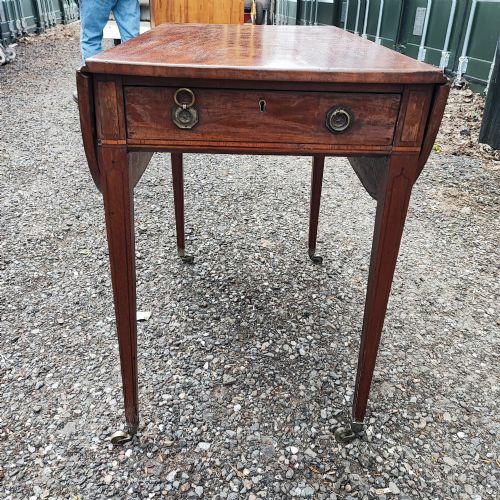
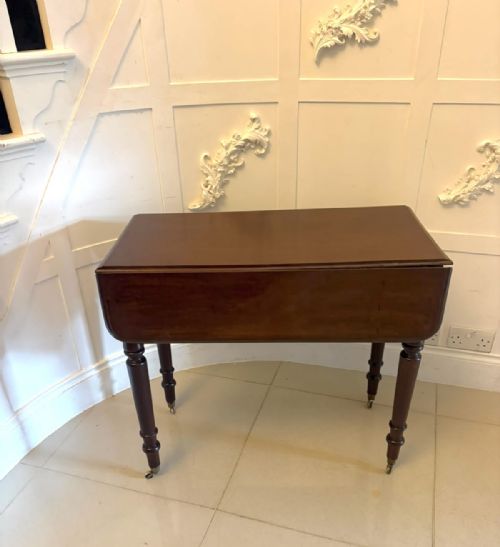
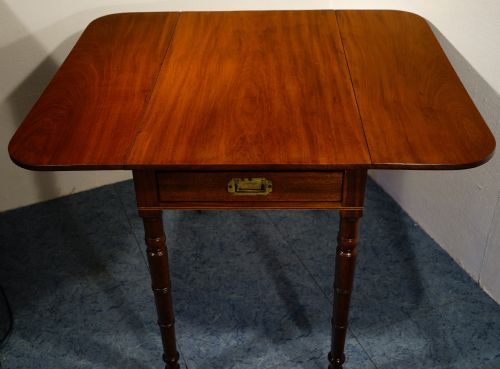
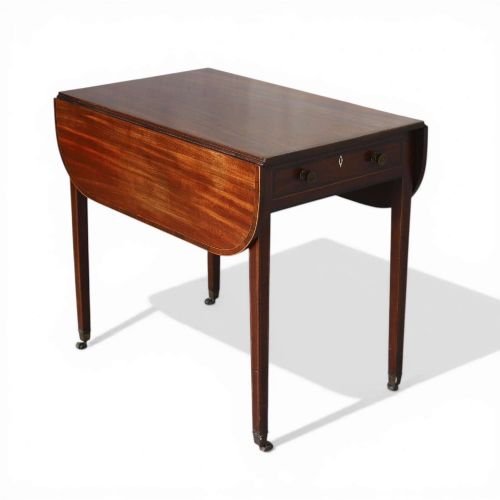
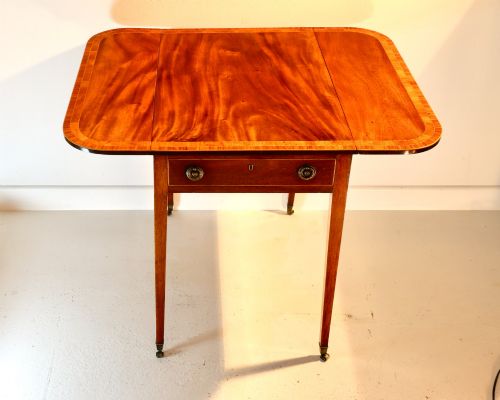
An antique pembroke occasional table offers a folding leaf surface suited to compact spaces, shaped in mahogany, satinwood or rosewood.
Antique Pembroke Occasional Table
An antique pembroke occasional table combines a central fixed leaf with two hinged drop leaves supported by folding brackets, creating an adaptable surface originally designed for breakfast, writing or needlework. These versatile tables appear frequently across eighteenth, nineteenth and early twentieth century periods, reflecting the shifting domestic needs of Georgian, Regency, Victorian and Edwardian households.
Mahogany forms the primary timber across the selections, accompanied by rosewood, satinwood, burr walnut and occasional alternative woods like sycamore or harewood. Most examples span the Georgian and Regency eras, though Victorian and Edwardian variants continue the drop-leaf format with inlaid decoration or carved details.
How they were made
Cabinetmakers constructed these tables primarily from solid mahogany and secondary timbers, employing panel-gluing techniques for the tops and precision jointing for the framing undercarriages. Drop leaves required stable hinging mechanisms and pivoting wooden brackets, known as fly brackets or rule joints, to support the extended flaps.
Surface embellishment relied heavily on timber selection, utilising cross-banding, boxwood stringing, wood inlay and marquetry to create geometric or neoclassical borders. Finishing involved hand-applied polish that highlighted the natural grain patterns of cuban mahogany, satinwood and rosewood.
Materials span mahogany, rosewood, satinwood and burr walnut across Georgian, Regency, Victorian and Edwardian periods.
What varies in quality
Distinctions in quality rest upon timber selection, timber figure and the precision of the joinery rather than mere age. Tables utilising figured timbers, such as fiddleback sycamore or well-matched mahogany grain across the leaves and top, demonstrate superior workshop standard.
The sophistication of secondary details, including finely executed wood inlay, cross-banding, dovetailed drawer construction and original brass castors, separates standard utility pieces from exceptional cabinet work.
Johnstone and Jeanes·Andrew Thomson and Sons
The Antique Pembroke Occasional Table Glossary
- Pembroke table
- A small drop-leaf table with hinged flaps on opposite sides supported by swinging brackets. It gained popularity during the eighteenth century for multi-purpose domestic use.
- Drop leaf
- A hinged section of a table top that folds down when not in use. It allows the table to occupy minimal floor space.
- Cross-banding
- A strip of veneer applied around the border of a table top with the grain running perpendicular to the central panel. This technique provides a decorative framing effect.
- Marquetry
- The art of applying pieces of veneer to a structure to form decorative patterns and pictures. It often incorporates diverse exotic timbers such as satinwood and harewood.
- Rule joint
- A moulded joint connecting a table top to its drop leaf. It conceals the hinge mechanism and prevents the leaf from sagging when extended.
Antique Pembroke Occasional Table: Frequently Asked Questions
What is an antique pembroke occasional table?
An antique pembroke occasional table is a small, versatile table featuring two hinged drop leaves supported by pivoting brackets. These tables typically include a drawer at one or both ends and stand on slender legs.
Cabinetmakers designed them for flexible use in parlours, bedrooms and drawing rooms, where surfaces needed to expand or contract according to the hour.
How were these tables used originally?
Georgian and Regency households utilised these tables for varied tasks including breakfast dining, writing letters, sewing and holding tea services. The drop leaves allowed the furniture to sit compactly against a wall when not in use.
As domestic spaces evolved through the Victorian and Edwardian periods, they served increasingly as display surfaces for lamps and decorative objects.
Can I use an antique pembroke table daily?
These tables adapt well to modern living as side tables, desks or occasional surfaces in sitting rooms and hallways. Their folding leaves make them particularly practical for rooms with limited space.
Care should be taken to protect finished wooden surfaces from moisture, direct heat and heavy impacts during daily use.