
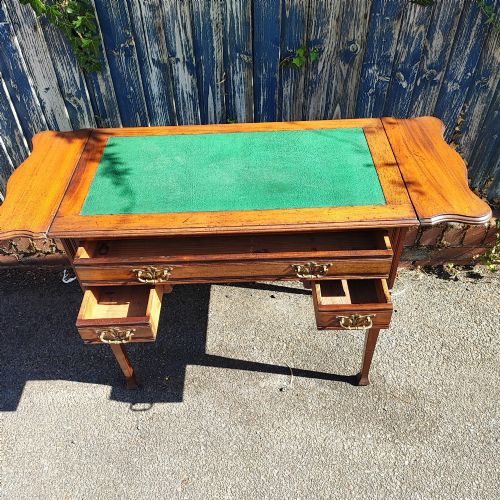
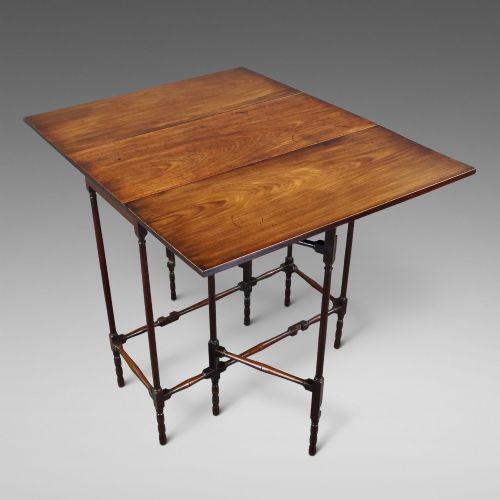
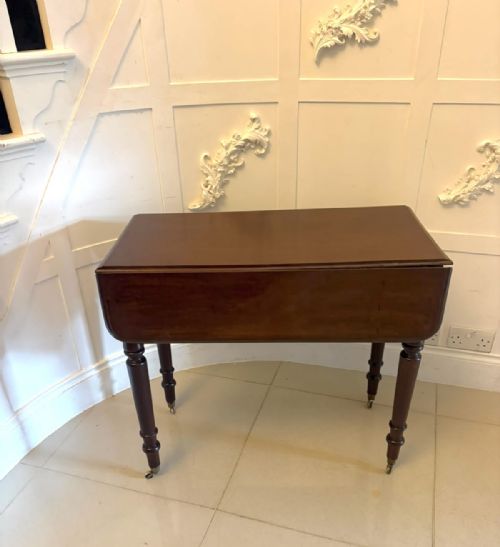
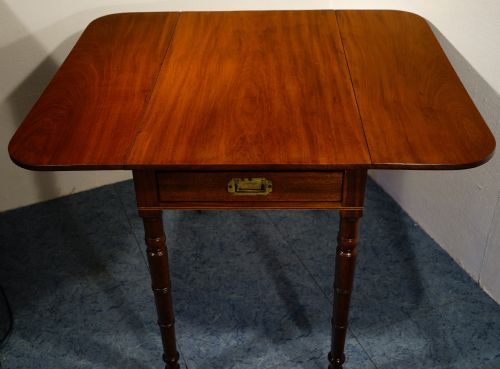
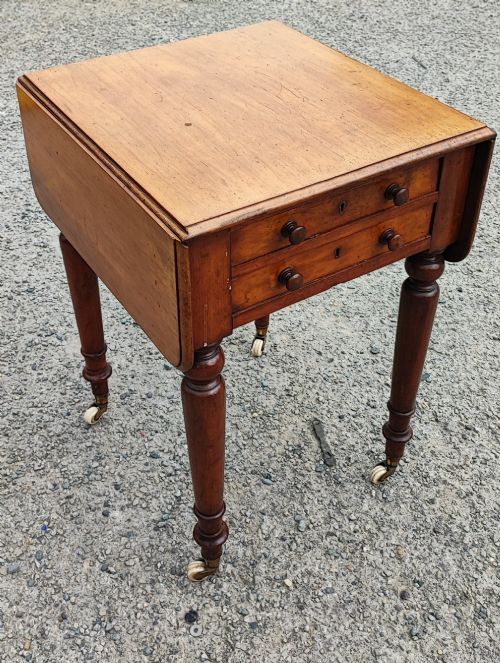
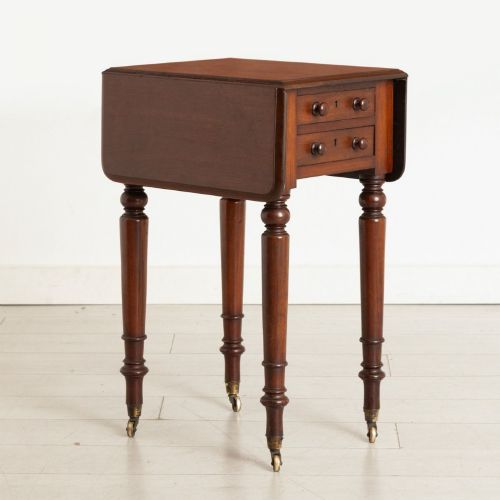
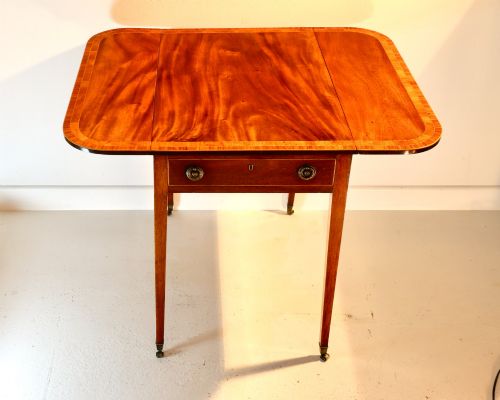
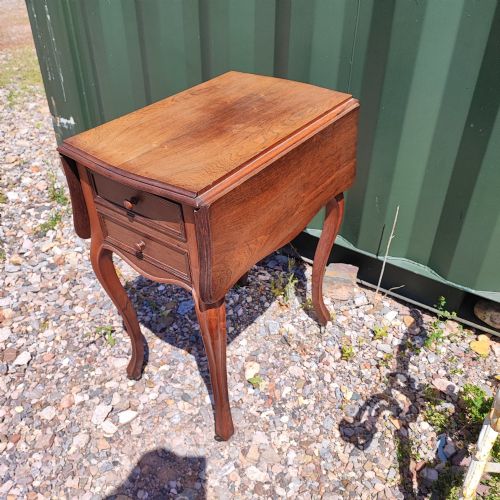
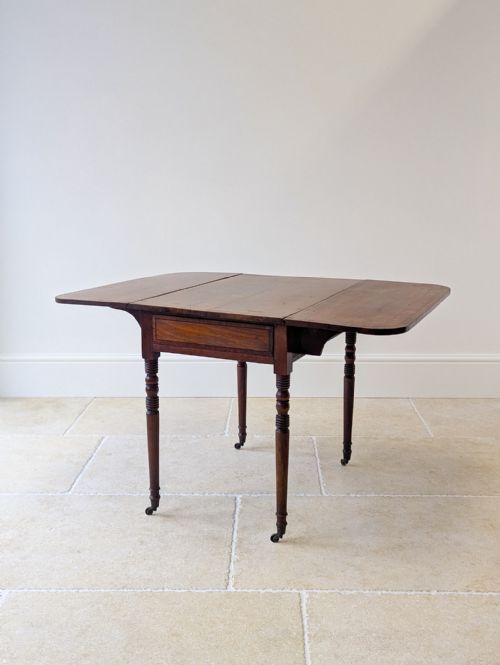
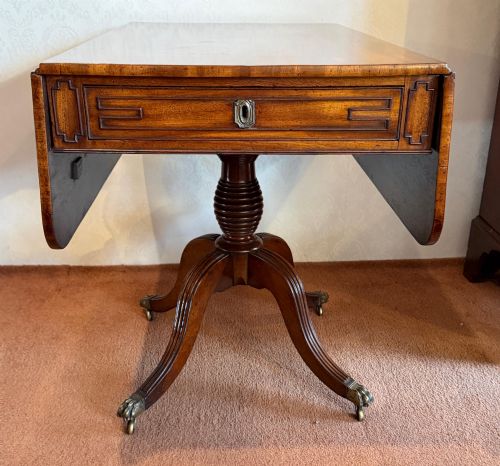
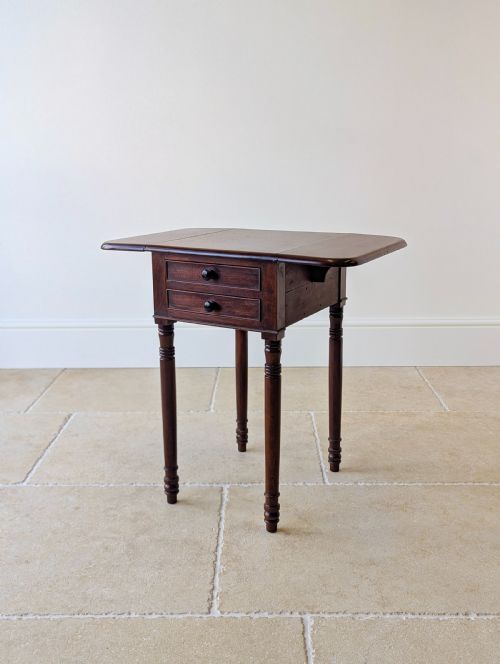

Small Pembroke Table
A small pembroke table brings ingenious drop leaves and compact surface space into tight rooms with understated grace.
Small Pembroke Table
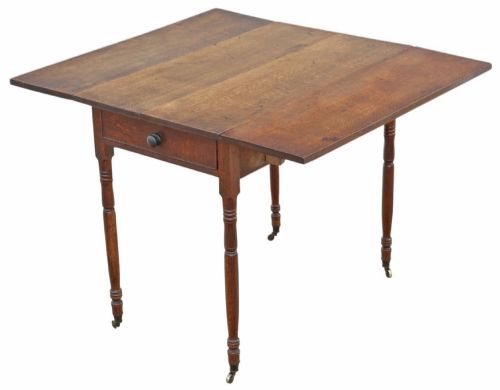
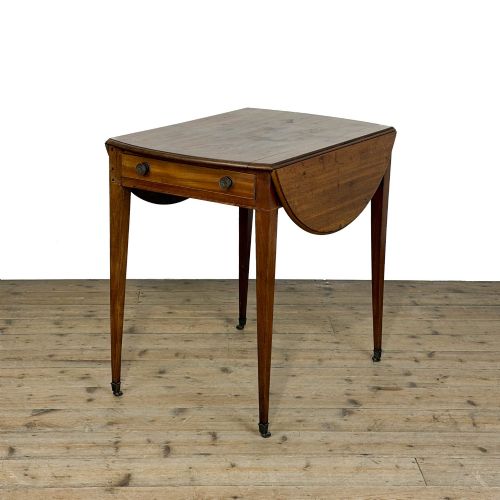
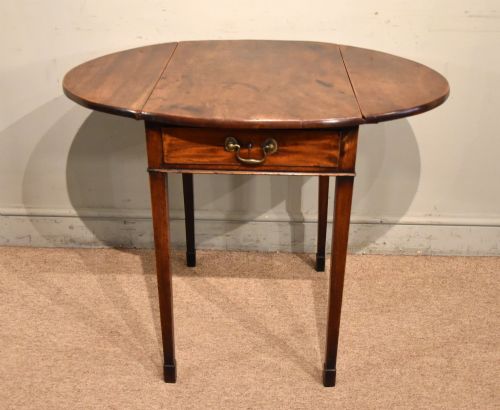
The form developed significantly through the Georgian and Regency periods before seeing continued production into the Victorian and Edwardian eras. Pieces span centuries of craftsmanship, ranging from simple 18th-century oak and mahogany kitchen tables to refined satinwood and rosewood examples meant for the parlour.
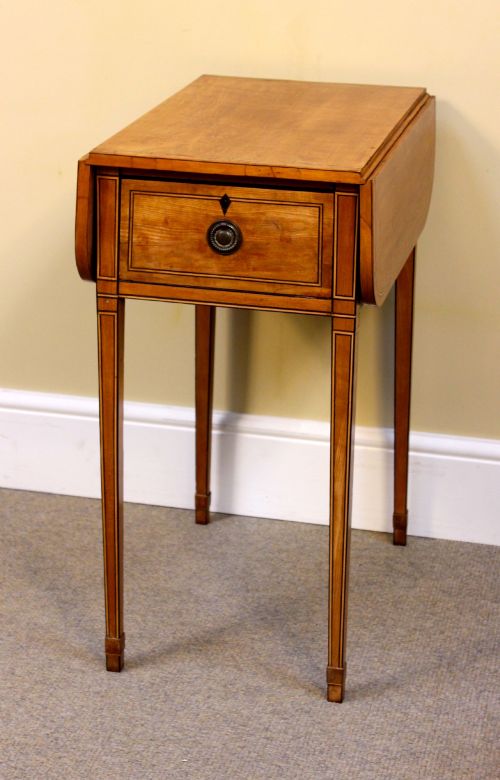
Makers adapted the form for varied domestic tasks, resulting in work tables fitted with drawers, breakfast tables, and miniature or baby pembroke variants. These tables function effortlessly as lamp stands, side tables, or compact writing desks in modern interiors.
Materials and Construction
Cabinetmakers relied heavily on dense tropical hardwoods like mahogany and rosewood for durability and rich grain, alongside lighter timbers such as satinwood, fruitwood, and oak. Brass hinges and castors frequently support the drop leaves and mobility of Regency and Victorian examples.
Inlaid stringing in boxwood or contrasting veneers often decorates the tops of late Georgian and Edwardian pieces, highlighting the clean lines of the leaves. Structural integrity relies on sturdy gateleg or hinged bracket supports that bear the weight of the lowered flaps.
Quality Variations
Superior examples distinguish themselves through choice timber selection, such as figured mahogany or finely matched satinwood veneers, rather than plain utility boards. The crispness of inlaid details and the smooth operation of drop-leaf mechanisms reveal the original maker's skill.
Proportion and stability define better pieces, where extended leaves lock level without sagging and drawer construction utilises traditional dovetailing. Refined turning on the central column or legs separates bespoke cabinet work from simpler vernacular pieces.
Gillows
The Small Pembroke Table Glossary
- Pembroke table
- A small drop-leaf table featuring two hinged flaps on opposite sides of a fixed central top. It typically includes one or two drawers and rests on four legs.
- Drop leaf
- A hinged section of a table top that can be folded down to reduce the footprint of the furniture or raised to provide extra surface area.
- Satinwood
- A lustrous, durable timber native to India and Sri Lanka, highly prized for its pale yellow colour and smooth grain in fine Regency and Edwardian furniture.
- Spider leg
- A style of furniture construction utilising exceptionally slender turned legs that impart a delicate visual lightness to small occasional tables.
- Sofa table
- A long, narrow variety of drop-leaf table traditionally placed in front of a sofa, often fitted with drawers and double pedestals.
Small Pembroke Table: Frequently Asked Questions
What is a small pembroke table used for?
These versatile tables serve primarily as compact writing desks, lamp stands, or occasional side tables in constrained spaces. The folding leaves allow the surface area to expand or contract depending on daily needs.
Historically, many versions functioned as work tables for sewing or as small breakfast tables in private chambers.
How do I identify a Georgian pembroke table?
Georgian examples typically display solid mahogany or oak construction with straight, tapered legs or subtle spade feet. The joinery is entirely handmade, often featuring hand-cut dovetails within the integrated drawer.
Earlier 18th-century versions may feature slender spider legs, while later Georgian pieces incorporate delicate brass hardware and subtle crossbanding.
Are pembroke tables stable when the leaves are up?
Yes, properly designed pembroke tables utilise hinged wooden brackets, known as rule joints or fly brackets, that swing out from the frame to support the raised leaves. When fully extended, these supports lock the flaps firmly in a horizontal position.
Heavy downward pressure should still be avoided on the unsupported outer edges of the extended leaves.
How do I care for antique mahogany and rosewood?
Maintain the wood by applying natural beeswax polish occasionally and buffing it gently with a soft cloth to nourish the grain. Keep the table away from direct sunlight and strong heat sources to prevent the timber from drying or cracking.
Avoid placing wet glasses or damp items directly on the polished surface to prevent water rings.