



Antique Pearlware Plate
An antique pearlware plate brings a subtle blue-tinted earthenware body and detailed blue-and-white transfer print to the table, prized for its crisp historical narrative.
Antique Pearlware Plate
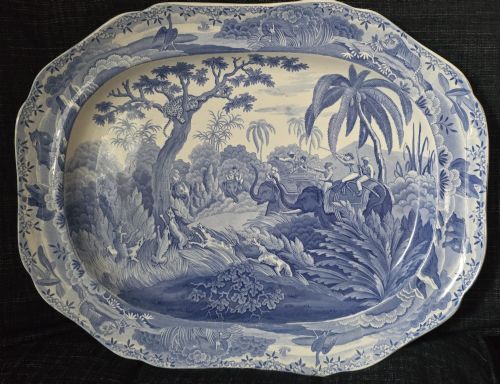
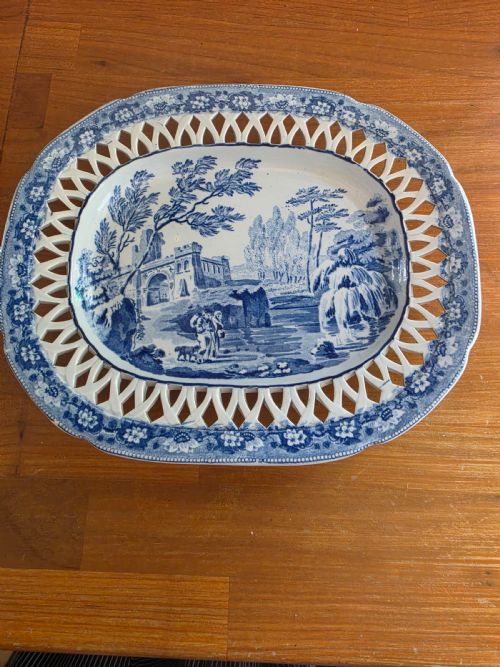
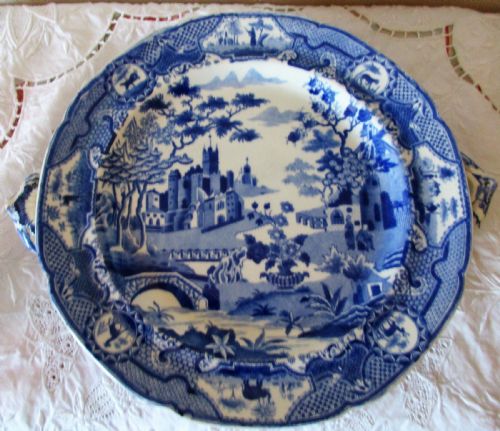
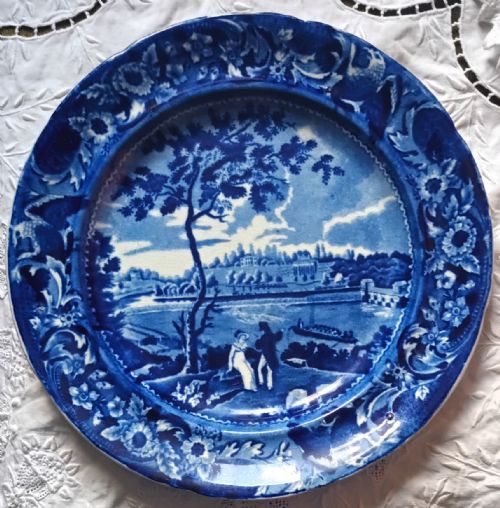
An antique pearlware plate sits at the intersection of Georgian earthenware development and the enduring popularity of blue-and-white domestic pottery. You will most frequently encounter circular plates and platters bearing transfer-printed topographical or romantic patterns from the late eighteenth and early nineteenth centuries.
The objects span varied serving forms, including deep soup plates, small child's plates, large chargers, and tazza stands. Makers utilised distinct regional styles ranging from classical ruins to Chinoiserie landscapes, reflecting the prevailing aesthetic tastes of the Regency and Georgian periods.
How They Were Made
Potters formed these pieces using refined white earthenware clay bodies, subsequently applying a thin lead glaze containing a small amount of cobalt to mask the natural yellowish cream colour of the fired clay. This glaze pools delicately in crevices, giving the characteristic bluish tint that distinguishes pearlware from standard creamware.
Decoration relied primarily on copper-plate transfer printing, applying intricate blue designs onto the biscuit or glazed surface before a high-temperature kiln firing. Certain examples also incorporated hand-painted polychrome highlights or moulded feather edges to finish the rim.
The records show pearlware plates decorated with diverse transfer themes, ranging from American historical views to classical ruins and romantic landscapes.
What Varies In Quality
Quality rests heavily on the clarity of the cobalt transfer print and the smoothness of the glaze surface. Crisp lines without smudging or pooling distinguish superior potting from hurried commercial output.
The sophistication of the moulded border work and the complexity of the narrative scene also elevate certain pieces, distinguishing standard Staffordshire tableware from finely potted chargers and specialised serving stands.
Davenport·Spode·Stubbs·Thomas Lakin·John Rogers and Son
The Antique Pearlware Plate Glossary
- Pearlware
- A refined earthenware developed in the late eighteenth century featuring a thin glaze tinted with cobalt to appear whiter than creamware. It serves as the primary ceramic body for these blue-and-white plates.
- Transfer printing
- A technique where an engraved copper plate transfers a design onto tissue paper, which is then pressed onto the ceramic body. This method allowed for intricate and repeatable pictorial scenes.
- Chinoiserie
- European decorative motifs inspired by Chinese art, frequently featuring pagodas, bridges, and figures. It appears widely across Georgian and Regency earthenware.
- Tazza
- An elevated decorative dish or serving stand supported on a single foot. These forms are less common than standard flat plates.
- Feather edge
- A moulded rim pattern resembling bird feathers, often highlighted with blue or green enamel. It provides a textured border to early earthenware plates.
Antique Pearlware Plate: Frequently Asked Questions
How do I date an antique pearlware plate?
Dating relies on stylistic markers, potter marks on the reverse, and the specific shade of the blue glaze. Pieces from around eighteen hundred typically exhibit a distinct bluish pooling in the glaze.
Later Regency examples often feature sharper transfer-printed patterns with crisper borders. Comparing the printed pattern to known factory archives clarifies the production decade.
Are these plates safe for daily use?
These ceramic pieces are primarily intended for display and collection rather than modern dining. The historic lead-containing glazes can degrade when exposed to acidic foods.
Gentle hand washing in lukewarm water preserves the glaze and prevents crazing. Avoid dishwashers and microwaves entirely to protect the antique material.
What is the difference between creamware and pearlware?
Creamware utilises a yellowish lead glaze over a cream-coloured earthenware body. Potters developed pearlware to achieve a whiter appearance that resembled imported Chinese porcelain.
The addition of cobalt oxide to the transparent glaze creates the signature faint blue tint characteristic of pearlware ceramics.
Why do some plates have blue edges?
The blue edge refers to a moulded border design, often resembling feathers, painted with cobalt before firing. This decorative technique frames the central white space of the plate.
Potters used this method extensively on early earthenware to add definition without a complex transfer-printed scene.