


Antique Pastoral Engraving
An antique pastoral engraving brings rural quietude indoors, offering framed scenes of shepherds, flocks, and rustic idylls to modern rooms.
Antique Pastoral Engraving
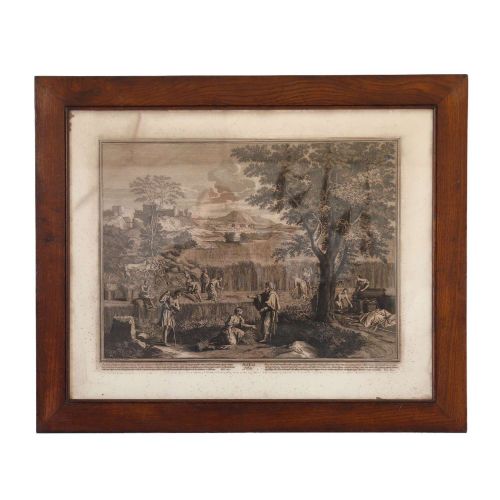
When you search for an antique pastoral engraving, you are looking at printed rural imagery framed for wall display, spanning periods from the seventeenth century to the nineteenth century including Regency and Victorian examples. These works capture idealized countryside scenes derived from artists such as Poussin, Huet, and Claude Lorrain.
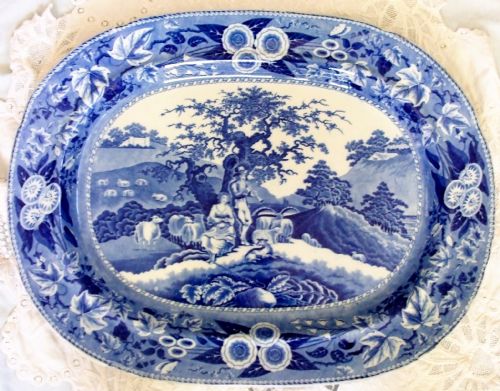
The pieces on this page appear as framed prints, framed art, and wall art, alongside related items like a pottery platter featuring a piping shepherd motif. They utilise paper housed behind glass in wooden frames, sometimes finished with gold leaf or gilt wood.
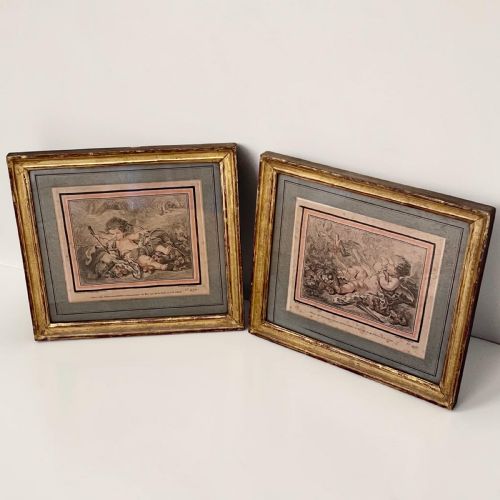
Buyers meet variations ranging from seventeenth-century masterworks to eighteenth-century French sheets and nineteenth-century hand-coloured mezzotints. The styles encompass Georgian, Regency, Baroque Classicism, French Rococo, and Neoclassical approaches.
Materials and methods
The primary medium involves ink printed onto paper sheets, frequently enhanced with hand-colouring or sepia tones. Certain platters utilise earthenware decorated with cobalt pigment.
Frames are constructed from wood, with select examples receiving gold leaf or gilt finishes to highlight the moulding around the glass.
Listings feature paper, glass, wood, and gold leaf alongside earthenware decorated with cobalt pigment.
Judging quality in pastoral prints
Quality rests upon the clarity of the line work and the prestige of the original artist and printmaker, such as Demarteau or John Boydell. Earlier impressions retain crisper detail than later reprintings.
The presentation matters significantly, where period frames utilising original wood and gold leaf enhance the integrity of the piece compared to later replacements.
Demarteau·John Boydell·I R Smith·Henry William Banbury·George Morland
The Antique Pastoral Engraving Glossary
- Engraving
- A printmaking process where an artist cuts lines directly into a metal plate with a burin. This technique produces sharp, precise lines that hold up well across centuries.
- Mezzotint
- A printmaking method of the tonal category, allowing smooth gradations between light and dark. It is achieved by roughening the metal plate with a rocker.
- Etching
- A process where acid bites lines into a metal plate prepared with an acid-resistant ground. It yields flowing, painterly lines characteristic of many nineteenth-century works.
- Transfer printing
- A decoration technique using a tissue paper to transfer an engraved design onto earthenware pottery. This method adorns items like the blue and white platters seen here.
- Gilt wood
- Wood coated with a thin layer of gold leaf or gold paint. It frequently borders the glass on Regency and Victorian frames.
Antique Pastoral Engraving: Frequently Asked Questions
What is an antique pastoral engraving?
It is a printed artwork depicting rural scenes, shepherds, and country life, produced during periods like the seventeenth, eighteenth, or nineteenth centuries.
These works were framed and hung in homes to provide a decorative view of an idealized countryside.
How do I date a pastoral print?
Dating relies on the paper type, framing style, print technique, and any inscriptions naming the artist or publisher.
Evidence from the maker or period style often helps narrow the timeframe to decades such as the Regency or Georgian eras.
How were these prints displayed?
They were typically placed in wooden frames behind glass to protect the paper from dust and moisture.
Many retain period frames featuring gilt wood or gold leaf that complement the domestic interiors of their time.
Are all pastoral prints hand-coloured?
Not all prints received colour, as many were issued as monochrome engravings, sepia prints, or mezzotints.
When colour is present, it was typically applied by hand using water-based pigments after the printing process.