
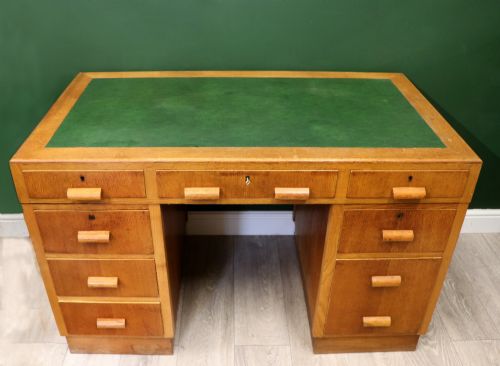
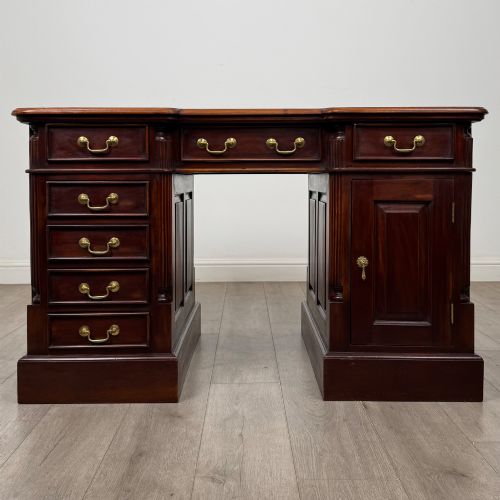
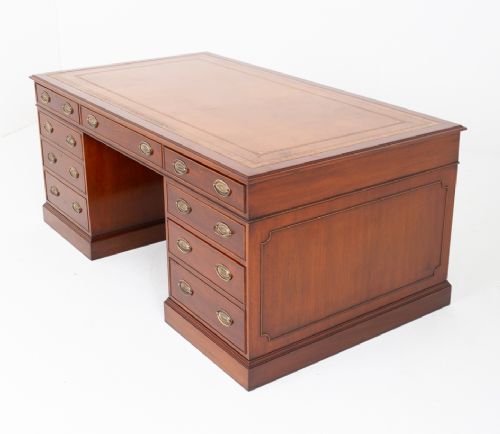
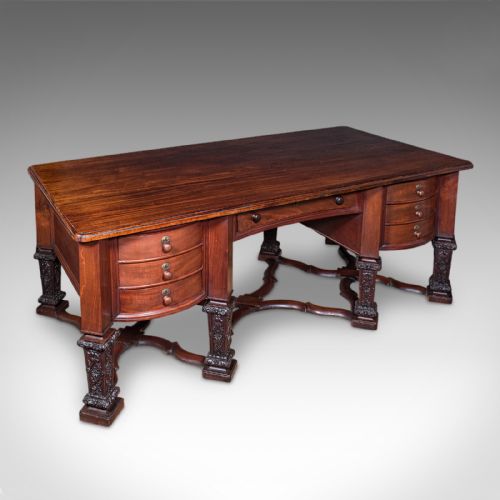


Antique Partner Style Desk
An antique partner style desk provides a generous double-sided workspace built for two to sit opposite each other.

Antique Partner Style Desk
An antique partner style desk brings dual-sided workspace into a room, offering drawers and cupboards on both front and reverse sides. These large pieces of furniture serve as statement library or study tables where two people can work facing one another.
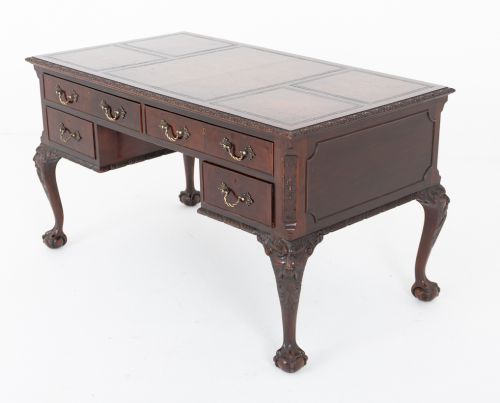
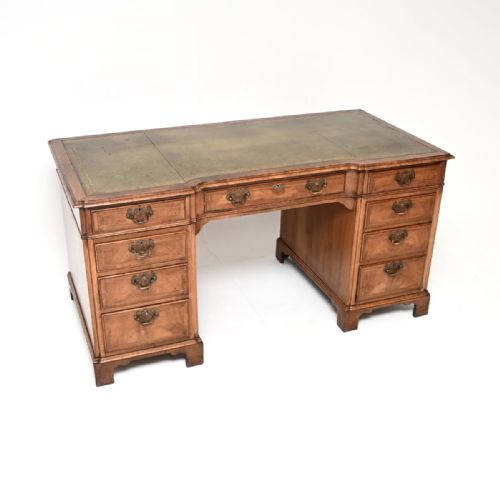
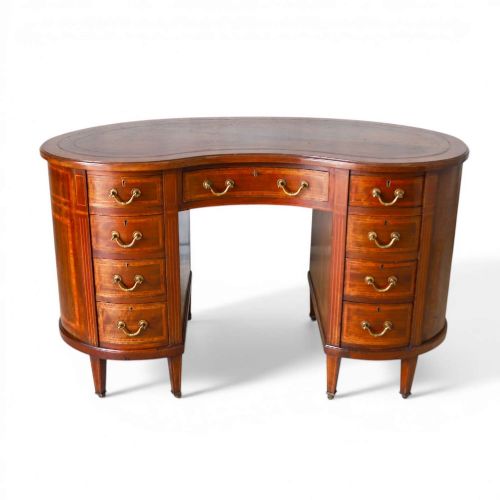
Most examples found here date from the nineteenth century into the early twentieth century, spanning Victorian, Edwardian and revival periods. Mahogany and walnut form the primary timber choices, often paired with inset leather writing surfaces.
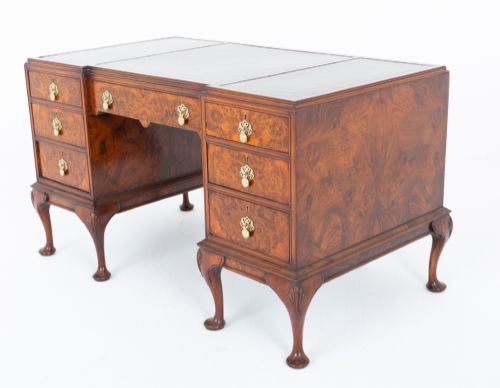
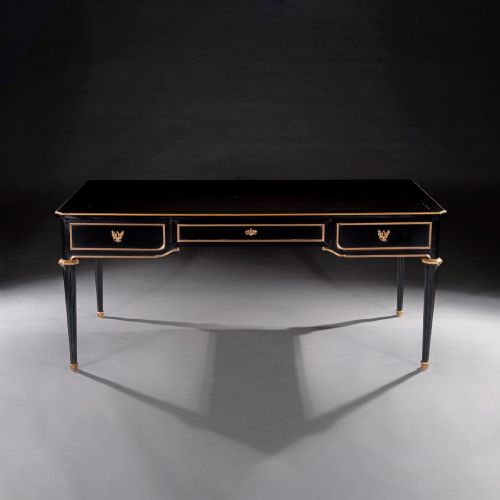
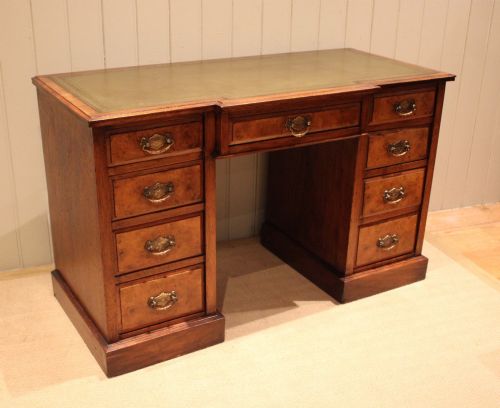
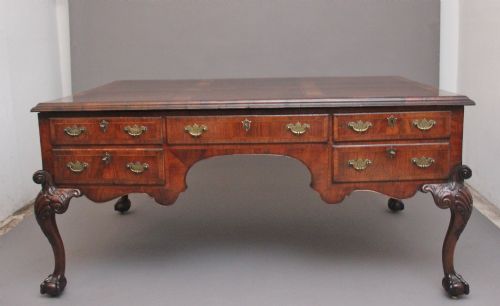
The layout typically follows a twin pedestal construction with banks of drawers flanking a wide central kneehole. Variations include Chippendale, Georgian and Queen Anne styles, alongside occasional French Empire and Art Deco interpretations.
Materials and construction methods
Cabinet makers constructed these large desks using solid timbers and rich veneers such as mahogany, burr walnut and satin birch. Brass hardware, including handles and key escutcheons, provides functional and decorative accents.
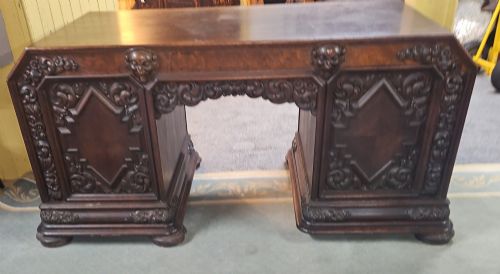
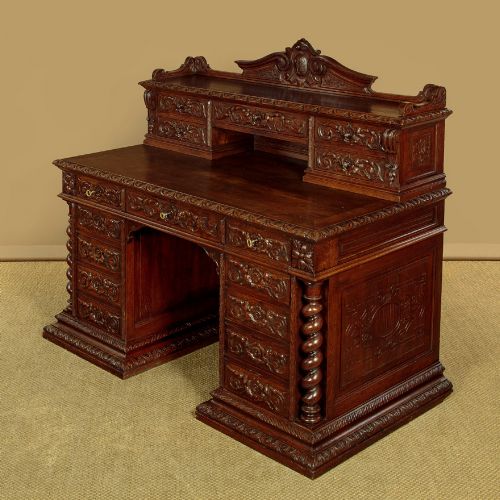
Writing surfaces are traditionally inset with tooled leather, bordered by gilt tooling. Carved details appear on revival pieces, drawing on Chippendale or Jacobean motifs executed in dense hardwoods.
Some nineteenth-century partners desks hide secret kneehole compartments for storing private documents out of sight.
Distinctions in craftsmanship
Quality rests in the selection of timber figures, such as curl mahogany or burr walnut, matched symmetrically across the dual-sided drawers. Heavier secondary woods used internally and smooth drawer operation indicate superior workshop execution.
The crispness of carved mouldings and the depth of relief work separate standard production from exceptional library furniture. Original leather inserts with well-preserved gilt tooling also elevate an example's standing.
Gillows·Étienne Kohlmann
The Antique Partner Style Desk Glossary
- Partners desk
- A double-sided freestanding desk designed with drawers and cupboards accessible from both front and back. This configuration allowed two individuals to work opposite each other in a shared office or library.
- Pedestal desk
- A form comprising two freestanding drawer columns that support a wide desktop. The central space between the pedestals forms the kneehole.
- Kneehole
- The central recess beneath the desk top designed to accommodate the user's legs when seated. Wider kneeholes allow comfortable clearance.
- Bureau plat
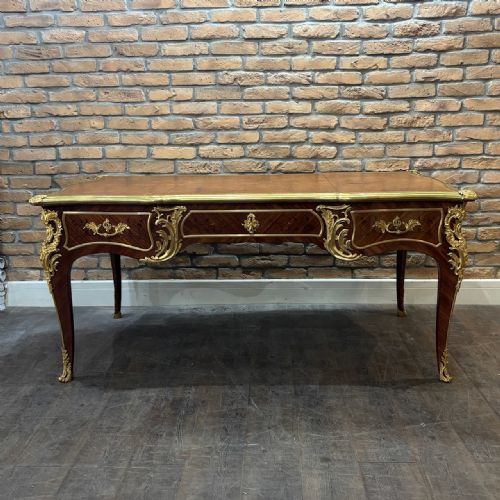
- A freestanding French writing table featuring a rectangular top above a frieze with drawers. These typically lack the twin pedestals seen on standard English models.
Antique Partner Style Desk: Frequently Asked Questions
How do I use a partner style desk?
These desks suit large studies or central library spaces where they can stand away from walls. Both sides feature functional drawers and cupboards for shared storage and dual workstations.
Position the desk with enough clearance around all four sides to access the storage compartments and seating positions properly.
Are these desks good for daily work?
The large surface area and numerous drawers offer practical organisation for modern writing and computer equipment. Their robust timber construction handles daily use comfortably.
Protect the inset leather writing surface with a blotter to prevent wear from modern writing instruments.
How do I date a mahogany desk?
Examine the timber grain, construction methods of the drawer linings, and secondary woods like oak or pine. Revival styles often combine older decorative motifs with later nineteenth or twentieth-century framing.
Hardware styles and the type of dovetailing inside the drawers help narrow the manufacturing decade.
What is a pedestal configuration?
A pedestal layout consists of two independent stacks of drawers that support the main desktop above. This arrangement creates a central kneehole for seating.
Some partner versions replace one pedestal with a cupboard fitted with shelves on the reverse.