
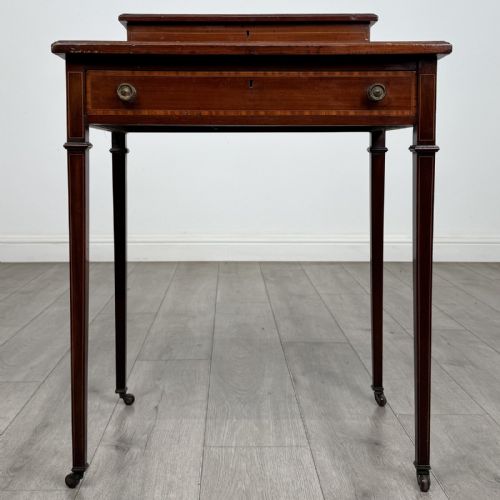
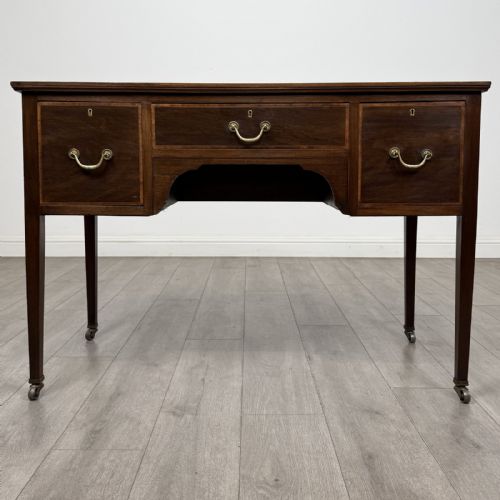
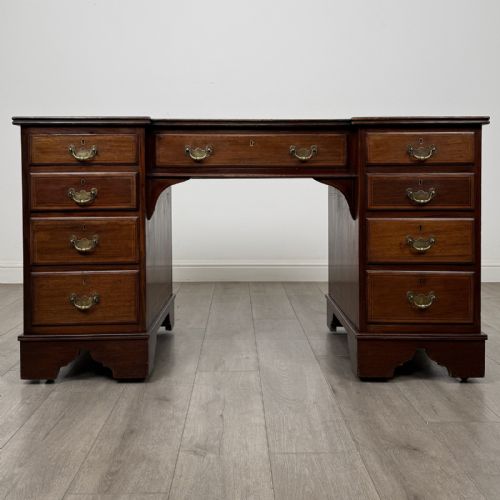
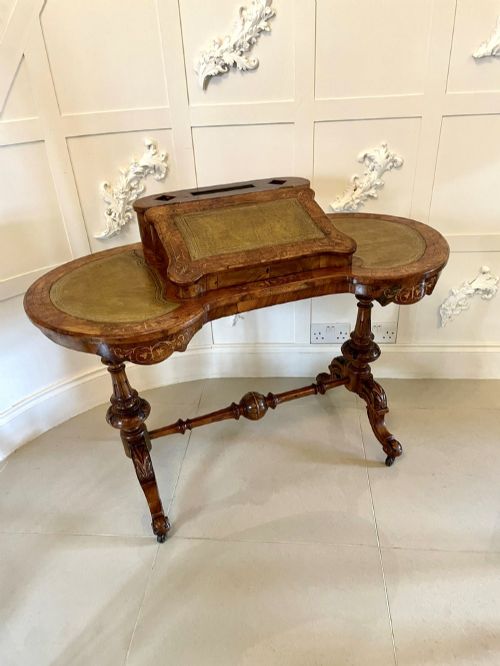

Edwardian Inlaid Study Desk
An edwardian inlaid study desk brings refined craftsmanship and classic styling into a room through delicate marquetry and rich timber construction.

Edwardian Inlaid Study Desk
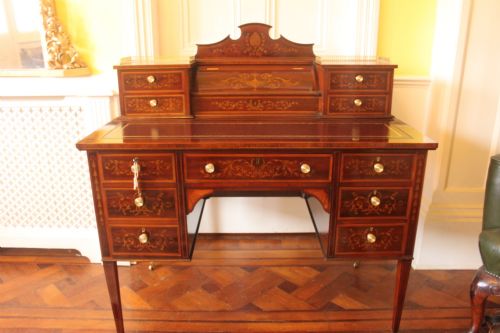
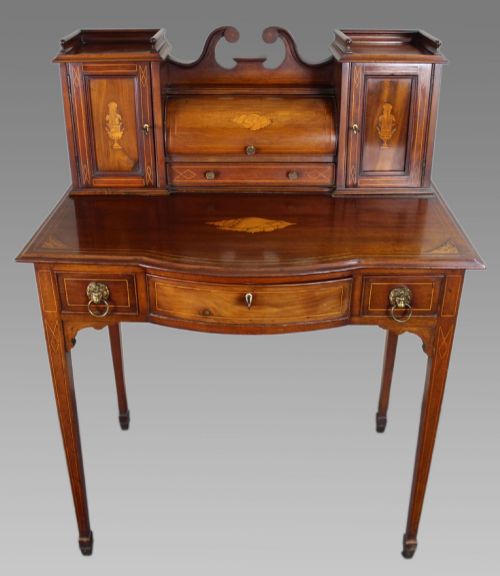
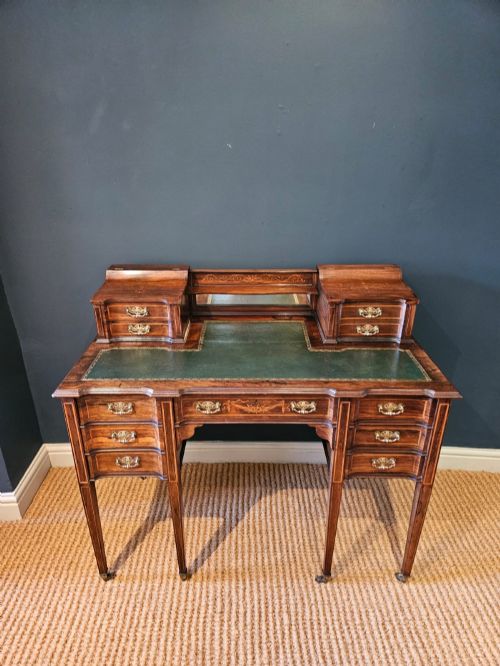
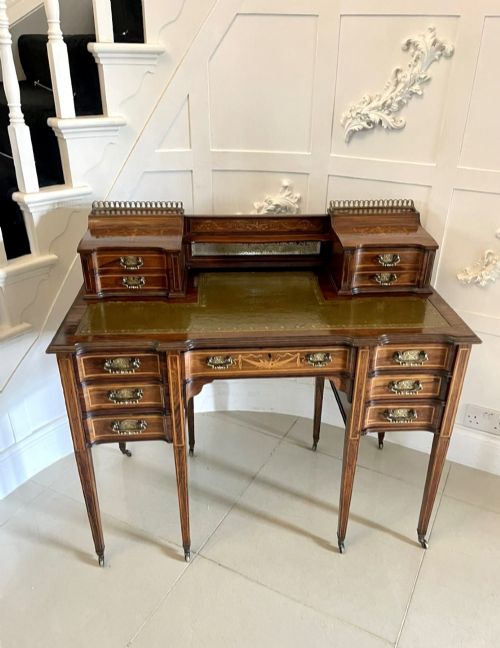
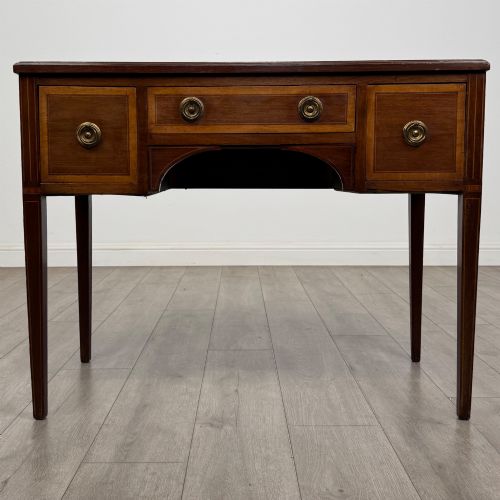
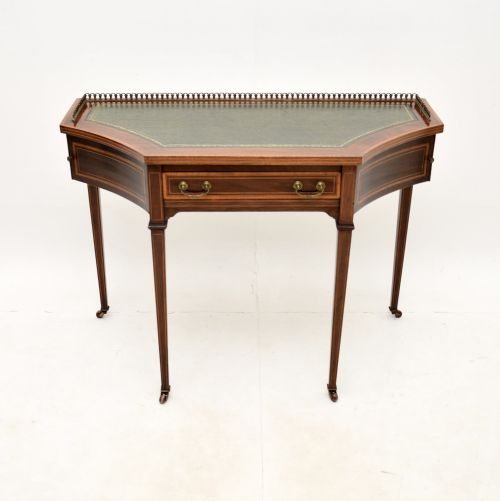
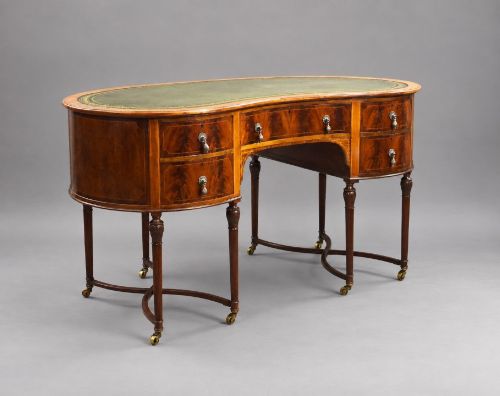
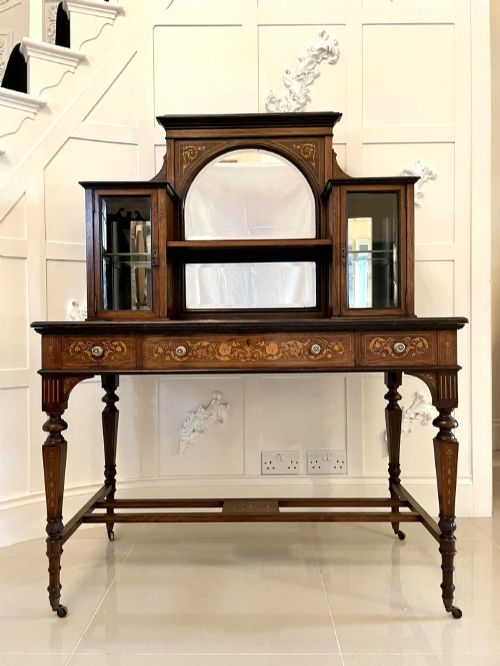
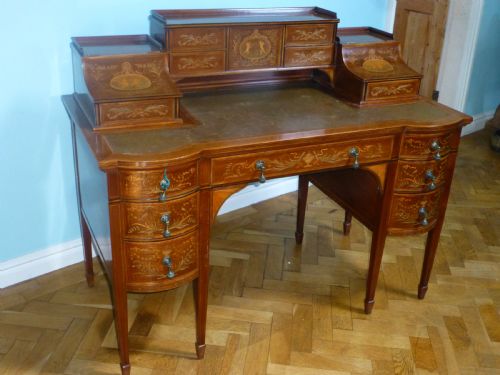
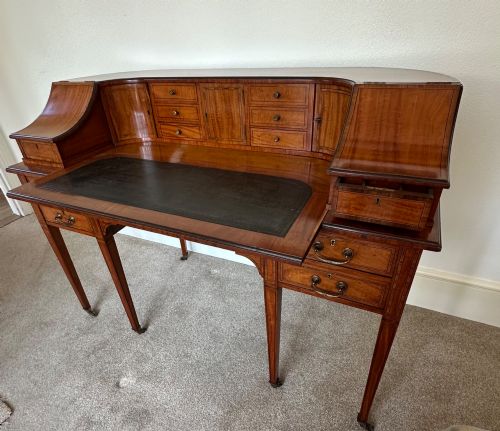
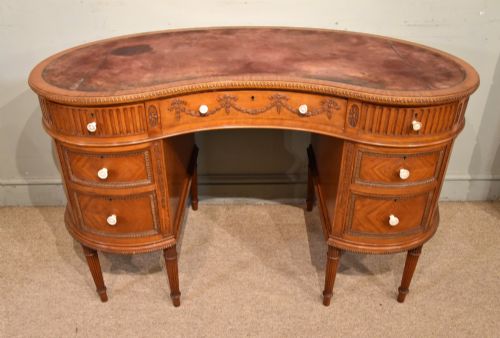
An edwardian inlaid study desk combines functional writing surfaces with decorative cabinetwork typical of the early twentieth century and late nineteenth century. These pieces appear in forms ranging from standard writing tables and pedestal desks to sophisticated Carlton House desks and kidney-shaped writing desks.
The pieces on this page span the Edwardian era and Victorian period, often drawing design inspiration from Sheraton Revival and Regency styles. Makers such as Maple & Co, Edwards & Roberts, and Gill & Reigate produced many of the finer examples seen here.
Buyers encounter variations including oval writing tables, barrel-fronted desks, and compact kneehole configurations. Mahogany, satinwood, and rosewood form the primary carcasses, accented by contrasting boxwood and satinwood inlay.
How they were made
Cabinetmakers constructed these desks using solid timbers and veneers of mahogany, satinwood, and rosewood, frequently incorporating flame mahogany and burr walnut for visual depth. Tops often feature inset leather writing surfaces framed by banded wood borders.
Decoration relied heavily on contrasting marquetry and stringing executed in boxwood and satinwood inlay. Hardware typically consists of original brass ring handles or drop pulls affixed to drawers lined with secondary timbers.
The furniture spans Victorian, Edwardian, and Regency periods, highlighting Sheraton Revival and Arts and Crafts design movements.
What varies in quality
Quality rests upon the crispness of the marquetry and the choice of timber figure, such as highly grained flame mahogany or choice satinwood veneers. Superior pieces display meticulous hand-cut inlay and balanced proportions across complex shapes like kidney contours and curved Carlton House superstructures.
The presence of original brass hardware, fitted stationery compartments, and authentic leather writing surfaces elevates a piece above standard utility examples. Maker attribution to established firms like Maple & Co or Edwards & Roberts also distinguishes the finest specimens from ordinary workshop output.
Maple & Co·Edwards & Roberts·Gill & Reigate
The Edwardian Inlaid Study Desk Glossary
- Carlton House desk
- A distinctive writing desk featuring a low, curved superstructure fitted with small drawers and pigeonholes wrapping around the back of the writing surface. This form gained popularity during the late eighteenth century and saw revival production in the Victorian and Edwardian eras.
- Marquetry
- The art of applying decorative pieces of veneer to a structure to form intricate pictorial or geometric designs. Craftsmen utilised contrasting woods such as satinwood, rosewood, and boxwood to achieve multi-tonal motifs.
- Kidney-shaped desk
- A writing table characterised by a curved, concave front that wraps around the user, resembling a kidney bean. This graceful form appears frequently among Edwardian satinwood and mahogany writing tables.
- Stringing
- Thin, narrow lines of contrasting wood inlaid flush into the surface of a furniture piece to outline drawers, tops, or legs. It serves as a defining linear detail in Sheraton Revival and Edwardian design.
- Pedestal desk
- A heavy, freestanding desk comprising two independent pedestals of drawers supporting a single wide desktop. Examples from this period often incorporate central drawers and modest cupboards.
Edwardian Inlaid Study Desk: Frequently Asked Questions
How do I care for a leather desk top?
Maintain the leather insert by dusting gently with a dry cloth and avoiding harsh chemical cleaners or excessive moisture. Periodic application of specialised leather cream helps prevent drying and cracking.
Protect the surface from direct sunlight and sharp objects to preserve the original gilt tooling and coloration.
Are these desks suitable for daily laptop use?
These desks accommodate laptops and writing tasks comfortably, provided the dimensions match your workspace requirements. Kidney-shaped and pedestal variants offer ample knee clearance and surface area.
Consider the height and depth of specific forms, such as compact ladies desks versus full pedestal tables, to ensure everyday comfort.
How do I distinguish Edwardian from Victorian desks?
Edwardian pieces generally exhibit lighter timbers, restrained satinwood or boxwood inlay, and graceful proportions influenced by the Sheraton Revival. Victorian desks tend toward heavier proportions, darker rosewood or mahogany, and denser marquetry or burr walnut figure.
Overlapping design revivals mean construction techniques and secondary woods provide clearer dating clues than style alone.