


Antique Painted Ottoman
An antique painted ottoman offers practical seating and storage, bringing period charm and character to a room through decorative painted finishes.
Antique Painted Ottoman
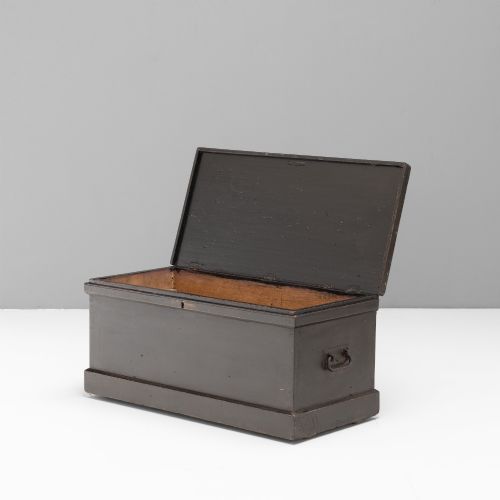
When you search for an antique painted ottoman, you encounter a varied selection of seating and storage forms dating from the eighteenth century to the early twentieth century. These pieces encompass blanket boxes, window seats, and stools from various European origins.
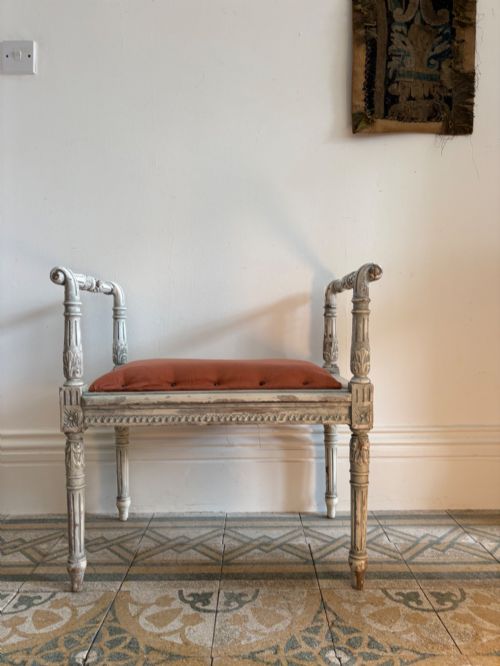
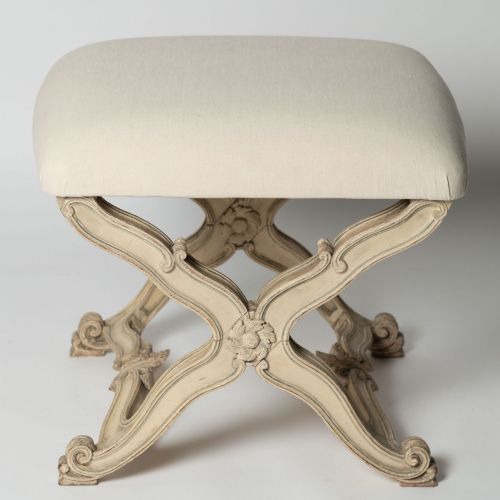
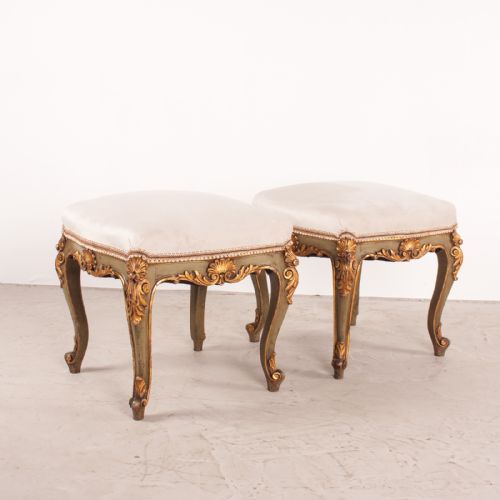
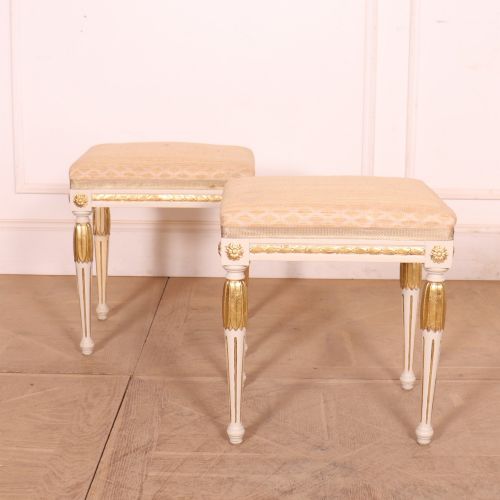
The pieces most frequently met on this page are French and Swedish stools alongside pine blanket boxes. They showcase styles ranging from Gustavian Neoclassical and Continental Rococo to Victorian Country.
Makers such as Miles & Edwards also appear among the nineteenth-century footstools. Alongside furniture, the selection occasionally includes manuscript items like an eighteenth-century ottoman book depicting rulers.
How they were made
Construction relies on solid timbers such as pine, beech, and general wood, shaped into frames and boxes. Carving often decorates the wood before it receives a painted finish.
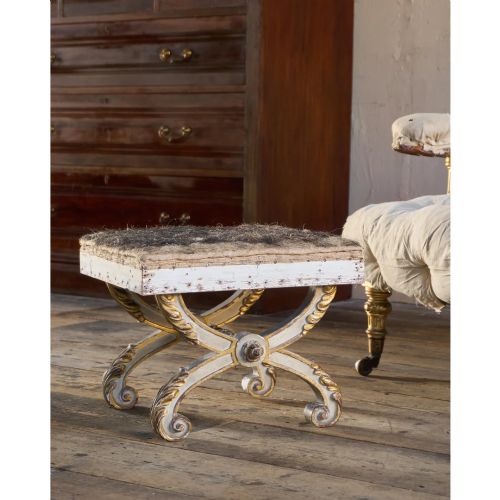
Surface decoration frequently combines paint with gold leaf and upholstered elements featuring silk, linen, or needlework. These materials reflect the French, Swedish, and English origins recorded in the listings.
One unexpected manuscript book records the descendants of Ottoman rulers right down to Sultan Abdul Majid.
What varies in quality
Quality rests in the finesse of the hand carving and the application of the paint and gold leaf layers. Pieces with original paint finishes and detailed carved woodwork stand apart from simpler utilitarian boxes.
The execution of the upholstery, whether silk, linen, or needlework, indicates the original grade of the seating. Maker attribution, such as work by Miles & Edwards, further elevates the standing of a piece.
Miles & Edwards
The Antique Painted Ottoman Glossary
- Gustavian
- A Swedish neoclassical style originating in the late eighteenth century, characterised by restrained carving and pale painted finishes. It reflects French influence interpreted with Scandinavian simplicity.
- Curule
- An ancient X-frame chair or stool design featuring intersecting legs. This classical form was revived in nineteenth-century seating.
- Needlework
- Canvas worked with yarn or thread in counted stitches to create decorative upholstery. It frequently appears on nineteenth-century stool seats.
- Gold Leaf
- Gold beaten into extremely thin sheets and applied to primed wooden surfaces for decoration. It highlights carved details on continental furniture.
Antique Painted Ottoman: Frequently Asked Questions
What periods do these pieces come from?
The pieces span several centuries, with examples originating from the eighteenth, nineteenth, and early twentieth centuries. Dates in the listings extend from the eighteenth century through the Victorian era up to the nineteen-thirties.
Most items date to the nineteenth century or around nineteen hundred. They capture diverse regional styles from Sweden, France, Italy, and England.
How were these blanket boxes and stools used?
Blanket boxes provided secure storage for household textiles, linens, and garments in domestic interiors. Stools and window seats offered movable seating for parlours, bedrooms, and drawing rooms.
Low stools and footstools were designed to support feet or provide low occasional seating by a fire. Manuscript books served as historical records depicting rulers.
How do I care for painted wooden surfaces?
Painted and gilded wooden surfaces require gentle dusting with a soft, dry cloth to prevent abrasion. Avoid liquid cleaners and harsh chemical polishes that can lift historic paint or gold leaf.
Keep pieces away from direct sunlight and radiators to prevent the wood from splitting. Stable room humidity preserves both the timber structure and the painted finish.
How do I distinguish French styles from Swedish styles?
French pieces often display Continental Rococo or Louis XV influence with ornate carved decoration and gilt accents. They range from decorative window seats to large stools.
Swedish pieces typically follow Gustavian Neoclassical designs with pale, muted paintwork and cleaner architectural lines. Original painted surfaces are a common feature of Swedish blanket boxes and stools.