





Antique Ottoman Tapestry Seat
An antique ottoman tapestry seat brings richness to a room, offering tactile warmth and practical seating rooted in nineteenth-century craftsmanship.
Antique Ottoman Tapestry Seat
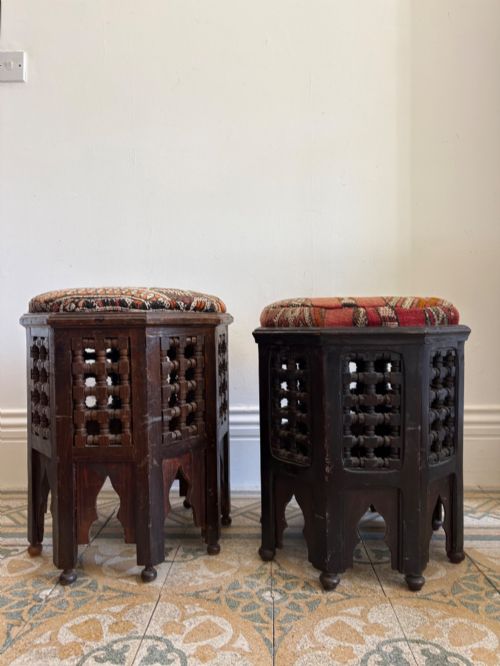
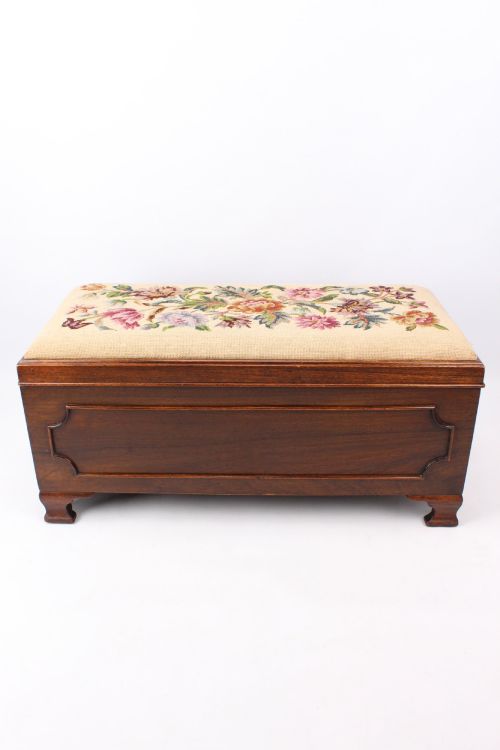
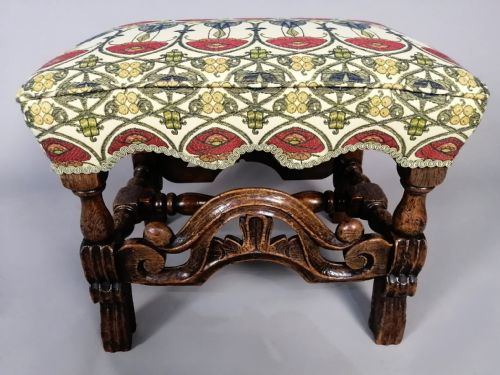
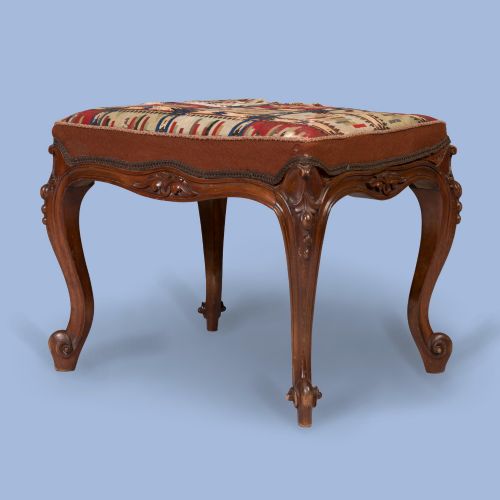
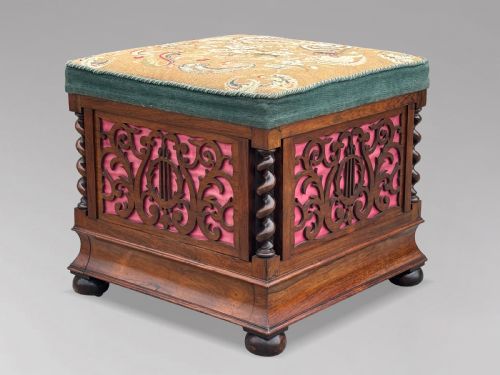
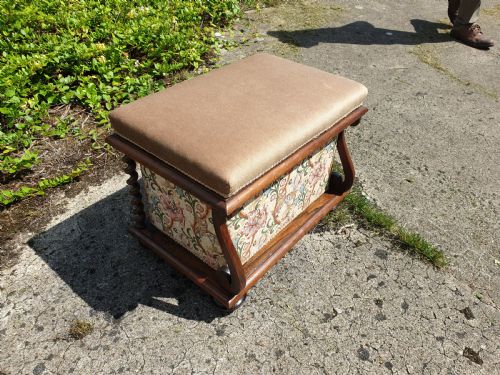
When buyers search for an antique ottoman tapestry seat, they encounter a variety of low seating forms designed for comfort and display. These pieces range from compact footstools and dressing stools to longer window seats and storage ottomans.
The selections available here span the nineteenth century into the early twentieth century, taking shape through periods such as Victorian, Regency, and Queen Anne style revivals. Walnut, mahogany, and rosewood frame surfaces upholstered in wool tapestry, needlework, and kilim textiles.
Materials and construction methods
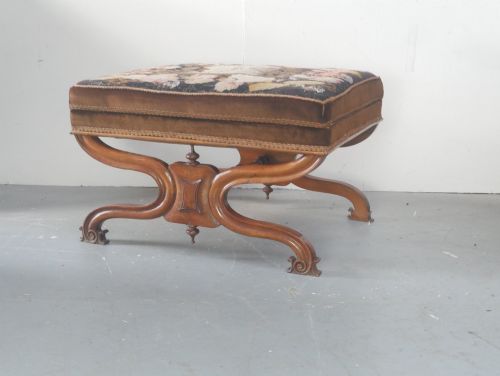
The framework of these seats relies on dense hardwoods including walnut, mahogany, oak, and rosewood, carved into revival styles with curved legs, cross stretchers, and exposed wood borders.
Upholstery relies on traditional textile techniques, incorporating wool tapestries, needlepoint, kilim, velvet, and woven fabric secured over internal padding to form the seat.
Antique Ottoman Tapestry Seat Retail Price Guide 2026
Typical asking prices for ottoman tapestry seat among the pieces listed under this phrase on Sellingantiques today, from the lower quarter to the upper quarter. They describe what is for sale here now, not the wider market.
Some Victorian walnut window seats feature carved hunting dog heads on their timber frames.
Distinctions in quality and execution
Quality rests in the crispness of the timber carving on frames made from woods like walnut and rosewood, alongside the density and intricacy of the needlework or tapestry covering.
Structural integrity, such as the tightness of joints in frames like the X-frame window seat or box seat storage ottoman, separates standard execution from finer examples.
Hallett & Sons
The Antique Ottoman Tapestry Seat Glossary
- Tapestry
- A heavy hand-woven or needleworked textile featuring pictorial or decorative designs used for upholstery.
- Needlepoint
- Stitched embroidery worked on an even-weave canvas ground to create dense floral or geometric patterns on seat tops.
- Ottoman
- A low upholstered seat or bench without arms or a back, frequently incorporating storage beneath the hinged top.
- X-Frame
- A structural furniture base formed by intersecting diagonal legs, common on formal window seats and stools.
- Kilim
- A flat-woven textile often utilised as durable upholstery material on nineteenth-century footstools.
Antique Ottoman Tapestry Seat: Frequently Asked Questions
What is an antique ottoman tapestry seat?
These pieces are low seats, footstools, or window benches constructed with wooden frames and covered in decorative needlework or woven tapestry.
They function as moveable seats or foot supports, utilising textiles such as wool, kilim, and velvet.
How were these seats used historically?
Historically, these items served dual purposes as dressing furniture, window perches, footrests, and small storage boxes in nineteenth-century interiors.
Larger versions accommodated sitting by windows or at dressing tables, while smaller boxes held household items.
How do I identify the period of a stool?
Period attribution relies on timber choices like rosewood or mahogany, alongside stylistic details such as Victorian carved walnut or Regency frames.
Revival designs also point to specific eras, reflecting nineteenth-century revivals of Queen Anne and Chippendale styles.
How should I care for vintage tapestry upholstery?
Preserving these textiles requires keeping them out of direct sunlight to prevent wool fibres from fading over time.
Gentle surface cleaning and avoiding excess moisture will protect the antique needlework and woven surfaces.