





Mahogany Footstool Needlepoint
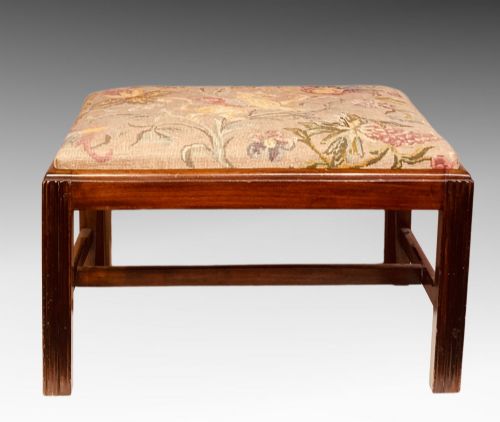
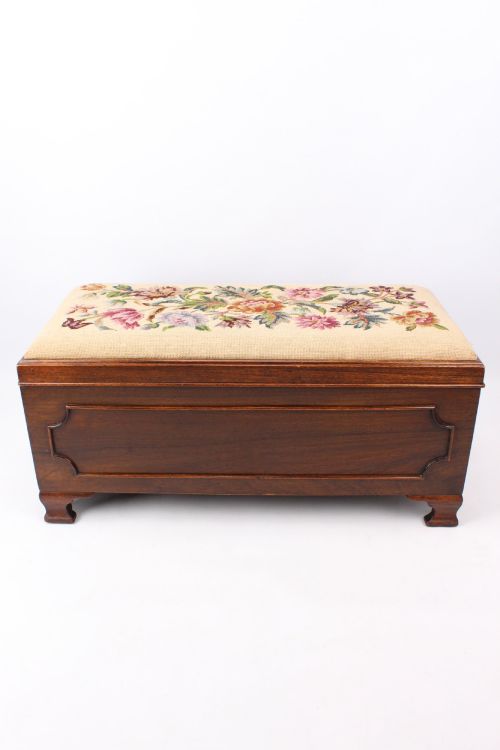
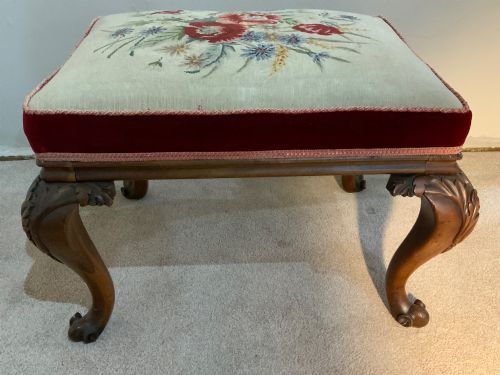
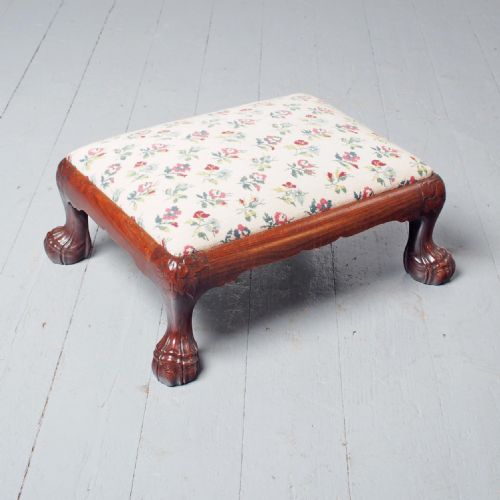
These mahogany footstool needlepoint pieces are solid timber frames topped with hand-stitched wool work, offering traditional low seating.
Mahogany Footstool Needlepoint
A mahogany footstool needlepoint piece combines a dark timber frame with a textile top worked in wool. These domestic items appear across several eras, ranging from eighteenth-century examples to pieces made during the twentieth century.
The selections on this page span various formats, including standard footstools, long ottomans, piano stools and dressing table seats. Victorian and 1920s examples form the bulk of what is available for buyers today.
Makers such as Jas Shoolbred and Whytock and Reid contribute to the range of designated seating forms. Revival aesthetics, notably Queen Anne style, Chippendale style and George III interpretations, heavily influence the wooden frames.
Materials and construction
Makers utilised solid mahogany for the structural frames, occasionally incorporating brass elements or cross stretchers for additional support. Woodturning and carved details define the legs of these stools, pointing to Georgian and Victorian cabinet-making traditions.
The textile tops rely on wool, tapestry fabric and gros-point needlework. Artisans stitched these complex wool designs by hand onto the fabric foundation before securing the textile to the timber frame.
Mahogany Footstool Needlepoint Retail Price Guide 2026
Typical asking prices for mahogany footstool needlepoint among the pieces listed under this phrase on Sellingantiques today, from the lower quarter to the upper quarter. They describe what is for sale here now, not the wider market.
Listings incorporate mahogany frames paired with wool tapestry, alongside specialised seating forms like piano stools and dressing table seats.
Assessing quality in frames and needlework
The density and precision of the hand-stitched needlework separate standard textile tops from finer examples. Intricate wool tapestries and original gros-point surfaces require skilled needlework that holds its tension across the stool.
Frame construction also dictates the standing of a piece, with solid carved mahogany timbers and robust cross stretchers representing superior workshop output. Maker attribution, seen in pieces bearing stamps or labels, elevates the stature of the stool.
Jas Shoolbred·Whytock and Reid
The Mahogany Footstool Needlepoint Glossary
- Mahogany
- A durable tropical hardwood selected for furniture frames due to its rich reddish-brown colour and strength. Cabinet makers relied on it extensively throughout the eighteenth and nineteenth centuries.
- Gros-point
- A type of needlework stitched on canvas using a coarse wool yarn. It creates a sturdy, textured surface ideal for heavy-use upholstery on seats and ottomans.
- Cross stretcher
- Wooden bars connecting the legs of a stool near the base to increase structural stability. They frequently feature intersecting designs in revival pieces.
- Tapestry
- A form of textile art woven or stitched with complicated pictorial or geometric designs. In these listings, it refers to the decorative fabric covering the seat.
- Ottoman
- A low, upholstered seat without a back or arms, designed for resting feet or sitting. Larger versions accommodate multiple users in a living space.
Mahogany Footstool Needlepoint: Frequently Asked Questions
How do I care for antique needlepoint?
Keep wool needlework out of direct sunlight to prevent the coloured threads from fading over time. Gentle vacuuming through a mesh screen helps remove dust without pulling the delicate stitches.
Avoid using liquid cleaners on the textile top. Consult a textile conservator if the fabric requires deeper cleaning.
Are these stools sturdy enough to sit on?
Most mahogany frames are built from solid hardwood and constructed to support weight. Check the joints and stretchers to ensure the timber remains stable before regular seating use.
Smaller footstools suit resting feet rather than bearing the full weight of an adult sitting.
How can I tell a Victorian stool from a 1920s revival piece?
Victorian pieces often display heavier proportions and characteristic dark timber patination built up over decades of use. Revival items from the 1920s frequently copy earlier styles like Queen Anne or Chippendale while retaining cleaner timber finishes.
Examine the underside of the frame and the tack holes to understand the age of the upholstery webbing.
What is the difference between an ottoman and a footstool?
Ottomans generally provide a larger surface area designed to serve as a central seat or a wide footrest. Footstools are more compact and intended primarily for supporting the legs while seated in a chair.
Both items utilise similar mahogany frames and needlework upholstery tops.