



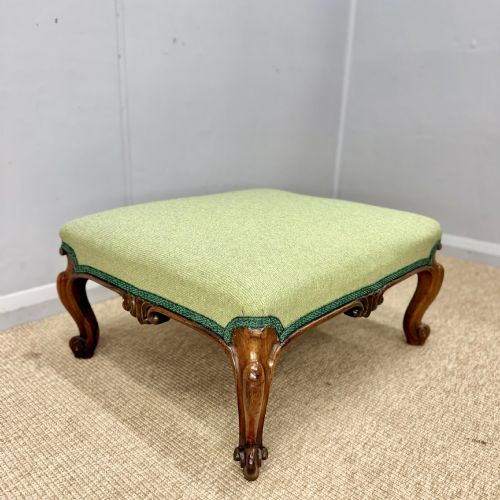


Rococo Revival Carved Footstool
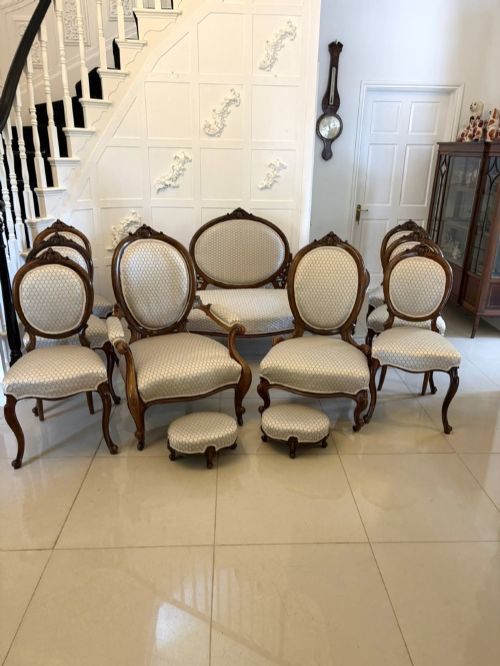
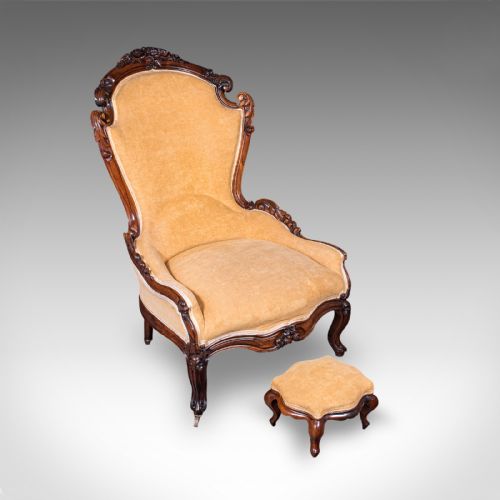
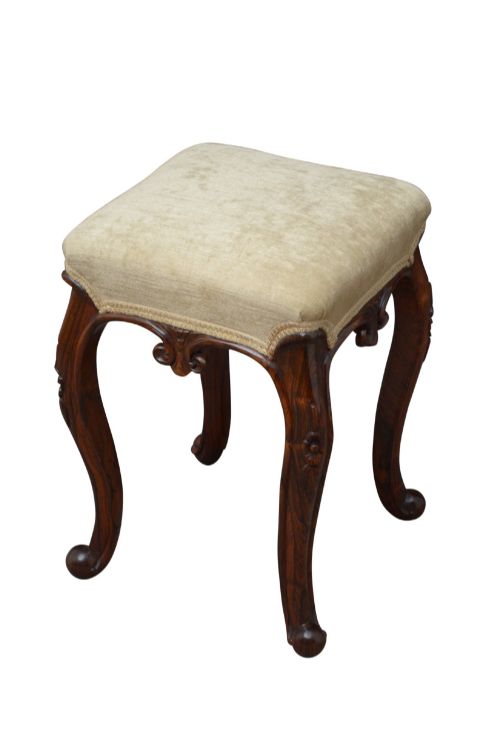
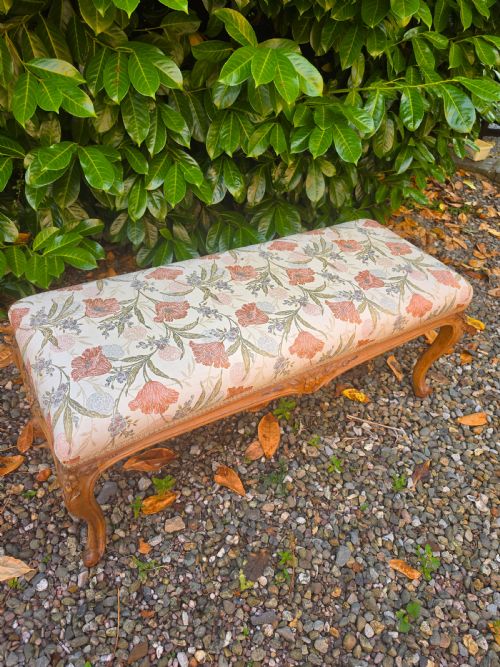
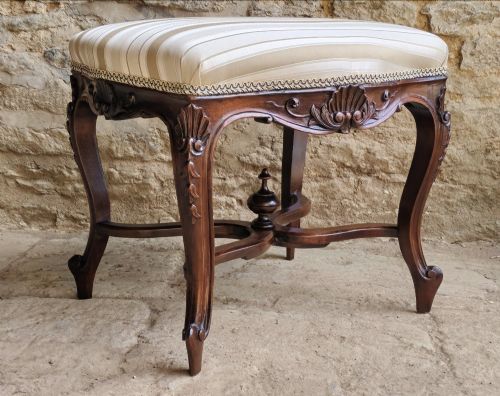
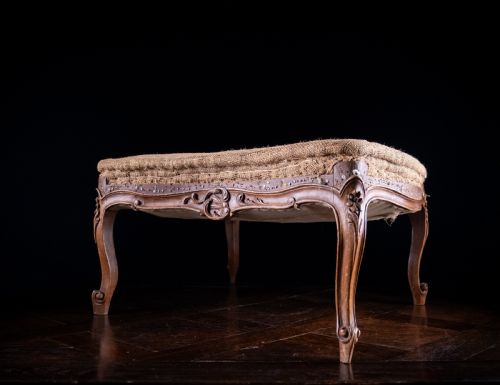
These carved footstool examples bring opulent Rococo Revival character to a room, offering low seating and foot support through expressive serpentine woodwork.
Rococo Revival Carved Footstool
A rococo revival carved footstool sits low to the ground and borrows heavily from mid eighteenth century French design, drawing on Louis XV style curves and ornamentation. These items serve as fireside accessories, dressing table seats or centre stools depending on their scale.
Most examples found on this page hail from the Victorian era and the nineteenth century, reflecting a strong British and European appetite for flamboyant, ornate domestic furniture. Makers shaped these low seats to complement heavy saloon and drawing room decor.
Materials and construction
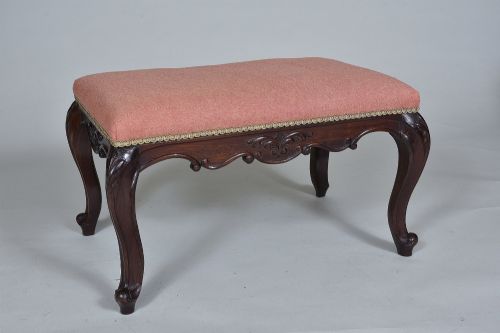
Cabinets and frames rely heavily on dense hardwoods like walnut, mahogany and rosewood, which accepted deep, flowing relief carving without splitting. Beech and gilt finishes also appear, providing the pale or gilded surfaces typical of Louis XV revival aesthetics.
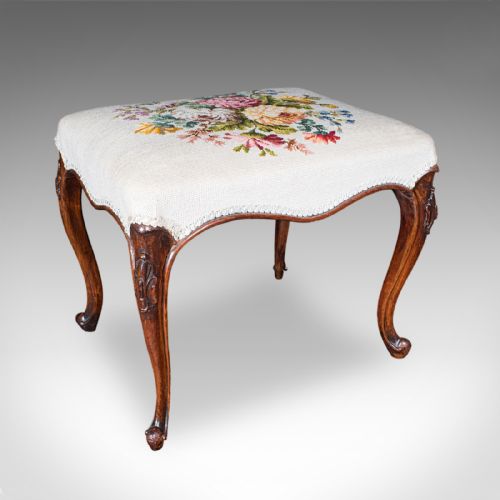
Upholstery forms a vital part of the construction, employing traditional textile coverings such as velvet, wool, needlepoint and fabric secured over padding. Brass components occasionally supplement the timber frames for castors or structural accents.
Rococo Revival Carved Footstool Retail Price Guide 2026
Typical asking prices for rococo revival carved footstool among the pieces listed under this phrase on Sellingantiques today, from the lower quarter to the upper quarter. They describe what is for sale here now, not the wider market.
Listings span the nineteenth century, showcasing Victorian walnut, rosewood and mahogany frames paired with needlepoint, velvet and textile upholstery.
Distinctions in quality
Quality rests primarily on the depth and crispness of the carved woodwork, where sharper, more fluid floral and scroll motifs distinguish finer items from simpler, softer moulding. The choice of timber also elevates a piece, with figured walnut and rich rosewood commanding greater visual presence than basic mahogany or beech.
Proportion and stance dictate the overall architectural success of the stool, particularly how gracefully the cabriole legs sweep downwards to the feet. Substantial scale and balanced framing separate standard utilitarian seating from the grander salon pieces produced in the nineteenth century.
The Rococo Revival Carved Footstool Glossary
- Cabriole leg
- A furniture leg featuring a double curve, bulging outward at the top and tapering inward toward the foot. This shape mimics animal limbs and forms a defining feature of Rococo Revival design.
- Needlepoint
- A type of canvas work embroidery utilised historically for durable upholstery. It provides intricate pictorial or geometric surface patterns on traditional stools.
- Centre stool
- A larger freestanding stool finished on all sides for placement in the middle of a room rather than against a wall. These items function as versatile saloon seating.
- Gilt
- A thin layer of gold leaf or paint applied to a wood or metal surface. This technique creates a luminous, reflective finish popular in ornate nineteenth century revival styles.
Rococo Revival Carved Footstool: Frequently Asked Questions
How do I use a footstool in a modern room?
Place a rococo revival stool beside a low armchair to serve its original function as a comfortable footrest during fireside relaxation.
Alternatively, position a larger centre stool in the middle of a dressing room or hallway where its carved timber and upholstery can be appreciated from all angles.
How can I tell a Victorian piece from an older one?
Examine the timber framing and secondary woods, as nineteenth century makers utilised specific milling techniques and machinery standards distinct from earlier periods. The presence of dense Victorian walnut or rosewood combined with classic revival upholstery gives away its nineteenth century origin.
Look closely at the style of the carving, which during the Victorian revival period tended to be heavier and deeper than authentic eighteenth century prototypes. Machine assistance in shaping internal components also becomes apparent upon closer inspection of the frame joints.
What fabrics were originally used for upholstery?
Period pieces frequently utilised heavy textiles, including patterned velvet, woven wool and hand worked needlepoint. These materials offered both durability and the tactile richness favoured by Victorian decorators.
Many surviving pieces have been newly upholstered in matching historical fabrics to preserve their traditional appearance while ensuring clean everyday use.
Are these stools sturdy enough for daily sitting?
Solid hardwood frames built from walnut, mahogany or rosewood provide substantial structural integrity capable of supporting daily use as seats or footrests. The thick cabriole legs distribute weight evenly across the base.
Buyers should check that the joints remain tight and the internal webbing supports the upholstery firmly. Properly maintained nineteenth century frames withstand regular weight without difficulty.