
19th Century Carved Footstool
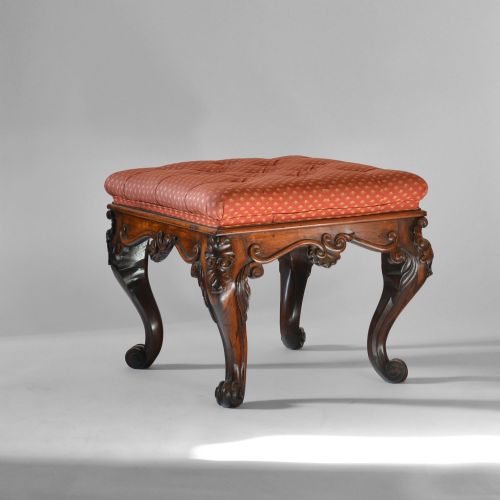
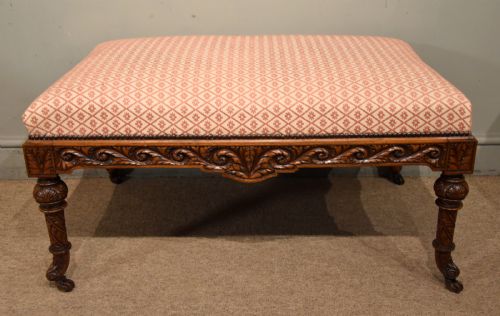
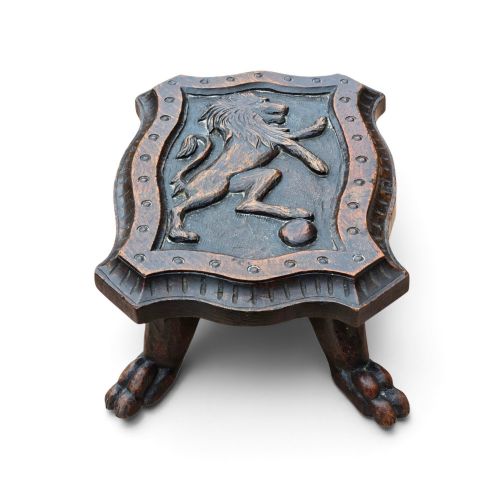
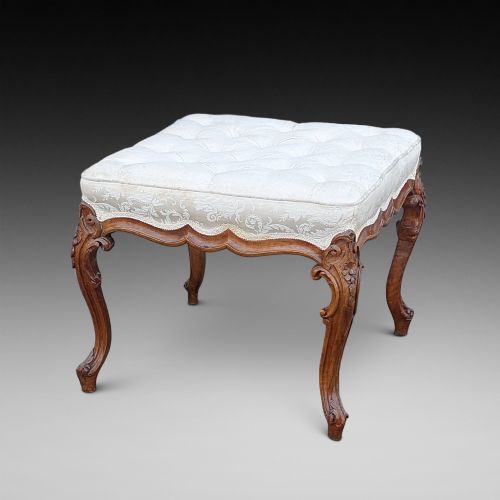
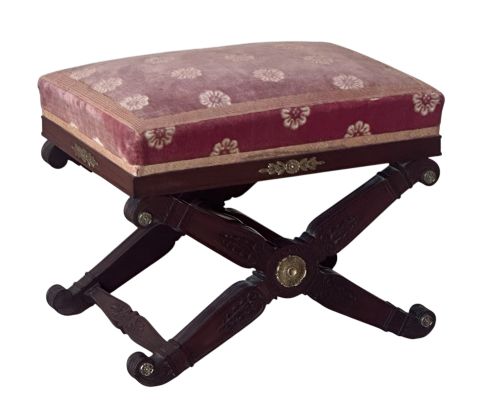
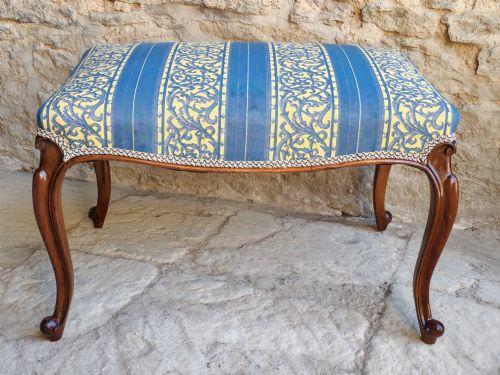
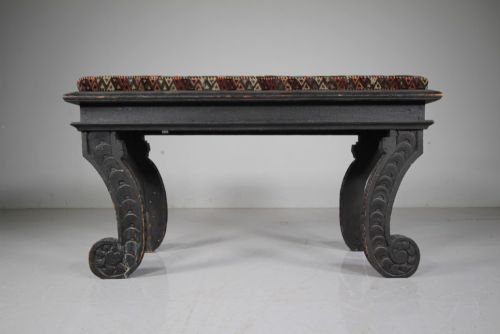
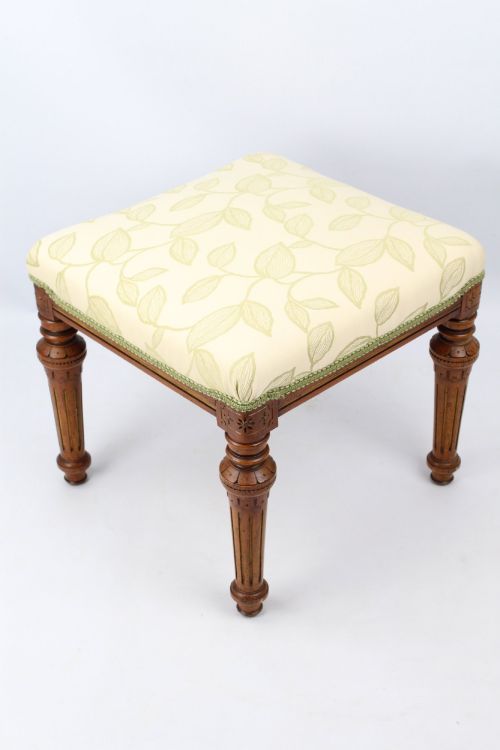
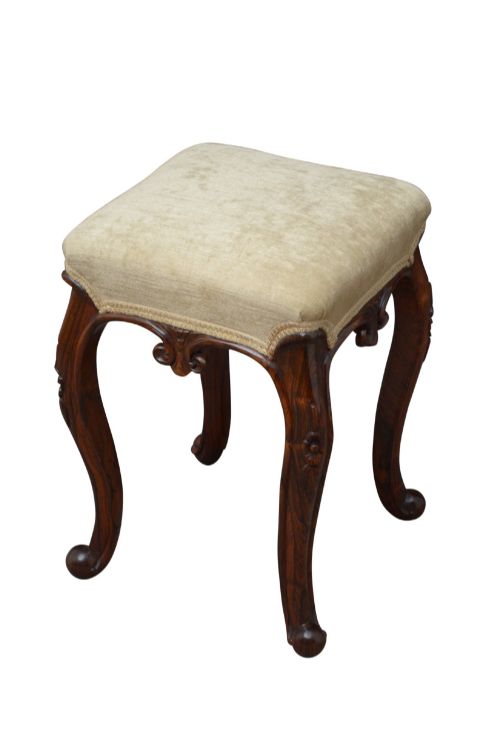
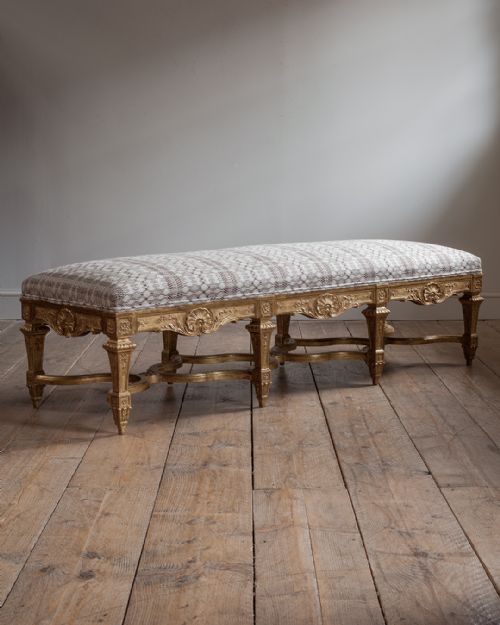
These pieces are a 19th century carved footstool, offering solid timber frames, detailed carving, and period upholstery suited to traditional interiors.
19th Century Carved Footstool
A 19th century carved footstool covers low seating pieces designed to support the feet or serve as short seats beside a fireplace, dressing table, or armchair. The selection spans the Georgian, Regency, and Victorian eras, alongside revivals drawing on Queen Anne, Louis XIV, and Rococo styles.
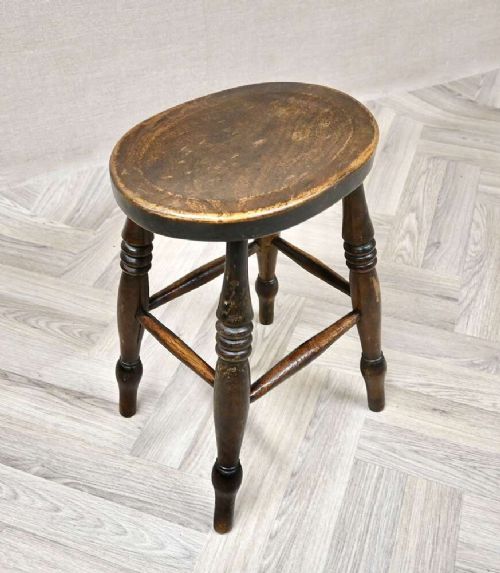
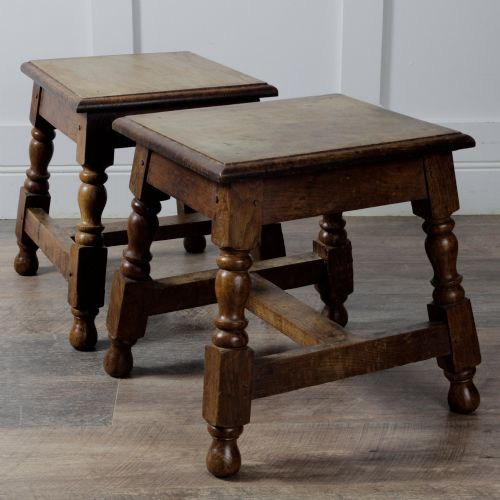
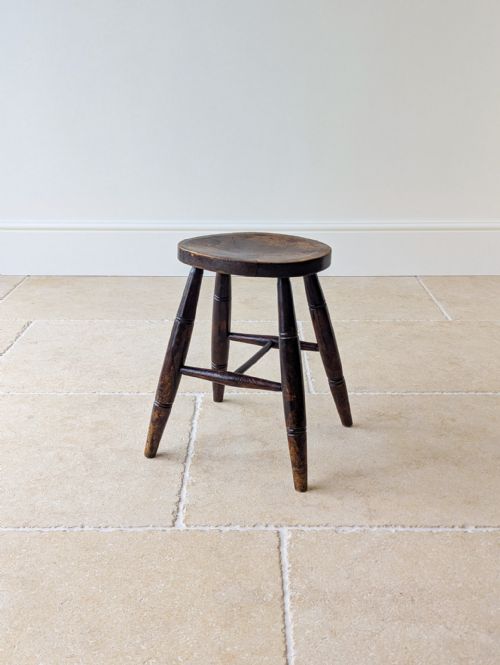
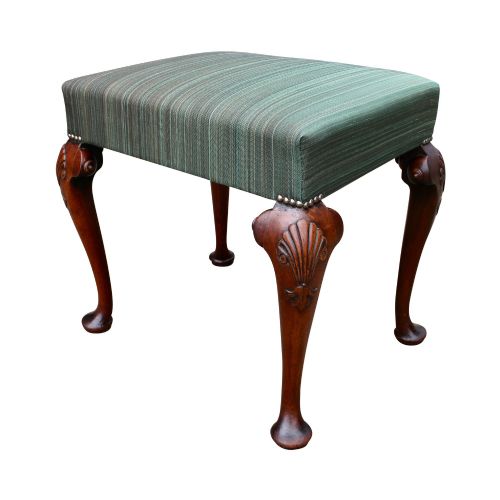
Most items appearing in this group are constructed from dense hardwoods like walnut, mahogany, and rosewood, often resting on cabriole legs, turned supports, or scroll feet. Vernacular oak and pine country stools also appear, alongside giltwood and painted Continental examples.
Makers produced these forms in various configurations, including piano stools, dressing stools, and larger hearth stools. Upholstery ranges from plain textiles and velvet to needlework and modern replacement fabric over traditional webbing or horsehair stuffing.
Materials and construction
Cabinetmakers built these frames using traditional joinery such as mortise and tenon joints, dovetails, and corner blocks to ensure stability under daily weight. Timbers such as walnut, mahogany, and oak were selected for their grain and structural strength, then shaped by hand with chisels and gouges to create relief motifs, fluting, or cabriole curves.
Surface decoration frequently combined carved wooden elements with applied gilding, ebonising, or clear polishing to highlight the natural figure of the wood. Upholstered tops relied on supportive internal webbing, coil springs in later Victorian pieces, and stuffing materials secured beneath fabric and decorative brass studding.
Listings feature walnut, mahogany, oak, rosewood, and giltwood across Georgian, Regency, and Victorian periods.
Quality factors
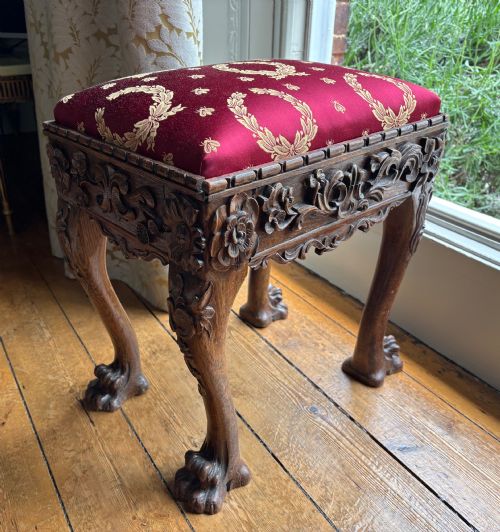
The standard of a 19th century carved footstool rests on the crispness and depth of the hand-carving rather than shallow machine routing. Crisp execution in foliage, scrollwork, or animal motifs indicates skilled workshop production.
Structural integrity depends on tight joints and the selection of uncompromised timber. Frames retaining their original blocking and unthinned legs demonstrate superior survival compared to pieces requiring extensive timber grafting or replacement stretchers.
LOIDRAULT FRERES PARIS
The 19th Century Carved Footstool Glossary
- Cabriole leg
- A furniture leg that curves outward at the knee and tapers inward to an ankle, finishing in a pad, claw-and-ball, or scroll foot. This profile derives from animal limbs and gained popularity during the 18th century before recurring in Victorian revival furniture.
- Giltwood
- Timber coated with a thin layer of gold leaf over a prepared gesso ground. It appears on decorative Continental and English salon pieces.
- X-frame
- A seating support formed by intersecting diagonal timbers creating an X shape when viewed from the side. This ancient structural form returned in Regency and mid-century revival designs.
- Hearth stool
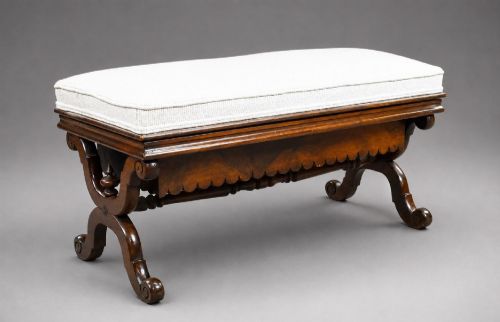
- A long, low seat positioned near a fireplace for warming feet or sitting close to the fire. These pieces usually feature generous padding over a sturdy wooden frame.
- Goncalo Alves
- A dense exotic hardwood with distinct dark brown and yellowish-brown markings, sometimes termed zebrawood. Cabinetmakers utilised it for decorative banding and occasional small furnishings.
19th Century Carved Footstool: Frequently Asked Questions
How do I date a footstool?
Dating relies on timber choice, secondary woods, and stylistic clues matching documented design periods. Examining the joinery and underside construction helps confirm whether a piece dates to the early Georgian era or later Victorian revivals.
Changes in upholstery techniques, such as the introduction of coil springs in the 19th century, also provide a reliable timeframe for manufacture.
Were these stools used daily?
Most of these pieces served practical functions in drawing rooms, dressing rooms, and parlours. They supported tired feet after long journeys or served as low seats near hearths and piano benches.
Because they experienced frequent movement around the room, sturdy frame construction was essential for survival.
Can I reupholster an antique stool?
Reupholstering is common and often necessary to preserve the wooden frame while adapting the textile to modern interiors. Traditional materials like horsehair and webbing can be retained or replaced depending on the condition of the inner stuffing.
Choosing a fabric that suits the period style helps maintain the visual balance of the carved wooden base.
What is the difference between walnut and mahogany frames?
Walnut frames tend to show softer honey tones and prominent grain patterns, frequently associated with Queen Anne and Victorian revival pieces. Mahogany offers a deeper reddish-brown hue with a dense, straight grain favoured in Georgian and Regency designs.
Both timbers provide the structural rigidity required for carved cabriole legs and decorative scrollwork.