
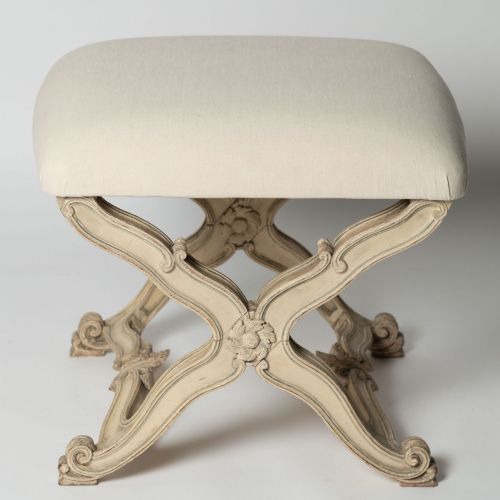
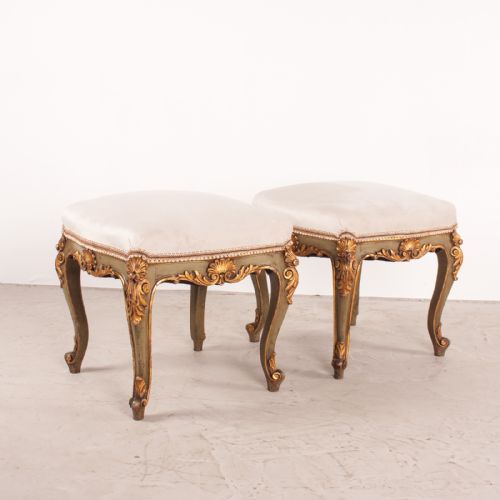
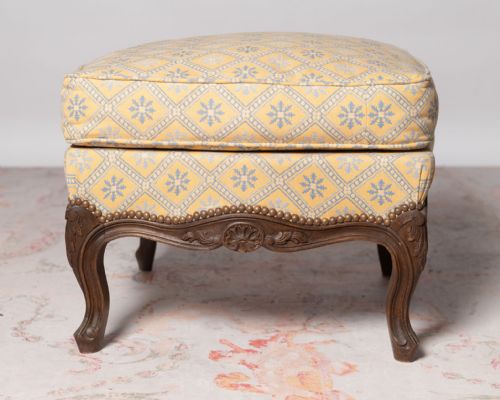
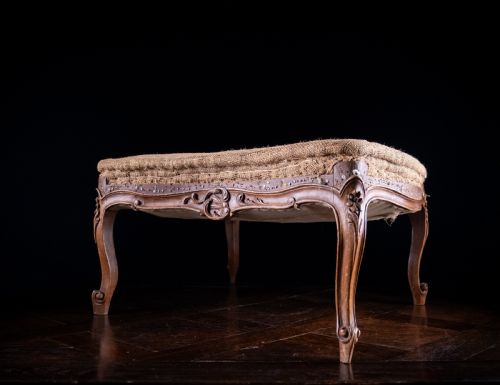


Louis XV Footstool
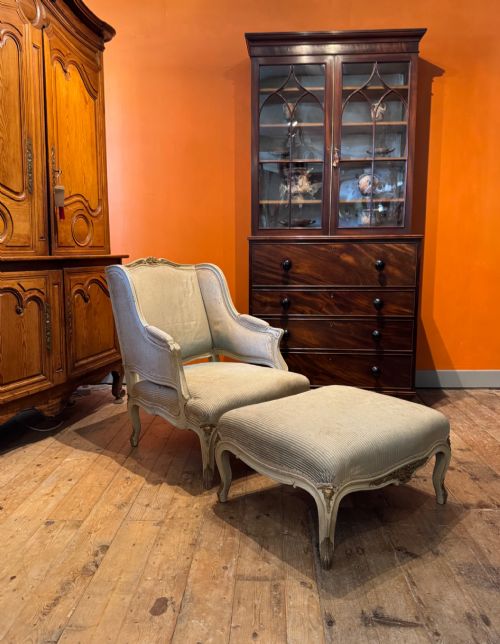
A louis xv footstool brings the flowing curves and carved flourish of rococo design directly to the floor of a drawing room.
Louis XV Footstool
A louis xv footstool embodies the asymmetrical ornamentation and cabriole legs characteristic of eighteenth-century French design, though most surviving examples date from later revival periods. When you search for a louis xv footstool, you encounter low seating forms designed to accompany armchairs or serve as standalone resting places.
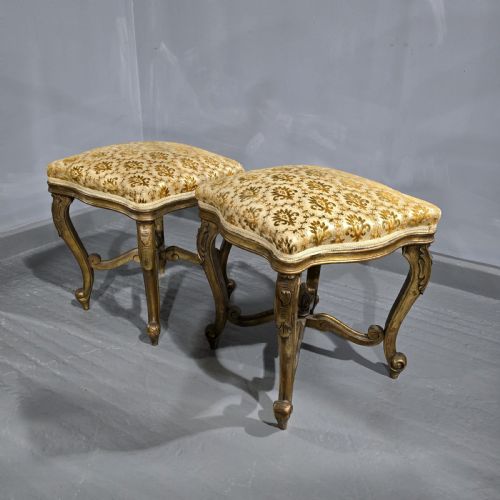
The pieces appearing on this page span the nineteenth and early twentieth centuries, featuring nineteenth-century interpretations alongside works from the eighteen-seventies, eighteen-eighties, and nineteen-thirties. You will find single examples and matched pairs created in the French rococo and provincial styles.
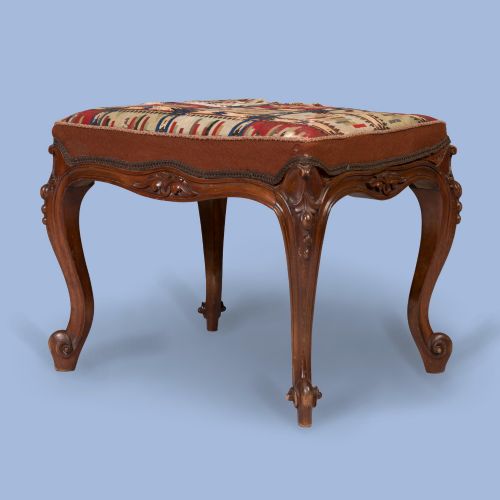
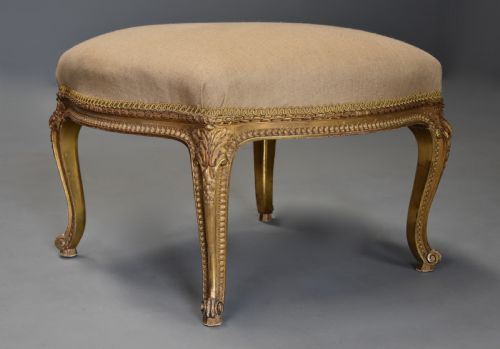
Makers often drew inspiration from classic forms, producing walnut, beech, and giltwood frames designed to hold needlework, tapestry, or plain linen upholstery. These low stools range from compact footrests to substantial centre stools and variations paired with larger chaises longues.
Materials and construction
Frames rely predominantly on hardwoods such as walnut and beech, chosen for their ability to hold intricate hand-carved details along the rails and cabriole legs. Many examples receive a giltwood finish, painted surface, or parcel gilding to highlight the woodwork.
Upholstery traditionally employs fabrics like linen, needlework, and tapestry stretched over webbing and stuffing. Some pieces arrive ready for new upholstery, while others retain their original painted or gilded surfaces.
Several footstools arrive entirely naked of fabric, patiently waiting in their bare wooden bones for an ambitious upholsterer to choose their next outfit.
Markers of quality
The distinction between standard production and finer work lies in the depth and crispness of the hand-carving on the wooden frame. Superior examples display fluid, continuous lines without mechanical stiffness in the floral motifs and scrollwork.
Original finishes and patination elevate a piece significantly, especially where genuine period gilding or authentic early paint remains intact. Substantial scale and the presence of makers' stamps, such as nineteenth-century Parisian marks, denote higher workshop standing.
LOIDRAULT FRERES PARIS
The Louis XV Footstool Glossary
- Giltwood
- Wood coated with gold leaf or a gold-coloured metallic preparation. This finish appears frequently on formal nineteenth-century revival seating.
- Cabriole leg
- A furniture leg that curves outward and then tapers inward, ending in a pad or scroll foot. It mimics the natural shape of an animal's leg and defines rococo styling.
- Duchesse brisée
- A chaise longue split into two or three parts, typically comprising an armchair and one or more footstools or benches. It allows the user to recline fully.
- Needlework
- Hand-stitched textile work used historically for covering seat furniture. It often depicts floral or pastoral scenes.
- Parcel gilt
- A decoration method where only specific carved elements of a painted or stained wooden surface are gilded. It creates contrast against the base colour.
Louis XV Footstool: Frequently Asked Questions
What is a louis xv footstool?
A louis xv footstool is a low, decorative seat featuring the characteristic cabriole legs and flowing scrollwork of the French rococo style. Most examples found today date from nineteenth and early twentieth-century revival periods.
These pieces were built to complement armchairs or serve as independent low seating in formal rooms, constructed from carved woods like walnut and beech.
How do I identify a revival period piece?
Revival pieces from the nineteenth and early twentieth centuries often employ machine-sawn timber framing beneath hand-carved surface details. Examining the construction joints and wear patterns helps distinguish them from earlier items.
Makers working in the eighteen-eighties and nineteen-thirties frequently reproduced eighteenth-century French proportions using local European hardwoods.
How were these stools used historically?
These stools served primarily as footrests positioned before armchairs, or as low seating in boudoirs and drawing rooms. Some larger examples functioned as centre stools or components of modular daybeds.
Their compact size allowed them to be moved easily around a room to accommodate guests or provide comfort during extended periods of sitting.
Are these stools suitable for daily modern use?
Stools with sturdy hardwood frames and sound upholstery support regular domestic use as footrests or occasional seats. Pieces sold ready for upholstery require new webbing and fabric before heavy use.
Giltwood and painted surfaces benefit from careful placement away from direct sunlight and moisture to preserve the decorative finish.