


Antique Ormolu Candle Stands
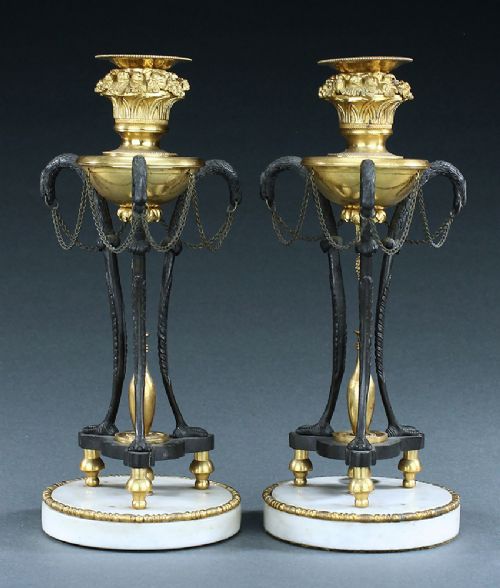
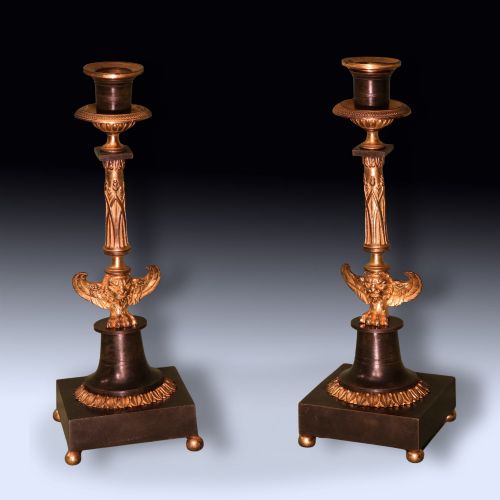
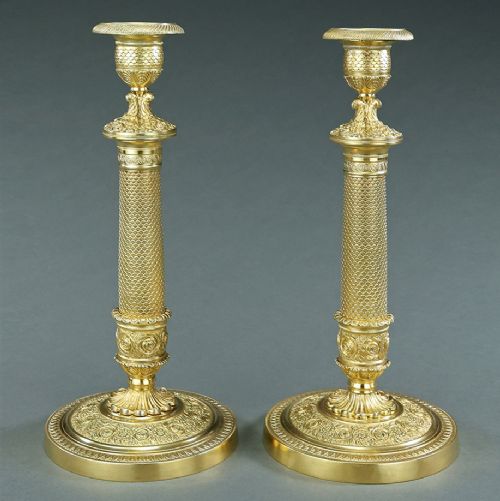
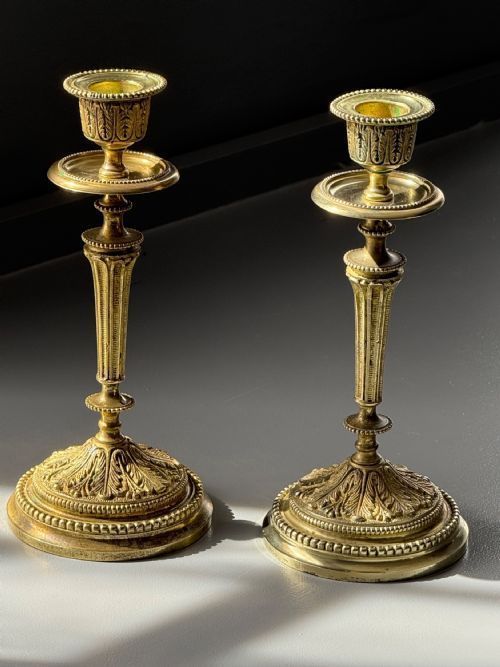
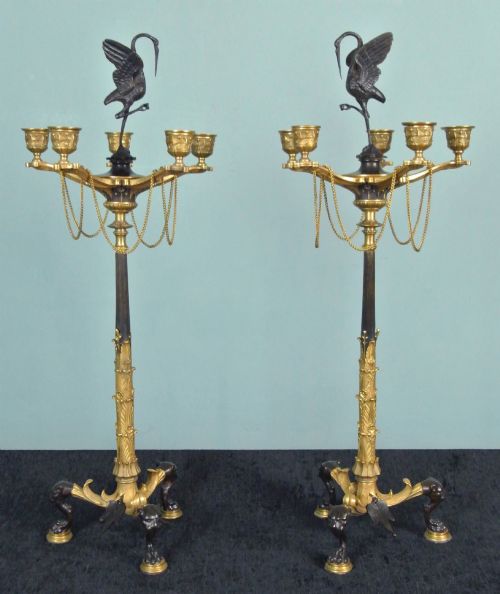
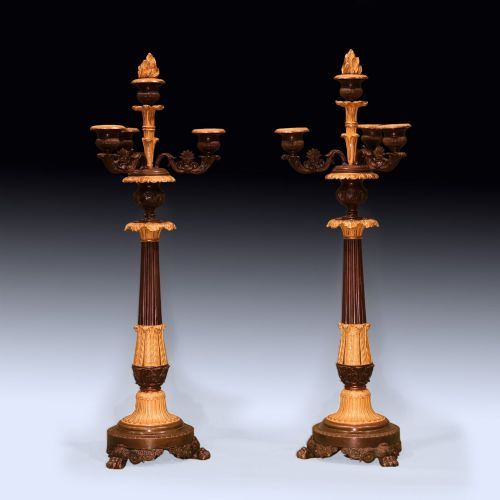
Antique ormolu candle stands bring heavy neoclassical gravitas to a mantelpiece, combining mercury-gilt metal with dark patinated bronze.
Antique Ormolu Candle Stands
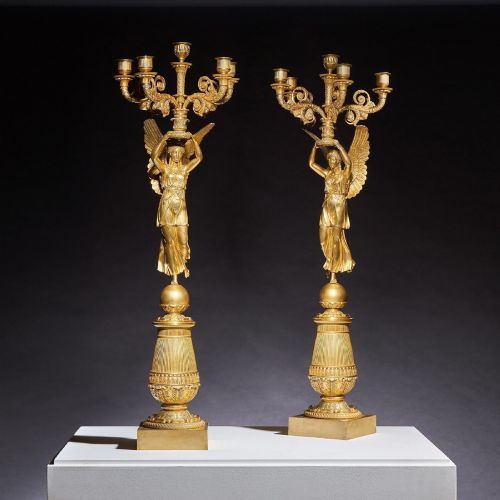
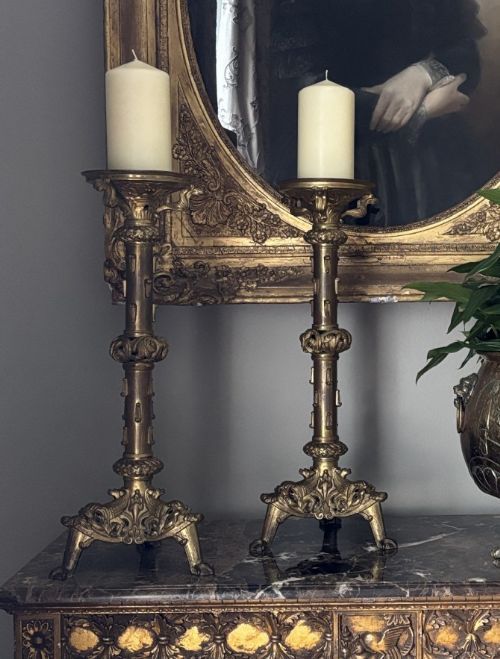
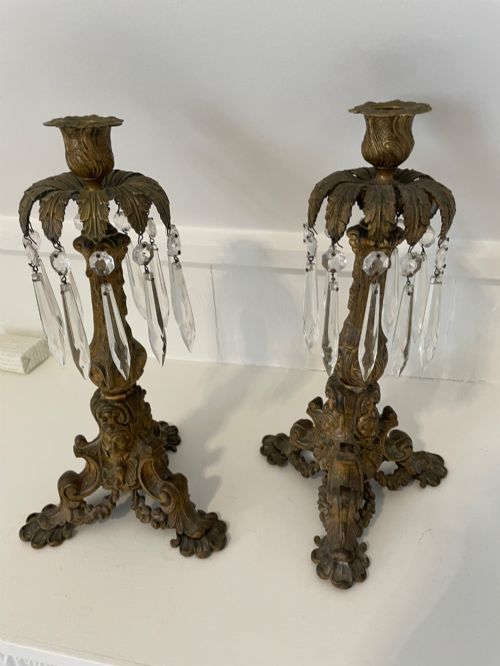
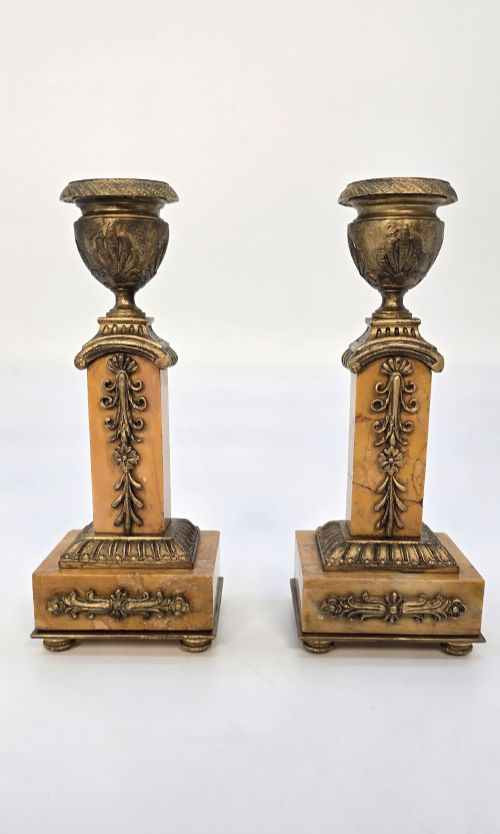
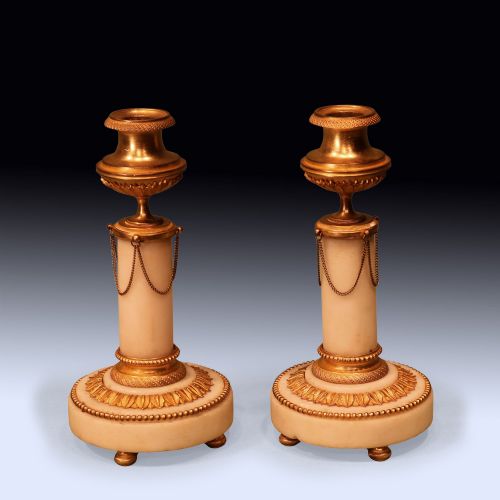
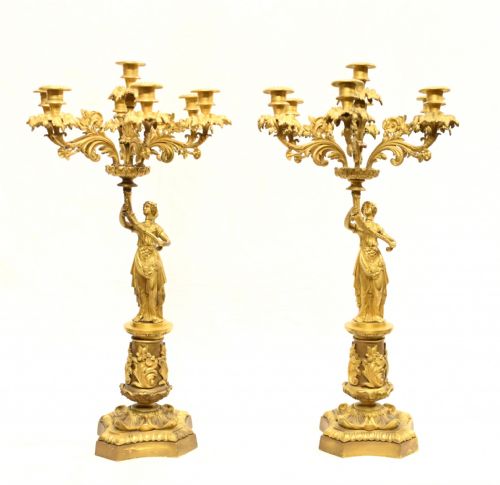
The material vocabulary centres on gilt bronze paired with contrasting patinated bronze, often mounted on marble, onyx, or porcelain bases. Forms range from simple tapered shafts to elaborate figural compositions involving putti, dolphins, and caryatids. French workshops dominate the selection, spanning styles from Louis XVI revival to heavy nineteenth-century rococo.
Materials and construction
The manufacture of these pieces relies on the union of cast bronze and mercury gilding, a process known as ormolu. Artisans chased the cast components by hand with fine chisels and matting tools to create varied textures before applying the gold amalgam. Many pieces combine this bright gilding with dark patinated bronze to heighten the sculptural contrast.
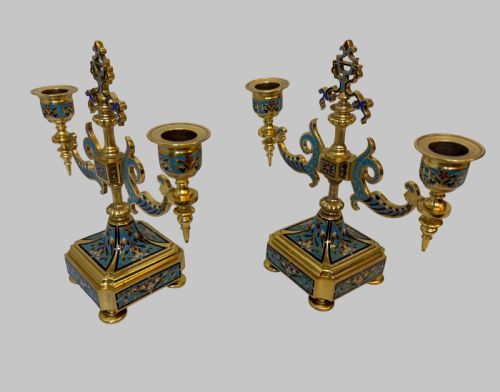
Marble and stone plinths frequently anchor the metalwork, connected by internal threaded rods and bolts. Secondary materials such as champlevé enamel, brass, and porcelain appear in specific Victorian and later nineteenth-century interpretations. The resulting weight is substantial due to the dense metal alloy and stone components.
Antique Ormolu Candle Stands Retail Price Guide 2026
Typical asking prices for ormolu candle stands among the pieces listed under this phrase on Sellingantiques today, from the lower quarter to the upper quarter. They describe what is for sale here now, not the wider market.
Several bronze cherubs spend their centuries holding up candle sockets without ever dropping them.
Assessing quality and execution
The crispness of the hand-chasing on the gilt bronze surfaces distinguishes finer workshop output from standard commercial production. Superior examples retain sharp facial expressions on figural mounts and clean architectural lines on pedestals, whereas lesser pieces exhibit softened details from worn or repeated casting. The depth and durability of the mercury gilding also dictate the visual richness of the metal.
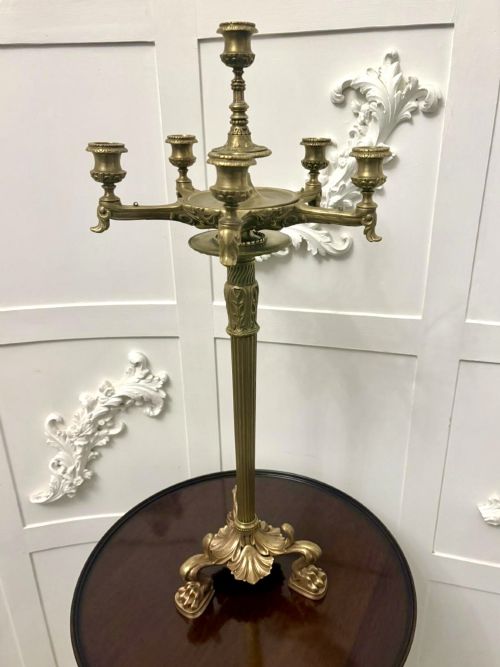
Construction methods reveal the ambition of the maker, particularly in multi-branch candelabra where drip pans, sockets, and arms join securely. The choice and finish of supporting materials, such as figured marble bases or finely turned patinated bronze stems, signal the original cost and design hierarchy of the object.
Pierre Philippe Thomire·Auguste Cain·Rabiat
The Antique Ormolu Candle Stands Glossary
- Ormolu
- A method of applying finely ground gold mercury amalgam to bronze, producing a rich golden finish after heating. This technique creates the characteristic warm lustre seen on nineteenth-century French mounts.
- Patinated bronze
- Bronze treated with chemical solutions to darken the surface to a deep brown or black tone. This dark finish provides a visual counterweight to the bright ormolu elements.
- Candelabra
- A branched lighting fixture designed to hold multiple candles simultaneously. These pieces often feature removable branches allowing them to function as standard candlesticks.
- Champleve
- An enamelling technique where troughs or cells are dug into the metal surface and filled with coloured glass paste before firing. It appears on decorative stems and bases in later Victorian pieces.
- Torchere
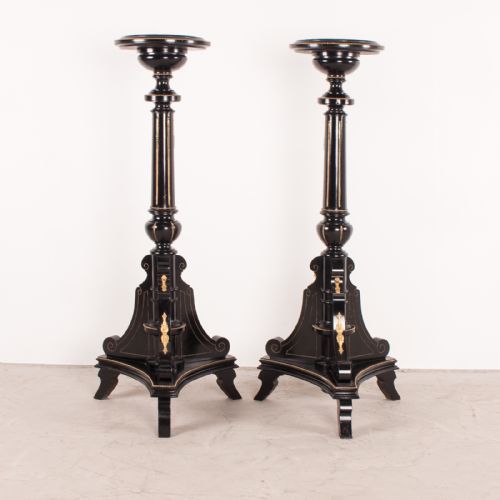
- A tall stand or pedestal originally intended to support a torch or large candle. In nineteenth-century examples, these items often take the form of slender decorative columns.
Antique Ormolu Candle Stands: Frequently Asked Questions
What is the difference between ormolu and brass?
Ormolu consists of a gold amalgam fired onto a bronze base, yielding a deep, complex golden hue that ages with a soft warmth. Brass is an alloy of copper and zinc throughout its entire mass, offering a uniform yellow metal colour that polishes differently.
While brass remains solid metal of one composition, ormolu relies on its surface layer of gold applied to cast bronze. This distinction affects both the weight and the method required for cleaning the object.
How do I distinguish French Empire from Victorian pieces?
French Empire pieces, often dating from the early nineteenth century, lean heavily on strict neoclassical geometry, military motifs, and mythological figures like caryatids. They display rigorous symmetry and precise architectural proportions.
Victorian interpretations tend toward eclectic revivalism, incorporating heavier rococo scrolls, champlevé enamel, or complex floral details. The casting on earlier pieces generally shows sharper chisel work than later mass-produced alternatives.
Were these stands meant for daily lighting?
These decorative objects served primarily as formal table garnitures and display pieces for elite interiors rather than utilitarian light sources. Their gilt surfaces were designed to catch candle flame reflection during evening entertaining.
Consequently, many survive with minimal wear to the candle sockets compared to everyday household items. They formed part of grand decorative schemes on mantelpieces and sideboards.
Why do some candlesticks include marble bases?
Marble bases added structural weight and introduced contrasting geological colours to the metallic composition. White Carrara and dark varieties helped ground the towering bronze figures visually.
This combination of stone and metal was a hallmark of neoclassical design traditions popular across French and Russian workshops.