

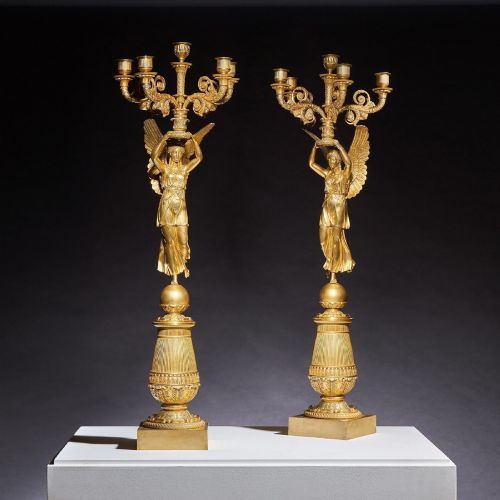
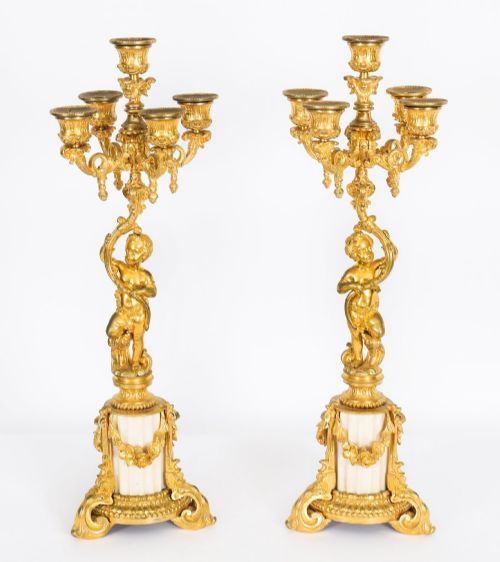
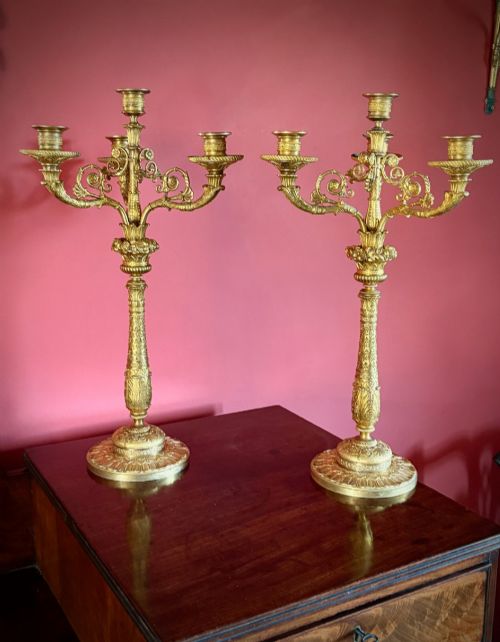
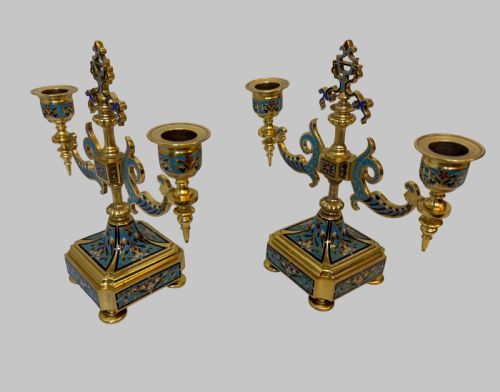
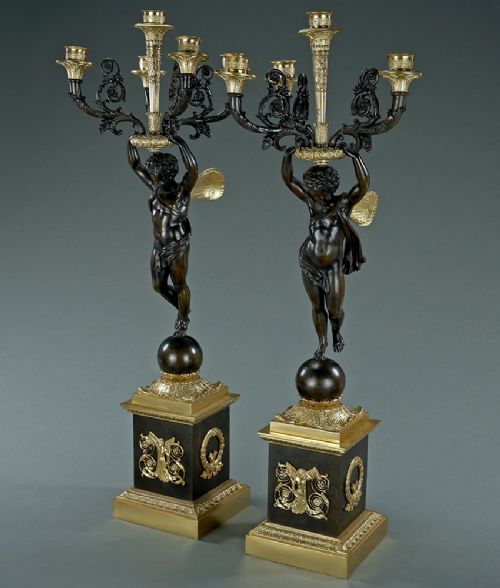


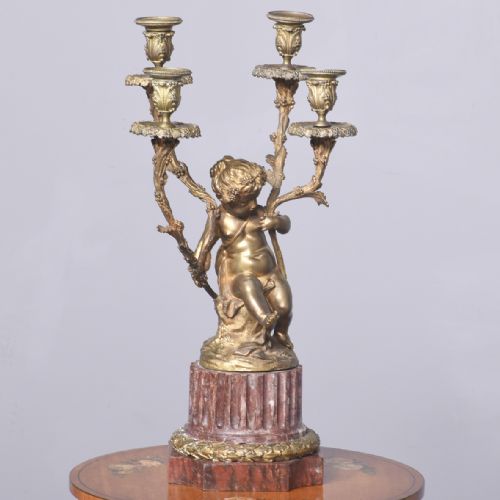


Gilded Bronze Table Candelabra
These gilded bronze table candelabra bring undeniable nineteenth-century French splendour to a room, offering warm light and sculptural presence.
Gilded Bronze Table Candelabra
When searching for gilded bronze table candelabra, buyers encounter nineteenth-century lighting and decorative objects originating largely from France. The selection on this page centres on pairs of candelabra alongside related garniture elements and converted lamps.
Most examples date across the nineteenth century, including specific decades from the eighteen-sixties through to the nineteen-twenties, incorporating styles such as French Empire, Louis Revival, and Rococo Revival. These pieces typically stand upon tables or mantelpieces, holding multiple candles or serving as electrified table lamps.
Materials and construction
The objects combine cast bronze with mercury gilding or ormolu, creating a bright metallic finish that contrasts with patinated bronze elements. Many pieces integrate white marble, such as Carrara marble bases, alongside decorative details in champlevé enamel or cloisonné.
Manufacturing techniques involve detailed metal casting and chasing, often paired with crystal components and enamel work. Bases frequently incorporate contrasting materials like marble to anchor the substantial weight of the cast metal branches.
Gilded Bronze Table Candelabra Retail Price Guide 2026
Typical asking prices for gilded bronze table candelabra among the pieces listed under this phrase on Sellingantiques today, from the lower quarter to the upper quarter. They describe what is for sale here now, not the wider market.
Listings feature periods from the nineteenth century alongside the early twentieth century, incorporating marble, enamel, and gilt bronze materials.
Indicators of quality
Quality depends upon the crispness of the bronze chasing and the depth of the original gilding or ormolu. Finer examples display sharp, well-defined casting on figures, acanthus leaves, and putti without softening of detail.
The integration of secondary materials, such as heavy marble plinths or intricate champlevé enamel panels, distinguishes superior workshop production from simpler commercial output.
Pierre Philippe Thomire·Deniere Paris
The Gilded Bronze Table Candelabra Glossary
- Ormolu
- A method of applying finely ground high-carat gold to a bronze object using a mercury amalgam. This technique creates a rich golden surface characteristic of nineteenth-century French metalwork.
- Champlevé
- An enamelling technique where troughs or cells are carved into the surface of the metal and filled with vitreous enamel before firing. It frequently appears on nineteenth-century decorative bronze items.
- Garniture
- A set of matching decorative objects, typically consisting of a clock flanked by a pair of candelabra or vases designed to sit together on a mantelpiece.
- Patinated bronze
- Bronze treated with chemicals to produce a dark, uniform surface colour. This dark finish often provides visual contrast against bright ormolu mountings.
Gilded Bronze Table Candelabra: Frequently Asked Questions
What periods do these candelabra date from?
The pieces span the nineteenth century and extend into the early twentieth century, with strong representation from the eighteen-sixties, eighteen-eighties, and eighteen-nineties.
Styles range from early French Empire to later revival periods including Louis XV and Louis XVI designs.
How were these items used originally?
They functioned primarily as table or mantel lighting, holding multiple candles to illuminate nineteenth-century interiors.
Many survivors form part of garniture sets paired with matching clocks, or have later adaptation as table lamps.
What materials appear most frequently?
Gilt bronze and ormolu dominate the construction, often combined with patinated bronze, brass, and white marble bases.
Additional decorative elements include champlevé enamel, cloisonné, crystal drops, and enamel detailing.
How do Empire and Rococo styles differ?
Empire style pieces draw on classical motifs with restrained symmetry and military or ancient Roman references. Rococo revival designs feature flowing asymmetrical curves, naturalistic foliage, and scrolling forms.