



Gilt Bronze Mantel Candelabra
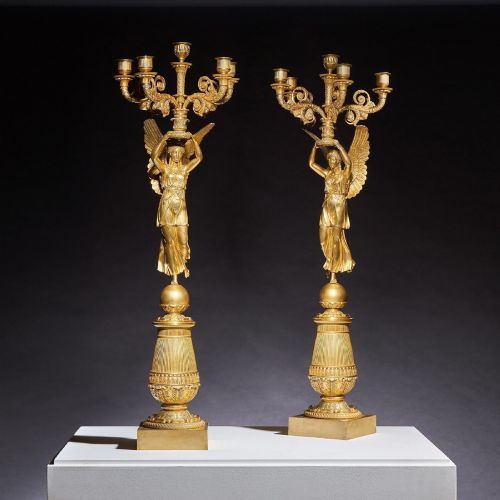
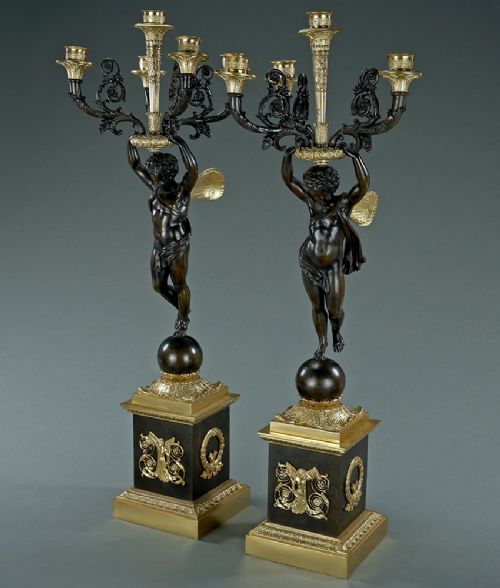
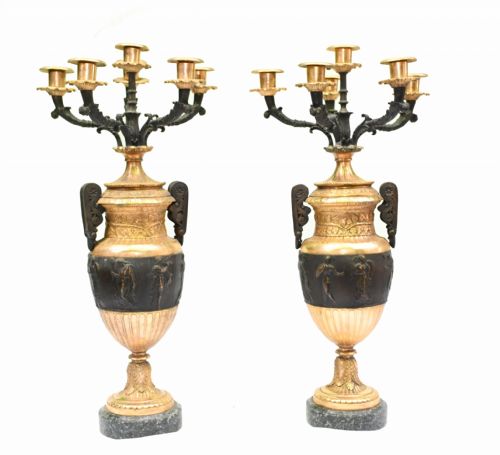
Gilt bronze mantel candelabra bring the warm, reflective lustre of nineteenth-century French and English reception rooms directly onto the mantelpiece.
Gilt Bronze Mantel Candelabra
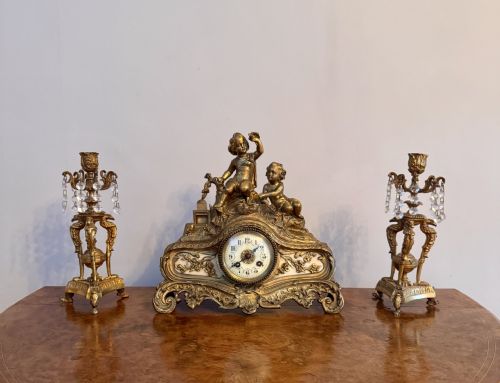
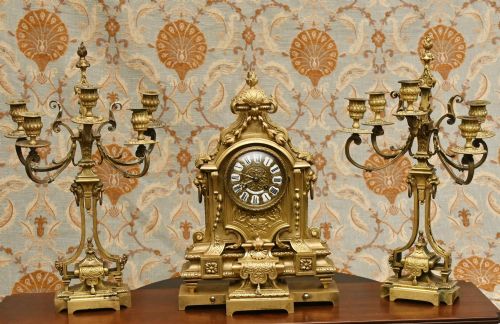
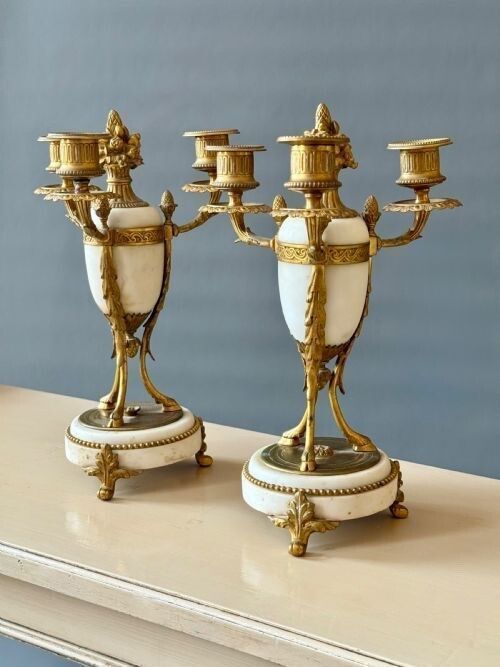
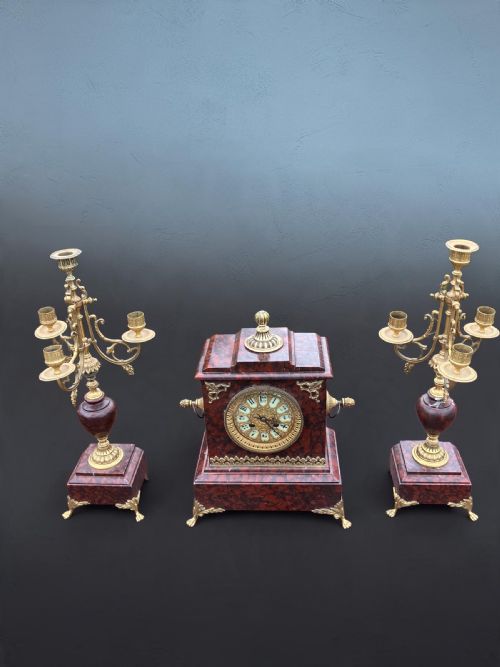
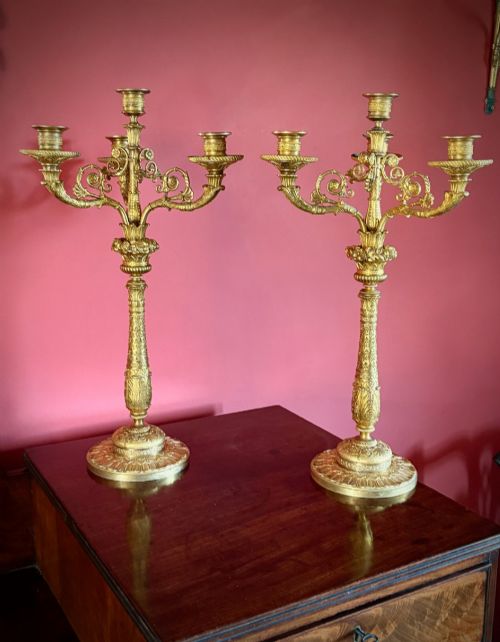
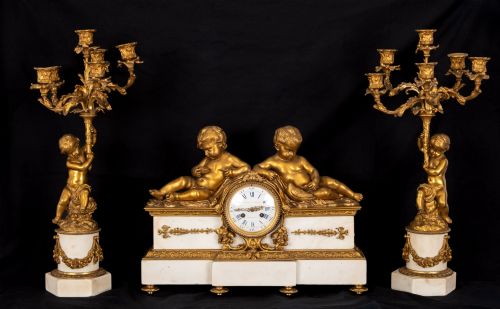
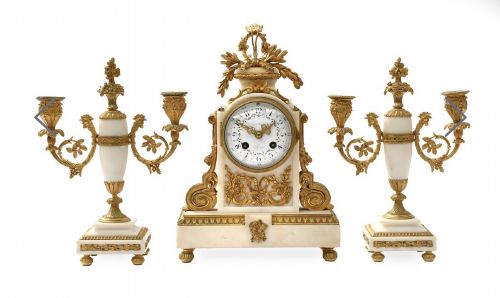
When you search for gilt bronze mantel candelabra, you are looking at ornamental candleholders designed to sit upon fireplace mantels, frequently encountered on this page as part of larger clock garniture sets. These pieces originate predominantly from the nineteenth century, spanning periods such as the Victorian era, Regency, and various revivals of the Louis XVI and Empire styles.
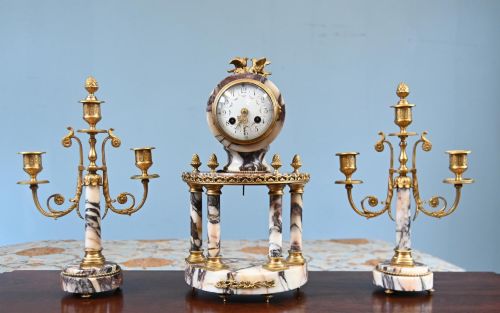
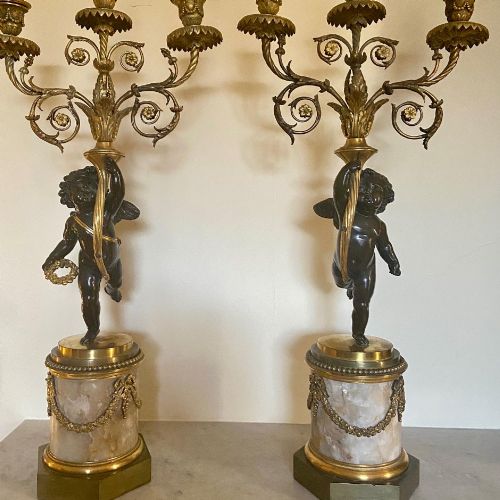
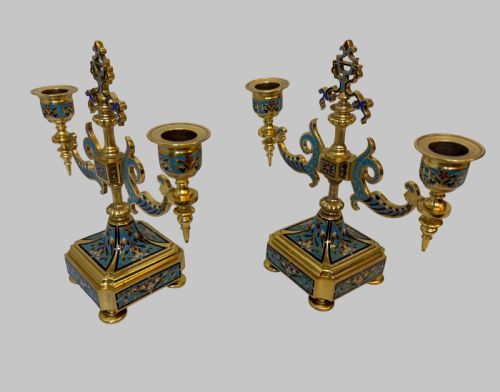
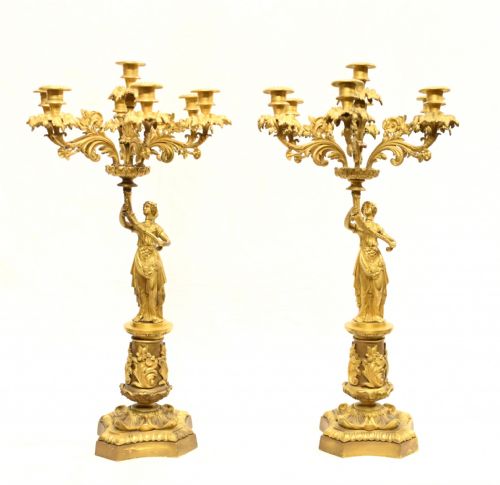
The objects appear singly or as matched pairs, sometimes accompanied by matching mantel clocks to form a unified garniture set. Forms range from simple tiered candleholders to elaborate multi-arm candelabras featuring figural supports, cherubs, and putti.
Originating largely from French workshops and occasionally English makers, these candelabra reflect classical architectural motifs and ornate rococo flourishes. The version you are most likely to meet on this page is a French nineteenth-century pairing combining cast metal with contrasting marble bases.
How They Were Made
Maker workshops constructed these pieces primarily from cast bronze, brass, and patinated metals, applying fire gilding or ormolu to achieve a bright, durable golden surface. Artisans integrated natural and synthetic stones into the designs, using white marble, rouge marble, onyx, slate, and occasionally fluorspar for the plinths and column bodies.
Finer details often incorporate decorative insets such as champlevé enamel, cloisonné, and painted porcelain panels reminiscent of Sevres ware. Individual components were cast separately, chased by hand to sharpen the foliage and figural definition, and then mechanically assembled with threaded pins and nuts.
Gilt Bronze Mantel Candelabra Retail Price Guide 2026
Typical asking prices for gilt bronze mantel candelabra among the pieces listed under this phrase on Sellingantiques today, from the lower quarter to the upper quarter. They describe what is for sale here now, not the wider market.
Bronze putti frequently balance heavy candle arms with expressions of minor exhaustion.
What Varies in Quality
Lesser items rely on shallow, repetitive surface stamping and thin, lacquered brass coatings that dull over time. The integration of auxiliary materials also dictates standing; pieces incorporating hand-painted porcelain or intricate cloisonné enamel alongside substantial white marble demand greater technical proficiency than plain cast metal assemblies.
Pierre Philippe Thomire·Thomas Hope·Henry Dasson·H Luppens Paris
The Gilt Bronze Mantel Candelabra Glossary
- Ormolu
- A technique of applying finely ground high-carat gold amalgam to a bronze object before heating to drive off the mercury. This leaves a durable, rich golden coating characteristic of fine nineteenth-century metalwork.
- Garniture
- A set of decorative objects designed to be displayed together on a mantelpiece, typically consisting of a central clock flanked by matching candelabra or vases.
- Champlevé
- An enamelling technique where troughs or cells are hollowed out of the metal surface and filled with vitreous enamel paste before firing and polishing flush.
- Patinated Bronze
- Metal treated with chemical solutions to produce a controlled dark or greenish surface colour, providing visual contrast against bright ormolu mounts.
Gilt Bronze Mantel Candelabra: Frequently Asked Questions
What is a clock garniture?
A clock garniture is a matched decorative set designed for display on a mantelpiece. It usually pairs a central mantel clock with two matching side pieces, such as candelabra or urns.
These sets created a balanced, symmetrical focal point in nineteenth-century reception rooms and parlours.
How do I clean gilt bronze?
Gilt bronze and ormolu require gentle dusting with a soft, dry cloth to remove airborne particles. Avoid chemical polishes, abrasive cloths, and water, as these can strip or discolour the historic gold surface.
If grime accumulates, professional conservation cleaning is recommended to preserve the delicate metal layer beneath.
How can I tell the period?
Dating relies on stylistic clues, manufacturing techniques, and material combinations recorded in the piece. Nineteenth-century French items often feature cast numbers, specific marble types, and revival motifs reflecting Louis XVI or Empire tastes.
Maker signatures stamped onto the bronze or clock movements provide more precise chronological anchors.
Were these made for candles?
Candelabra and candleholders were originally produced to hold wax or tallow candles for illumination before electric lighting became common. They provided functional light while reflecting candlelight off their gilded surfaces.
Many surviving pieces retain their original socket inserts and brisées designed to catch dripping wax.