


Antique Oak Wall Storage
Antique oak wall storage pieces are practical timber cupboards and boxes designed to hang safely out of the way, bringing period utility directly to modern rooms.
Antique Oak Wall Storage
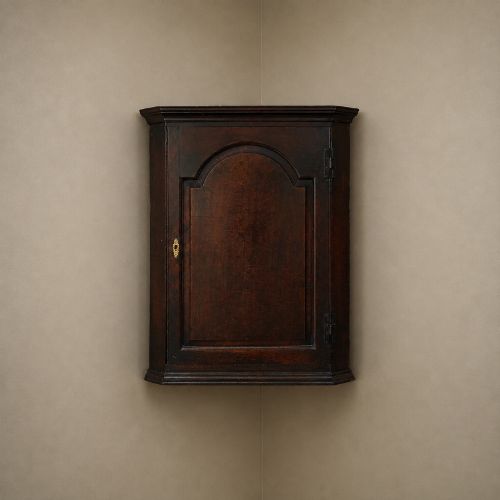
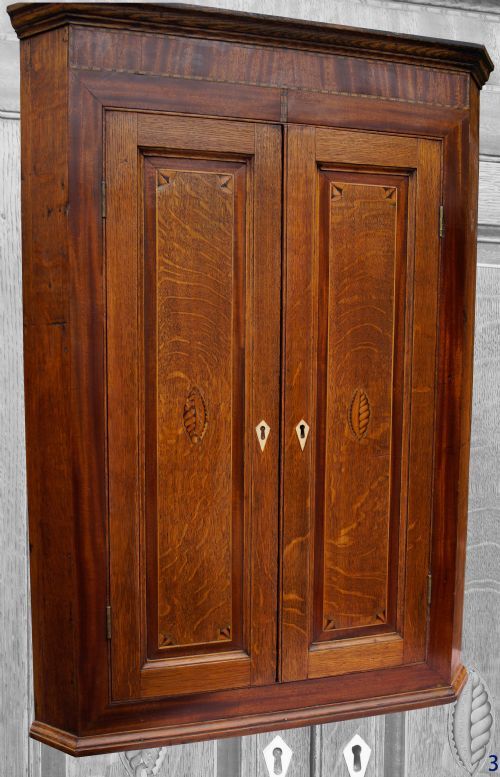
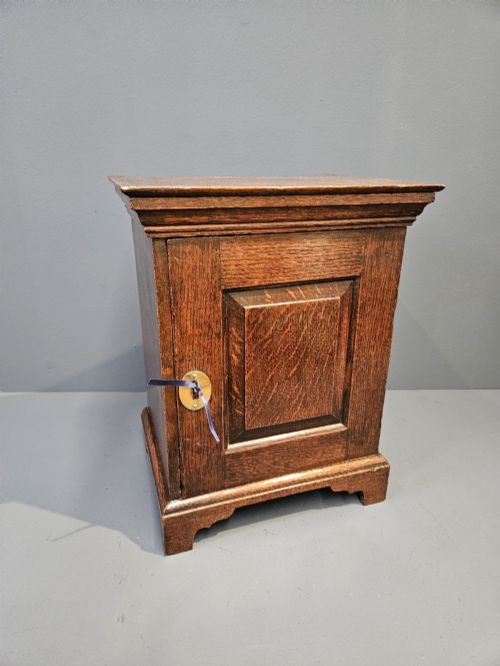
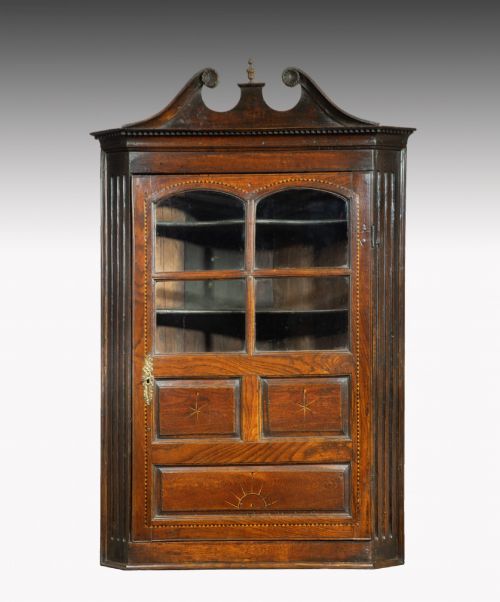
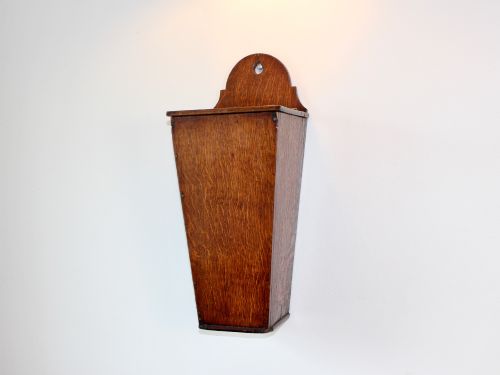
When you search for antique oak wall storage, you encounter a selection of hanging corner cupboards, wall cabinets, spice cupboards, and candle boxes spanning the Georgian and Victorian eras. The most frequent pieces are corner cupboards, constructed to utilise empty room angles and save floor space in smaller domestic interiors.
The material record shows strong representation from the eighteenth and nineteenth centuries, including provincial French and Welsh examples alongside English pieces. These utilitarian items served everyday storage roles in kitchens, parlours, and hallways before finding favour with modern collectors of country furniture.
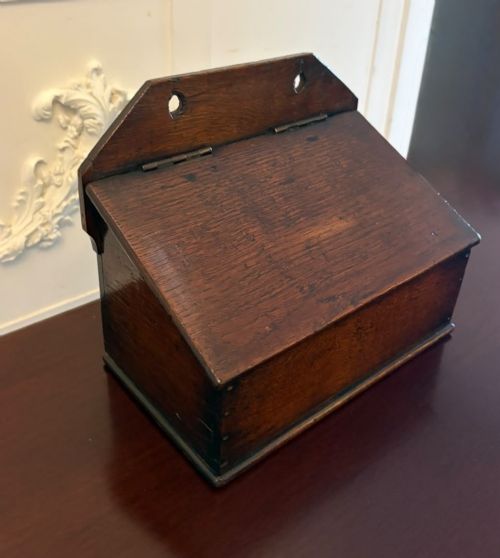
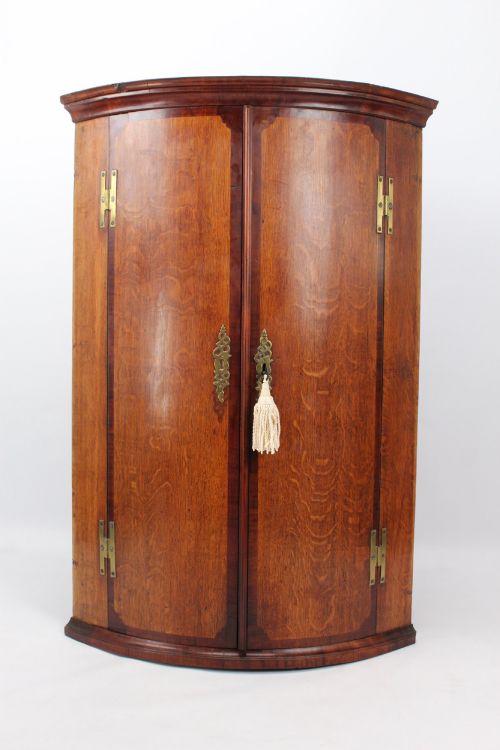
Forms range from simple rectangular hanging boxes with sliding or hinged lids to bow-fronted cabinets featuring raised panels and internal shaped shelves. Secondary woods like pine and fruitwood inlay appear alongside the primary oak timber, indicating regional workshop traditions.
Materials and Technique
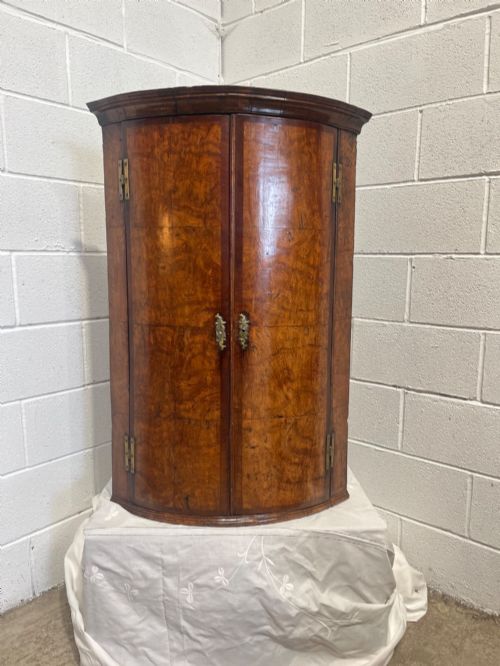
Cabinet makers relied primarily on solid oak, selected for durability and strength, frequently complemented by burr oak veneers or fruitwood inlay to add visual interest to door panels. Iron and brass hardware, including strap hinges and escutcheons, secure the doors and provide structural support.
Construction techniques involve traditional joinery such as pegged mortise and tenon frames and raised panels set into grooves to accommodate timber movement over time. Wall mounting relied on sturdy internal brackets or heavy hanging loops forged from iron.
Listings feature oak alongside iron, brass, and fruitwood inlay across Georgian and Victorian periods.
Distinctions in Quality
The distinction between standard utility items and finer examples rests on the choice of timber and the sophistication of the joinery. Burr oak fronts and thoughtful fruitwood inlay elevate a provincial piece into something visually striking, whilst well-proportioned bow-front doors demand greater technical skill from the maker.
Surface patination and the survival of original brass or iron hardware heavily influence the character of each piece. Cabinets retaining their untouched finish and original shaped internal shelves demonstrate better preservation than those altered by later restorations or modern replacements.
The Antique Oak Wall Storage Glossary
- Corner cupboard
- A cabinet specifically built with a triangular footprint to fit snugly into the corner of a room. These saved valuable floor space in period homes.
- Spice cupboard
- A small wall-mounted box containing multiple internal drawers or small compartments. They were used to store valuable culinary spices and herbs.
- Candle box
- A long, narrow hanging box with a hinged lid designed to store tallow or wax candles safely away from pests. They often feature a shaped backboard with a hanging hole.
- Bow front
- A convex, outwardly curving front surface on a cabinet or cupboard. This shape requires advanced woodworking skill to construct from solid timber.
- Raised panel
- A central wooden panel whose edges are thinned to fit into a grooved frame. This technique allows the wood to expand and contract with humidity without splitting.
Antique Oak Wall Storage: Frequently Asked Questions
How were antique oak wall cupboards used?
These pieces served practical storage functions in period households, holding dried goods, spices, small valuables, or candles safely away from dampness and pests.
Their wall-mounted designs kept everyday items within arm's reach while preserving valuable floor space in cramped kitchens and hallways.
How do I hang an antique wall cupboard safely?
Most pieces feature original internal fixing points or heavy iron brackets designed to bear the weight of the solid oak timber.
Modern installations require appropriate wall anchors matched to the specific plaster or masonry behind the cabinet to ensure secure support.
How do I distinguish Georgian from Victorian pieces?
Georgian examples usually display simpler, heavier construction with pegged joints and unadorned surfaces suited to eighteenth-century domestic life.
Victorian pieces often incorporate Arts and Crafts influences or heavier decorative carving reflecting later nineteenth-century revival styles.
Does oak wall storage suit modern interiors?
The compact footprint of corner cupboards and hanging cabinets makes them ideal for adding period character to contemporary kitchens or bathrooms.
Their natural timber tones and dark patination warm up minimalist white walls while providing genuinely useful hidden storage.