




Antique Oak Looking Glass
An antique oak looking glass brings rich grain and deep carving to a wall, offering both a functional glass and a substantial timber frame.
Antique Oak Looking Glass
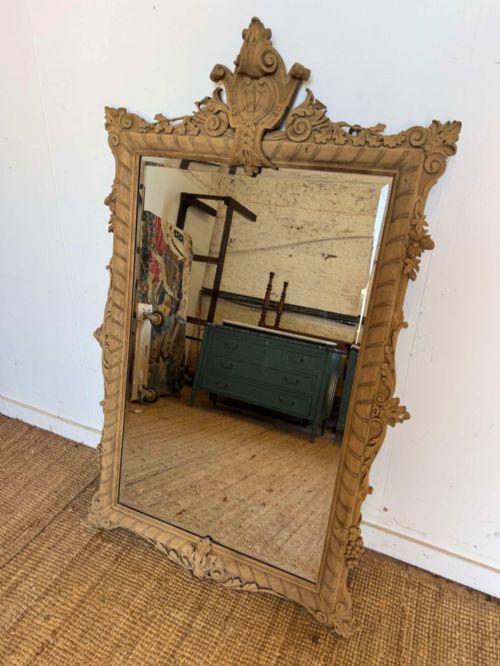
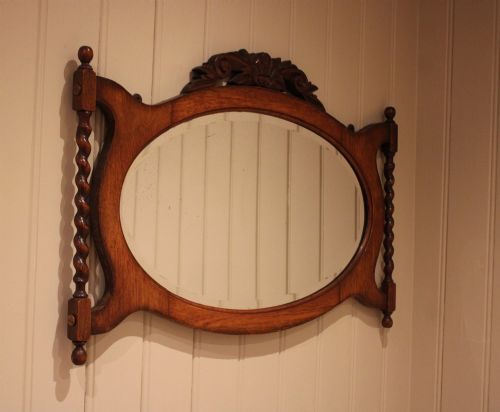
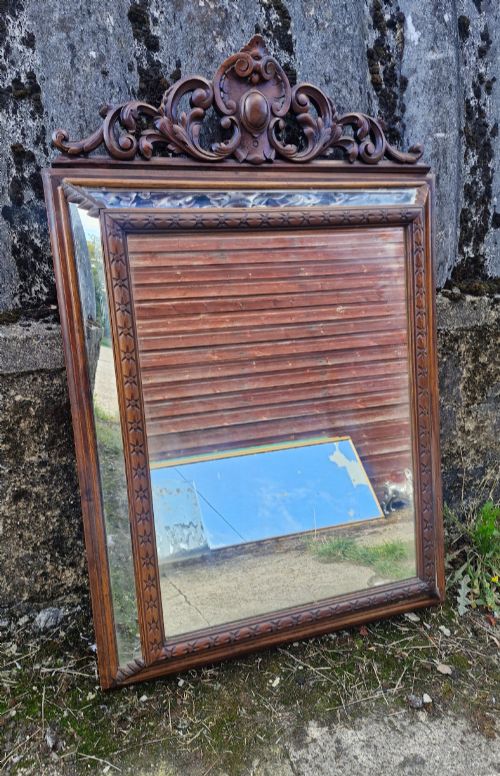
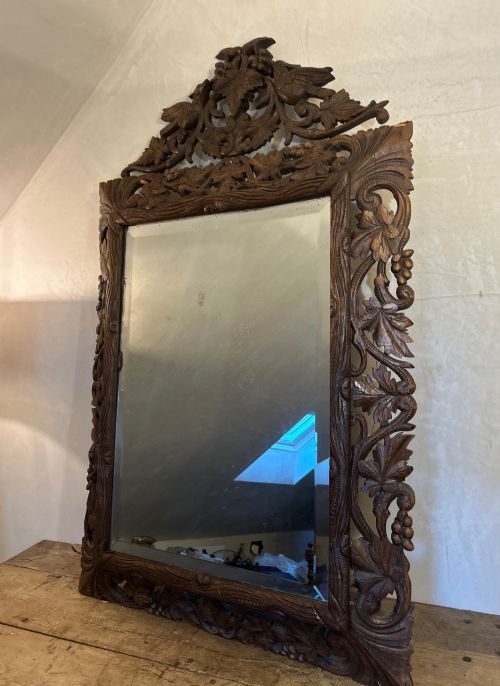
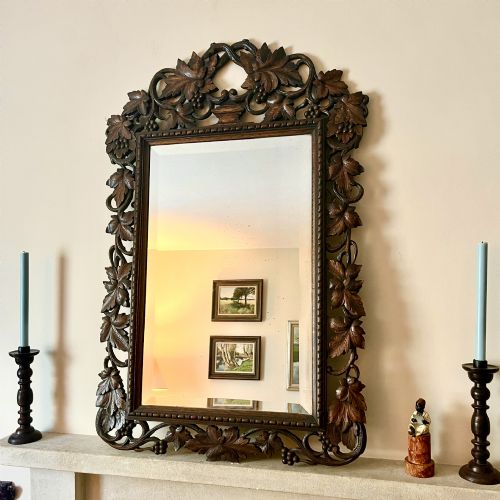
An antique oak looking glass is a wall mirror framed in timber, spanning periods from the eighteenth century through to the early twentieth century. Buyers seeking this phrase encounter wall mirrors shaped by Victorian, Arts and Crafts, and Rococo Revival tastes, alongside Black Forest and French Renaissance Revival examples.
The pieces listed on this page range from large oval frames to heavily carved rectangular plates. Most examples date from the nineteenth century, utilising the natural warmth and durability of oak to anchor the reflective glass within domestic spaces.
Materials and construction methods
The primary construction relies on solid oak, frequently shaped with hand carving to create deep relief decoration around the perimeter. Artisans combined this timber with brass, copper, and gesso to accent the frames.
Makers integrated original glass plates into these wooden housings, sometimes applying gold leaf or painted details to highlight the carved motifs. The joinery and framing reflect the vernacular methods of the period in which they were produced.
Antique Oak Looking Glass Retail Price Guide 2026
Typical asking prices for oak looking glass among the pieces listed under this phrase on Sellingantiques today, from the lower quarter to the upper quarter. They describe what is for sale here now, not the wider market.
Stated styles range from Victorian and Rococo Revival to Arts and Crafts and French Renaissance Revival.
Factors of quality and execution
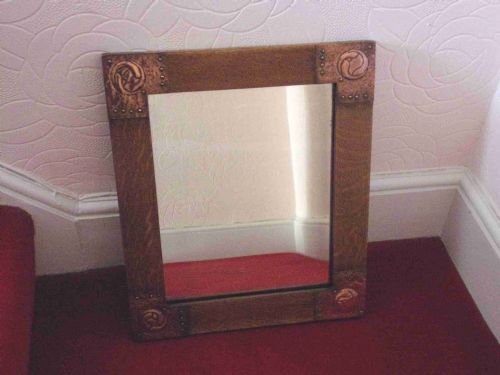
Quality rests upon the depth and crispness of the carved wood work, distinguishing standard production frames from exceptionally ornate pieces. The integration of specialised decorative elements, such as Celtic knot copper work or elaborate gesso ornamentation, elevates the execution.
The preservation of the original glass and the harmonious proportion between the timber frame and the mirror plate dictate the overall merit of the object. Finer examples display meticulous attention to detail across the entire wooden surface.
The Antique Oak Looking Glass Glossary
- Looking glass
- An archaic term for a mirror, specifically one housed within a decorative frame designed to be hung upon a wall or placed on a surface.
- Gesso
- A plaster-like mixture applied to wooden frames as a base for gilding or painting, allowing artisans to create raised decorative details.
- Black Forest
- A regional style originating from the wooded mountain area of Germany, known for dramatic, deep relief carvings of natural motifs in dark timber.
- Arts and Crafts
- A design movement emphasising handcraftsmanship and simple vernacular materials, frequently featuring exposed joints and metalwork accents like copper.
- Rococo Revival
- A nineteenth-century style drawing on eighteenth-century French motifs, characterised by asymmetrical scrollwork, C-scrolls, and organic forms.
Antique Oak Looking Glass: Frequently Asked Questions
How do I hang a heavy oak mirror safely?
These substantial timber frames require secure wall fixings suited to the weight of the wood and glass. Ensure you anchor directly into wall studs or use appropriate heavy-duty cavity wall plugs.
Distributing the weight across two hanging points on the back of the frame provides stability and prevents the mirror from shifting over time.
What is the difference between Victorian and Arts and Crafts oak mirrors?
Victorian examples tend toward heavy ornamentation, deep relief carving, and revivals of historical styles like Gothic or French Renaissance. They prioritize ornate visual impact.
Arts and Crafts pieces focus on honest construction, simpler wooden frames, and often incorporate hammered copper or brass decorations with motifs like Celtic knots.
How should I clean an antique oak looking glass?
Dust the carved oak frame gently with a dry, soft cloth to prevent buildup in the recesses of the wood. Avoid using harsh chemical sprays or modern polishes that can damage the antique finish.
Clean the glass plate using a modest amount of glass cleaner applied to a cloth rather than directly sprayed, ensuring liquid does not seep behind the frame edge.
Are the mirror plates usually original?
Many surviving examples retain their original glass plates, which often show slight foxing or age spots that confirm their antiquity. Replacement plates do occur if the original glass suffered damage over the centuries.
Checking the silvering on the reverse and looking for characteristic minor imperfections helps determine whether the glass dates from the same period as the frame.