
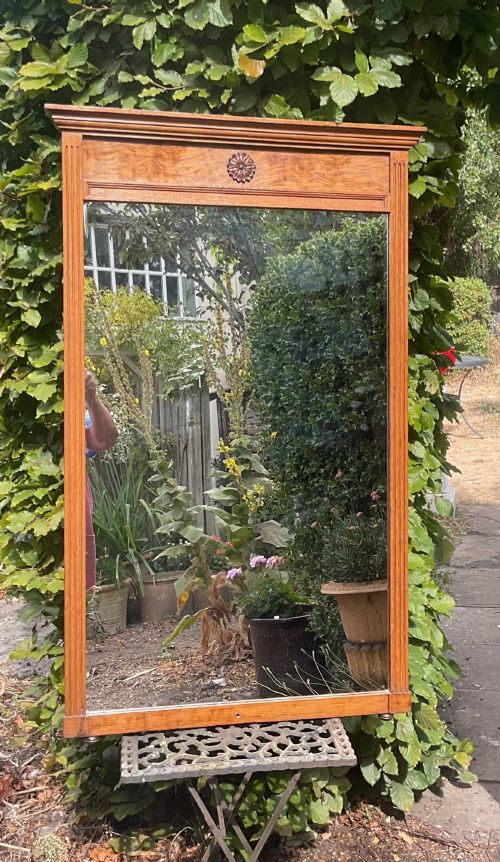
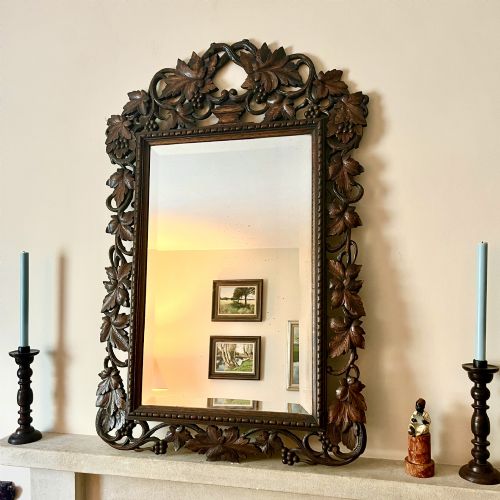


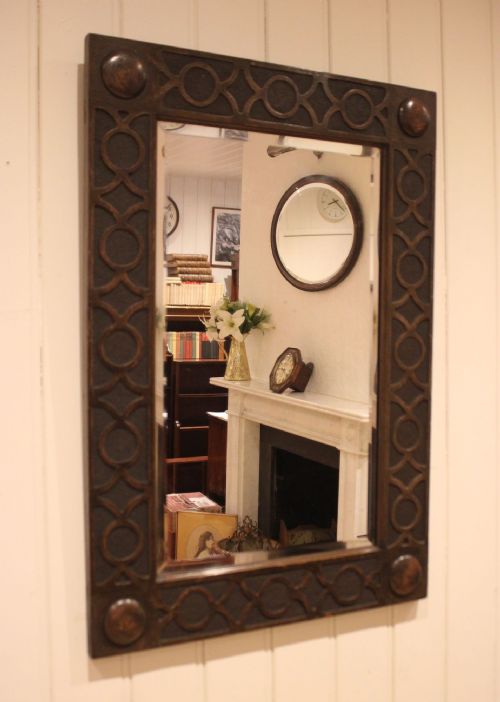


Carved Oak Glass Frame
These carved oak glass frame pieces bring robust texture and period warmth into any room through deeply worked timber and fitted glass.
Carved Oak Glass Frame
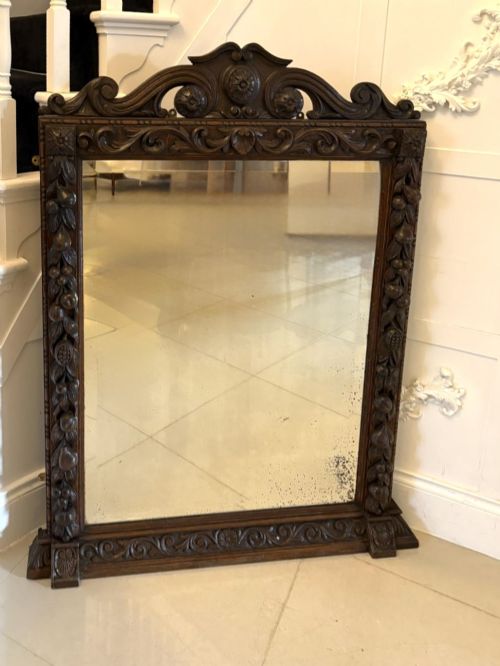
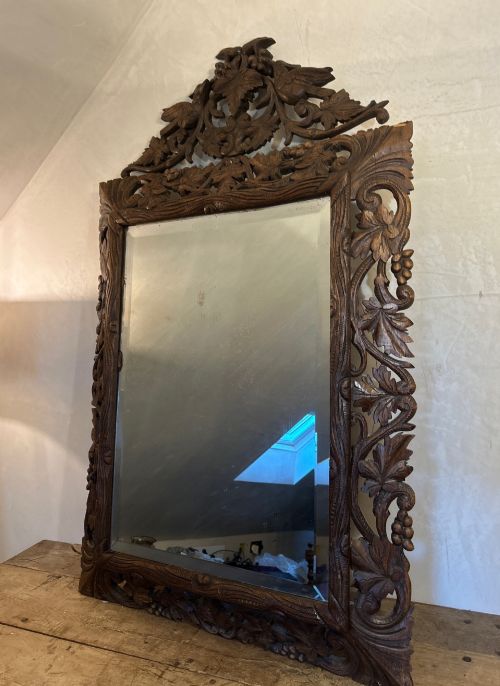
When you search for a carved oak glass frame, you are looking at wall mirrors, overmantel mirrors, dressing mirrors, and barometer frames spanning the nineteenth and early twentieth centuries. The versions met most often on this page date from the Victorian and Edwardian eras, executed in styles ranging from Gothic and French Renaissance revivals to Black Forest work.
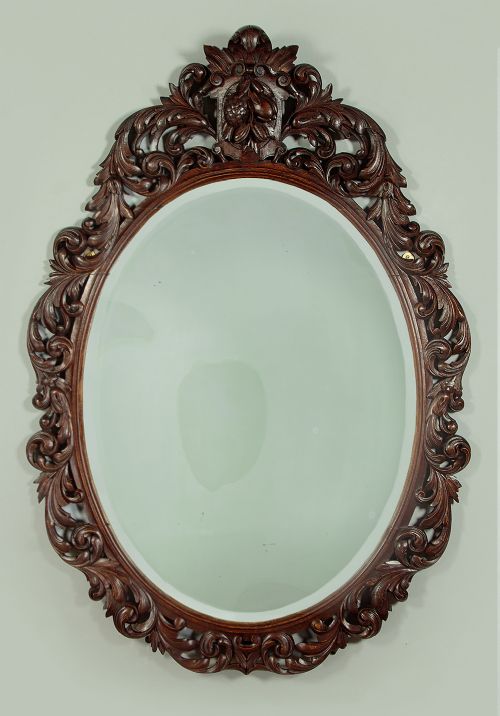
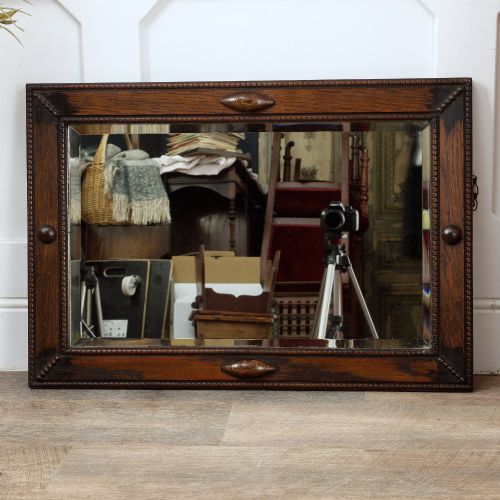
These items primarily function as wall mirrors and overmantel mirrors, alongside occasional hall mirrors, ship barometers, and wall clocks. Their forms stretch from simple rectangular shapes to large oval formats, cushion frames, and arch top designs intended to anchor a room.
Originating largely from English and continental workshops, these pieces showcase the heavy timber tastes of the nineteenth century. They bridge utilitarian household objects and decorative carving traditions, utilising solid oak structures built to endure.
How they were made
The construction relies on solid oak timbers, selected for strength and distinctive grain, shaped through hand carving and joinery. Makers frequently integrated brass fittings, gesso details, gold leaf accents, and occasional paint layers to enrich the timber surface.
Glass components include bevel edge plates and reverse painted or etched panels set securely into the heavy wooden frames. Continental examples often incorporate deep relief carving characteristic of Black Forest or French revival movements.
Materials across these listings combine solid oak with glass, brass, gesso, gold leaf, and painted surfaces.
What varies in quality
The depth and crispness of the hand carving separate standard commercial frames from exceptional pieces, with superior examples showing undercut details and deliberate relief work. The choice of timber also shifts the character, where blonde oak or richly figured grain elevates the visual weight of the frame.
Integration of secondary materials dictates overall refinement, distinguishing simple timber surrounds from those finished with parcel-gilt gesso, detailed brass hardware, or original bevelled glass plates. The ambition of the style, from plain Edwardian mouldings to elaborate French Rococo revival forms, defines the tier of execution.
The Carved Oak Glass Frame Glossary
- Overmantel mirror
- A large mirror designed to hang specifically above a fireplace mantelpiece. These often feature architectural proportions and substantial carved oak frames.
- Black Forest
- A regional style of wood carving originating from central Europe during the nineteenth century. It is known for highly naturalistic motifs depicting animals, foliage, and rustic scenes.
- Cushion frame
- A frame profile characterised by a rounded, outward-bulging surface resembling a stuffed cushion. This form provides a heavy, tactile border for the central glass plate.
- Gesso
- A plaster-like mixture applied to wooden frames as a smooth base for gilding or painting. It allows intricate decorative relief to be moulded before applying gold leaf.
- Bevel edge
- An angled ground and polished edge around the perimeter of a glass mirror plate. This technique creates a refractive border that catches ambient light.
Carved Oak Glass Frame: Frequently Asked Questions
What periods do these frames cover?
The listings span the nineteenth and early twentieth centuries, capturing Victorian, Edwardian, and various revival periods.
Most pieces concentrate in the decades between eighteen sixty and nineteen twenty, reflecting the popularity of heavy oak furnishings.
How were overmantel mirrors used?
Overmantel mirrors were designed to sit directly above fireplace hearths to reflect light and fill large wall spaces.
Their substantial proportions made them the visual anchor of Victorian and Edwardian reception rooms.
What styles are most common?
Styles range from plain Edwardian utility pieces to ornate French Rococo and Gothic revivals.
Black Forest and Renaissance revival carvings also appear frequently among the continental offerings.
Are the glass plates original?
Many pieces retain their original glass, often featuring period characteristics such as bevelled edges or subtle foxing.
Descriptions note specific details regarding the glass where relevant to the piece's history.