
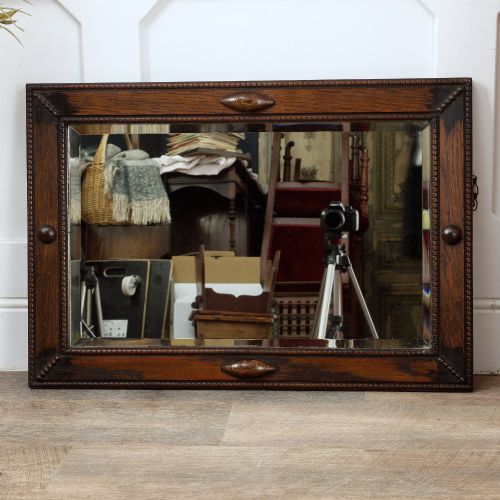
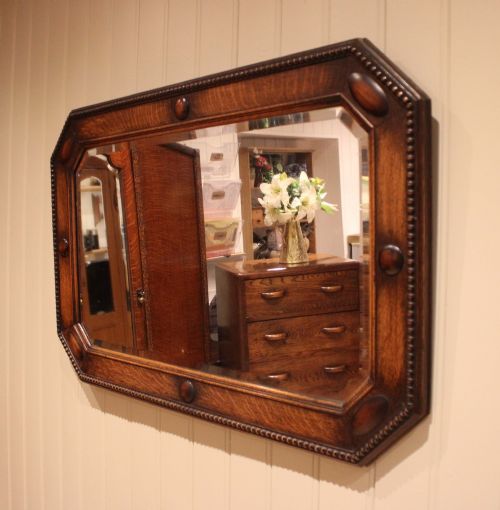
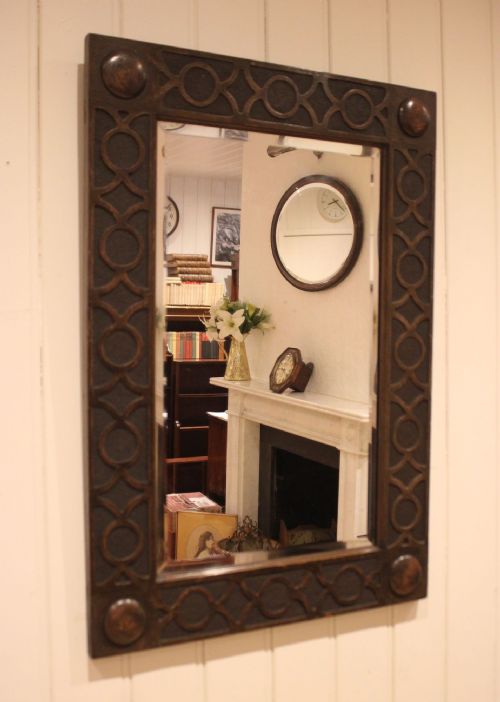


Rectangular Oak Wall Mirror
A rectangular oak wall mirror anchors a room with solid grain and honest construction, spanning periods from the eighteenth century to the art deco era.
Rectangular Oak Wall Mirror
A rectangular oak wall mirror brings substantial character to an interior through robust timber frames and dependable wall-hanging formats. When buyers search for a rectangular oak wall mirror, they encounter a range of interpretations from simple Edwardian mouldings to deeply carved Victorian Gothic revivals.
The pieces appearing on this page stretch from the eighteenth century through to the nineteen-thirties. Examples include large cushion-moulded frames, French provincial carvings, and heavy brass-mounted brasserie pieces.
Simpler iterations prioritise the natural grain of the timber, whilst earlier and revival styles showcase intricate hand-carved details. Every piece serves the dual purpose of reflecting light and introducing architectural warmth to a wall space.
Materials and construction methods
Makers built these frames primarily from solid oak, sometimes utilising gesso and gold leaf or brass mounts to enhance the visual weight of the design. The timber was frequently carved by hand, yielding deep relief work seen in nineteenth-century Gothic and French provincial styles.
Original mirror glass plates are secured within the timber rebates, occasionally featuring bevelled edges that catch the light. Metal fixings and brass elements provide structural reinforcement and decorative contrast against the dark or scrubbed oak surfaces.
Design styles represented across the inventory include Art Deco, French Provincial, Rococo Revival, and Victorian Gothic.
Markers of quality and craftsmanship
Quality in a rectangular oak wall mirror rests upon the depth and crispness of the carving alongside the stability of the frame joints. Superior examples exhibit tightly fitted corner joints and timber selected for consistent medullary rays in the oak grain.
The presence of original mirror glass and authentic period hardware distinguishes higher-grade pieces from later replacements. Weight and thickness of the wooden frame further indicate the substantial nature of the construction.
The Rectangular Oak Wall Mirror Glossary
- Cushion mirror
- A frame profile featuring a rounded, convex sweep resembling a cushion. This style is frequently observed in nineteenth-century continental pieces.
- Bevel edge
- An angled edge ground along the perimeter of the mirror glass. It refracts light and denotes finer finishing.
- Gesso
- A plaster-like mixture applied to timber as a base for gilding or paint. It allows for intricate moulded ornamentation.
- Brasserie mirror
- A heavy utility mirror featuring a thick timber frame often mounted with brass. These originated in commercial hospitality settings.
- Medullary ray
- A cellular ribbon across hardwood timber that creates distinct figuring in quarter-sawn oak. Collectors prize this natural pattern for its visual depth.
Rectangular Oak Wall Mirror: Frequently Asked Questions
Are the mirror plates original?
Many pieces retain their original glass, which often exhibits minor foxing or light oxidation spots resulting from age. This natural ageing process confirms the historical integrity of the piece.
Replaced glass typically appears completely clear and lacks the subtle distortions or surface wear associated with nineteenth-century or earlier manufacture.
How do I clean an antique oak frame?
Dust the carved wooden surfaces regularly with a soft, dry cloth to prevent particulate buildup in the recesses of the relief work. Avoid harsh chemical polishes that can strip the dry or waxed patina of the antique timber.
For the glass plate, apply a mild glass cleaner to a cloth rather than spraying directly onto the glass, preventing moisture from seeping behind the frame rabbet.
What is the difference between Victorian and Edwardian oak mirrors?
Victorian examples tend to feature heavier, darker timber with dense Gothic carvings, deep bevelling, and robust proportions. They project a sense of architectural solemnity and substantial weight.
Edwardian pieces often lighten in tone and scale, displaying cleaner lines and simpler mouldings that reflect the shifting domestic tastes of the early twentieth century.