
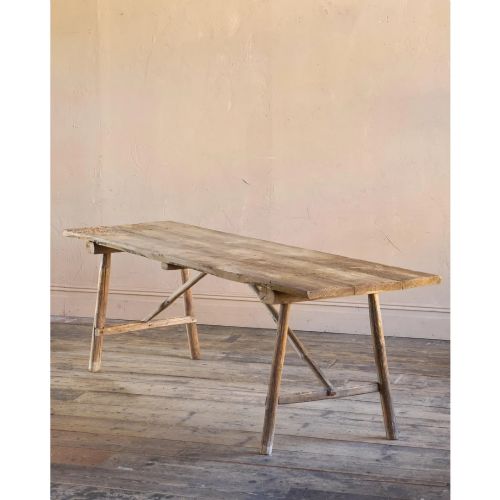
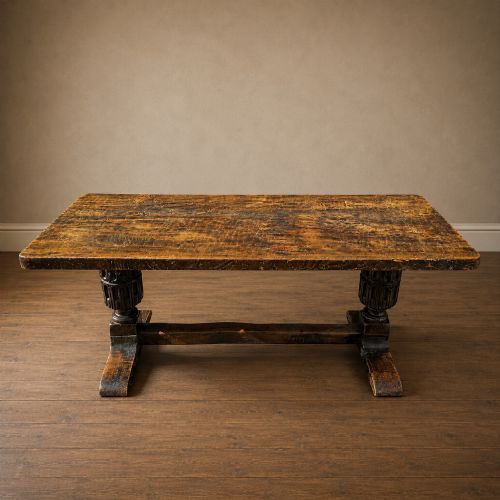


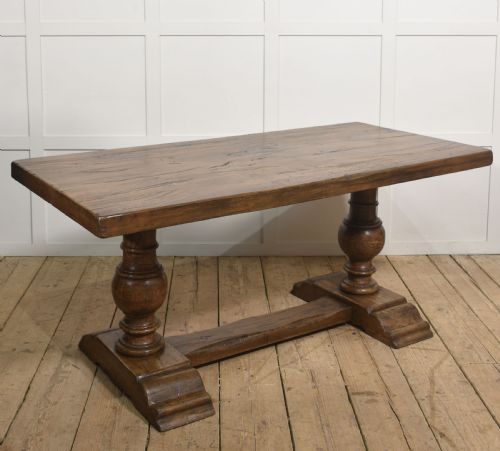


Antique Oak Farm Table
An antique oak farm table anchors a room with generations of utility, built from honest timber to serve daily family life.
Forms and periods
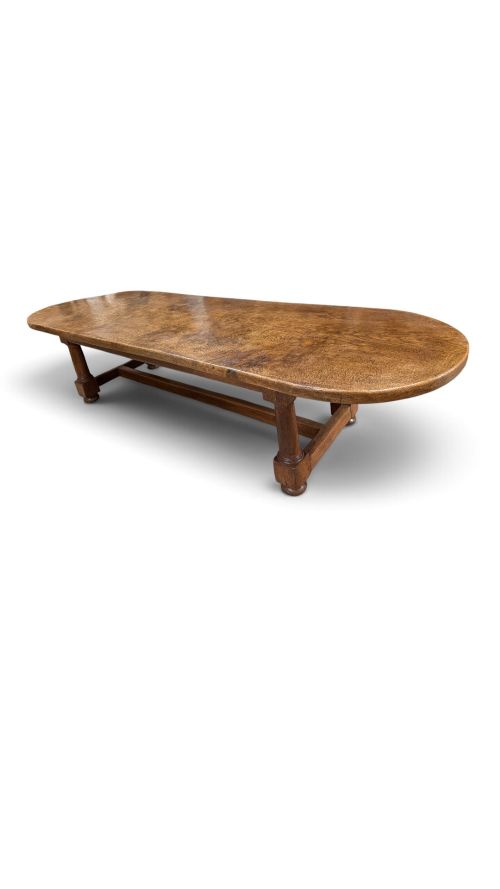
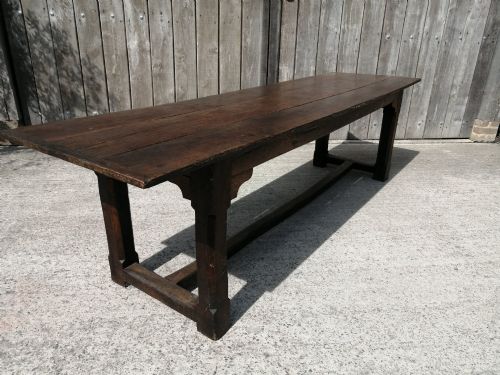
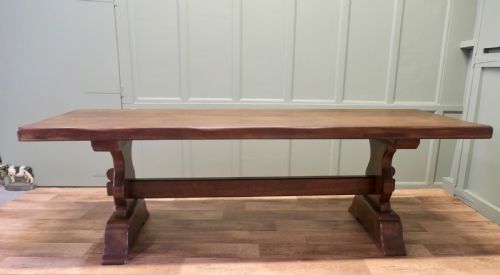
An antique oak farm table represents the heart of historic domestic life, appearing primarily as substantial refectory tables, gateleg tables, and extendable kitchen dining variants. These pieces span the seventeenth, eighteenth, nineteenth, and twentieth centuries, incorporating Jacobean, Georgian, and rustic farmhouse styles.
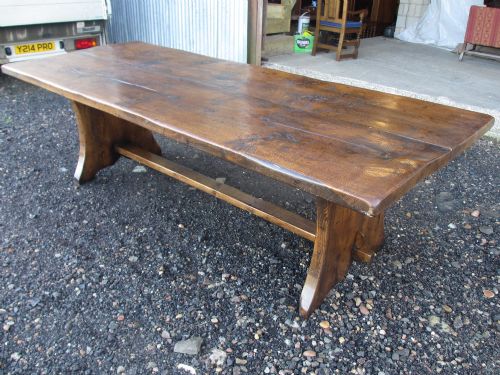
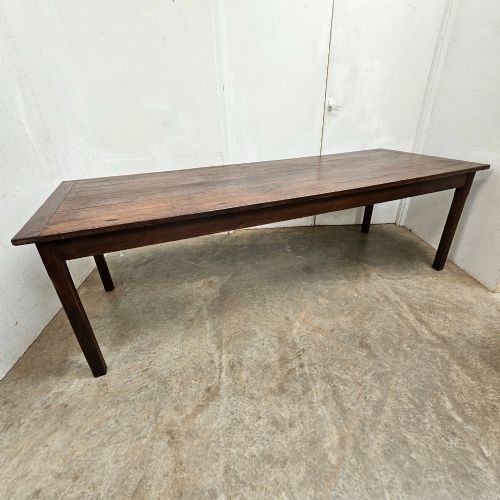
The versions most commonly met on this page showcase thick timber tops paired with robust stretchers, designed originally for communal dining or heavy kitchen work. Surviving examples range from intimate four-seat breakfast tables to imposing three-metre French and English refectory formats.
Materials and construction
Makers relied principally on solid oak, occasionally combining it with elm, pine, or supplementary painted finishes to construct these hard-wearing boards and frames. Construction methods prioritised structural longevity, utilising thick planks for table tops and sturdy joinery to withstand daily pressure.
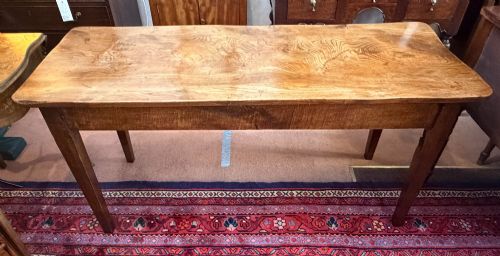
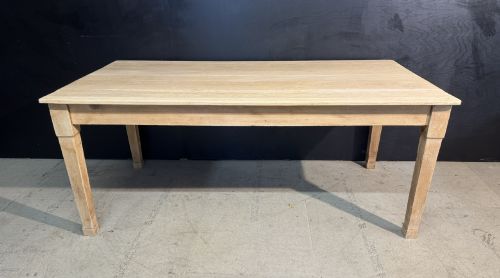
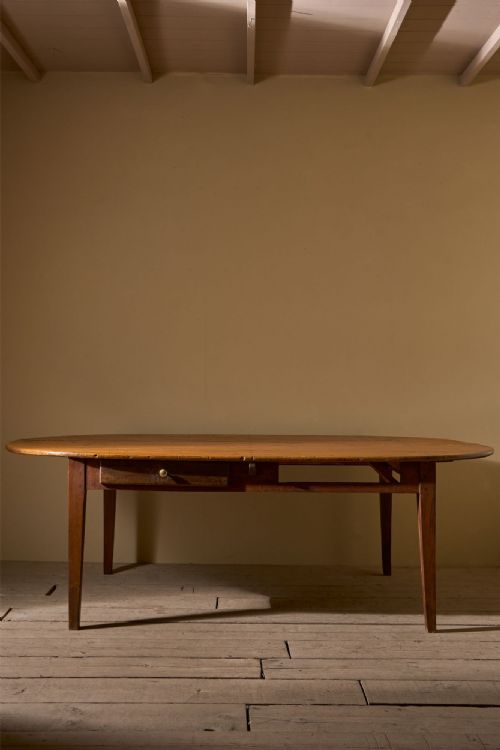
Surfaces show various historical treatments, from scrubbed pale oak and bleached finishes to polished timber and paint. Draw leaves, gateleg mechanisms, and end drawers appear on select iterations, reflecting practical adaptations for expanding dining space or storing household implements.
Retail Price Guide 2026
Typical UK retail prices for oak farm table, calculated from the Sellingantiques database of over a million retail prices indexed since 2003. This retail price guide relies exclusively on Sellingantiques data; no external sources or auction records are used, so the figures do not describe the wider market.
Several tables retain end drawers designed for hiding away the butter knives before the inspector arrived.
Standards of craftsmanship
Quality rests in the selection of the timber and the integrity of the underlying framing, where dense, well-figured oak boards command greater appreciation than softer secondary woods. The thickness of the top and the stability of the leg stretchers determine how securely the table bears weight across centuries of use.
Proportion and the handling of surface texture separate standard utility pieces from finer examples, particularly where scrubbed tops reveal natural grain without excessive timber loss. The integration of functional elements, such as smoothly operating draw leaves or fitted drawers, indicates the care taken by the original maker.
The Antique Oak Farm Table Glossary
- Refectory table
- A long, narrow dining table traditionally built for monastic or communal dining halls. These forms feature prominent stretcher bases for added stability.
- Gateleg table
- A drop-leaf table supported by hinged legs that swing out like a gate. This design allows the surface area to expand or contract according to need.
- Draw leaf
- An extending table mechanism featuring leaves hidden beneath the main top that pull out from each end. It increases surface length without removing the central boards.
- Scrub top
- A table top repeatedly washed with water and scouring sand, producing a pale, weathered timber surface. This finish is typical of heavy kitchen use in country houses.
- Jacobean
- A style dating from the early seventeenth century characterised by sturdy rectangular construction and dark, panelled woodwork. It represents the earliest period found in these dining tables.
Frequently Asked Questions
How do I clean an antique oak farm table?
Wipe surfaces gently with a damp cloth and mild soap, avoiding harsh modern chemical cleaners that strip historic finishes.
Dry the timber thoroughly afterwards to prevent moisture damage to the grain.
Can I use an antique farm table daily?
These tables were built for heavy kitchen work and daily dining, making them exceptionally durable for modern family life.
Use coasters and mats to protect the historic timber surface from heat and moisture rings.
What is the difference between a refectory and a gateleg table?
Refectory tables feature fixed, elongated tops supported by permanent legs and stretcher rails.
Gateleg tables incorporate hinged drop leaves and pivoting legs that fold away to save space.
How do I identify the period of an oak table?
Examine the joinery methods, timber thickness, and overall style cues such as seventeenth-century Jacobean framing or eighteenth-century Georgian proportions.
Tool marks and the natural ageing of the oak provide further clues to the manufacturing era.