




Antique Oak Cupboard Rack
An antique oak cupboard rack combines generous shelf display with enclosed storage, giving country houses and rural cottages a practical focal point.
Antique Oak Cupboard Rack
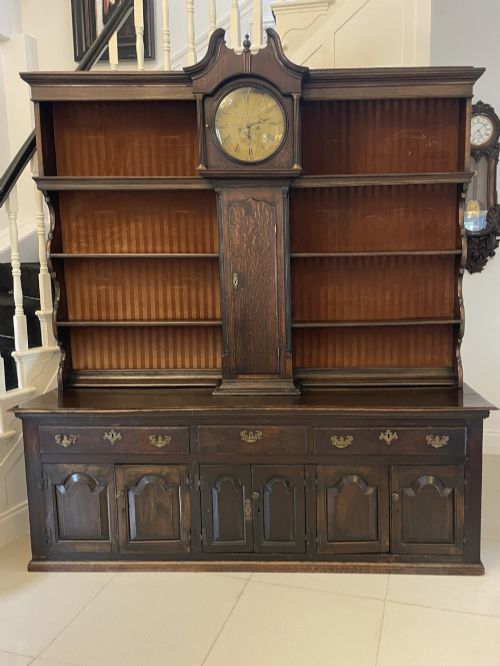
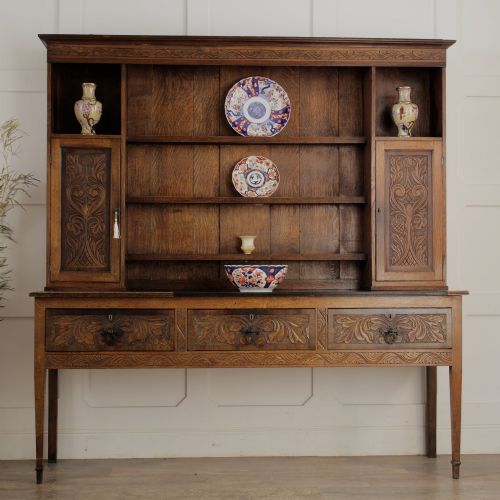
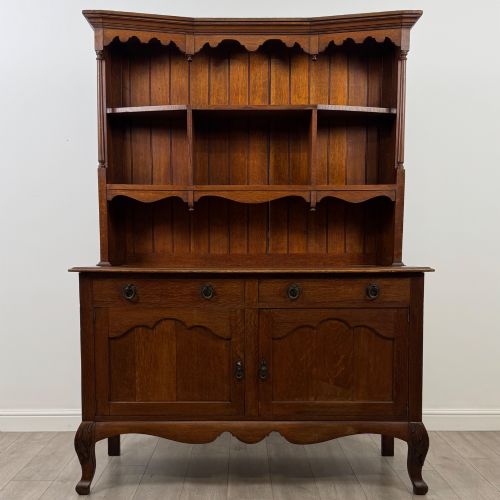
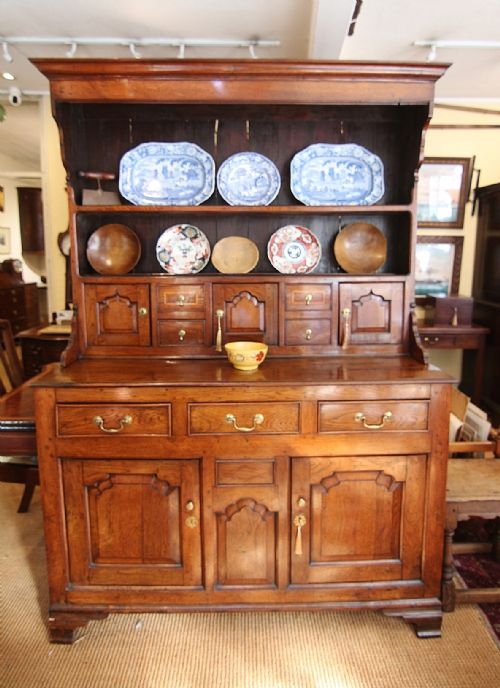
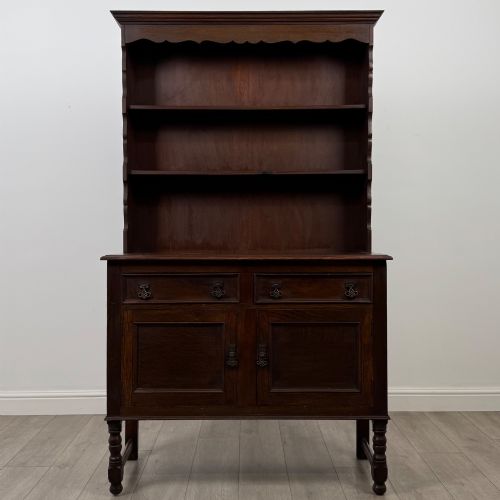
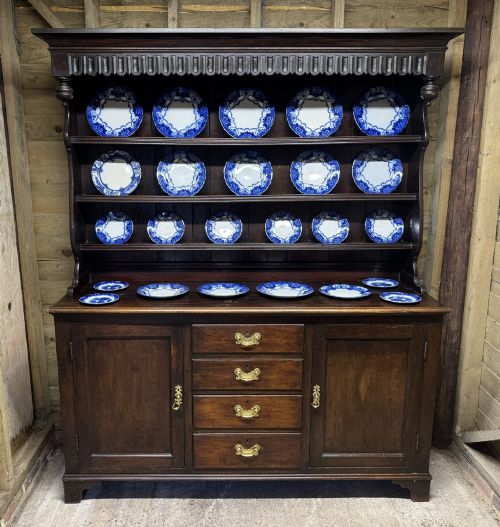
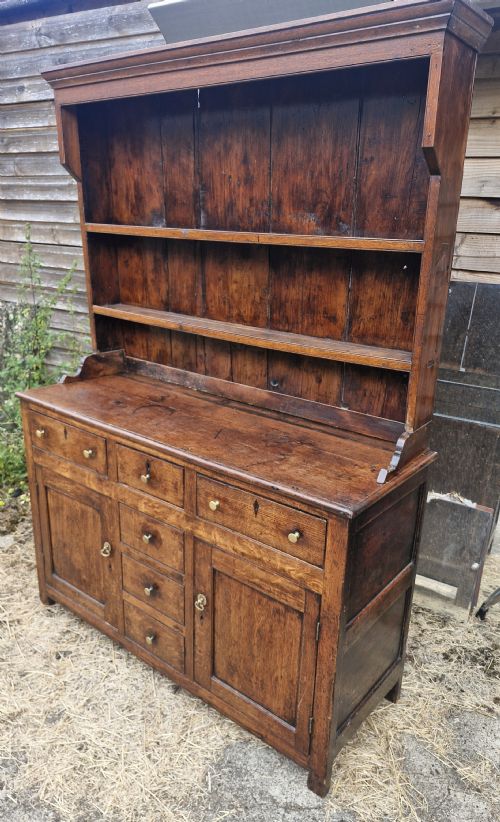
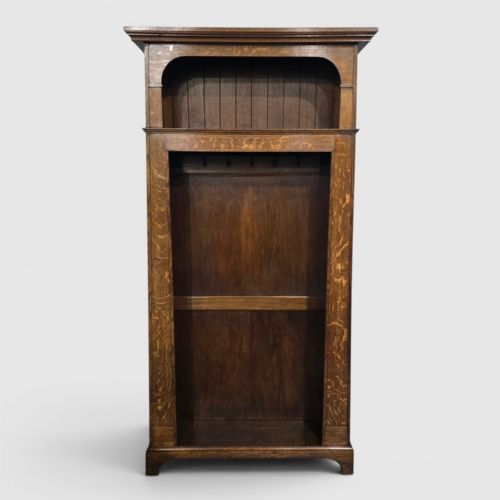
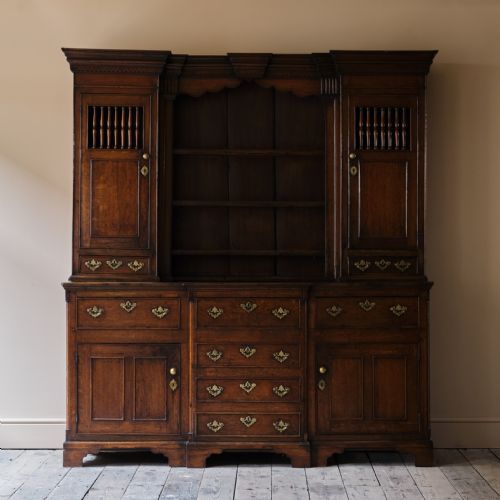
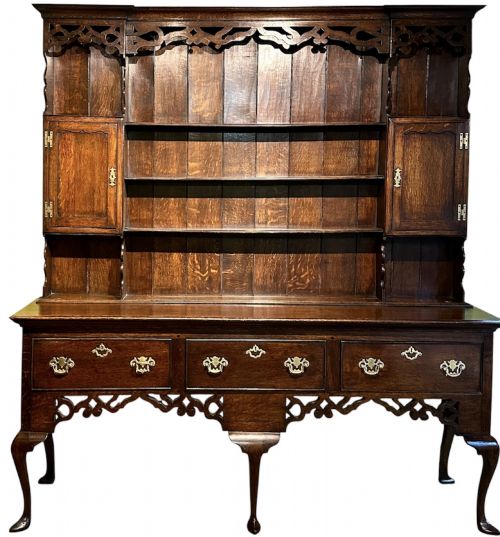
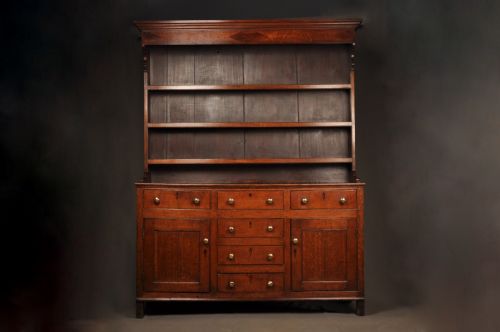
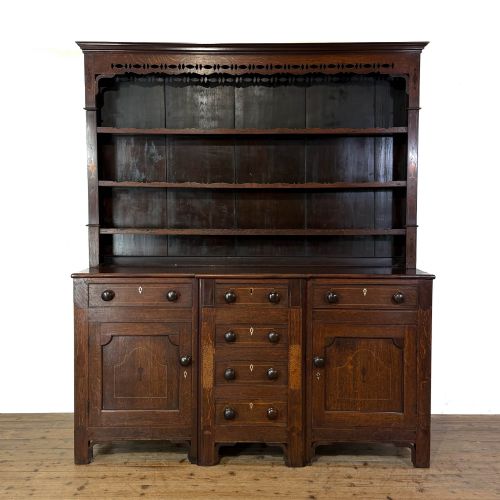
An antique oak cupboard rack brings together a lower base fitted with cupboards, drawers, or pot boards and an upper tier of open shelves designed for displaying ceramics and kitchenware. When searching for an antique oak cupboard rack, buyers typically encounter substantial Welsh and English regional dressers originating from the eighteenth and nineteenth centuries.
The regional variations stretch from Snowdonia and Llanrwst to the West Country and English farmhouses, each bringing distinct architectural proportions to the lower storage and the upper plate display. Makers constructed these dual-purpose items for everyday domestic use in rural kitchens and pantries rather than formal reception rooms.
Surviving examples span periods from the Georgian era through to the Edwardian period, often incorporating walnut, elm, or pine secondary woods alongside the primary oak timber. These pieces serve equally well in modern interiors for organising tableware while providing concealed storage beneath.
Materials and construction methods
Joiners built these carcass structures predominantly from solid oak, sometimes combining elm, pine, and mahogany for drawer linings, backboards, and interior shelving. Brass and iron hardware such as hinges, handles, and escutcheons secured doors and drawers, while occasional bone details appeared on select regional pieces.
Carpenters utilised traditional frame and panel construction for the cupboard doors, allowing the heavy timber to expand and contract naturally with seasonal changes in humidity. Open plate racks were pegged or screwed securely to the dresser base, featuring grooved plate rails and shaped fretwork cornices to hold heavy ceramics safely in place.
Listings feature oak cupboard racks spanning the eighteenth century, Georgian period, Victorian era, and Edwardian decades, alongside elm and pine.
Assessing quality and proportion
Superior examples display crisp hand-carving, such as Green Man motifs or geometric panelling, executed with deliberate control rather than hurried execution. The integration between the upper rack and the lower cupboard base reveals the maker's skill, with well-matched timber grains running consistently across the front elevation.
Original surface patination distinguishes the finest specimens, showing decades of honest waxing and handling that accentuate the natural medullary rays in the quarter-sawn oak. Alterations to the cornice, replaced hardware, or mismatched upper and lower sections alter the integrity and visual balance of the assembled piece.
The Antique Oak Cupboard Rack Glossary
- Pot board
- An open lower shelf built into the base of a dresser for storing heavy kitchen utensils and pots. This platform sits just above the floor on short feet or stiles.
- Plate rack
- The upper tiered section featuring horizontal grooved timber strips designed to hold plates vertically against the backboard. It often incorporates smaller spice drawers or side cupboards.
- Bread and cheese cupboard
- A regional variant featuring pierced or ventilated panel doors intended to keep dairy and dry goods cool in farmhouse kitchens. These sections are integrated directly into the dresser base.
- Belly rack
- A regional configuration where the lower dresser base swells outward with convex drawer fronts or protruding cupboard doors. This design provides increased internal storage capacity.
- Georgian
- A design period spanning the reigns of the first four Georges, characterised by classical proportions, sturdy construction, and restrained decorative carving. Pieces from this era rely on architectural balance rather than heavy ornamentation.
Antique Oak Cupboard Rack: Frequently Asked Questions
What is an antique oak cupboard rack?
An antique oak cupboard rack is a traditional kitchen dresser featuring a lower storage base with cupboards or drawers combined with an upper set of open display shelves.
These functional pieces originated in British farmhouses and rural cottages to store and display domestic tableware in daily use.
How do I style an antique oak cupboard rack?
Position the piece against a main wall in a kitchen, dining room, or hallway where its substantial proportions can anchor the room. Use the open upper shelves to display ceramics, glassware, or books while keeping everyday clutter hidden inside the lower cupboards.
Allow sufficient clearance around the furniture to appreciate the regional timber grain and traditional joinery without crowding the space.
How do I tell regional styles apart?
Regional variations show in the specific choice of secondary woods, carved motifs, and overall architectural proportions built by local joiners. Welsh examples often feature distinctive frieze details, shaped board sides, and specific local cupboard configurations.
English country versions from the West Country or northern workshops display alternative moulding profiles and drawer arrangements characteristic of their distinct woodworking traditions.
Are the upper racks original to the bases?
Many surviving dressers retain their original matching upper racks, though centuries of domestic use meant upper and lower sections were occasionally separated or paired with other bases. Examining the timber species, wear patterns, peg construction, and backboard fixings helps confirm whether the rack and base started life together.
Slight discrepancies in colour or mounting marks indicate where a rack may have been reunited with a base at a later date.