



Antique Oak Buffet Display
An antique oak buffet display unites practical storage with the warm, honest grain of timber.
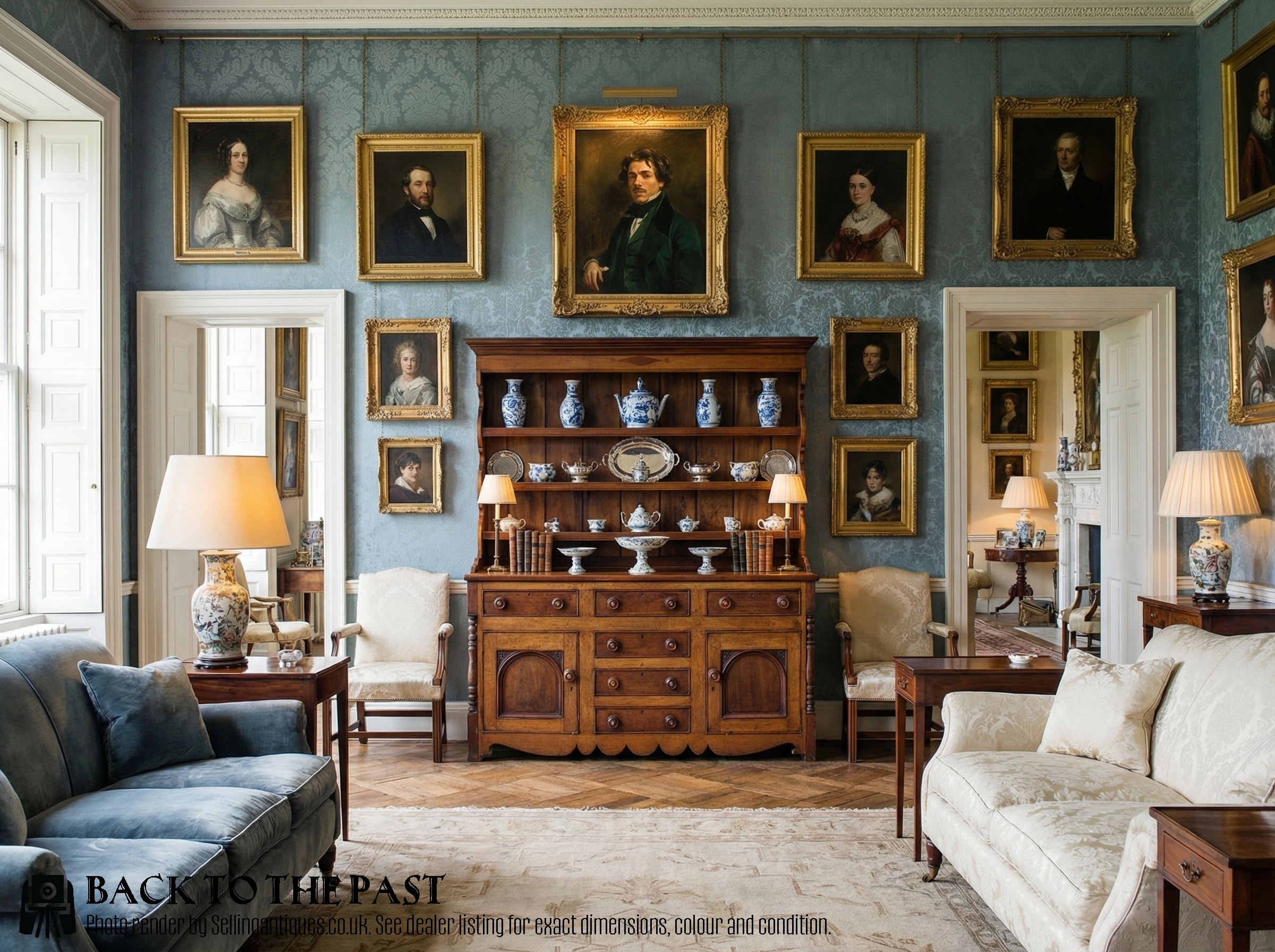
Antique Oak Buffet Display
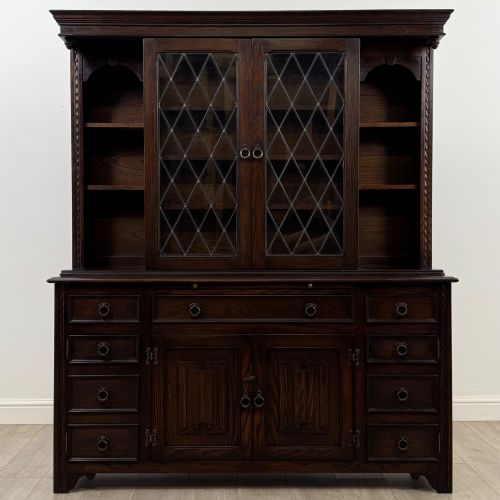
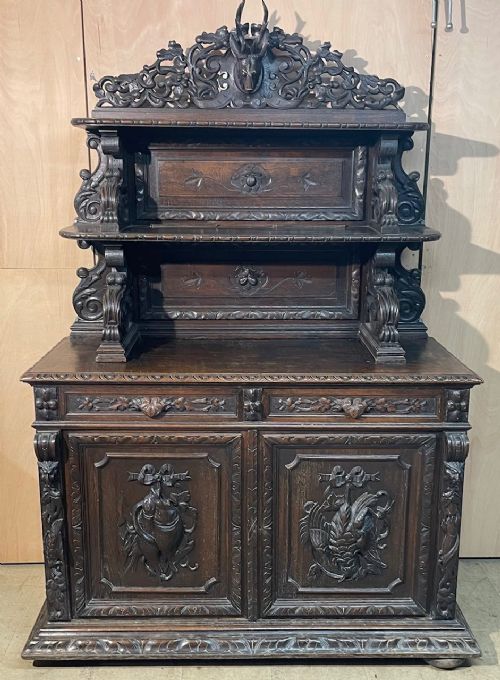
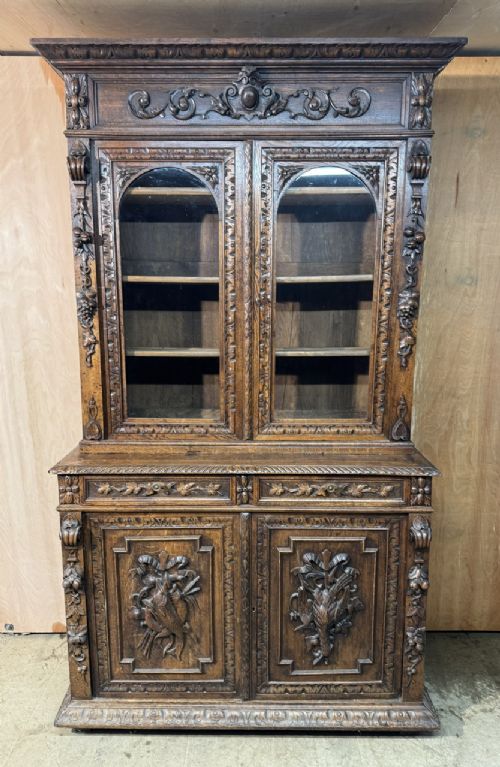
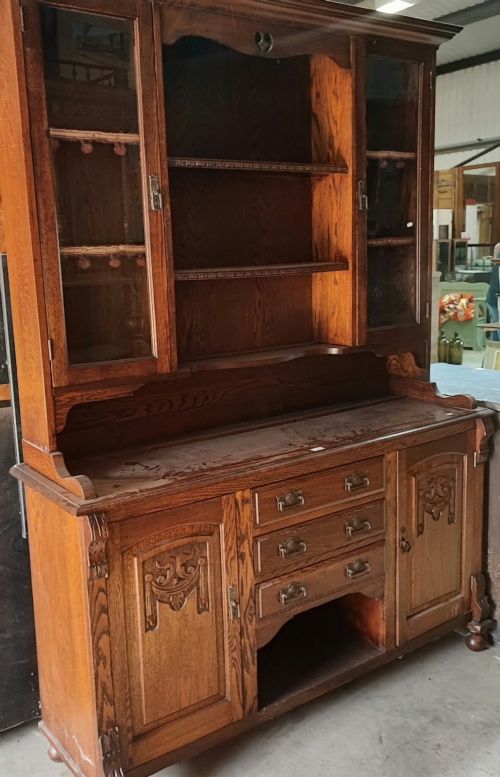
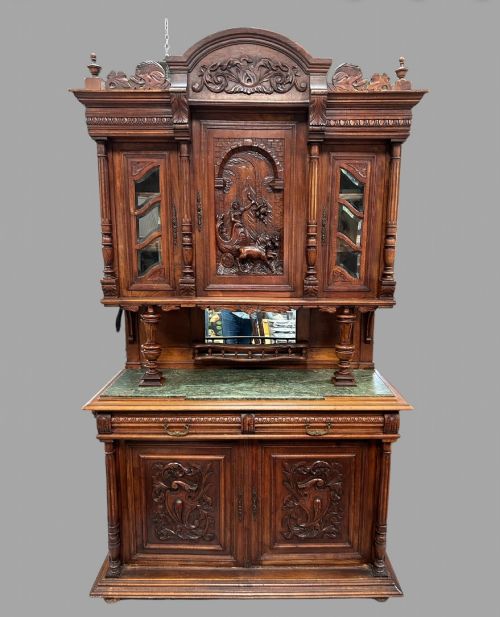
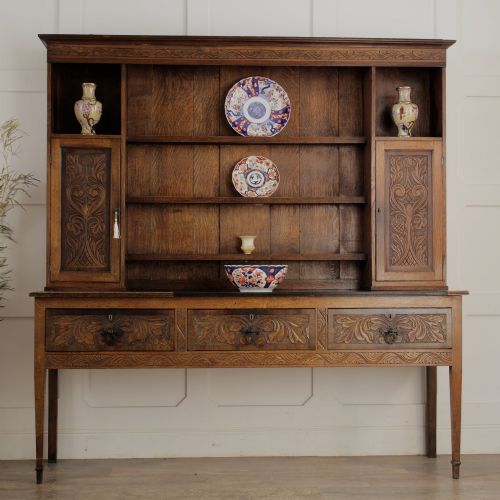
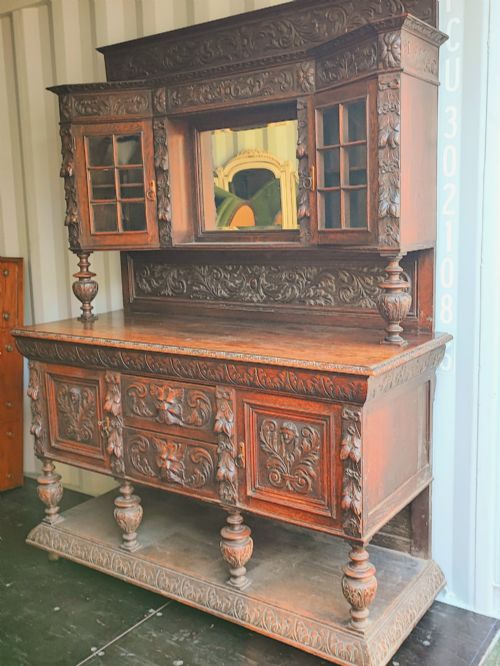
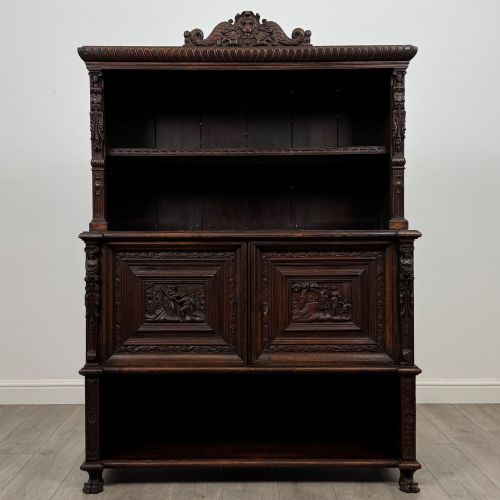
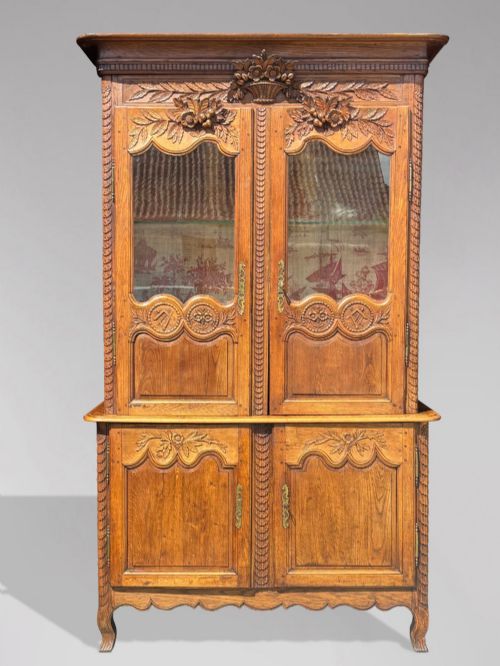
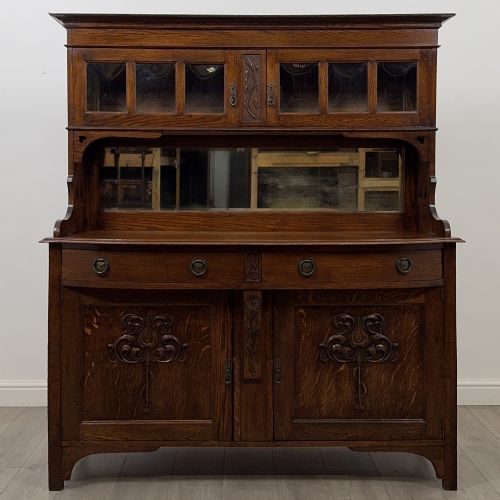
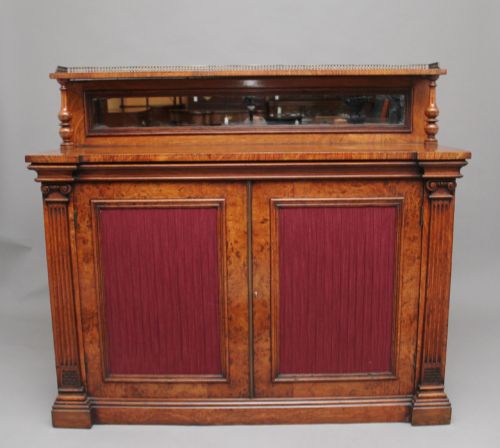
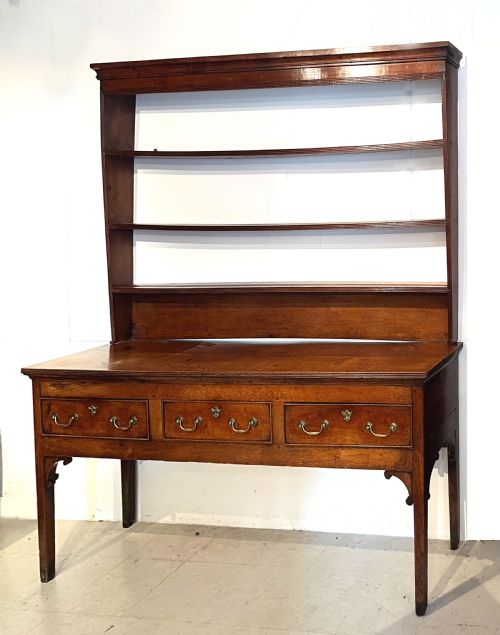
When you search for an antique oak buffet display, you encounter a robust selection of heavy timber storage furniture spanning several centuries. The forms vary from provincial Welsh dressers with plate racks to French hunting cabinets and British Arts and Crafts sideboards. These pieces combine closed cupboards with open display surfaces, serving both utility and architectural presence in a room.
Victorian and Edwardian iterations dominate the selection, often featuring deep relief carving and glazed doors. Earlier examples from the eighteenth century introduce geometric mouldings and vernacular country proportions. Buyers typically select these items to anchor a dining room or hallway with substantial, historic cabinetry.
Materials and construction methods
Makers relied primarily on solid oak, occasionally selecting figured pollard oak or tiger oak to accentuate the natural grain of the timber. Joinery typically involved traditional mortise and tenon frames, ensuring structural longevity for heavy household items.
Brass handles, iron hardware and leaded glass panels frequently accompany the woodwork, particularly in pieces originating from the Arts and Crafts period. Surface finishes range from hand-waxed patination on country dressers to deeper, polished tones on formal revival sideboards.
Stylistic influences range from Gothic revival and Jacobean motifs to continental Arts and Crafts movements.
Assessing craftsmanship and proportion
Quality rests heavily on the depth and crispness of the carved ornamentation, separating utilitarian workshop output from ambitious cabinet-making. Superior pieces display harmonious proportions where the height of the display rack balances the weight of the lower buffet base.
The integrity of the timber selection also defines the tier of the piece, with straight-grained or richly figured oak commanding greater visual depth. Original hardware, intact leaded or glazed glass, and tight joinery further distinguish finer examples from standard vernacular furniture.
Shapland and Petter·Liberty and Co.
The Antique Oak Buffet Display Glossary
- Buffet deux corps
- A tall, two-part cabinet featuring an upper display section resting upon a lower sideboard base. This French regional form provides substantial capacity.
- Welsh dresser
- A traditional kitchen or dining cabinet comprising base cupboards and drawers surmounted by open plate racks. The shelves allow for the display of ceramic tableware.
- Pollard oak
- Timber harvested from pollarded trees, yielding highly decorative burr or clustered grain patterns. Cabinet-makers reserved this material for prominent door panels and drawer fronts.
- Leaded glass
- Small panes of glass joined together by narrow strips of lead to form geometric or decorative patterns. This technique appears frequently on Edwardian display doors.
- Breakfront
- A cabinet design where the central section projects forward from the flanking wings. This architectural arrangement creates depth and shadow across the facade.
Antique Oak Buffet Display: Frequently Asked Questions
What is an antique oak buffet display?
These items are heavy timber storage units that combine enclosed cupboards with open shelves or glass doors for display.
They evolved across centuries to serve dining rooms and kitchens, holding tableware while anchoring the room's decor.
How do I date an oak buffet?
Dating relies on observing construction methods, handle styles, and decorative motifs like geometric mouldings or naturalistic carvings.
Eighteenth-century examples often show simpler country construction, whereas Victorian and Edwardian pieces frequently feature heavier revival styling.
Where should I place a buffet display?
These substantial cabinets suit dining rooms, large kitchens, or spacious hallways where their depth and height fit comfortably.
Ensure the floor space accommodates the projection of open cabinet doors and lower drawers.
How do I care for antique oak?
Maintain the timber by applying traditional beeswax periodically to nourish the dry grain and preserve the surface sheen.
Keep the furniture away from direct heat sources and strong sunlight to prevent the oak from splitting.