

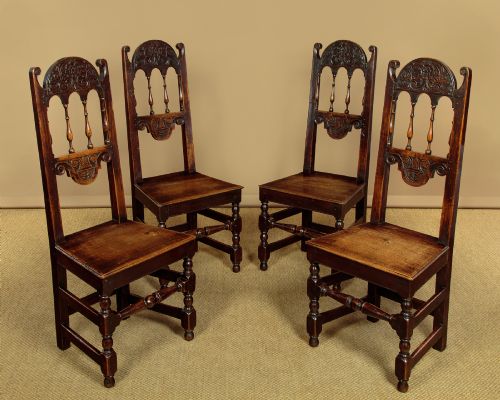


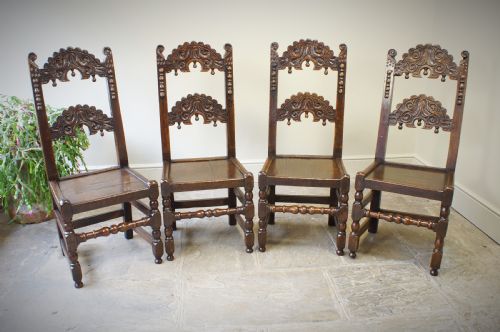


Antique Oak Backstool
An antique oak backstool offers sturdy seating rooted in seventeenth-century domestic life, prized for its tall, upright form.
Antique Oak Backstool
The antique oak backstool represents a fundamental early form of domestic seating that predates the widespread use of upholstered dining chairs. Buyers seeking this phrase typically encounter robust, high-backed wooden chairs designed for use at the head of a table or against a wall.
The selections available here lean heavily into seventeenth-century production, spanning regional vernacular traditions from Yorkshire, Lancashire, South Yorkshire, and the Conwy Valley in North Wales. These pieces frequently appear alongside related side chairs and occasional later survivals from the Georgian era or around seventeen hundred.
Regional variations define much of what turns up on the market, ranging from carved Yorkshire examples to sturdy Welsh vernacular pieces. Regional workshops imparted distinct local characteristics to the upright frame and back panel.
Materials and construction
Makers built these chairs using solid oak timbers, often shaped with joined construction techniques that relied on mortise and tenon joints secured by wooden pegs. The structural skeleton prioritises durability and straightforward joinery over concealed framing.
Surface detailing occasionally incorporates carved ornamentation on the wooden back panels, whilst surviving examples show that some variants utilised tapestry upholstery, brass accents, cane, lacquer, or gilt decoration to soften the rigid timber.
Antique Oak Backstool Retail Price Guide 2026
Typical asking prices for oak backstool among the pieces listed under this phrase on Sellingantiques today, from the lower quarter to the upper quarter. They describe what is for sale here now, not the wider market.
Distinguishing finer examples
The degree of original surface patination and the crispness of regional carving separate standard vernacular pieces from exceptional survivals. Untouched timber surfaces that have aged naturally carry more visual depth than heavily restored framing.
Structural integrity and the retention of original joining elements dictate the quality of an antique oak backstool. Chairs retaining their early form without extensive timber replacement command greater interest among collectors.
The Antique Oak Backstool Glossary
- Backstool
- An early term for a chair without arms, essentially describing a stool with a back added. This form became common in seventeenth-century domestic interiors.
- Joined oak
- Furniture constructed using interlocking mortise and tenon joints pegged together rather than glued or nailed. This technique provides the primary structural skeleton for these chairs.
- Vernacular
- Objects made by regional craftsmen following local traditions rather than high-style metropolitan fashions. Welsh and Yorkshire pieces exemplify this localized approach.
- Japanned
- European imitation of East Asian lacquerwork applied to furniture surfaces. This decorative finish appears on select pieces around seventeen hundred.
- Tapestry upholstery
- Woven textile coverings applied to the seat or back of a chair. Surviving examples incorporate this material to add texture and comfort.
Antique Oak Backstool: Frequently Asked Questions
What is an antique oak backstool?
An antique oak backstool is an early form of single chair featuring a tall, upright wooden back and a solid seat, originating primarily in the seventeenth century.
These pieces served functional roles in period homes before upholstered dining sets became standard in domestic interiors.
How were backstools used originally?
In seventeenth-century households, these chairs were positioned against walls or used at tables by the head of the household.
Their upright posture encouraged formal seating habits reflective of the period's domestic routines.
How do regional styles differ?
Regional workshops in areas like Yorkshire, Lancashire, and North Wales applied distinct carving patterns and structural proportions to their output.
Examining the specific motifs on the wooden back panel often reveals the geographic origin of the workshop.
How should I care for an oak backstool?
Maintain these chairs in stable indoor environments away from direct heat sources and excessive humidity changes that affect old timber.
Dust the joined surfaces gently with a dry cloth and avoid applying modern chemical polishes to the historic wood finish.