


Antique Mythology Wall Art
Antique mythology wall art brings classical figures and legendary narratives into interiors through oils, watercolours and period engravings.
Antique Mythology Wall Art
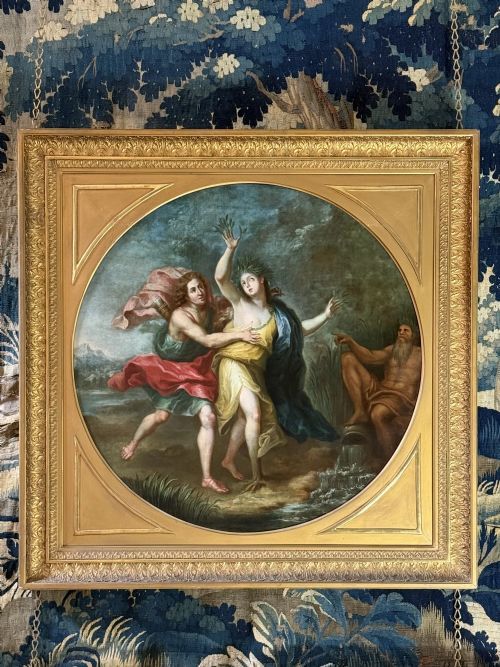
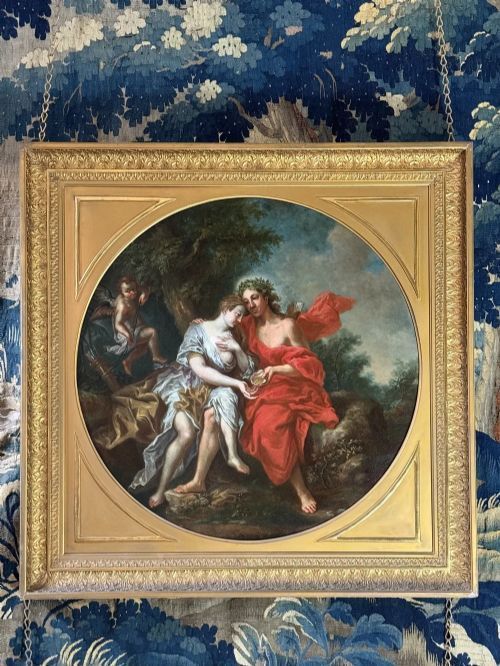
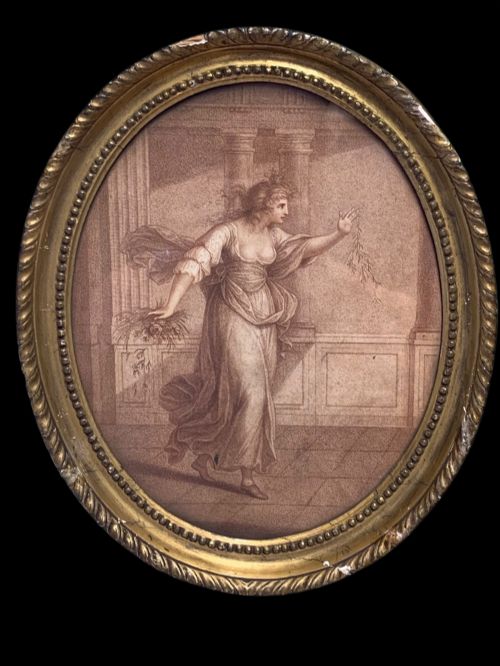
When buyers search for antique mythology wall art, they encounter depictions of classical deities, nymphs and legendary scenes drawn from Greek and Roman traditions. The selection spans neoclassical illustrations, French Rococo pairs and Victorian classical works, often framed in giltwood or simple wood.
Engravings and stipple prints from the eighteenth century form a major part of the selection, frequently recording architectural antiquities alongside winged gods and mythological figures. Alongside these works, oil paintings on canvas present figures such as Flora, Venus and Apollo.
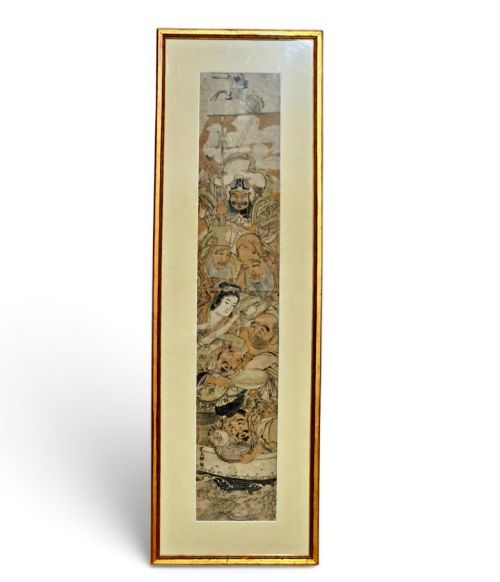
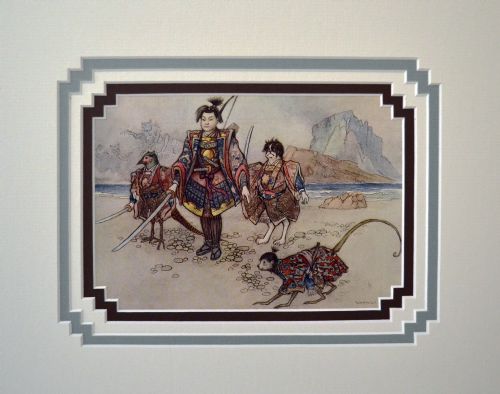
Later pieces extend into the Edwardian and Art Nouveau periods, introducing Japanese fairy tales and depictions of legends like Theseus and Ariadne. Prints and engravings dominate the forms available, supported by watercolours and chromolithographs.
Materials and methods
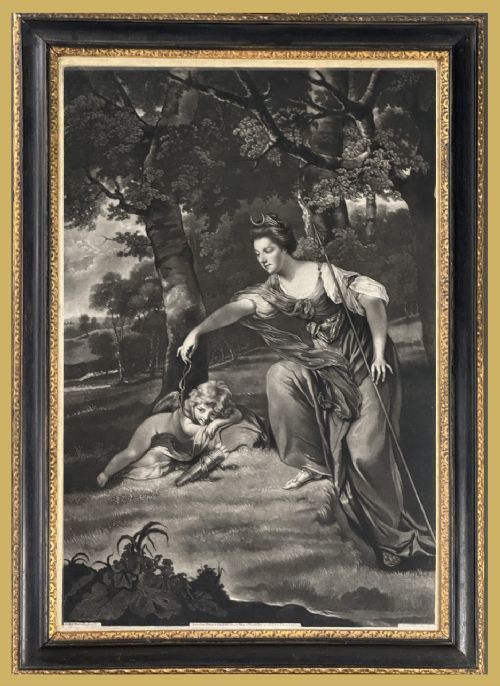
Makers utilised oil paint on canvas for substantial paintings, applying pigments to render classical narratives and portraits of deities. Engravings and mezzotints on paper relied on metal plates inked and pressed to capture fine linear details.
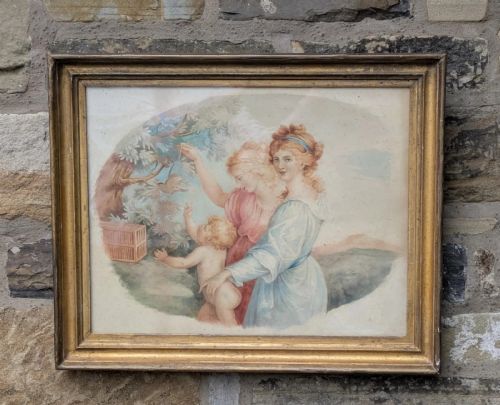
Watercolour and ink appear on paper for lighter illustrative scenes, while chromolithographs introduced multi-coloured printing techniques. Giltwood and gold leaf frames frequently enclose these works, providing decorative borders that complement the subject matter.
The inventory spans the 18th Century, 19th Century, Victorian, Edwardian and Art Nouveau periods.
Factors that separate examples
Quality rests upon the clarity of the printed line in engravings and the depth of handling in oil on canvas. Skilled plate work retains crisp architectural details and facial expressions, whereas weaker impressions lose definition in shaded areas.
The choice of framing material, such as period giltwood versus plain wood, influences the overall presence of the piece. Attribution to documented printmakers or painters also separates standard decorative plates from significant historical works.
Charles-Antoine Coypel·James Watson·Sir Joshua Reynolds·Warwick Goble·John Flaxman·Jean Baptiste Isabey·Arthur Hacker·Peter Paul Rubens·James Basire·Edward Rooker
The Antique Mythology Wall Art Glossary
- Mezzotint
- A printmaking process where the copper plate is roughened to achieve rich tonal gradations and dark backgrounds. It allows for soft transitions of light and shadow.
- Chromolithograph
- A colour lithographic printing process using multiple stones or plates, one for each colour applied. It produced vibrant reproductions of paintings.
- Neoclassical
- A style inspired by the classical art and architecture of ancient Greece and Rome, prioritising clarity of form and heroic subjects. It emerged strongly in the eighteenth century.
- Etching
- A technique where acid bites into metal lines protected by a wax ground to form an image for printing. It produces fine, fluid lines.
Antique Mythology Wall Art: Frequently Asked Questions
What periods do these pieces date from?
The works span from the eighteenth century through the Victorian era into the early twentieth century. Examples include neoclassical engravings and Art Nouveau paintings.
Dates are established through stylistic markers, publishing dates on prints, and artist lifespans recorded in the listings.
How are these artworks framed?
Many pieces are housed in antique giltwood or carved wooden frames appropriate to their period of origin. Some engravings and prints retain early or original framing.
Frames often feature decorative gilding or leaf motifs that match the classical nature of the artwork within.
How do I identify classical subjects?
Subjects typically reference Greek and Roman mythology, featuring named deities such as Apollo, Venus, Diana and Eros. Architectural engravings record ancient structures like the Tower of the Winds.
Inscriptions on prints often provide the title of the myth or the name of the classical god depicted.
Are these original prints or later copies?
The selection consists of period works, including eighteenth-century copperplate engravings, nineteenth-century oil paintings and early twentieth-century first edition prints.
Paper quality, plate marks and printing techniques help distinguish period impressions from modern reproductions.