



Antique Music Rack Drawer
An antique music rack drawer combines functional sheet music storage with the refined craftsmanship of the Georgian, Regency and Victorian eras.
Antique Music Rack Drawer
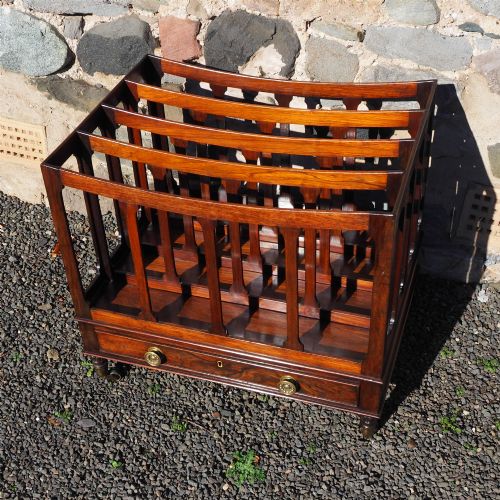
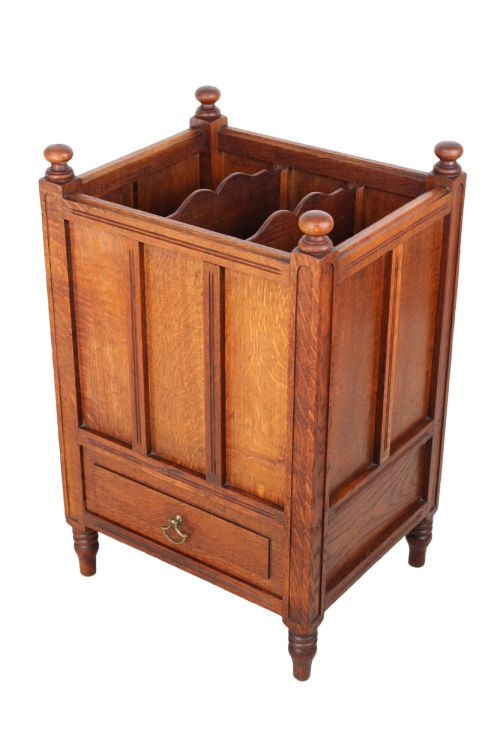
When searching for an antique music rack drawer, collectors encounter distinctive pieces primarily known in the trade as canterburys, music stands, and cabinets designed to hold folios and periodicals. These items span periods from the eighteenth century through to the Edwardian era, encompassing Georgian, Regency, William IV, and Victorian designs.
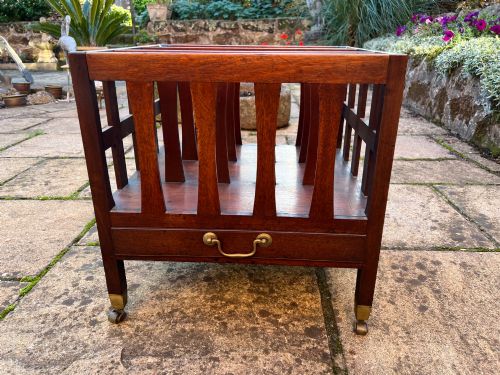
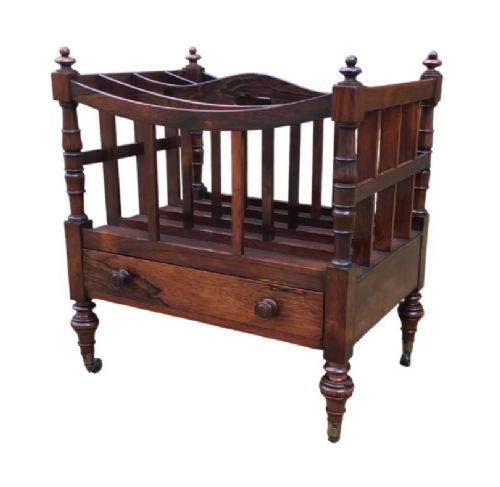
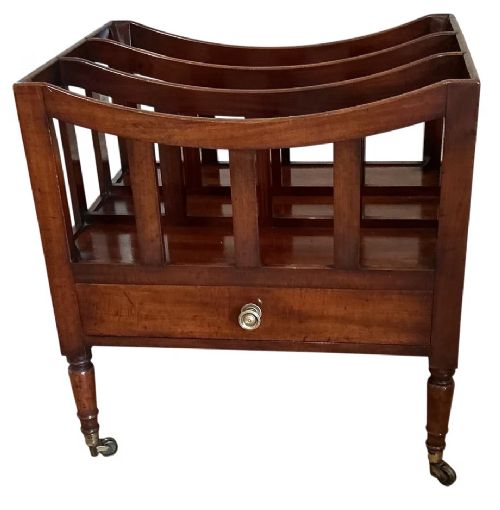
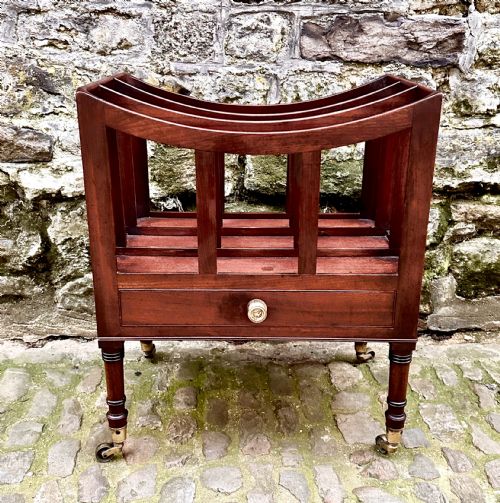
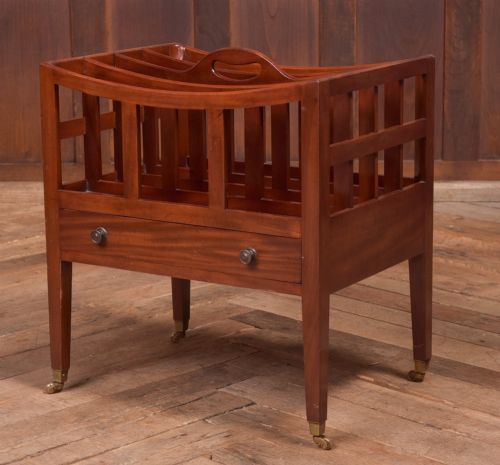
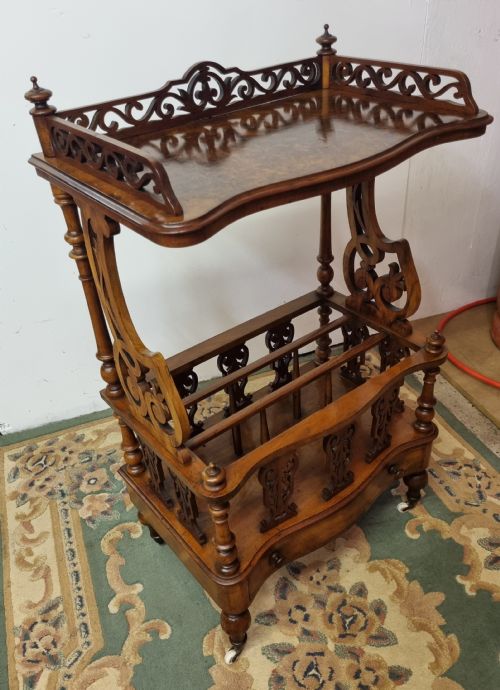
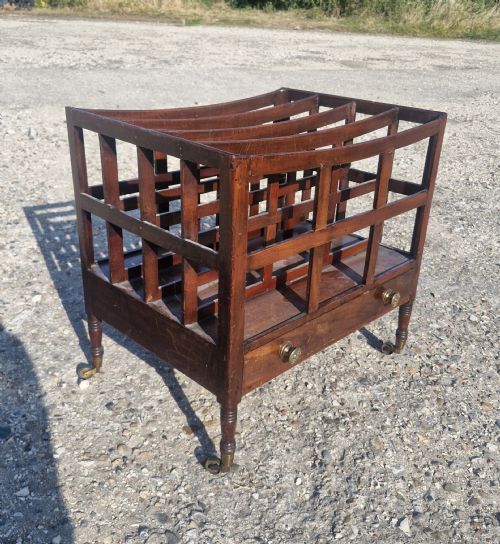
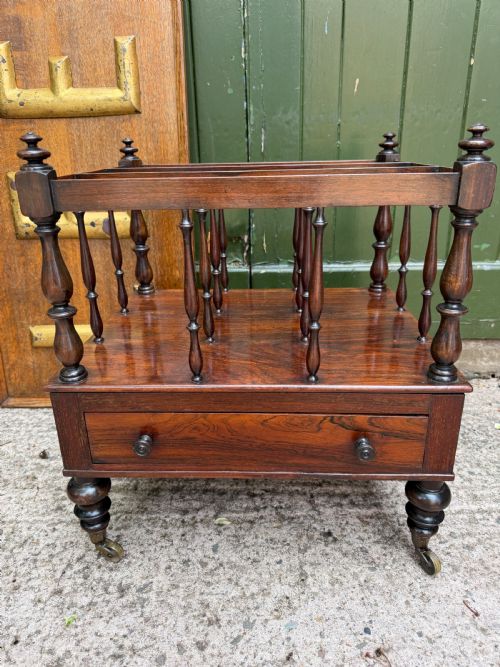
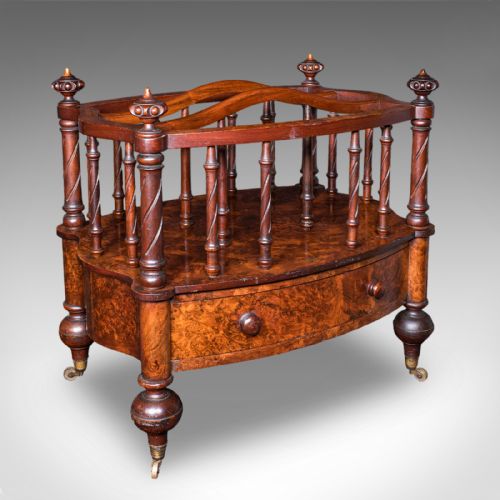
The most frequent form on this page is the freestanding mahogany, rosewood, or burr walnut Canterbury featuring a low partitioned rack above a single small drawer. Such items served dual purposes in the nineteenth-century parlour, keeping sheet music and newspapers organised near the pianoforte while functioning as decorative occasional furniture.
Materials and construction
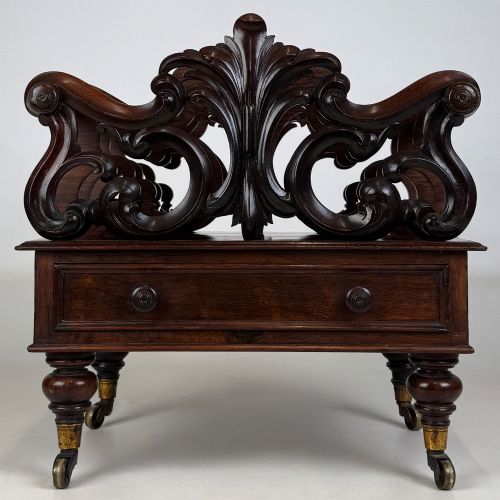
Cabinetmakers utilised rich timber veneers such as figured mahogany, rosewood, and burr walnut, often applied to solid secondary woods to create tactile, highly figured surfaces. Structural elements incorporate turned legs, frequently set upon castors for mobility, alongside delicate brass details and fretwork dividers.
Joinery techniques rely on traditional hand-cut joints, while drawer construction typically employs dovetailed sides and solid timber bases. Certain examples integrate ceramic or porcelain components alongside polished brass spindle work to separate the upright compartments.
Antique Music Rack Drawer Retail Price Guide 2026
Typical asking prices for music rack drawer among the pieces listed under this phrase on Sellingantiques today, from the lower quarter to the upper quarter. They describe what is for sale here now, not the wider market.
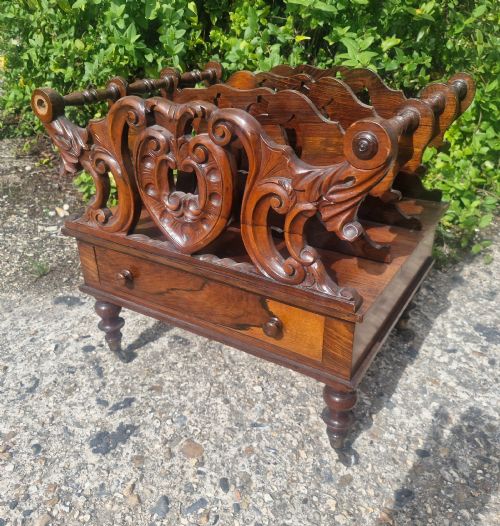
Early nineteenth-century makers occasionally carved Prince of Wales feathers into rosewood dividers, ensuring sheet music was stored with royal approval.
Distinctions in craftsmanship
Superior examples display exceptional timber selection, such as closely matched burr walnut or deeply figured rosewood veneers that wrap cohesively around the frame and drawer fronts. The crispness of carved details, such as Prince of Wales feathers or turned wooden finials, separates standard workshop output from finer cabinet work.
Structural integrity and proportion dictate overall excellence, where slender upright divisions remain secure within the base and drawers operate smoothly. The inclusion of original brass castors and uncompromised internal framing elevates a piece above simpler domestic utility furniture.
Edwards and Roberts
The Antique Music Rack Drawer Glossary
- Canterbury
- A low, freestanding stand featuring upright partitions for holding sheet music, newspapers, or folios, usually equipped with a small under-drawer. It originated in the late eighteenth century and evolved through various revival styles.
- Etagere
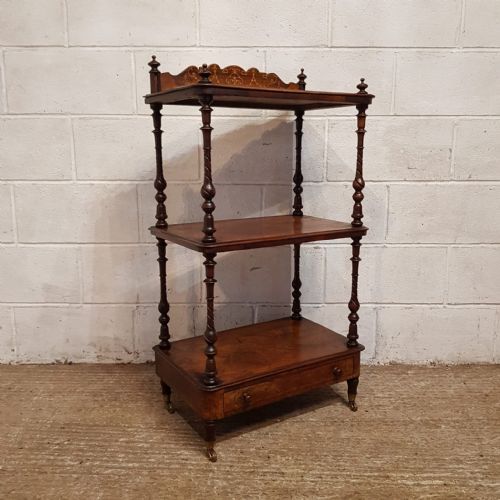
- A set of open tiered shelves used for displaying small objects or holding books and papers. These pieces often share decorative vocabularies with contemporaneous music stands and cabinets.
- Whatnot
- A piece of multi-shelved freestanding furniture designed for storage or display in the principal rooms of a house. Victorian versions frequently combined open shelving with enclosed drawer space.
- Boat Shaped
- A descriptive term for Canterbury frames featuring curved, flared sides reminiscent of a hull. This silhouette is particularly characteristic of Regency cabinet making.
- Serpentine Shape
- An undulating, wave-like contour applied to the front edge of a cabinet or table top. This profile demands advanced woodworking skill to shape accurately.
Antique Music Rack Drawer: Frequently Asked Questions
What is a Canterbury in furniture terms?
A Canterbury is a low stand with divided vertical slots designed specifically to hold sheet music, periodicals, or newspapers. Most incorporate a pull-out drawer beneath the partitions for smaller accessories.
Originally conceived in the Georgian period, the form remained popular throughout the Regency and Victorian eras as a practical accessory for the drawing room piano.
How do I distinguish Regency from Victorian models?
Regency pieces often display classical restraint, featuring boat-shaped frames, rosewood veneers, and elegant turned legs with brass castors. They date from the early nineteenth century and rely on clean, architectural lines.
Victorian examples tend to use burr walnut or mahogany with more exuberant carving, serpentine contours, or inlaid satinwood details. They frequently reflect later nineteenth-century revival tastes.
Were these pieces used only for music?
While primarily designed for holding sheet music near a piano or music stand, households also utilised them for daily newspapers and correspondence. The integrated drawer provided convenient storage for small reading items and writing materials.
Their versatility ensured they transitioned easily into general occasional tables or magazine tidies within domestic interiors.
What woods were commonly used?
Mahogany served as the primary timber from the Georgian era onward, prized for its durability and rich warm tone. Rosewood and burr walnut gained widespread favour during the Regency and Victorian periods for their striking grain patterns.
Satinwood and oak also appear in specific Edwardian or decorative variants, offering lighter aesthetic alternatives to the darker tropical hardwoods.