
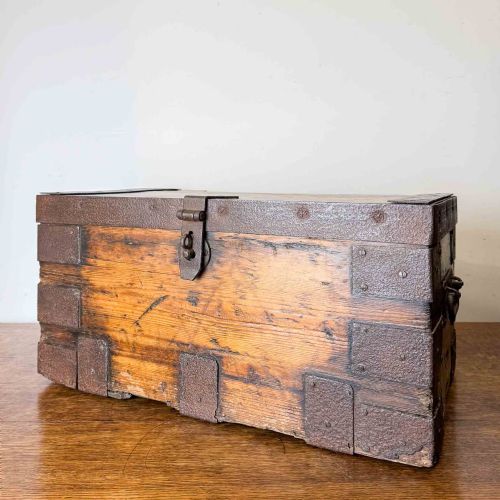


Antique Money Box
An antique money box is a small receptacle designed for saving coins, ranging from vernacular treen cottages to cast iron banks.
Forms and Origins
The antique money box appears in many vernacular and domestic forms, most commonly modelled as miniature cottages, houses, chests, books, and treen animals. These pieces reflect the architectural and domestic interests of the nineteenth century, often taking whimsical or novelty shapes to encourage saving. Buyers searching this category encounter everything from utilitarian elm strongboxes to intricately painted folk art cottages.
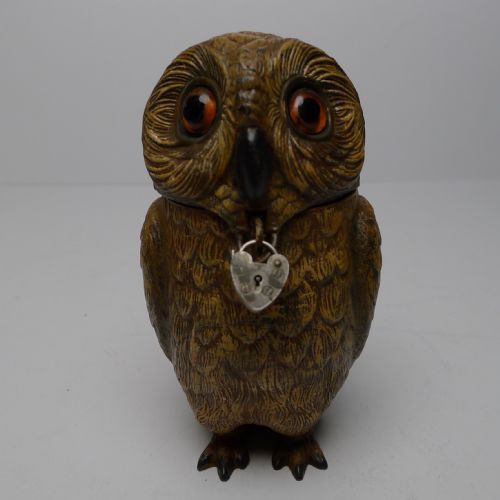
Among the most frequent finds are treen examples carved from boxwood, fruitwood, and walnut, alongside cast iron mechanical banks and pottery figures such as pigs and owls. Pieces span the Georgian, Victorian, and Edwardian eras, encompassing English provincial work, American cast iron, and Austrian tinplate. The variety ranges from simple slotted blocks of wood to intricate puzzle book boxes and inlaid maritime chests.
Materials and Construction
Makers utilised timber such as elm, pine, mahogany, and various fruitwoods, often turning them on a lathe or joining them with dovetails. Treen items demonstrate skilled carpentry and miniature architectural detailing, while cast iron and tinplate pieces rely on foundational moulding and stamping techniques.
Surface decoration involves hand painting, polychrome pigments, intricate marquetry inlay featuring ships and lighthouses, and cold painted metal finishes. Potters employed slip glaze and Prattware techniques to colour earthenware figures, whilst silversmiths shaped sterling silver into barrels and nest eggs.
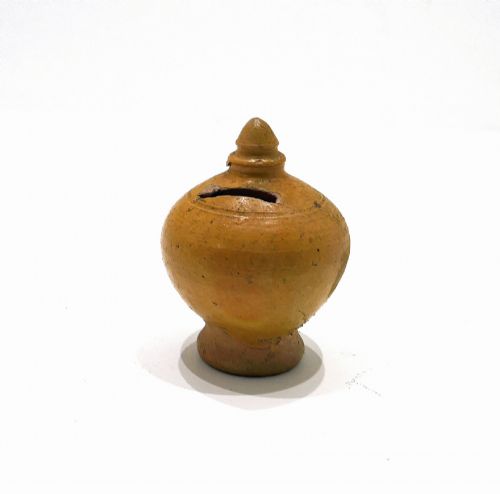
The listings show money boxes rendered in cast iron, sterling silver, pottery, and various woods including elm, pine, and walnut.
Defining Quality
Quality rests on the crispness of the carving or moulding, the complexity of the form, and the survival of original surface finishes. A piece with untouched folk art paintwork or detailed architectural inlay commands greater interest than a plain, utilitarian example.
Construction integrity also dictates standard, particularly where moving parts or sliding mechanisms in puzzle books and mechanical banks are concerned. The sophistication of the design, whether a castellated fruitwood castle or a detailed Black Forest bear, separates standard production from exceptional craftsmanship.
The Antique Money Box Glossary
- Mauchline ware
- Scottish souvenir wooden items. These pieces are decorated with photographic transfers or tartanware patterns.
- Strongbox
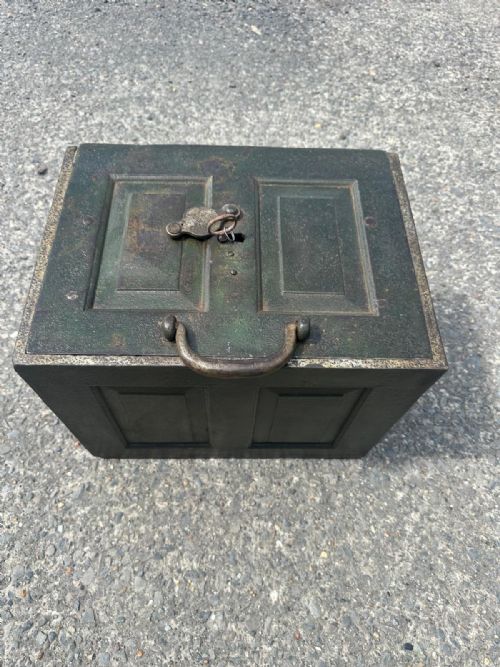
- A heavily reinforced small chest. Such containers utilise iron banding and robust locks to secure valuables.
Frequently Asked Questions
What materials were antique money boxes made from?
Makers used a diverse range of materials depending on the workshop and period. Common mediums include local timbers like elm, pine, and boxwood, alongside cast iron, tinplate, sterling silver, brass, and pottery.
Folk art examples frequently showcase painted wood, while domestic novelty pieces utilise metals and specialised hardwoods like walnut and fruitwood.
How do I date an antique money box?
Dating relies on material analysis, construction methods, and stylistic cues. Nineteenth-century pieces often feature hand-cut joinery, specific cast iron foundry marks, or traditional Prattware and slip-glazed pottery finishes.
Assay marks on silver examples provide precise decade markers, whereas folk art treen is typically dated by regional style and wear.
Were these boxes used by children or adults?
They served both demographics, functioning as childhood savings banks as well as decorative desk accessories for adults. Novelty shapes like animals and books appealed directly to younger savers.
More elaborate strongboxes and inlaid maritime chests were functional receptacles utilised in domestic and commercial settings.
What is treen in relation to these boxes?
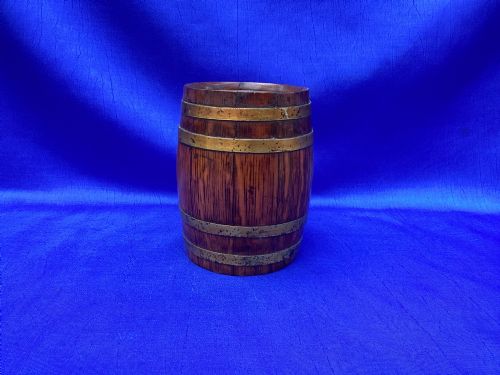
Treen refers to small, functional wooden objects made before the widespread use of plastic. In this category, it encompasses turned and carved items like beehives, castles, barrels, and book boxes.
These pieces highlight the skill of nineteenth-century woodturners working with fruitwood, boxwood, and other dense timbers.