
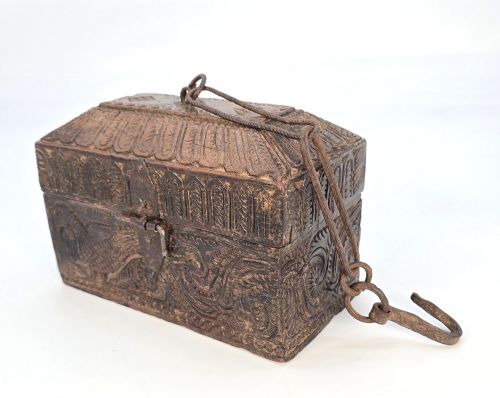
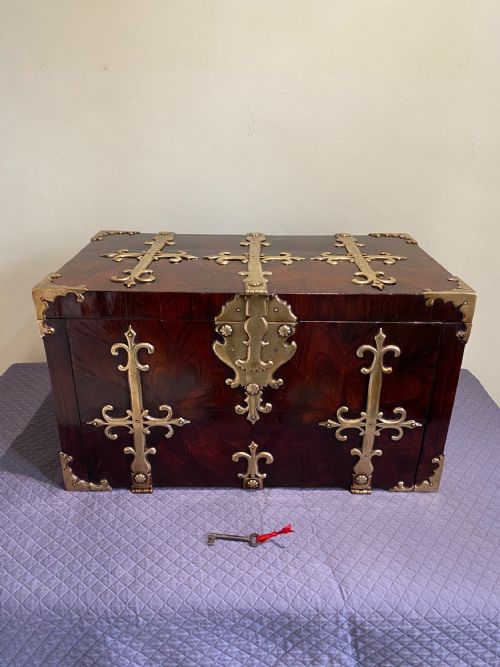


Antique Wooden Treasure Box
An antique wooden treasure box satisfies the desire to hold something solid, secret, and old.
Antique Wooden Treasure Box
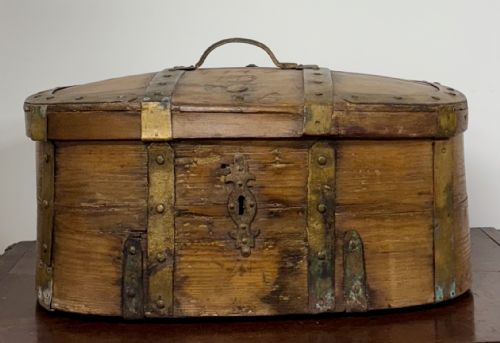
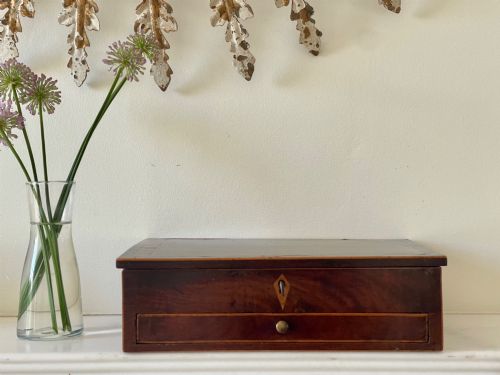
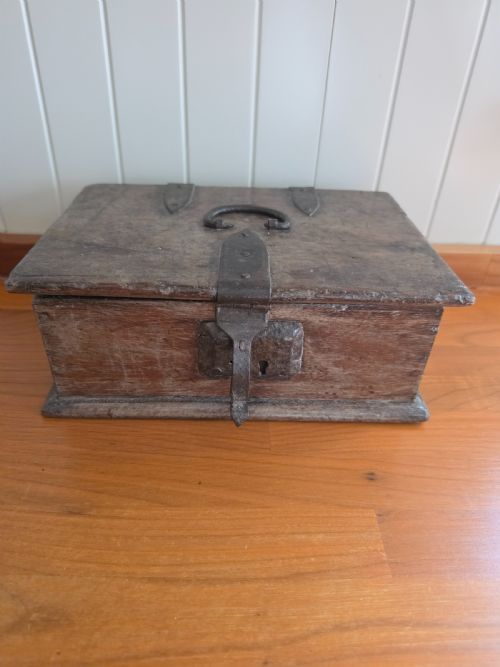
Buyers seeking an antique wooden treasure box encounter pieces ranging from heavy travelling strongboxes banded in iron to delicate flame mahogany jewellery caskets and rosewood keepsake boxes. The selection spans centuries of storage forms, including mule chests, spice boxes, and painted pine trunks.
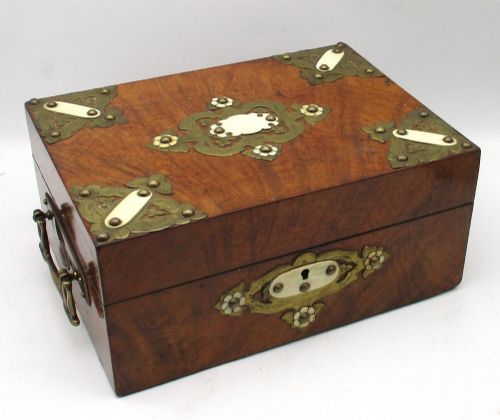
Origins stretch across regions and eras, uniting 17th-century European coffre fortes with 18th-century Indian carved teak and 19th-century Chinese wedding boxes. Oak, walnut, and kingwood predominate, often enhanced with brass mounts, bone details, and intricate marquetry.
Materials and construction methods
Carpenters built these receptacles using dense hardwoods like oak, walnut, and teak, frequently applying decorative veneers such as kingwood oyster or flame mahogany over secondary timbers. Surfaces relied on natural grain patterns or hand-painted finishes to provide visual depth.
Metal reinforcement defines the stronger utilitarian forms, employing heavy wrought iron straps, corner plates, and brass bindings secured with visible fixings. Internal compartments often featured hidden drawers, secret mechanisms, and specialised linings tailored for coins, jewellery, or documents.
One clever box hides coins inside a puzzle mechanism that requires a specific sequence of secret slides to open.
Determining quality and craftsmanship
Superior examples reveal themselves through the precision of their joinery and the integrity of their original hardware, whether hand-forged iron hinges or finely chased brass locks. The choice and matching of veneers, particularly on oyster-veneer and marquetry surfaces, separate utilitarian storage from masterwork cabinetmaking.
Integrity of the timber and the retention of original surface patination dictate desirability, as boxes retaining their unpolished warmth and functional locking mechanisms command greater interest. The sophistication of internal arrangements, such as puzzle openings or fitted velvet compartments, marks the distinction between standard vessels and exceptional pieces.
The Antique Wooden Treasure Box Glossary
- Coffre forte
- A heavy European strongbox, typically reinforced with iron bands and designed for securing valuables or currency. These sturdy chests often incorporate complex internal locking mechanisms.
- Mule chest
- A small chest or coffer featuring one or more drawers beneath the main storage compartment. They bridge the gap between simple trunks and fitted drawer furniture.
- Oyster veneer
- Slices cut transversely across small branches or roots to produce circular or oval patterns resembling oyster shells. This technique gained prominence during the seventeenth and eighteenth centuries.
- Marquetry
- The art of applying pieces of veneer to a structure to form decorative patterns or pictures. Craftsmen utilised various exotic and native woods to create contrasting pictorial scenes.
- Apprentice piece
- A small-scale item created by a trainee craftsman to demonstrate mastery of skills before admission to a guild. These miniature chests replicate full-sized furniture with exact proportions.
Antique Wooden Treasure Box: Frequently Asked Questions
What were strongboxes used for?
Strongboxes served to secure high-value possessions, documents, and currency during an era when portable security was essential for travel or domestic safety. Their heavy iron banding and robust wooden construction deterred theft and protected contents from fire or moisture.
Over time, these utilitarian boxes evolved into display pieces in wealthier households, transitioning from purely functional defence to decorative receptacles for personal treasures.
How do I date an antique box?
Dating relies on examining the construction techniques, timber species, and hardware styles visible on the piece. Hand-cut dovetails, forged iron hinges, and specific decorative idioms like oyster veneering or marquetry point to distinct historical periods.
Secondary woods used inside drawers and back panels also provide clues to the region of origin and approximate decade of manufacture.
Are these boxes still practical for daily use?
Many of these containers retain their original structural integrity and functional locks, making them suitable for storing jewellery, modern trinkets, or keepsakes. Their solid construction allows them to endure everyday handling.
Care should be taken with historical finishes and delicate internal linings, avoiding excessive moisture or direct sunlight to preserve the aged timber.
How do I care for wooden surfaces?
Preserving the surface requires maintaining stable indoor humidity levels and keeping boxes away from direct heat sources that could cause wood to split or veneer to lift. Gentle dusting with a dry cloth is generally sufficient for regular maintenance.
Applying occasional appropriate wax feeds the old timber without building up heavy chemical residues that obscure the natural grain.