


Wooden Book Box
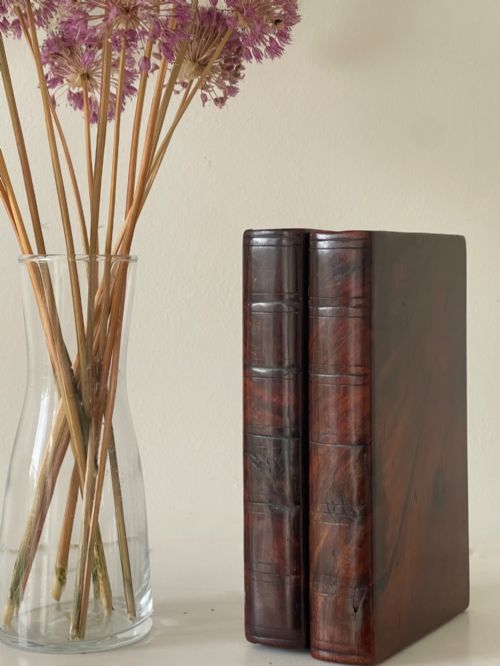
A wooden book box mimics a leather-bound volume to hold secrets, correspondence or keepsakes upon a desk.
Wooden Book Box
A wooden book box takes the deceptive form of a bound volume to sit discreetly amongst library shelves or upon a writing desk. These pieces serve as repositories for personal papers, coins, snuff, or keepsakes, using the spine and boards of a book to conceal a compartment within.
The versions met on this page span several eras, originating from the Georgian period through to the Art Deco and Edwardian decades. Makers rendered these boxes in forms such as bible boxes, writing slopes, secret safes, and games boxes.
Regional and stylistic varieties appear among the listings, including Welsh chip-carved folk art and Italian Sorrento olive wood boxes. Each specimen reflects the prevailing taste of its origin, whether the rustic carving of a local tradition or the geometric precision of the 1920s.
How they were made
Cabinet makers utilised dense hardwoods such as mahogany, walnut, oak, and fruitwood to construct the rigid carcasses of these disguised volumes. Olive wood frequently appears for decorative Sorrento surfaces, often enhanced by contrasting fruitwood inlay.
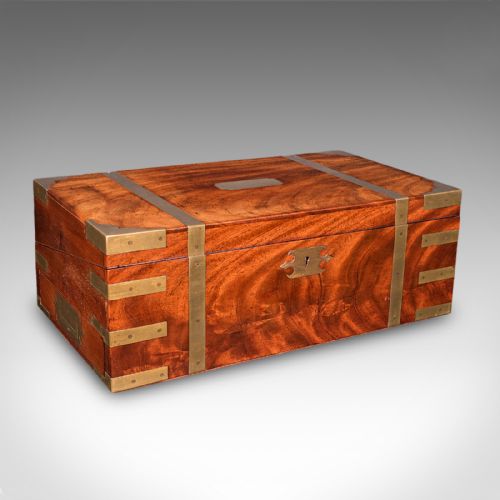
Metal components played a structural and decorative role, with brass fittings securing hinges, locks, and corners. Carving techniques ranged from Welsh chip carving on folk pieces to Art Nouveau floral motifs and Art Deco Odeon styling.
Materials recorded across the inventory include oak, mahogany, walnut, brass, olive wood, and fruitwood inlay.
What varies in quality
The cleverness of the deception dictates much of the appeal, where a box with convincing spine faux-ribs and inlaid page edges succeeds better than a simple rectangular block. Finer examples maintain tight tolerances around the concealed compartments and sliding mechanisms.
The integrity of the timber and the crispness of the carving separate standard pieces from superior examples. Surfaces enriched with intricate fruitwood inlay or detailed chip carving demand greater artisan skill than plain hardwood boxes.
The Wooden Book Box Glossary
- Bible box
- A small lidded desk or box traditionally used to hold a family bible or religious texts. These pieces often feature sloping lids designed for reading or writing.
- Writing slope
- A desk accessory with an angled writing surface that opens to reveal compartments for stationery and ink. Many incorporate hidden drawers beneath the writing flap.
- Sorrento ware
- Decorative wooden items produced in the Italian town of Sorrento featuring intricate micro-mosaic marquetry and olive wood construction. The technique relies on precise geometric inlays of various tinted woods.
- Chip carving
- A primitive folk art method where the maker removes small chips from a wooden surface with a knife to form geometric patterns. Welsh examples demonstrate this traditional technique on small containers.
- Snuff box
- A small pocket or desk container designed to hold powdered tobacco. These items often took disguised forms to amuse companions in company.
Wooden Book Box: Frequently Asked Questions
What were wooden book boxes used for?
These boxes served to store intimate items away from prying eyes while resting in plain sight upon a library table. Owners used them for correspondence, coins, jewellery, or tobacco.
Their deceptive disguise allowed sensitive papers or valuables to remain accessible yet concealed among genuine volumes.
How do I date a wooden book box?
Dating relies upon observing the timber species, decorative style, and construction methods used by the maker. Pieces from the Georgian era display simple folk carving, whereas Victorian and Edwardian examples often incorporate intricate marquetry or art styles.
Hardware such as brass hinges and locks also provides clues to the period of manufacture.
Are these boxes secure?
Most wooden book boxes rely on clever concealment, secret panels, or simple latches rather than heavy security. They functioned primarily as novelty items or personal keepsakes rather than heavy-duty safes.
Some later twentieth-century versions marketed as secret safes offered more deliberate locking mechanisms for valuables.
Where were Sorrento boxes made?
Sorrento boxes originated in the coastal Italian town of Sorrento, famous for its olive wood workshops and marquetry craftsmen. Local artisans specialised in inlaid wooden souvenirs for travellers.
These pieces typically feature distinctive floral or geometric marquetry set into pale olive wood.