


Antique Mirrored Tray
These antique mirrored tray examples combine reflective glass with tactile metals and woods, offering practical elegance for serving drinks or displaying objects.
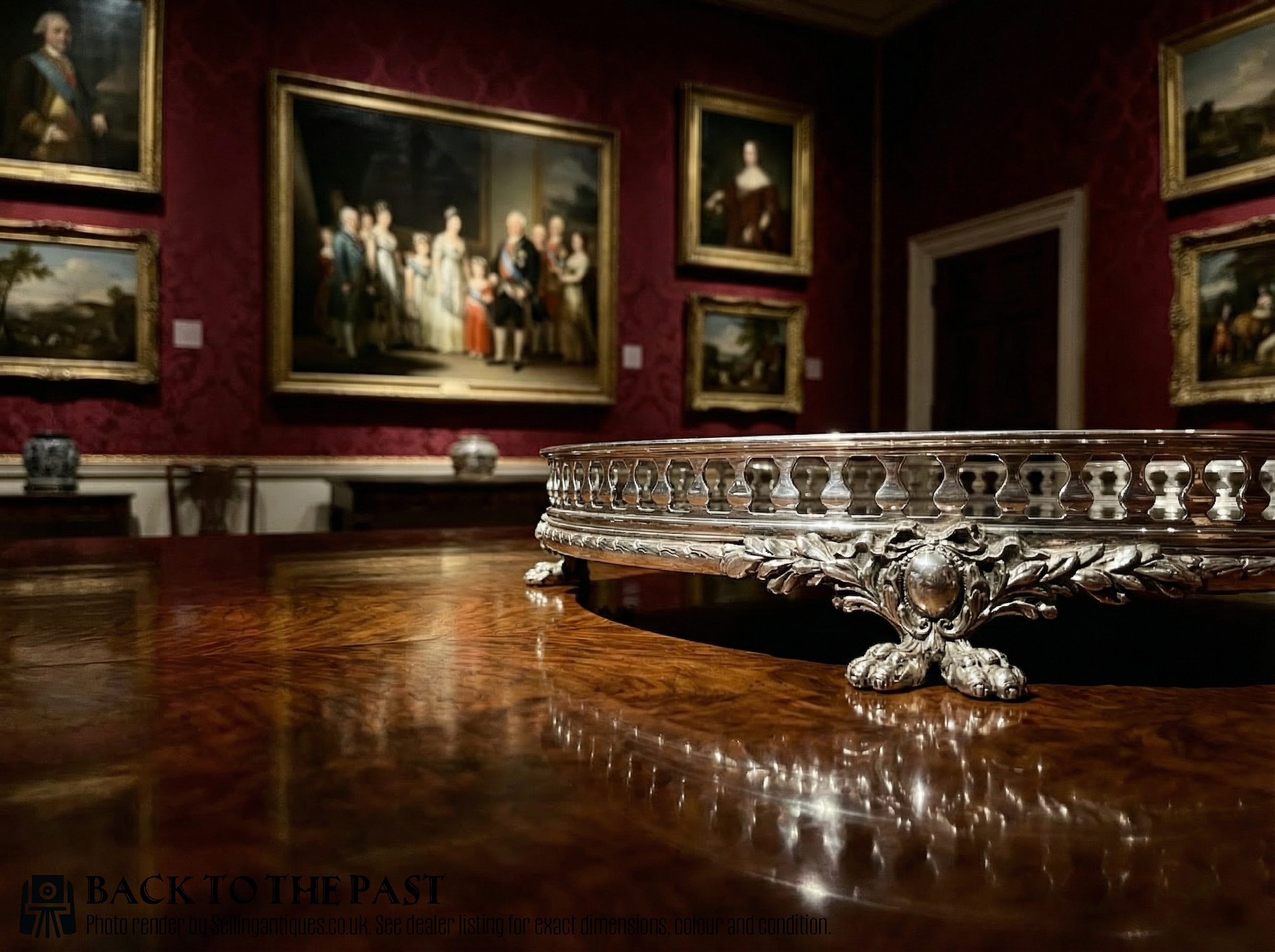
Antique Mirrored Tray
An antique mirrored tray serves as both a functional serving piece and a decorative tabletop plateau, often featuring a reflective glass base designed to enhance the items placed upon it. When exploring this selection, buyers encounter various forms ranging from compact drinks trays to substantial silver plated mirror plateaus.
The objects appearing across these listings date from the nineteenth century through the Art Deco era, encompassing Victorian, Edwardian, and 1930s designs. Alongside dedicated serving trays, the category occasionally spans related mirrored forms such as table plateaus and vanity sets.
How they were made
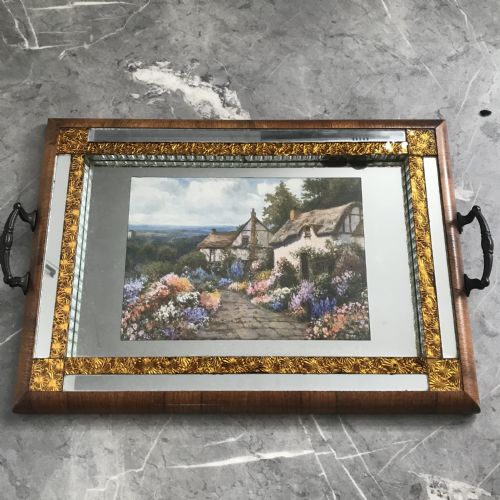
Construction relies on a combination of reflective glass and supportive frames fashioned from metals like brass, copper, silver plate, and gilt metal. Many examples incorporate wooden surrounds or handles utilising oak, walnut veneer, mahogany, or ebony.
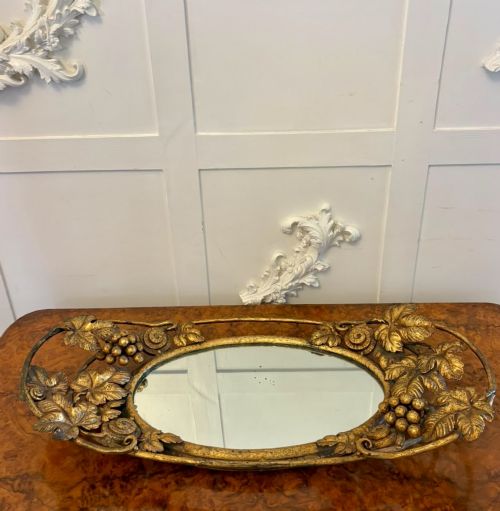
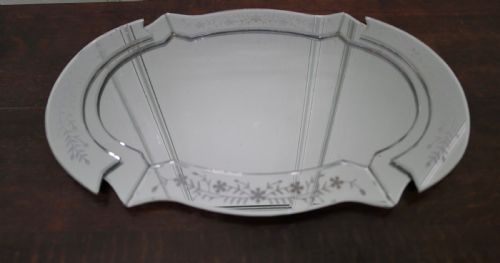
Surface decoration frequently involves etching upon the mirror plate itself, alongside cast or applied metal mounts in grapevine and other decorative motifs. Silver plating and pewter provide durable metallic structures to secure the heavy glass inserts.
A charming Victorian gateau centrepiece brings unexpected pastry architecture directly onto a reflective mirrored stage.
What varies in quality
Quality reveals itself in the crispness of the glass etching and the weight of the supporting metal frame or wooden gallery. Superior examples display clean silvering on the mirror plate paired with robust, securely joined handles and frames.
Distinction between pieces often rests on the finesse of secondary materials, such as finely figured walnut veneer or substantial cast bronze and silver plated mounts. The integration of specialised decorative elements, like cobalt blue glass or detailed Venetian cutting, elevates the piece.
Gillows·Mosey
The Antique Mirrored Tray Glossary
- Mirror plateau
- A mirrored tabletop base originally used in the nineteenth century as a centrepiece for dining tables to reflect candlelight or silver display items.
- Silver plate
- A technique where a thin layer of silver is fused to a base metal, commonly utilised to create durable trays and decorative mountings.
- Art Deco
- A design style prevalent in the 1920s and 1930s characterised by geometric shapes, stylized motifs, and streamlined forms.
- Etched glass
- Glass decorated by applying an acidic or abrasive substance to carve designs directly into the reflective surface.
Antique Mirrored Tray: Frequently Asked Questions
How do I clean an antique mirrored tray?
Maintenance requires gentle dusting and careful avoidance of harsh chemical cleaners that might damage the original silvering on the glass or the surrounding metal.
Cleaning the frame depends entirely on its material, requiring appropriate wood balms or gentle metal polishes applied separately from the mirror plate.
How do I date an antique mirrored tray?
Dating relies on observing stylistic markers, such as the geometric lines and materials typical of 1930s Art Deco pieces versus the ornate floral motifs of Victorian or Edwardian examples.
Construction methods, including the type of wood veneer, screw heads, and plating techniques, also provide reliable clues to the period of manufacture.
Can these trays still be used for serving?
Most examples remain structurally sound for carrying light items, though heavy daily use is generally discouraged to preserve fragile antique glass and original silvering.
Many owners choose to utilise them as stationary display surfaces for perfume bottles, glassware, or bar accessories rather than active service items.