



Mirrored Glass Tray
These mirrored glass trays combine reflective surfaces with functional frames, offering a practical way to display glassware and drinks.
Mirrored Glass Tray
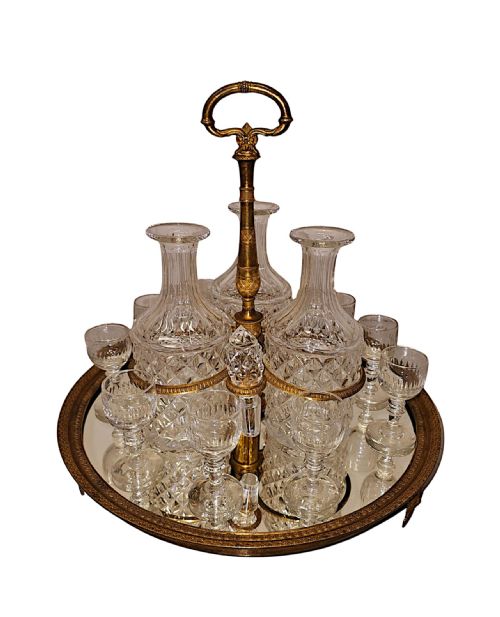
A mirrored glass tray serves as a decorative surface for holding decanters, drinks, and glassware. These pieces reflect light and objects placed upon them, adding brightness to a room.
The selection here includes items spanning from the Victorian period through the Edwardian era and into the Art Deco style of the nineteen-thirties. Forms range from dedicated cocktail trays and wine trays to table plateaus and display stands.
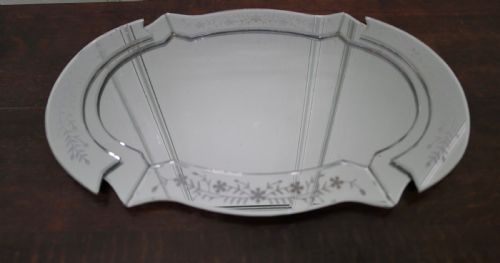
Venetian and Italian influences appear alongside metal, chrome, wood, and silver plated frames. Buyers encounter geometric shapes like octagons alongside cut glass mirrors and etched glass borders.
How they were made
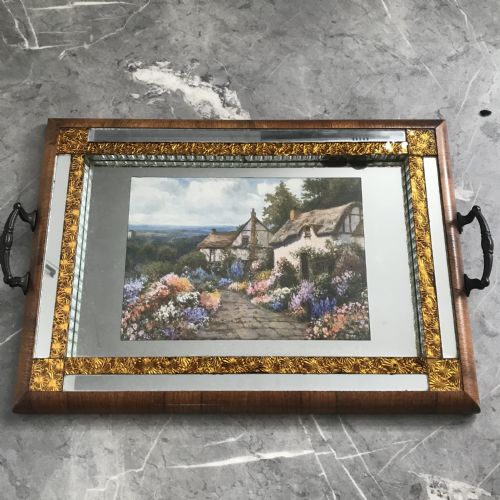
Makers combined mirror glass and reflective plateaus with structural supports of metal, chrome, copper, and wood such as walnut veneer. Silver plating provided a polished finish for metal mounts and handles.
Decoration relied on surface techniques including cutting, etching, and bevelling the glass. Artisans also integrated coloured elements, such as cobalt blue glass, and fitted handles made from copper or plated metal.
Mirrored Glass Tray Retail Price Guide 2026
Typical asking prices for mirrored glass tray among the pieces listed under this phrase on Sellingantiques today, from the lower quarter to the upper quarter. They describe what is for sale here now, not the wider market.
Jewellers once used small mirrored plateaus to bounce extra light onto pocket watches and rings in display windows.
What varies in quality
Quality depends on the crispness of the glass cutting, the precision of the etching, and the condition of the reflective silvering beneath the surface. Superior examples maintain clear, unblemished mirrors and secure, well-fitted frames.
The choice of materials also distinguishes the pieces, with substantial wood veneers, solid metal handles, and specialised glass borders indicating finer manufacture. Original matched components, such as decanter sets, elevate the integrity of the piece.
Mosey
The Mirrored Glass Tray Glossary
- Table plateau
- A mirrored centrepiece placed on a dining table to hold candelabras, flowers, or decanters. These heavy stands protect polished wood surfaces from heat and moisture.
- Bevelled glass
- Glass with an angled edge cut and polished to a specific acute angle. This technique creates a prismatic border that catches and refracts light.
- Art Deco
- A design style from the nineteen-twenties and nineteen-thirties characterised by streamlined geometric forms and modern industrial materials. It dominates the selection of trays shown here.
- Silver plate
- A thin layer of silver applied to a base metal object. This method provided the appearance of solid silver at a lower production cost.
Mirrored Glass Tray: Frequently Asked Questions
What were mirrored trays used for?
These trays served primarily for holding drinks, decanters, and cocktail glasses on sideboards or tables. Their reflective surfaces amplified the candlelight or room illumination.
They also functioned as table plateaus for centrepieces or as display stands for small decorative objects in domestic settings.
How do I date a mirrored tray?
Dating relies on observing the stylistic characteristics, materials, and manufacturing techniques of the frame and glass. Victorian and Edwardian examples often feature heavy plateaus and ornate silver plating.
Nineteen-thirties pieces typically display Art Deco geometric lines, chrome handles, and streamlined walnut or mirrored glass borders.
Can I use these trays for serving drinks?
Most of these trays accommodate decanters, glasses, and barware securely during transport or stationary display. The solid frames and handles provide adequate support for normal domestic use.
Care should be taken with older silver plated surfaces and delicate glass borders when cleaning or handling wet glassware.
What is the difference between a tray and a plateau?
A tray usually includes handles and a lighter construction designed for carrying items from room to room. Trays often feature raised wooden, metal, or glass borders.
A plateau is typically a heavier, low-profile mirrored stand intended to remain stationary on a table or sideboard as a decorative base.