

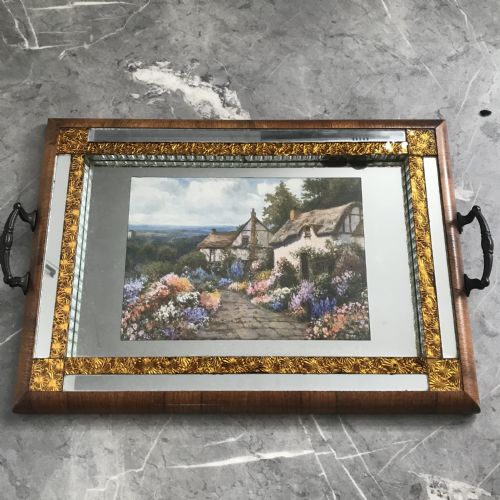


Vintage Vanity Table Tray
These vintage vanity table tray examples range from mirrored Art Deco plateaus to Edwardian porcelain sets, offering a practical surface for perfumes and cosmetics.
Vintage Vanity Table Tray
When you search for a vintage vanity table tray, you are looking at mirrored plates, metal platters, and wooden dressing table dishes designed to hold small personal items. The selection on this page spans several decades, including Edwardian examples, 1920s Italian glass, and 1930s Art Deco designs with walnut or macassar veneer.
The most common forms you will meet here are silver-plated ovals, bevelled mirror glass trays, and porcelain dressing table sets. These pieces were originally used on dressing tables and sideboards to organise brushes, jewellery, and perfume bottles.
Origins vary across English, French, and Italian workshops, alongside Kashmiri wooden items and Venetian mirror work. Each piece reflects the dressing habits of its period, from Victorian green glass to modernist interwar forms.
How they were made
The materials recorded in these pieces rely heavily on mirror plate, glass, and silver plate set into metal or wooden frames. Walnut veneer, ebonised wood, ebony, and macassar provide the structure for many of the wooden trays and boxes.
Surface decoration involves etching on glass, intricate embossed scrolls on silver plate, and hand-painted details on porcelain and Kashmiri wood. Spelter and ceramic also appear in specific dishes and pin trays from the interwar period.
Vintage Vanity Table Tray Retail Price Guide 2026
Typical asking prices for vintage vanity table tray among the pieces listed under this phrase on Sellingantiques today, from the lower quarter to the upper quarter. They describe what is for sale here now, not the wider market.
Listings feature items spanning from the Victorian period through the Edwardian era and into 1930s Art Deco.
What varies in quality
Quality in these trays is determined by the clarity of the mirror glass and the crispness of any metal embossing or woodwork. Substantial weight in the silver plate and precision in the veneered framing separate finer examples from standard production.
The integrity of the backing materials and the preservation of original mirror silvering indicate how well a piece has survived. Intricate detailing in the scrolls, etching, and applied handles shows the maker's original standard of execution.
The Vintage Vanity Table Tray Glossary
- Mirror plateau
- A mirrored tray or plateau used as a centrepiece on a table or dressing table to reflect light and display objects. These often feature decorative metal or wooden galleries around the edge.
- Silver plate
- A base metal such as copper or nickel silver coated with a layer of pure silver. It allows for detailed embossed scrolls and decorative handles without the weight of solid silver.
- Walnut veneer
- A thin layer of walnut wood applied to a core structure to create patterned surfaces. This technique defined many Art Deco and interwar furniture and accessory designs.
- Spelter
- A zinc alloy commonly used for cast figures, dishes, and decorative objects. It was frequently painted or electroplated to imitate bronze or silver.
- Ebonised
- Wood treated with a dark stain or finish to imitate ebony. This dark finish was popular in Edwardian and Georgian revival pieces.
Vintage Vanity Table Tray: Frequently Asked Questions
What is a vanity tray used for?
These trays were placed on dressing tables to hold perfume bottles, hairbrushes, and small cosmetics. They kept surfaces organised and protected wooden furniture from spills.
Today, they serve a similar purpose in bathrooms or bedrooms, or act as decorative display pieces for jewellery and small collections.
How do I date a mirror tray?
Dating relies on stylistic clues such as geometric Art Deco lines, Edwardian floral motifs, or Victorian glass colours. Materials like macassar and walnut veneer also point to specific decades.
Examining the backing materials, screw types, and construction methods helps narrow down the period of manufacture.
Are mirror trays fragile?
The mirrored glass and silvered backing require careful handling to prevent scratching or moisture damage. Placing them on stable surfaces away from heavy impacts keeps the glass secure.
Cleaning should be done with soft cloths, avoiding harsh chemical cleaners that might lift the silvering on the glass edges.
What is an Edwardian dressing set?
Edwardian dressing sets typically include matching trays, hairbrushes, and trinket boxes designed for the dressing table. They often feature porcelain, silver plate, or inlaid wood.
These coordinated sets reflect the formal dressing routines of the early twentieth century and were popular wedding gifts.