



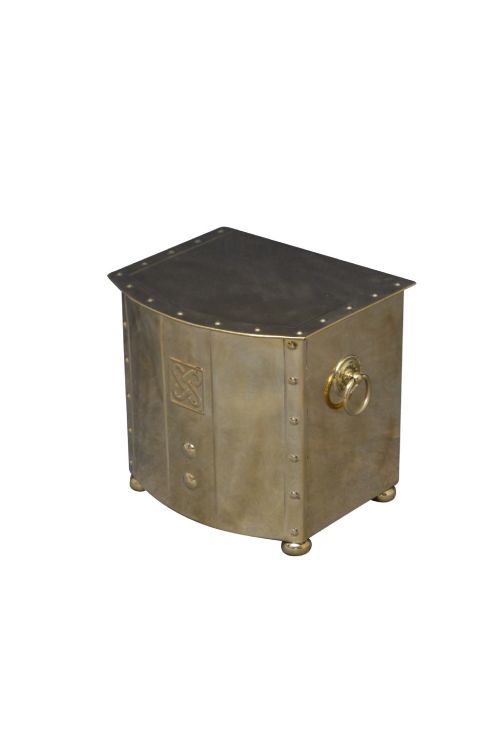
Antique Metal Fireside Bin
An antique metal fireside bin brings a heavy physical weight and warmth to a hearth, designed to hold coal, logs, or kindling near the fire.
Antique Metal Fireside Bin
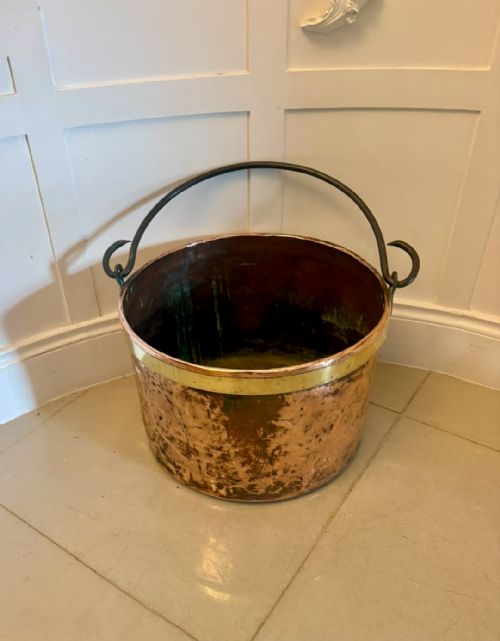
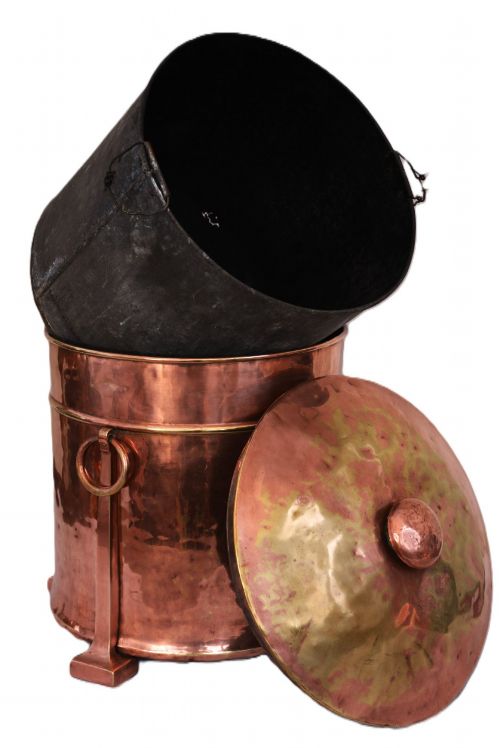
An antique metal fireside bin serves as a sturdy receptacle for hearth fuel, taking the form of buckets, scuttles, boxes, and cauldrons. The pieces seen here span from the nineteenth century into the twentieth, covering the Georgian, Victorian, Edwardian, and Art Deco periods.
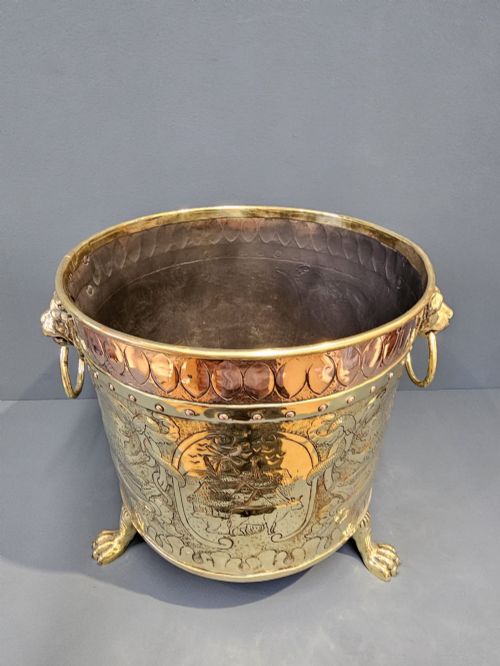
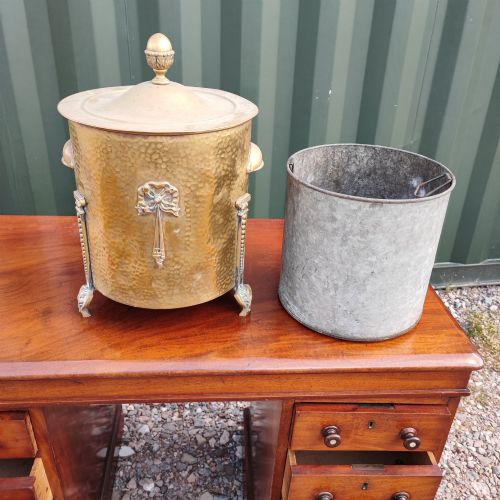
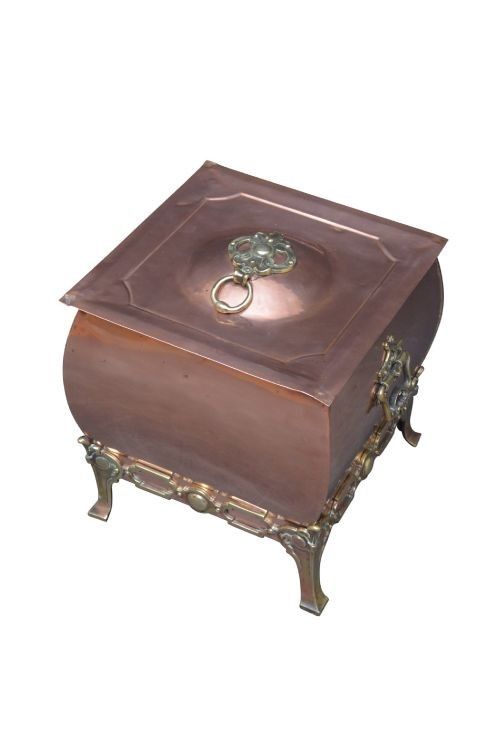
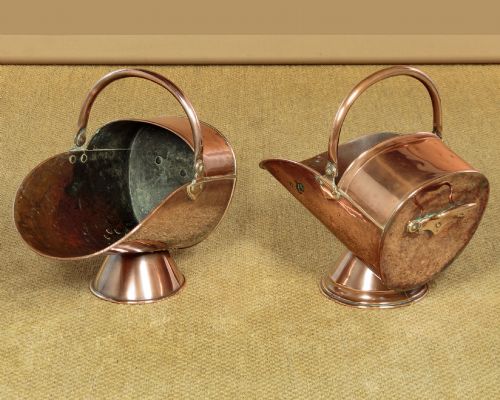
Brass and copper dominate the selection, shaped into cylindrical bins, helmet-shaped scuttles, and handled buckets. Many double as planters or newspaper stands, reflecting how domestic objects often shift their utility over decades of household life.
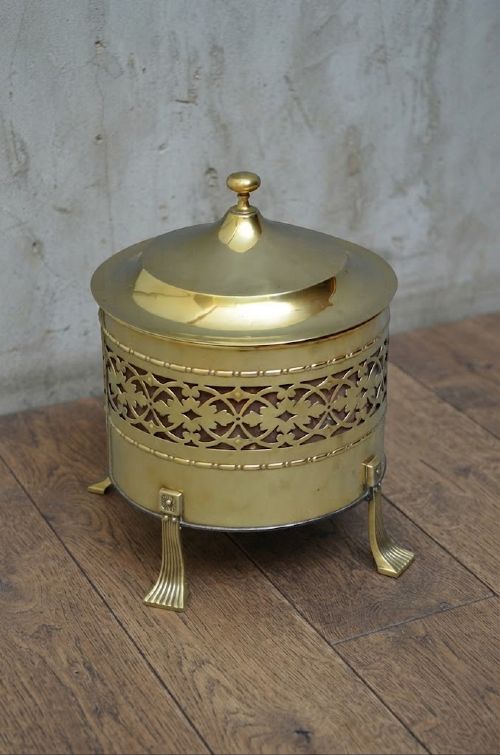
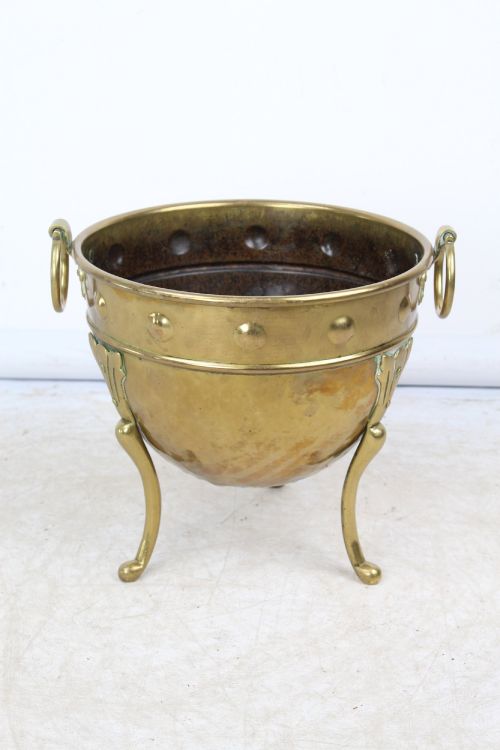
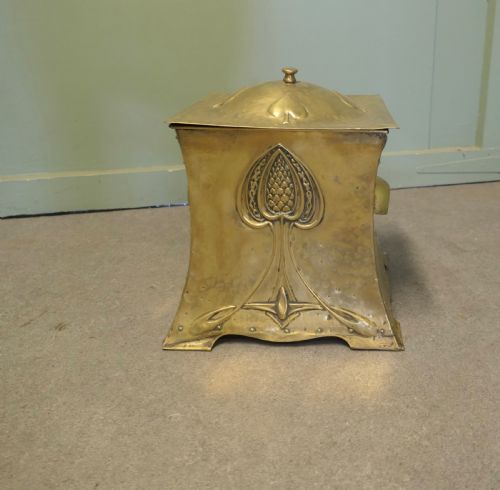
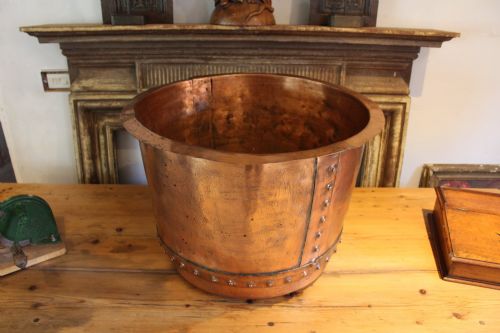
Makers and workshops from the Arts and Crafts and Art Nouveau movements applied hand-beaten textures, repoussé tavern scenes, and fretwork designs to otherwise utilitarian vessels. Buyers encounter everything from plain riveted copper cauldrons to elaborate brass bins with copper bands.
How They Were Made
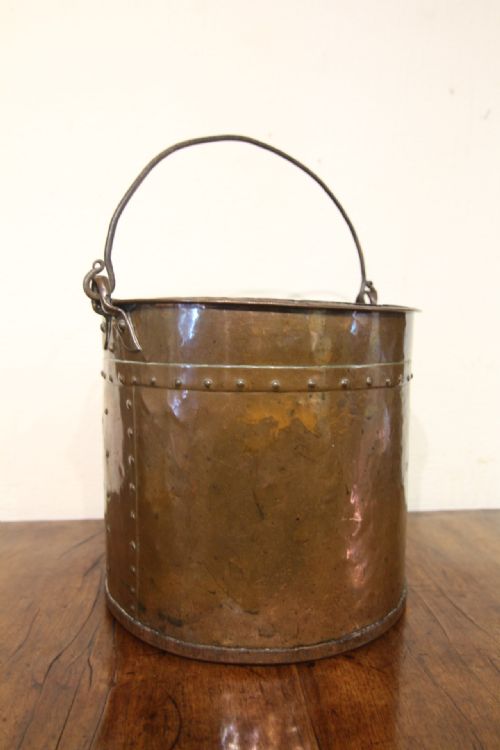
Metalsmiths worked sheet brass and copper by hand or with early industrial presses, raising bodies from single sheets or joining seams with visible rivets. Wrought iron provided swing handles, frames, and drop handles that had to bear the heavy load of coal or logs.
Decoration relied on hammer beating, embossing, and applied brass or copper bands to reinforce the joints and rims. Some examples incorporate wooden elements, such as coopered oak bodies bound with metal bands or fitted interior liners.
Listings feature brass, copper, wrought iron, and oak across Victorian, Edwardian, and Arts and Crafts styles.
What Varies in Quality
The weight of the metal and the integrity of the construction set apart the better examples from lighter, mass-produced items. Thick gauge copper or brass maintains its structural rigidity around the rim and base, resisting the dents that come from heavy logs and coal shovels.
Artisanal detail distinguishes workshop pieces from standard factory output, seen in crisp hand-hammered texturing, tight riveting, and well-fitted iron swing handles. The quality of decorative motifs - such as embossed tavern scenes or fretwork - reveals the skill of the original metalworker.
Henry Loveridge·Petrus Ramus·Percy Metal Works London
The Antique Metal Fireside Bin Glossary
- Coal Scuttle
- A bucket or box designed for carrying and holding coal by the hearth, often featuring a shaped lip or a hinged lid. They frequently take a helmet shape with a back handle for tilting.
- Repoussé
- A metalworking technique where the artisan hammers the design from the reverse side to form raised patterns on the front. This method appears widely on Arts and Crafts and Victorian brass bins.
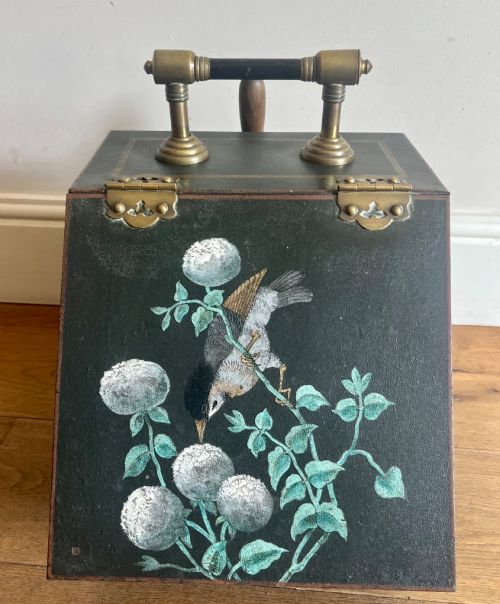
- Tole Ware
- Painted or enamelled sheet metal objects that imitate Japanese or Chinese lacquerware. These pieces bring colour and pattern into the fireside setting.
- Coopered
- Constructed from vertical wooden staves bound together with metal hoops, much like a traditional barrel. Some fireside bins use this method with oak timbers.
- Cauldron
- A large, round metal pot with a wide rim and a swinging iron handle for hanging or carrying. In a fireside context, they serve as deep log stores.
Antique Metal Fireside Bin: Frequently Asked Questions
How were antique fireside bins originally used?
These bins sat beside open hearths to store coal, logs, or kindling close to the fire for easy stoking. Households relied on them to keep fuel contained and tidy on the hearth rug.
Over time, many of these metal vessels transitioned into decorative roles, holding potted plants, dried flowers, or newspapers once central heating reduced the need for coal fires.
How do I clean an antique copper or brass bin?
Most collectors prefer to leave an aged patina on copper and brass, as the dark oxidation records the history of the object. Harsh metal polishes strip away this surface character and can remove thin surface layers.
If cleaning is necessary, a gentle wipe with a soft, dry cloth removes dust. Avoid abrasive scourers that scratch the hand-beaten or hammered surfaces.
Can I still use an antique metal bin for real logs?
Sturdy metal bins with iron frames or thick copper walls handle firewood quite well. Lighter decorative pieces from the Edwardian or Art Deco periods may dent under heavy logs.
Using an interior liner protects the antique metal from moisture and damp wood. This prevents internal corrosion and staining on the bottom of the vessel.
How do I tell a Victorian bin from an Edwardian one?
Victorian pieces tend to feature heavy gauge metals, robust riveted construction, and ornate ornamentation like embossed tavern scenes or heavy copper bands. They lean towards darker, more substantial aesthetic weights.
Edwardian and later pieces often display lighter fretwork designs, geometric Art Nouveau patterns, or cleaner Arts and Crafts lines with visible hammer marks rather than heavy castings.