
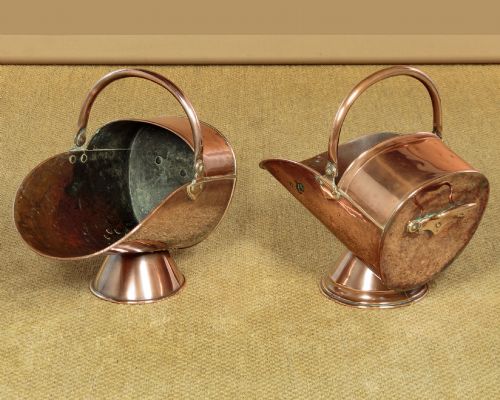


Copper Fireside Scuttle
A copper fireside scuttle brings practical warmth and character to a hearth, holding fuel while reflecting the glow of the fire.

Copper Fireside Scuttle
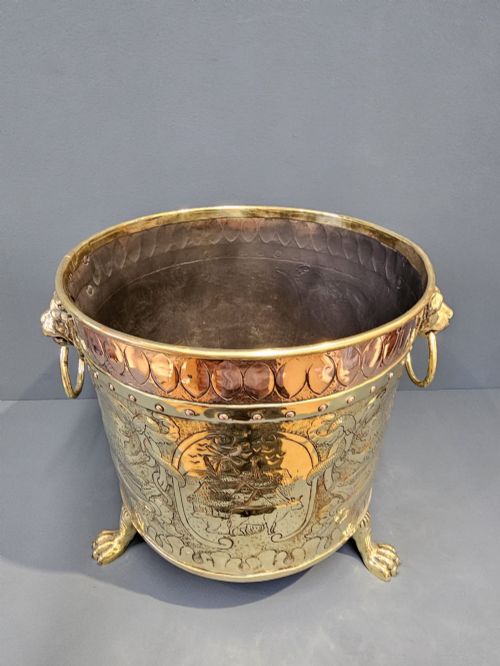
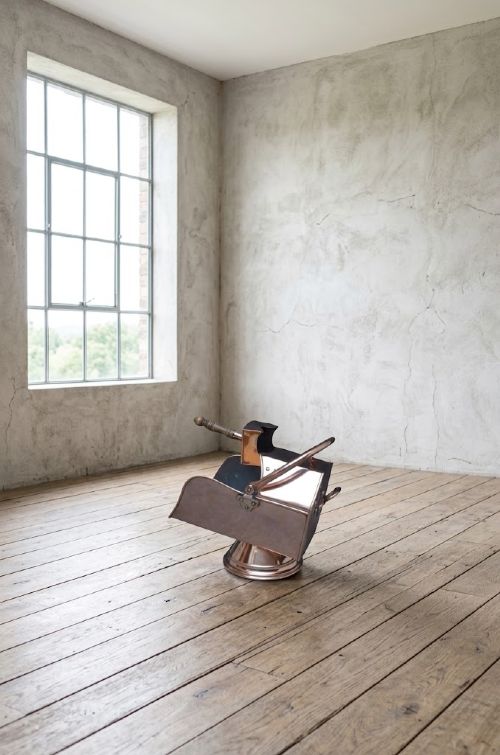
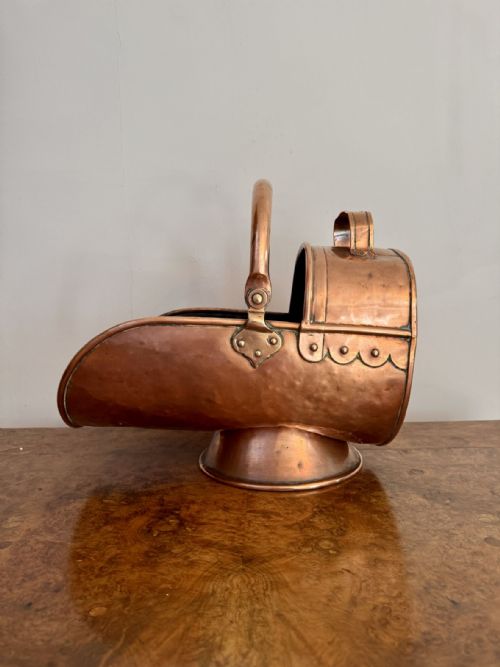
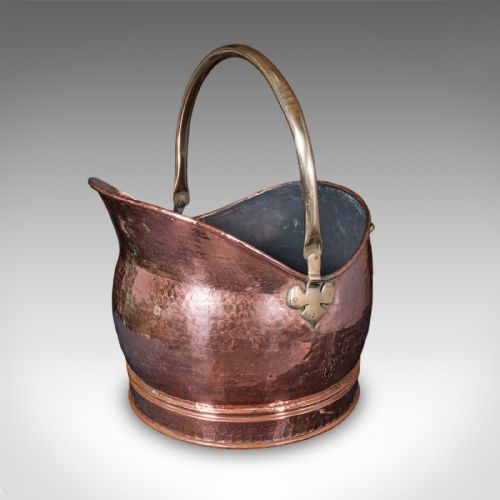
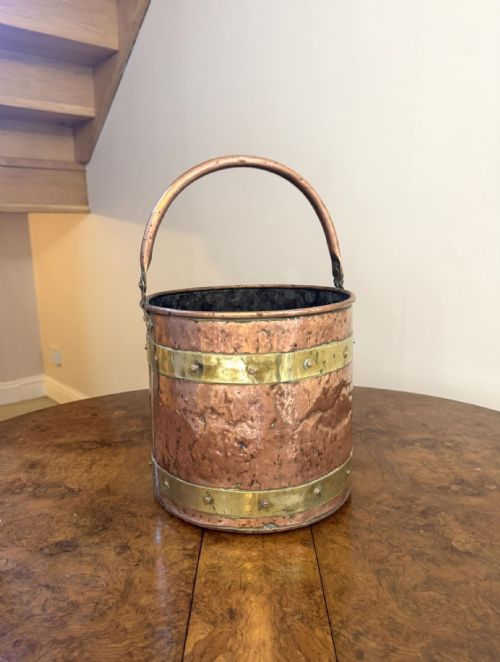
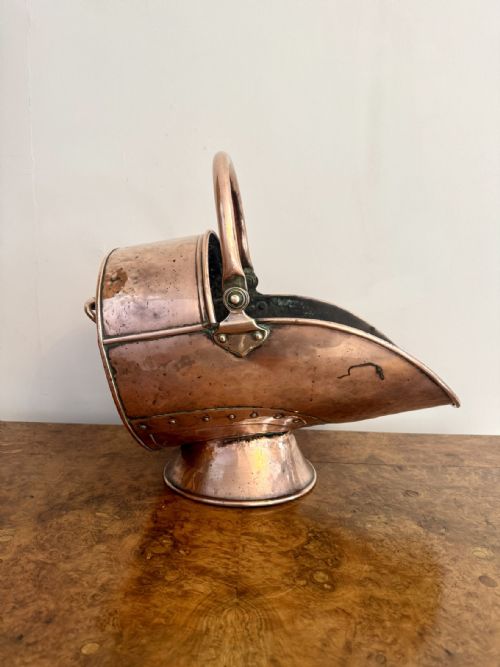
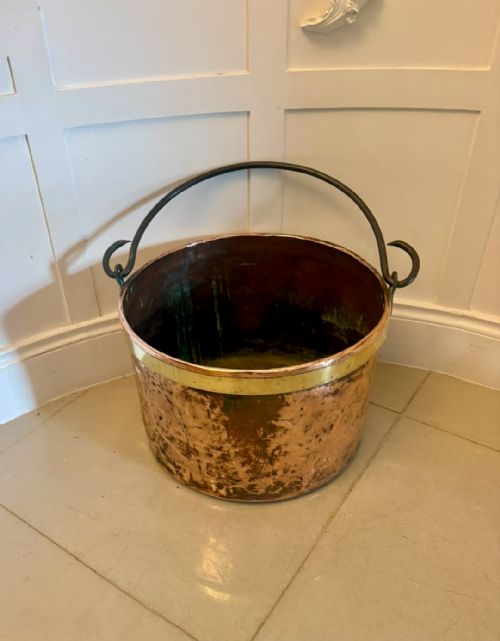
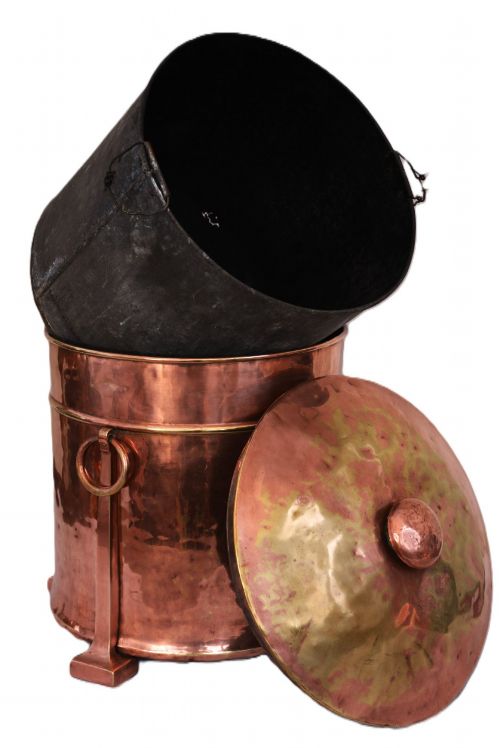
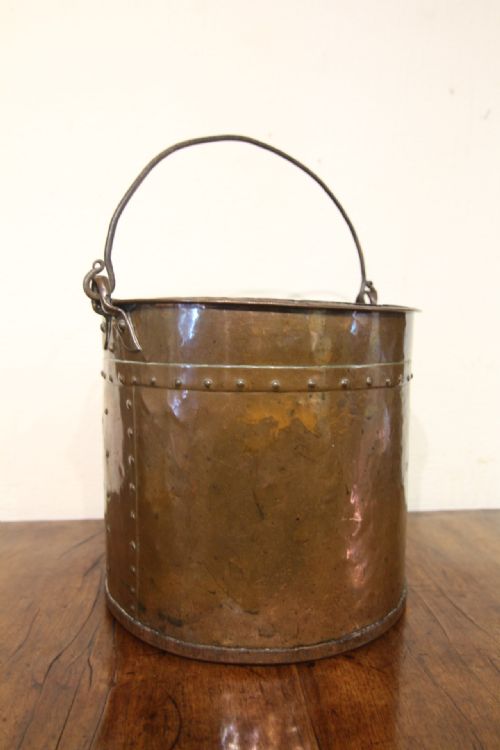
When searching for a copper fireside scuttle, collectors encounter functional vessels designed to hold coal, logs, and peat beside the fireplace. The most common examples on this page date from the Victorian period, featuring helmet shapes and cylindrical buckets.
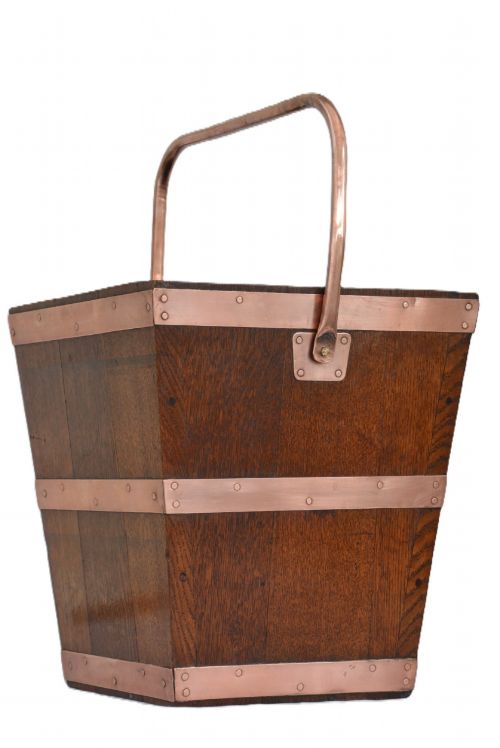
English workshops produced the majority of these pieces, pairing beaten copper with brass handles, iron frames, and oak bases. They served as everyday utility items that doubled as decorative focal points for the fireplace.
Materials and construction methods
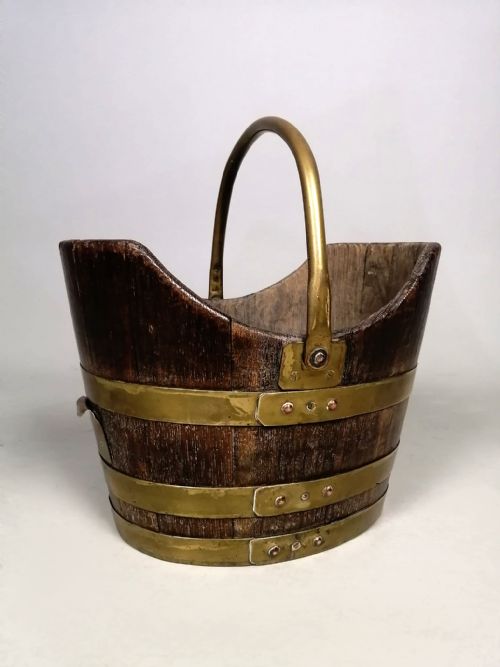
Makers utilised sheet copper combined with brass for handles, bands, and rims, frequently mounting bodies on sturdy iron frames or solid oak bases. Riveting and hand-beating techniques provided structural strength while adding decorative texture to the metal panels.
Handles and fixings were often forged from wrought iron or cast in brass, secured firmly to withstand the heavy loads of coal or logs. Hand-finished surfaces displayed individual hammer marks, reflecting the manual labour involved in shaping the metal.
Copper Fireside Scuttle Retail Price Guide 2026
Typical asking prices for copper fireside scuttle among the pieces listed under this phrase on Sellingantiques today, from the lower quarter to the upper quarter. They describe what is for sale here now, not the wider market.
Some nineteenth-century dairy jugs found a second life by the hearth, repurposed as practical log buckets.
Distinctions in construction and design
The distinction between standard utility items and finer examples lies in the weight of the metal and the complexity of the hand-beaten decoration. Heavier copper gauges and robust riveted construction signal higher craftsmanship, ensuring the vessel retained its shape under daily use.
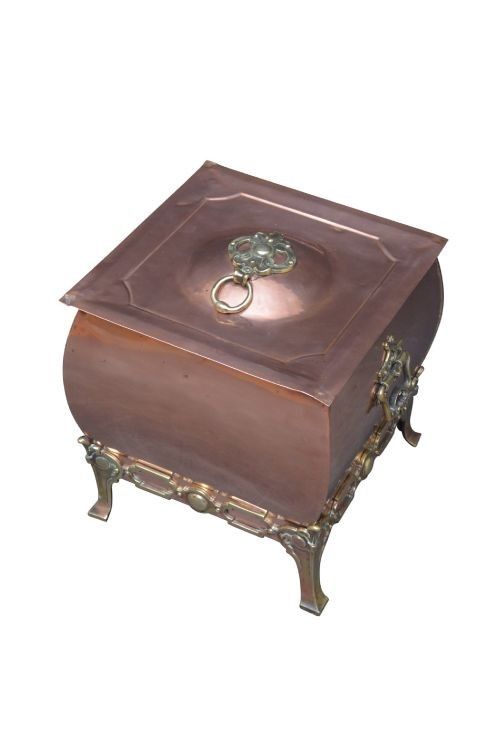
Artisanal touches such as embossed brass bands, intricate handles, and integrated oak or iron frames elevate the piece from simple hearth storage to a considered decorative object. Pieces retaining their original shovels or matching liners show greater integrity.
Percy Metal Works London
The Copper Fireside Scuttle Glossary
- Helmet scuttle
- A traditional coal container featuring a flared mouth and a sloped body that resembles a medieval helmet, designed for easy pouring into the grate.
- Log bin
- A deep cylindrical or rectangular container used primarily for storing firewood rather than small coal or peat.
- Embossed
- Raised ornamentation pressed or hammered into the surface of the metal from the reverse side to create decorative patterns.
- Riveted
- Joined together using metal pins that are hammered flat at the ends, providing both secure assembly and a distinct industrial aesthetic.
- Arts and Crafts
- A design movement valuing handcraftsmanship, simple utility, and traditional manufacturing techniques over mass production.
Copper Fireside Scuttle: Frequently Asked Questions
What is a copper fireside scuttle used for?
These vessels were built to store coal, logs, or peat close to the hearth for easy access when stoking the fire. Their angled openings and handles allowed fuel to be transferred smoothly into the grate without spilling.
Over time, many of these utilitarian containers transitioned into decorative room accessories or planters once central heating reduced the reliance on open fires.
How do I date an antique copper scuttle?
Dating relies on observing the manufacturing techniques, materials, and stylistic details present in the construction. Georgian and early nineteenth-century pieces often display heavy riveting and simpler brass banding, while Victorian and Edwardian examples frequently incorporate embossed patterns and Art Nouveau styling.
Changes in handle attachments and the use of secondary woods like oak inside the base also help narrow down the production era.
Can I use an antique scuttle for real logs?
Most antique copper scuttles and log bins remain structurally sound enough to hold firewood in a modern living space. The robust iron frames and thick copper walls were originally engineered to handle heavy loads of fuel.
Care should be taken with the interior lining to protect the metal from excessive moisture if storing damp wood or unseasoned logs.
How do I clean an antique copper scuttle?
Maintenance generally involves dusting with a soft cloth to preserve the natural patina built up over decades of use. Aggressive metal polishes are usually avoided by collectors who prefer the aged, weathered character of historical copper.
Gentle washing with warm soapy water removes accumulated soot or grime without stripping the aged surface finish.