


Copper Helmet Bucket
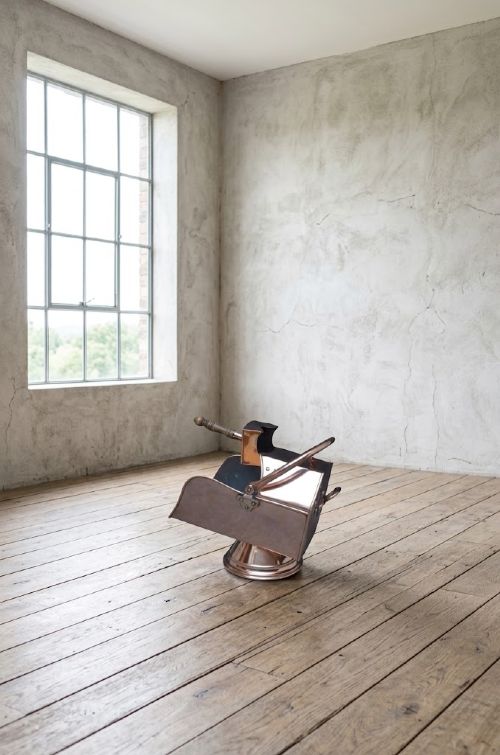
A copper helmet bucket brings distinct metalwork to the hearth, offering functional fuel storage with historic character.
Copper Helmet Bucket
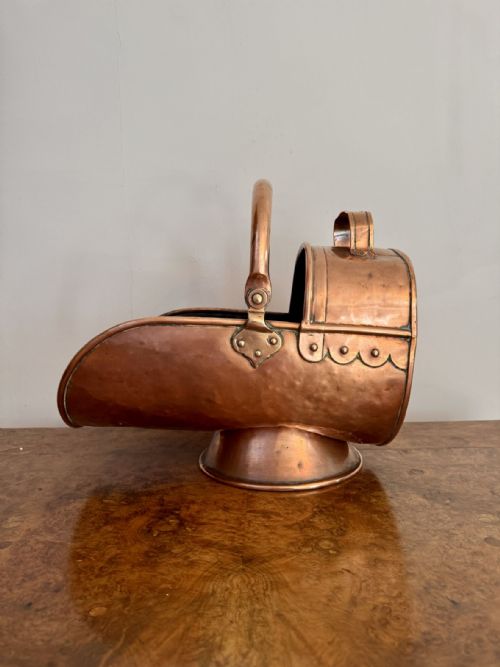
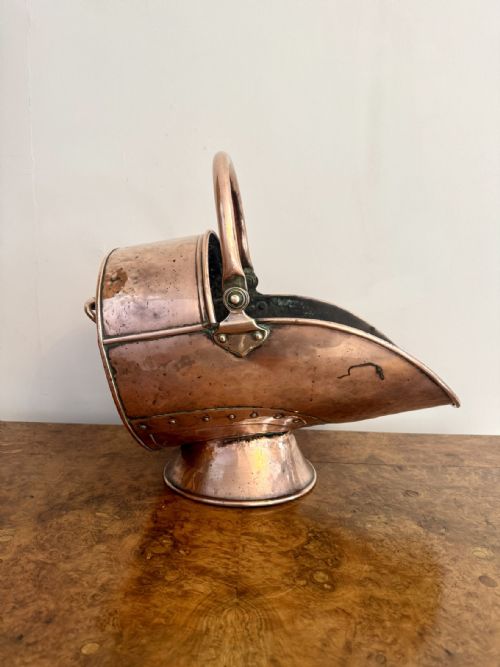
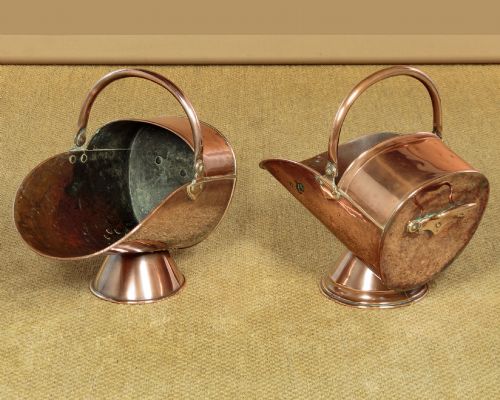
A copper helmet bucket is a traditional fireside container designed for holding coal or logs, taking its name from its distinctive sloped helmet shape. These vessels appear frequently in Victorian and George III forms, combining practical utility with polished metal display by the fireplace.
The pieces listed on this page span the nineteenth century, including Edwardian examples and Arts and Crafts interpretations. Buyers encounter variations ranging from simple utilitarian bins to heavy helmet scuttles fitted with brass handles and claw feet.
How they were made
Construction relies primarily on sheet copper shaped into the characteristic helmet profile, often joined with visible seams and reinforced with wrought iron or brass elements. Metalworkers utilised hammering techniques to strengthen the body, visible in the hammer-beaten surfaces found on later Arts and Crafts pieces.
Handles and fittings incorporate cast brass, ceramic china, and wood to provide insulated grips for carrying fuel. Many examples integrate iron or brass feet, securing the copper body above the hearth floor.
Listings feature copper, brass, wood, and iron materials spanning the Georgian, Victorian, Arts and Crafts, and Edwardian periods.
What varies in quality
Quality rests in the thickness of the copper sheet and the substantial weight of the overall construction. Lighter vessels bend easily under heavy loads of coal, whereas superior pieces maintain rigid walls and robust structural integrity.
The refinement of decorative details, such as embossed motifs, hand-beaten texturing, and securely attached brass or ceramic handles, distinguishes standard utilitarian scuttles from finer fireside accessories.
The Copper Helmet Bucket Glossary
- Helmet scuttle
- A fireside bucket featuring a raised back and a sloping front lip designed for pouring fuel cleanly. This profile defines the primary shape sought by collectors.
- Coal hod
- An alternative term for a fuel container used beside the fireplace. These vessels often share the materials and period styles of helmet buckets.
- Aesthetic Period
- A late nineteenth century design movement focusing on visual beauty and artistic detail. Items from this era frequently incorporate distinctive handles and decorative mountings.
Copper Helmet Bucket: Frequently Asked Questions
What is a copper helmet bucket used for?
These vessels served historically to store and transport coal or logs to the fireplace for domestic heating.
Today, owners utilise them to hold firewood or display dried arrangements beside the hearth.
How do I date a copper helmet bucket?
Dating relies on stylistic clues, construction methods, and materials associated with periods like George III or the Victorian era. Earlier pieces often display hand-beaten seams, while later Edwardian examples incorporate different handle attachments.
Examining the type of brass fittings and interior ironwork also helps place the object within its historical timeframe.
Are brass and copper used together?
Many examples combine a copper body with cast brass handles, rims, and feet to provide structural contrast and durability.
This pairing appears across Victorian and Edwardian manufacturing traditions.
How should I clean copper?
Maintenance depends on personal preference regarding polished shine versus aged patina. Gentle cleaning preserves the historic surface character accumulated over generations.
Harsh abrasives should be avoided to protect the original metal thickness.