


Antique Meat Platter Dish
When you search for an antique meat platter dish, you enter a world of large ceramic services and heavy metal domes made to present joints at the dining table.
Antique Meat Platter Dish
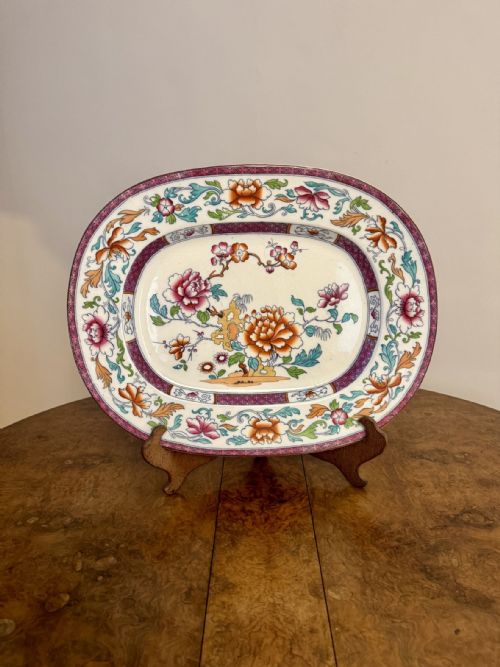
An antique meat platter dish spans substantial ceramic trays, deep ironstone dishes fitted with drainers, and heavy metal warming trays designed for carving joints.
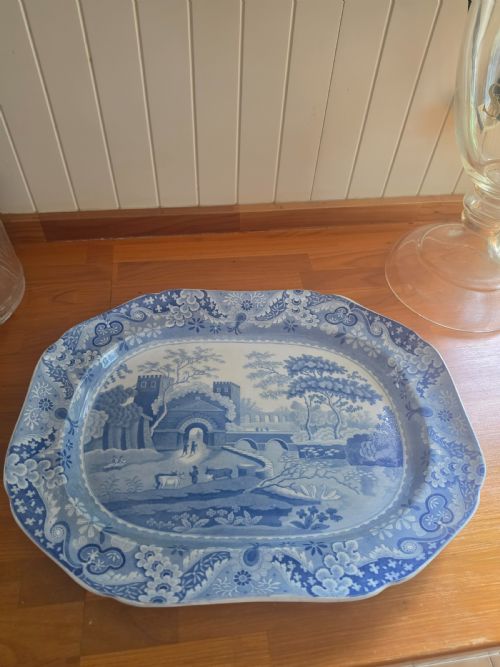
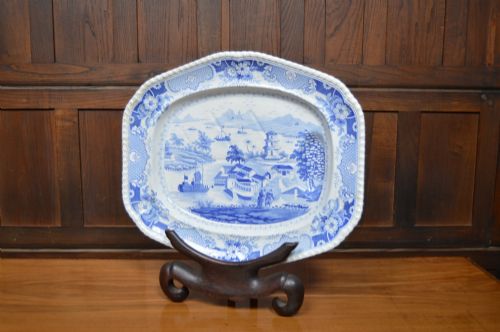
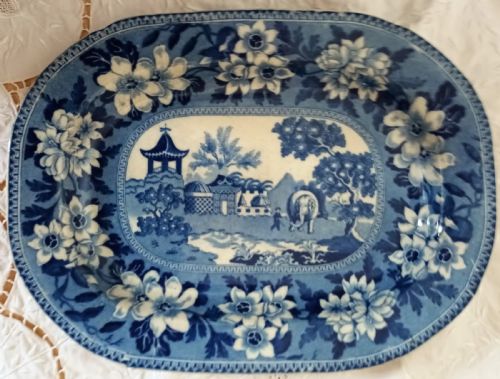
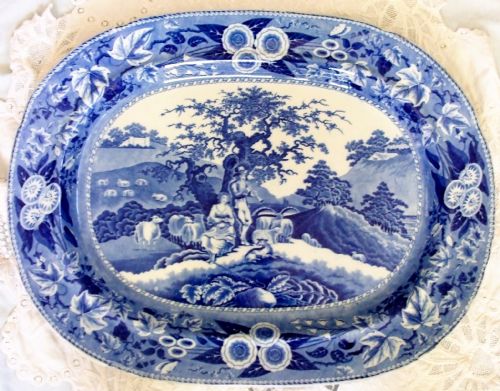
The version most commonly met on this page is the large blue and white transferware earthenware platter dating from the Georgian and Victorian periods, often decorated with romantic landscape scenes.
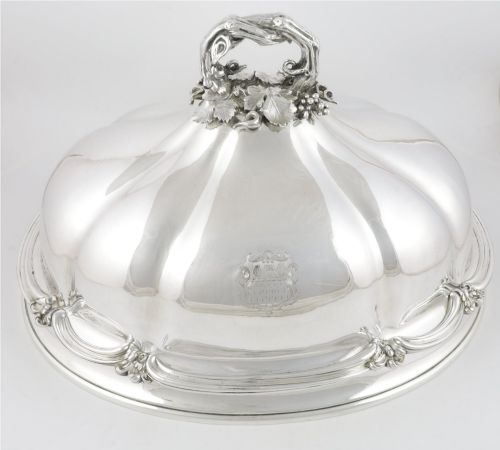
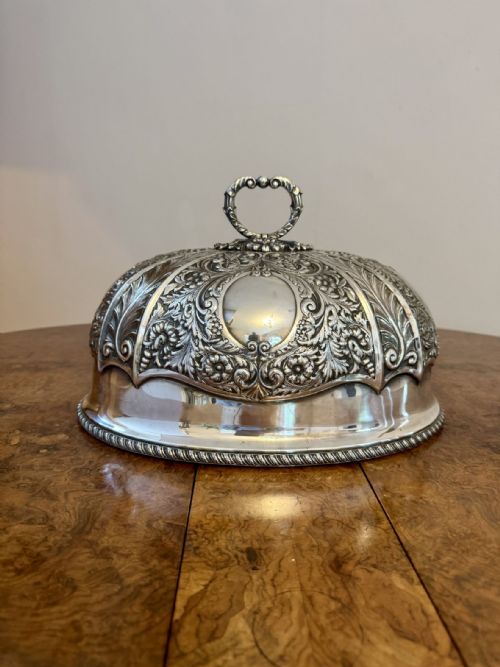
Alongside ceramic platters, the selection includes silver plate and Old Sheffield Plate meat domes or covers created to keep roasts warm before service.
Materials and Construction
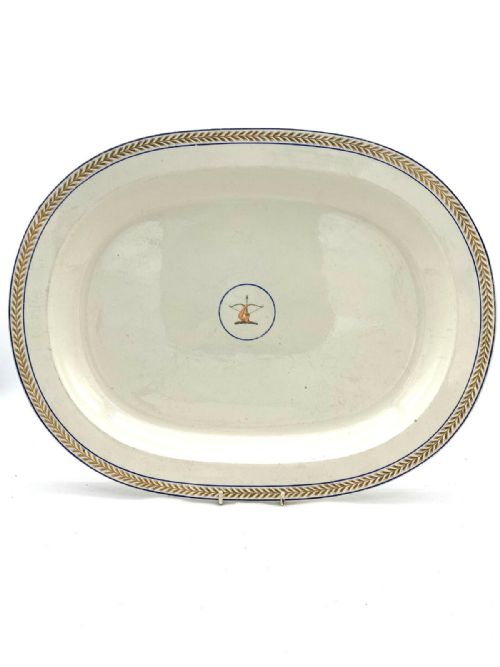
Potters shaped earthenware, creamware, ironstone, and porcelain into large rectangular or oval forms, then applied hand-painted designs or blue and white transfer prints under a clear glaze.
Metal pieces utilised copper bases fused with silver through the Old Sheffield Plate method, or employed solid silver and heavy silver plating for domed covers and warming dishes.
Metal items span Old Sheffield Plate warming trays alongside heavy silver-plated meat covers bearing engraved coats of arms.
Distinctions in Standard
Quality rests in the crispness of the transfer printing or the depth of the hand-painted porcelain decoration, alongside the weight and balance of the ceramic body.
Metal items separate by the thickness of the silver plating over the base metal, the clarity of engraved armorial crests, and the structural integrity of heavy meat domes.
Roberts Cadman·Spode·J.W.R.·Wedgwood·John Rogers Son·Henry Wilkinson·Robert Breading·Boulton·Copeland Garrett·Minton·Elkington·Puiforcat
The Antique Meat Platter Dish Glossary
- Transferware
- Earthenware decorated by applying a printed design from an engraved copper plate onto the ceramic surface before glazing. This technique allowed intricate pictorial scenes to be produced in volume.
- Old Sheffield Plate
- A composite material formed by fusing a sheet of silver to a thicker copper core under heat and pressure. It is recognised by the subtle copper bleed visible where edges meet.
- Meat Dome
- A large domed metal cover placed over a roasting joint on a platter to retain heat at the table. These often bear chased or engraved family crests and coats of arms.
- Creamware
- A refined earthenware developed in Yorkshire featuring a warm, pale yellow tone beneath a transparent lead glaze. Wedgwood mastered this lightweight and durable ceramic body.
- Ironstone
- A dense, heavy semi-vitreous pottery patented to resist chipping and cracking during heavy household use. It forms the body of many large nineteenth-century serving dishes and strainers.
Antique Meat Platter Dish: Frequently Asked Questions
What were antique meat platter dishes used for?
These large vessels served the central roasted joints of meat at formal dining tables, often paired with drainer inserts to catch juices.
Metal domes and warming dishes were added to keep the meat hot during long multi-course meals.
How do I identify a transferware pattern?
Transferware patterns depict detailed topographical scenes, historical events, or exotic landscapes transferred from engraved copper plates onto the clay body.
Maker marks and pattern names are frequently stamped or printed on the reverse of the ceramic.
What is the difference between earthenware and ironstone?
Earthenware is a porous, softer pottery body that requires a complete glaze to remain waterproof, commonly seen in eighteenth and early nineteenth-century pieces.
Ironstone is a much denser, heavier ceramic formulated to withstand rigorous daily dining use without easily chipping.
How can I care for an antique ceramic platter?
Wash ceramic platters gently by hand using warm water and mild soap, avoiding harsh scrubbing or modern dishwashers that can damage old glazes.
Display them securely using plate hangers rated for heavy platters or store them flat with protective padding between stacked pieces.