

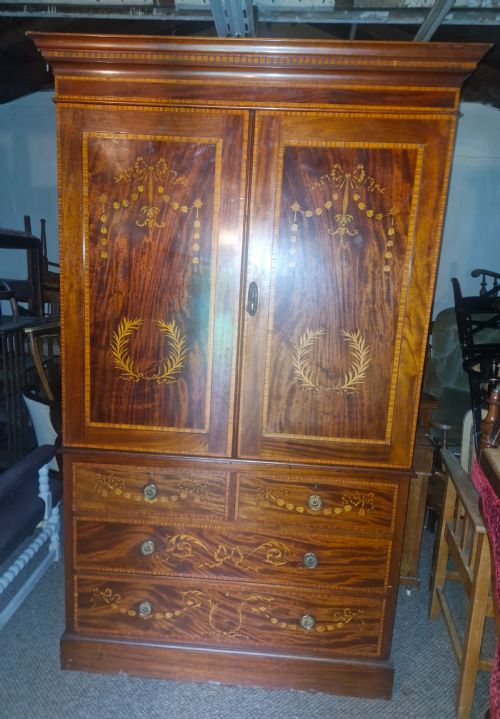
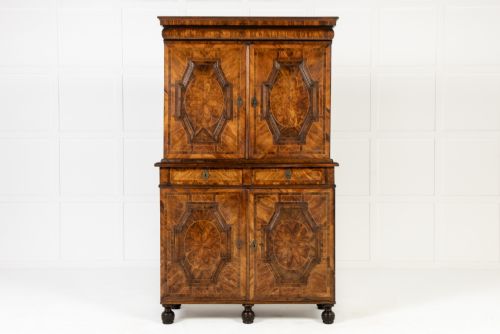


Antique Marquetry Linen Press
An antique marquetry linen press combines monumental scale with intricate floral and architectural wood inlay, offering serious storage for the discerning collector.
Antique Marquetry Linen Press
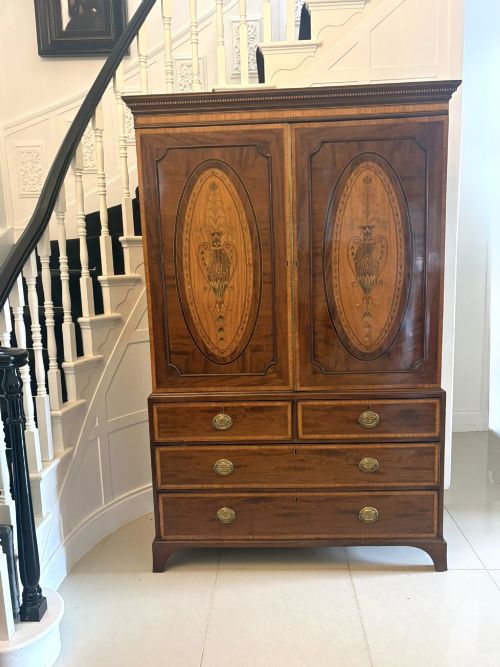
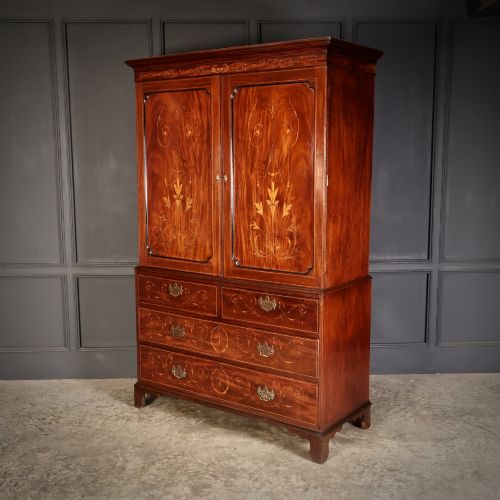
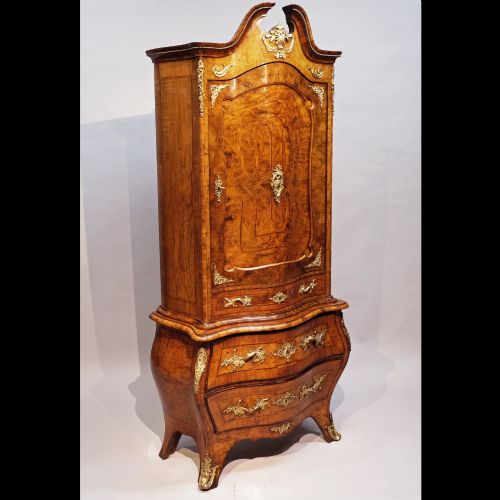
An antique marquetry linen press is a substantial piece of furniture designed for storing textiles, typically featuring upper cupboard doors concealing sliding trays and lower drawer sections. The examples available span from the seventeenth century through the Edwardian era, incorporating Georgian, Victorian, and Dutch Baroque designs.
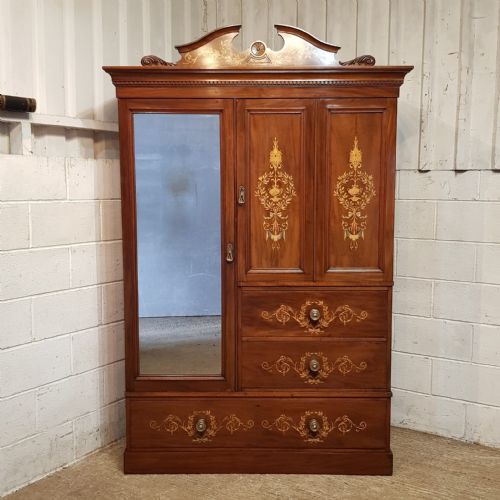
Buyers most frequently encounter large mahogany or walnut pieces inlaid with satinwood, boxwood, and fruitwood. These range from eighteenth-century George III models to later Edwardian and Victorian iterations, often appearing alongside related forms such as wardrobes, cabinets on chests, and compactum wardrobes.
Materials and construction
Cabinetmakers constructed these presses using sturdy primary woods like mahogany, walnut, and oak, applying fine veneers of satinwood, rosewood, and burr amboyna to exterior surfaces. Artisans then executed intricate marquetry using contrasting timber elements such as boxwood and fruitwood to create detailed floral and geometric patterns.
Structural integrity relied on traditional joinery, with cabinetry often supported by solid brass hardware. Specialised techniques like oyster veneering appeared on earlier seventeenth-century pieces, whilst later nineteenth-century iterations utilised extensive floral inlay and crossbanding.
Materials recorded across the inventory include brass, satinwood, mahogany, walnut, glass, boxwood, fruitwood, and rosewood.
Judging execution and depth
Quality in an antique marquetry linen press rests upon the precision of the wood inlay and the choice of timbers. Pieces displaying crisp, deeply figured flame mahogany or rich burr walnut with finely detailed floral marquetry represent the upper tier of craftsmanship.
The sophistication of the internal configuration also distinguishes superior examples, particularly those retaining original sliding linen trays rather than later alterations. Furthermore, works originating from documented cabinet-making firms demonstrate a higher standard of architectural proportion and cabinet construction.
Druce & Co.·Edwards & Roberts·Gillows of Lancaster·Maples & Co
The Antique Marquetry Linen Press Glossary
- Marquetry
- Decorative veneer work forming pictures or patterns by arranging small pieces of coloured wood, shell, or ivory. This technique defines the ornate exterior surfaces of Dutch and English presses.
- Linen press
- A tall cupboard traditionally used for storing household linen on sliding interior trays. Later variants evolved into comprehensive wardrobes with hanging space.
- Oyster veneer
- Circular pieces of wood cut transversely from small branches to create a pattern resembling oyster shells. It appears frequently on seventeenth-century walnut furniture.
- Compactum
- A large, multi-compartment wardrobe combining hanging space, drawers, and shelving. Edwardian makers produced these capacious units for modern bedroom suites.
- Crossbanding
- A border of veneer strips laid around the main panel with the wood grain running at right angles. This frames the primary marquetry design.
Antique Marquetry Linen Press: Frequently Asked Questions
What is the difference between a linen press and a wardrobe?
A traditional linen press contains sliding wooden trays behind its upper doors, originally designed for flat textiles rather than hanging garments. Over time, many interiors were altered to function as standard wardrobes.
Wardrobes focus primarily on vertical hanging space for full-length clothing. However, many larger antique examples combine both configurations within a single multi-section cabinet.
How do I date an antique marquetry linen press?
Dating relies on examining timber species, construction methods, and stylistic cues. Seventeenth- and eighteenth-century pieces often employ walnut, oak, and oyster veneers, whilst Georgian and Victorian examples frequently use mahogany and elaborate satinwood inlay.
Secondary woods inside drawers and backboards also provide clues. Oak and pine indicate different periods and regional origins of manufacture.
Where should I place a large linen press?
Due to their monumental height and depth, these pieces require substantial wall space and stable flooring. Bedrooms and large hallways suit them best, provided the room maintains moderate humidity to protect the veneers.
Measuring ceiling clearance is essential before purchase, as many presses arrive in two sections comprising a heavy upper cabinet resting on a chest base.
How do I care for marquetry and fine veneer?
Protect the surfaces by keeping the furniture away from direct sunlight and heat sources, which can cause wood to dry out and veneers to lift. Dust regularly with a dry, soft cloth.
Applying quality beeswax periodically maintains the sheen of the polished wood without building up heavy residues. Avoid chemical polishes and excessive moisture.