


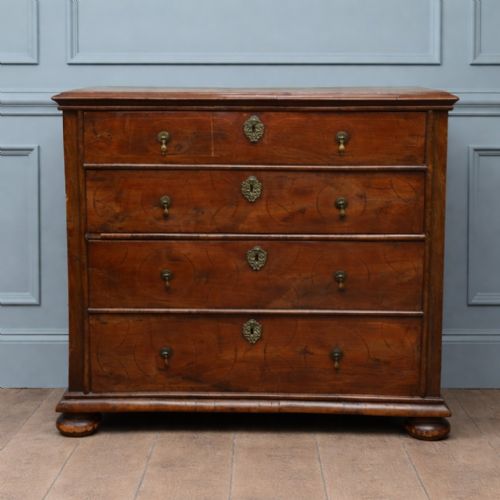


17th Century Walnut Cabinet
A 17th century walnut cabinet brings domestic history into a room through rich timber and intricate craftsmanship.
17th Century Walnut Cabinet
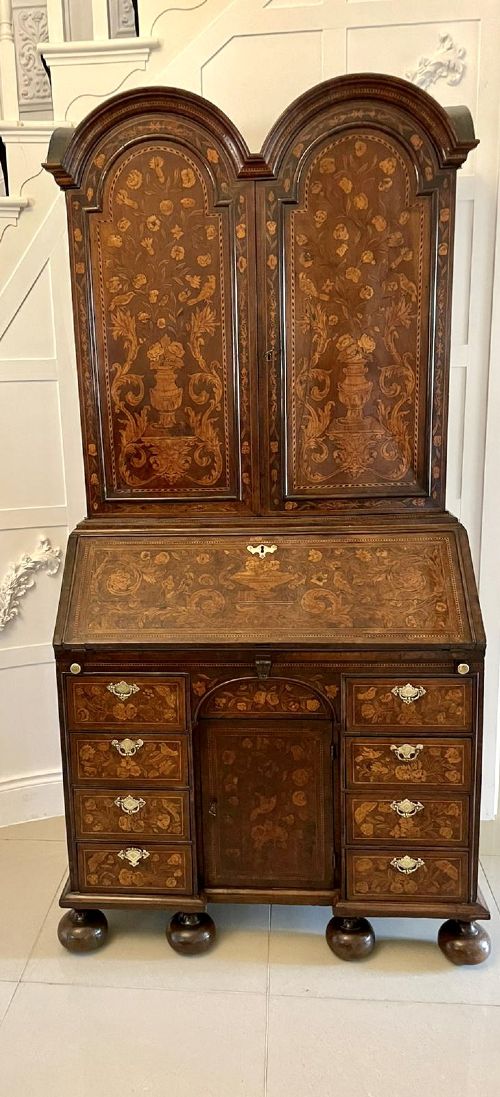
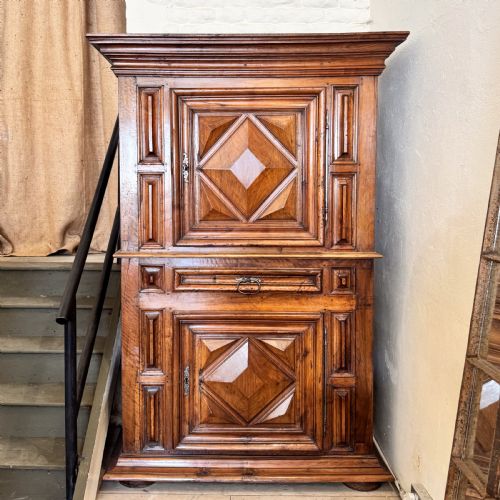
When you search for a 17th century walnut cabinet, you encounter substantial storage furniture designed for writing, displaying valuables, or concealing personal items behind panelled doors. These pieces encompass bureau cabinets, escritoires, and elaborate chests on stands originating from English, Dutch, Spanish, and Italian workshops.
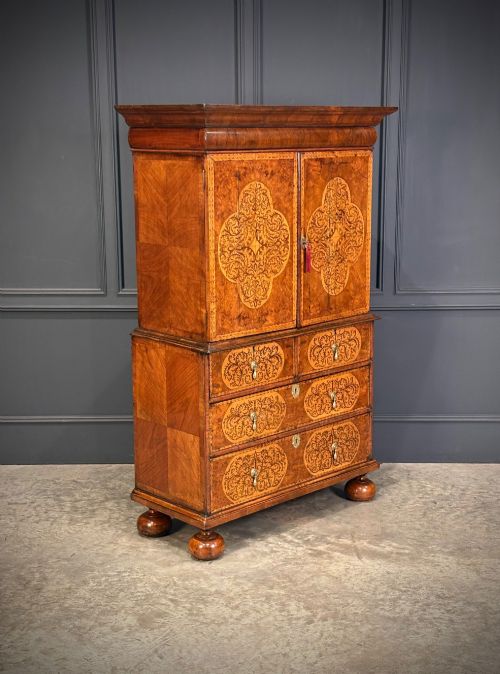
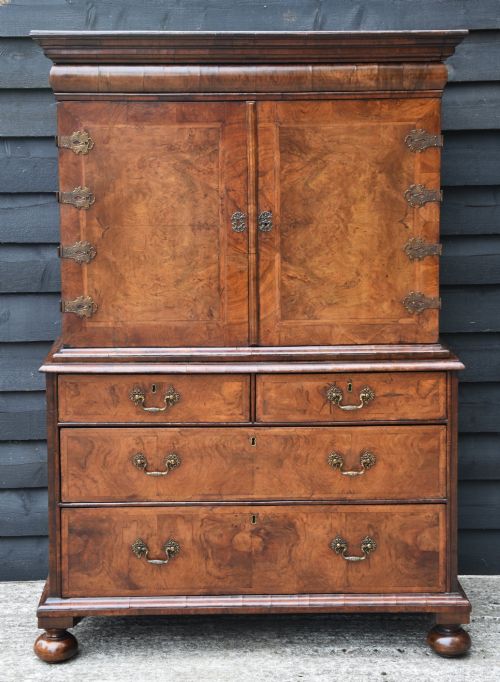
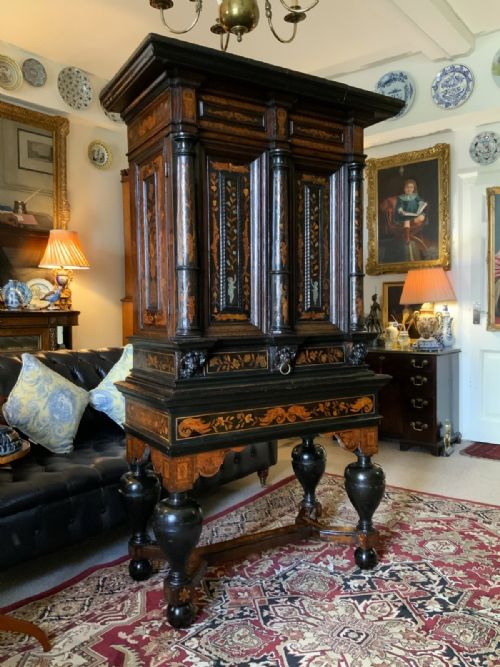
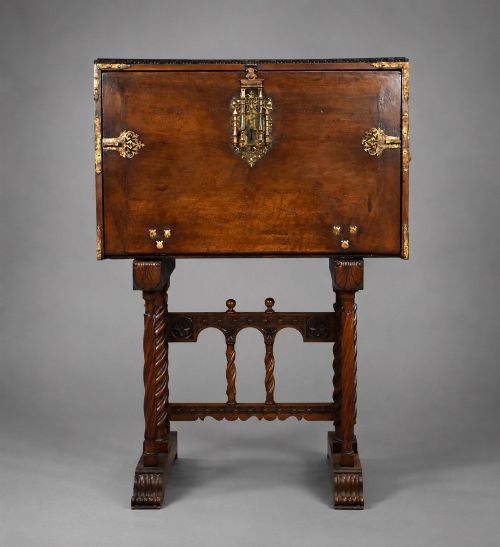
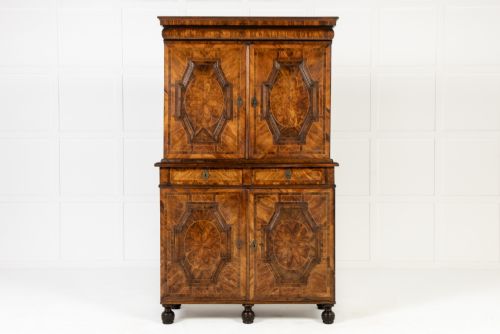
The version you are most likely to meet on this page is the William and Mary period cabinet on stand or chest on stand, usually veneered in figured walnut. Alongside these tall forms, table cabinets and Spanish varguenos appear frequently, reflecting the diverse continental influences of the era.
How they were made
Cabinetmakers constructed carcass frames from solid oak or pine, applying decorative veneers of walnut, burr walnut, and olive wood to visible surfaces. Oyster veneer cutting techniques created circular patterns across drawer fronts and panel surrounds.
Marquetry and inlay utilised boxwood, fruitwood, and pewter to form floral or seaweed motifs across the timber ground. Brass drop handles, escutcheons, and iron mounts completed the structural assembly, secured with hand-beaten fixings.
The inventory records bureau cabinets, chests of drawers, escritoires, and table cabinets spanning the seventeenth and eighteenth centuries.
What varies in quality
The sophistication of the veneer layout distinguishes standard production from exceptional examples, particularly in the symmetry of burr walnut and the intricacy of seaweed marquetry. Grain matching across multiple drawer fronts requires precise timber selection and expert sawing.
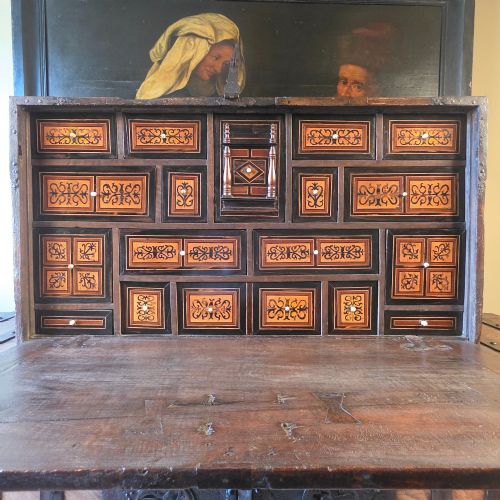
The complexity of internal compartments and the survival of original stands, feet, and hardware determine the historical integrity of the piece. Cabinet interiors fitted with secret drawers and small pigeonholes demonstrate superior workshop ambition.
The 17th Century Walnut Cabinet Glossary
- Oyster veneer
- Transverse slices of small branches laid out to resemble oyster shells. This technique creates rhythmic circular patterns across furniture surfaces.
- Marquetry
- Veneering patterns formed by fitted pieces of different coloured woods or metals. Artisans assemble floral and geometric designs on a paper backing before gluing them to the carcass.
- Escritoire
- A writing cabinet featuring a fall-front flap that drops down to reveal a fitted interior of small drawers. These pieces combine desk functionality with concealed compartment storage.
- Vargueno
- A traditional Spanish cabinet featuring a drop-front writing surface and numerous small drawers inside. They often display bone inlay and intricate metalwork.
- Carcass
- The main structural framework of a cabinet before drawers, doors, and decorative veneers are applied. Oak and pine serve as the primary woods for these hidden supports.
17th Century Walnut Cabinet: Frequently Asked Questions
What is a 17th century walnut cabinet?
A 17th century walnut cabinet is a historic storage piece designed for documents, textiles, or valuables, featuring decorative wood veneers and specialist internal compartments.
These items range from large bureau bookcases and chests on stands to compact table cabinets meant for placement on desks or side tables.
How were these cabinets used?
Owners used these cabinets to write letters, store personal account books, and lock away precious small items behind secure doors and drop-front panels.
The elaborate stands and decorative marquetry also served to display the owner's wealth and status to visitors in reception rooms.
How do I live with a walnut cabinet?
Position the cabinet away from direct sunlight and heat sources to prevent the walnut veneers from drying, cracking, or lifting from the timber carcass.
Maintain a stable room humidity and dust the intricate marquetry and oyster veneer gently with a soft dry cloth.
How do I tell different periods apart?
Examine the decorative techniques and hardware styles, noting that William and Mary pieces often feature seaweed marquetry and trumpet legs, while Baroque continental pieces display bolder carvings.
Spanish varguenos and Italian cabinets show distinct regional motifs such as bone inlay and heavy architectural mouldings.