
Antique Marquetry Dresser
An antique marquetry dresser brings centuries of intricate wood inlay and storage to a room, offering both history and utility.
Antique Marquetry Dresser
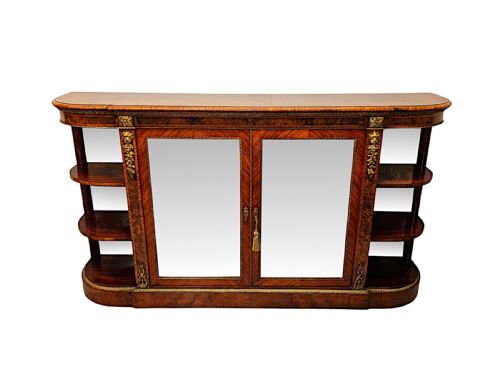
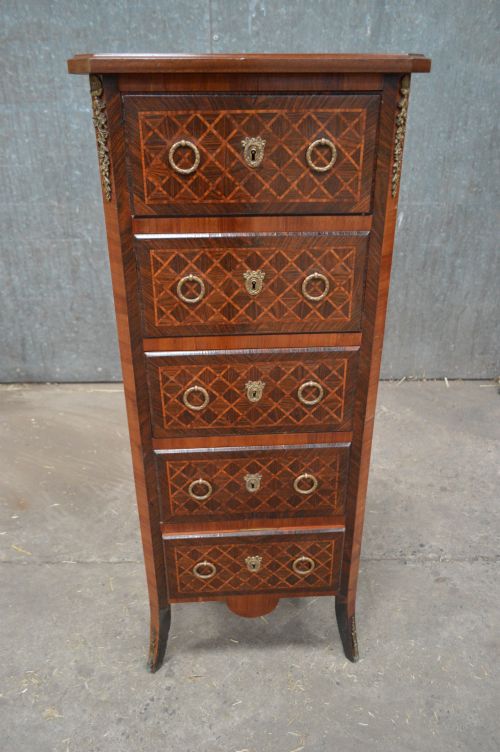
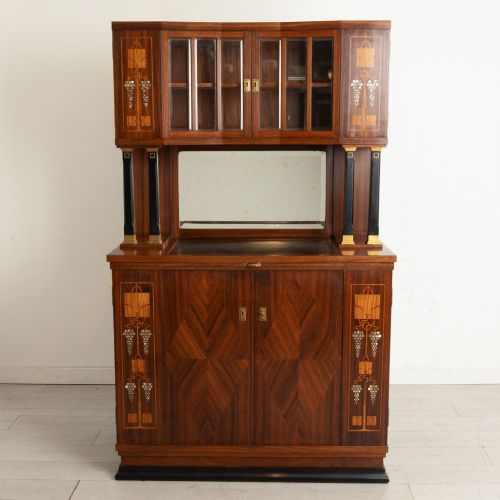
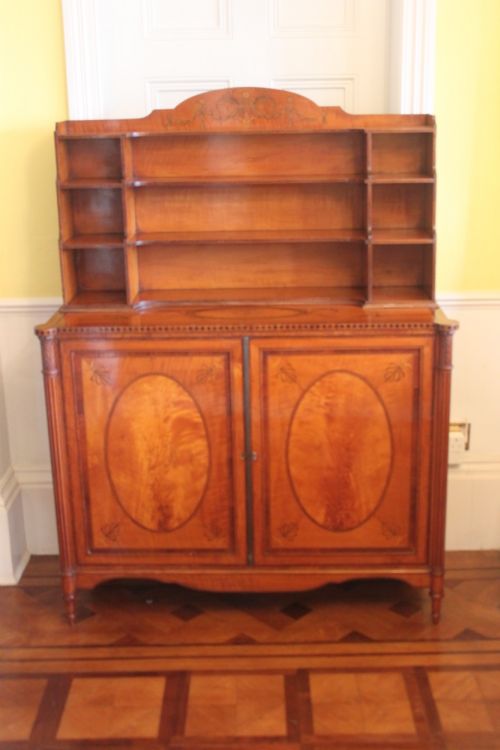
When searching for an antique marquetry dresser, buyers encounter a variety of forms including chests of drawers, commodes, sideboards, and side tables. These pieces originate across Europe, spanning the 17th, 18th, and 19th centuries, reflecting diverse regional cabinet-making traditions.
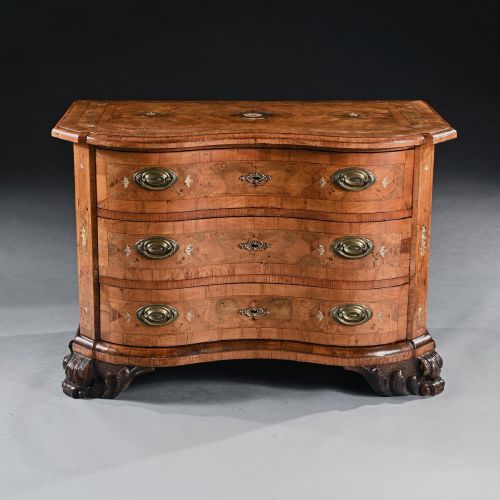
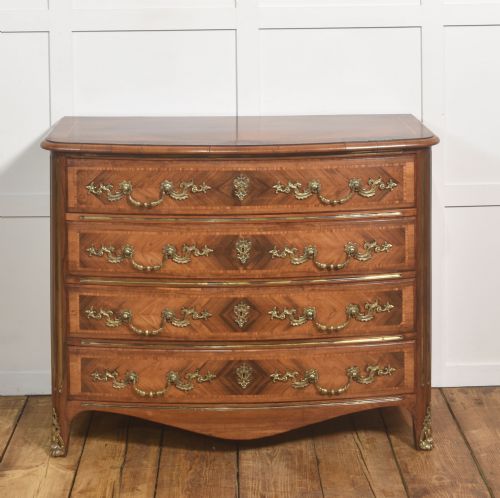
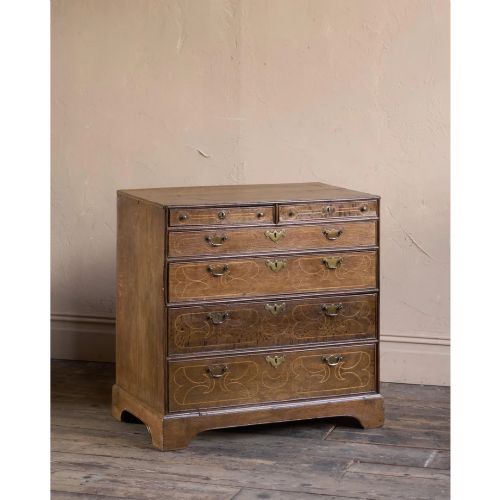
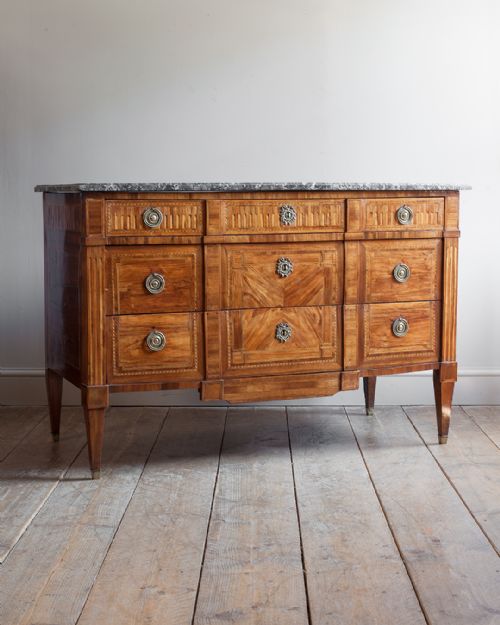
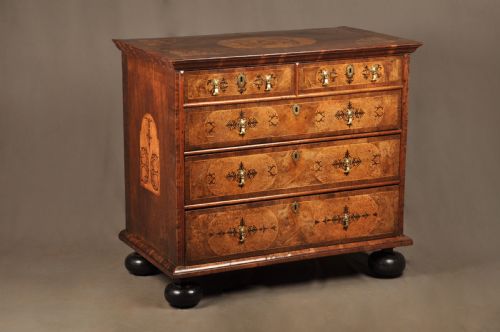
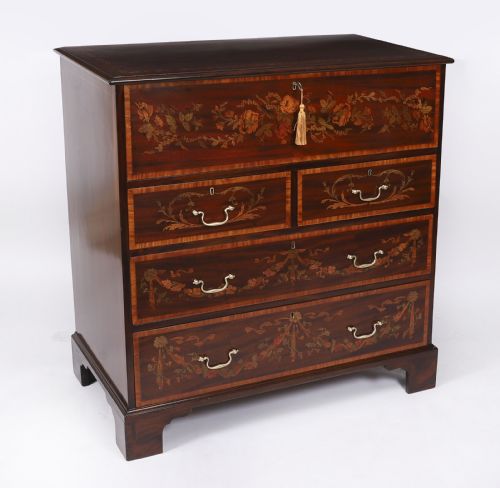
The most common examples on this page are chests of drawers and commodes built from woods such as walnut, mahogany, and oak, decorated with floral or geometric patterns. These items range from early English oak pieces to continental serpentine designs influenced by French and Italian styles.
Makers and workshops across England, France, Germany, Italy, and the Netherlands produced these storage items during periods such as William and Mary, Louis XV, Louis XVI, and the Georgian era. Each piece combines functional drawer space with detailed surface decoration that defines the category.
Materials and construction techniques
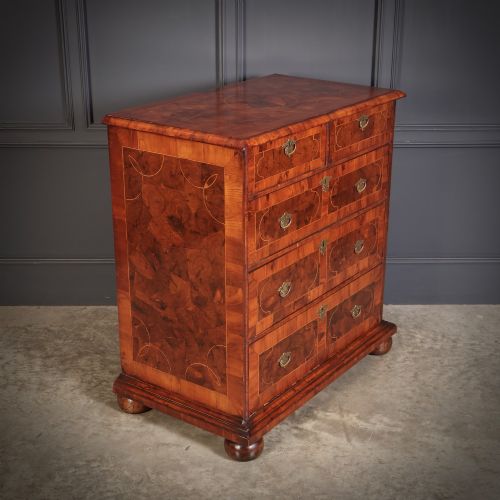
Cabinet makers utilised solid foundations of oak, walnut, or mahogany, applying fine veneers of kingwood, rosewood, satinwood, and burr walnut to external surfaces. Oyster veneering involved slicing small branch sections to create repeating circular patterns across the grain.
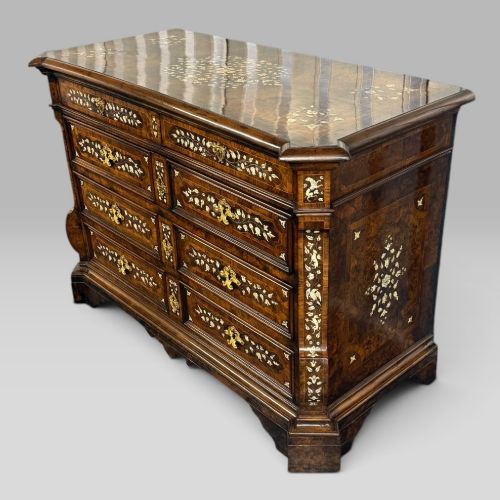
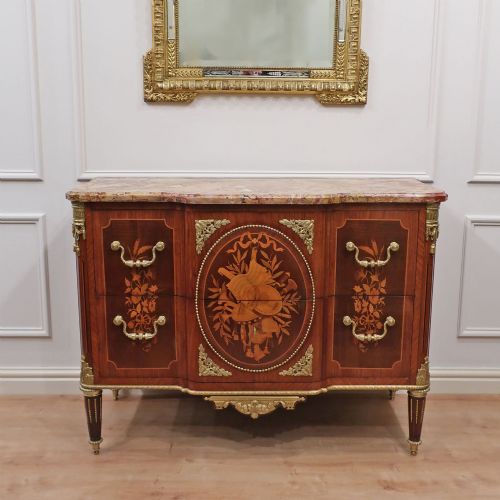
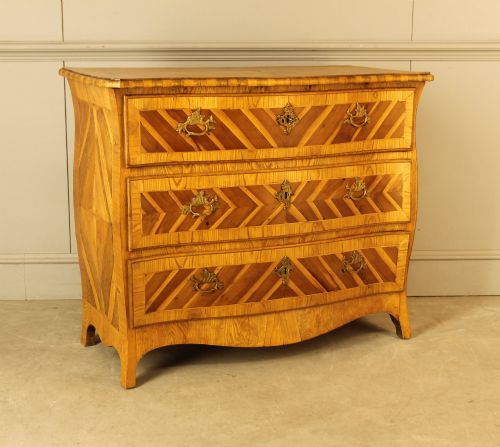
Marquetry and parquetry techniques required cutting thin pieces of contrasting woods, pewter, ivory, or brass to form pictorial or geometric designs before gluing them to the carcase. Ormolu mounts in cast bronze were frequently added to corners, feet, and key escutcheons on continental commodes.
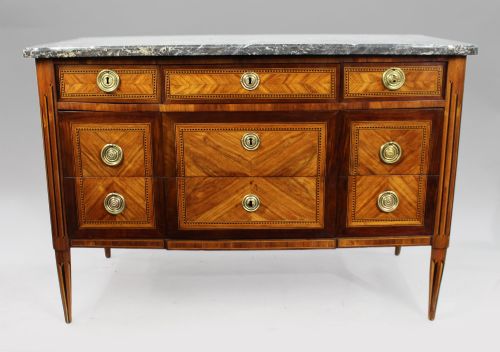
Marble tops, particularly in white or grey varieties, were often fitted to French and Italian commodes of the 18th and 19th centuries to provide a durable and decorative upper surface.
Listings span the 17th, 18th, and 19th centuries, featuring materials such as walnut, mahogany, oak, and ormolu.
Assessing quality in marquetry furniture
Quality rests upon the precision of the inlay work and the harmonious selection of timber grains. Finer examples display tight, seamless joints within the marquetry panels and subtle tonal contrasts between different wood species.
The structural integrity of the carcase and the original condition of the drawer linings separate standard production from exceptional pieces. Superior items retain their original brass or ormolu mounts, handles, and locks without modern replacements.
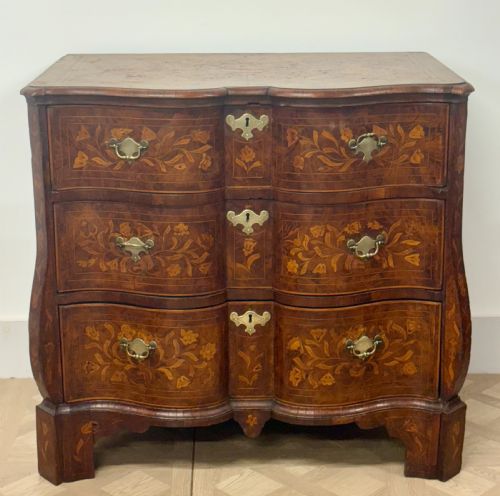
Regional execution dictates refinement, as seen in the fluidity of serpentine fronts and the complexity of floral arabesques or pictorial marquetry scenes executed by skilled workshops.
Grand Ducal Workshops·Gillows·August Ungethüm·Thomas Hache of Grenoble·Shapland and Petter
The Antique Marquetry Dresser Glossary
- Marquetry
- A decorative technique of applying thin pieces of wood, ivory, or metal to a wooden structure to form pictures or patterns. It transforms a flat surface into a detailed mosaic of contrasting grains.
- Parquetry
- A geometric mosaic of wood pieces used for floors and furniture surfaces. This technique relies on repeating angular shapes like squares, triangles, and diamonds.
- Ormolu
- Gilded bronze used for decorative mounts on furniture. It provides metallic contrast against dark woods like mahogany and walnut.
- Serpentine
- A furniture front or top that curves inward at the centre and outward at the ends in a gentle wave shape. This contour requires advanced carpentry to execute smoothly.
- Oyster Veneer
- Cross-sections of small branches cut to display circular growth rings arranged closely together. It creates a distinctive rippled surface texture popular in the 17th century.
Antique Marquetry Dresser: Frequently Asked Questions
How do I care for my dresser?
Keep the wood conditioned by avoiding direct sunlight and maintaining stable room humidity to prevent the delicate veneer from lifting.
Dust the surface gently with a dry cloth and use specialist wax sparingly to protect the polish and marquetry details.
How do I date a marquetry chest?
Dating relies on identifying the construction methods of the drawers, the wood species used, and the prevailing style of the inlay.
For example, oyster veneering points towards the 17th century, while neoclassical satinwood designs often indicate the late 18th century.
Where were these pieces made?
These items originated in workshops across England, France, Italy, Germany, the Netherlands, and Sweden during various historical periods.
Different regions developed distinct regional aesthetics, such as Dutch floral marquetry or French serpentine commodes with marble tops.