
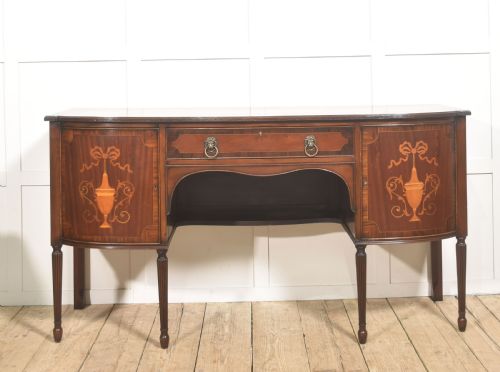


Antique Marquetry Buffet
An antique marquetry buffet brings intricate wood-inlaid artistry and substantial storage to a dining room or salon.
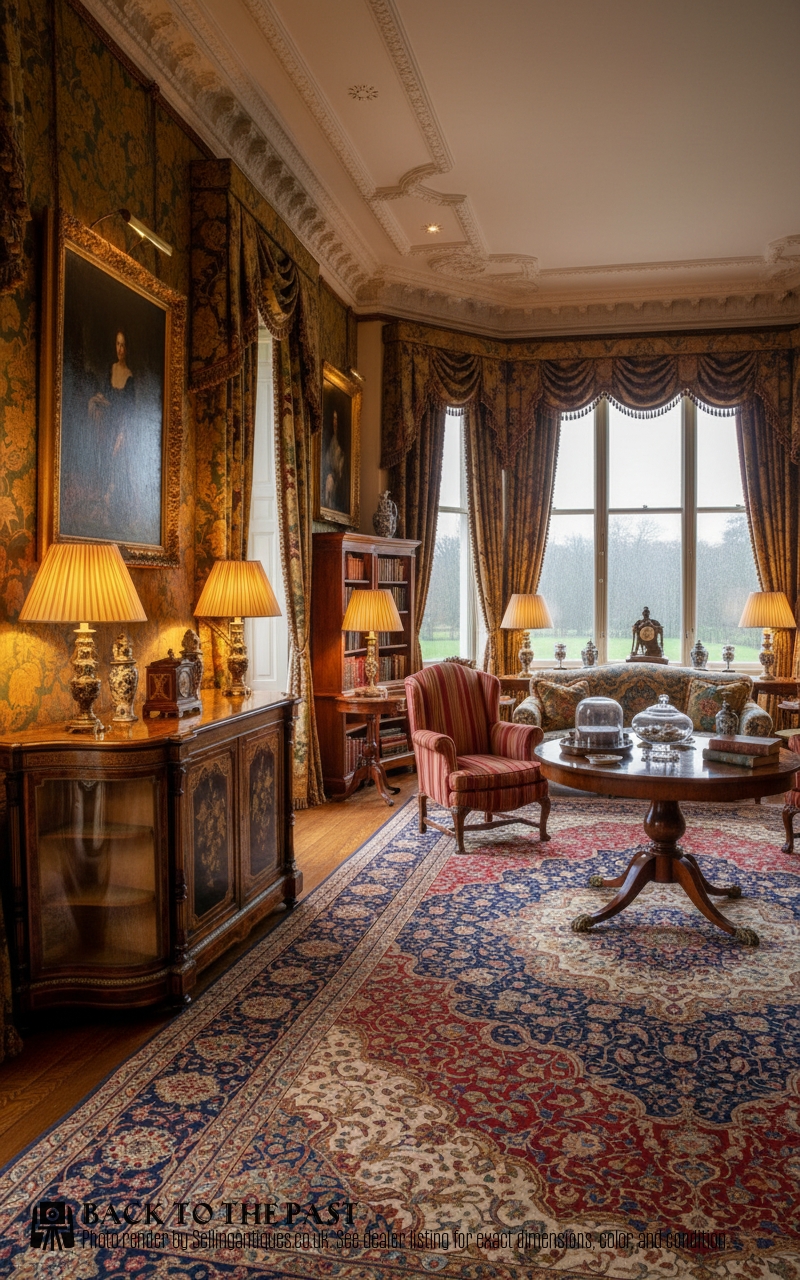
Antique Marquetry Buffet
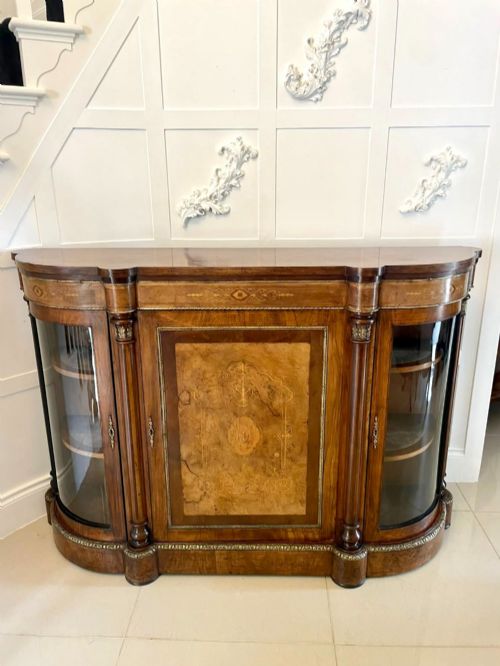
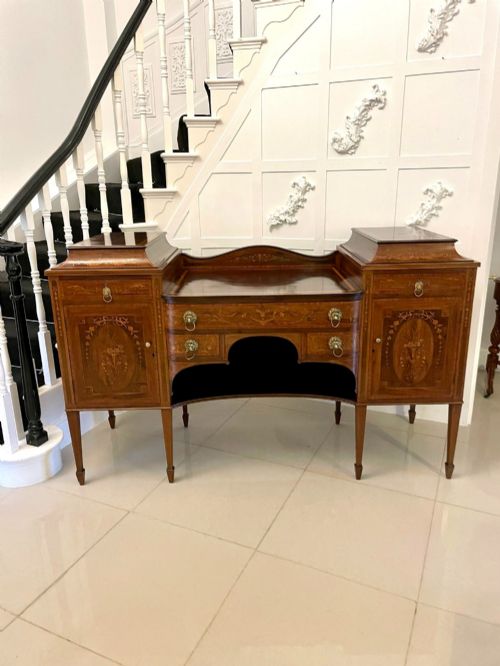
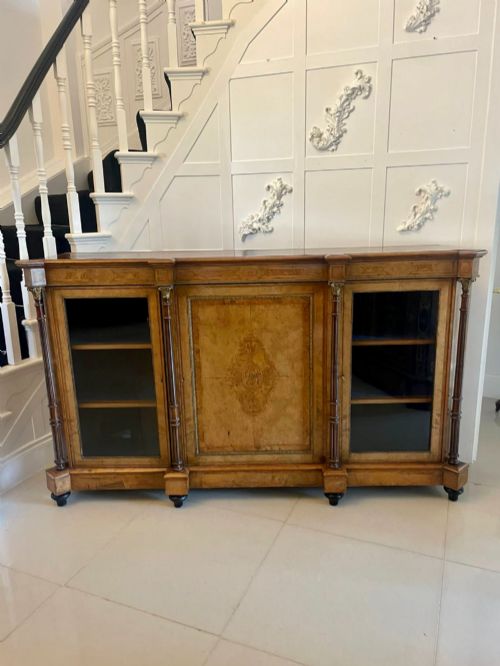
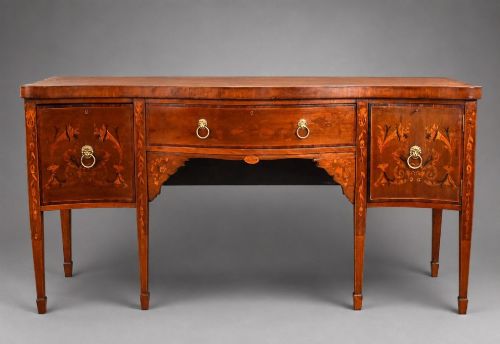
An antique marquetry buffet combines large-scale storage cabinetry with detailed floral or geometric wood-inlaid surfaces. When searching for this form, buyers encounter related dining and drawing room storage furniture including credenzas, sideboards, and side cabinets dating from the eighteenth century through the early twentieth century.
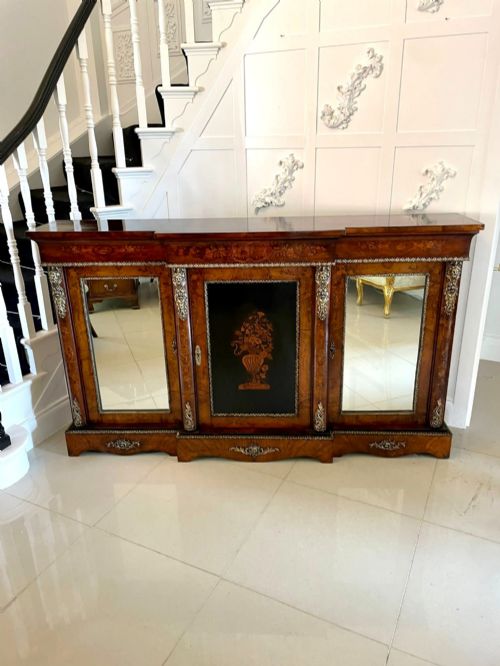
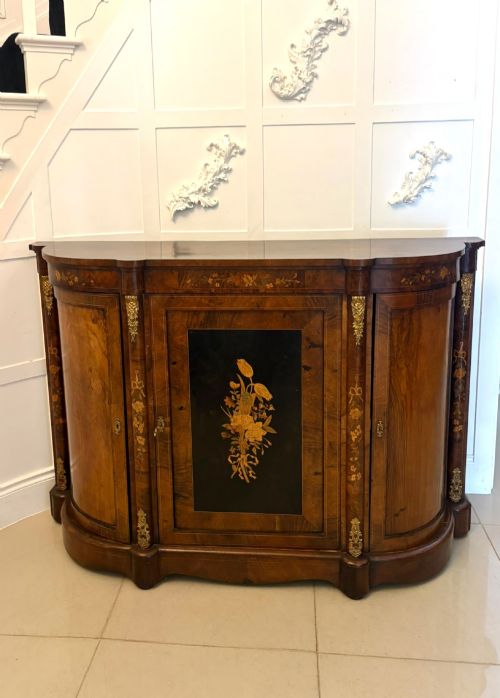
The Victorian period dominates the selection, frequently presenting burr walnut credenzas and sideboards enriched with contrasting marquetry panels. Pieces from this era span the middle and late nineteenth century, alongside French examples and Sheraton Revival designs from the nineteen hundreds.
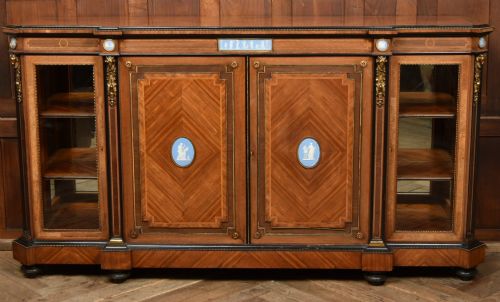
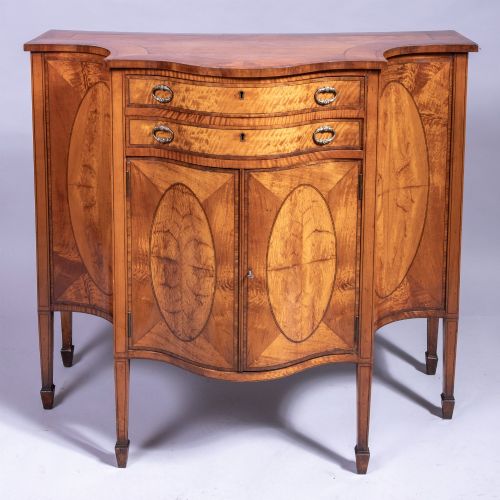
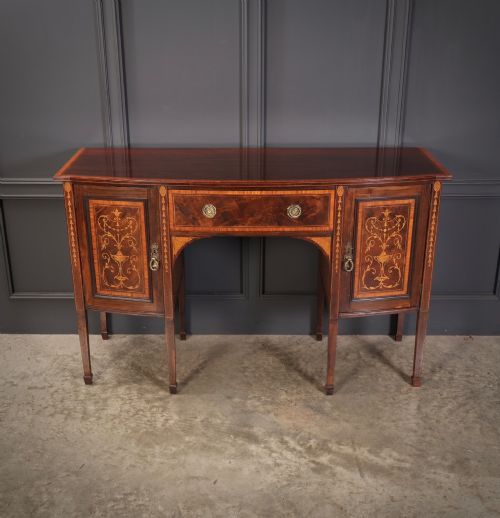
Forms range from serpentine and bow-fronted sideboards to multi-door credenzas and marble-topped cabinets. Walnut, mahogany, and satinwood provide the primary timber foundations for these decorative storage pieces.
Materials and construction techniques
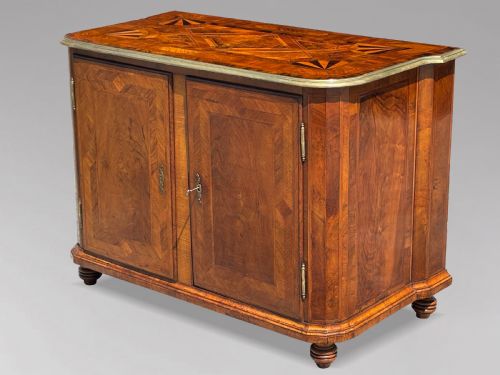
Cabinetmakers utilised dense native and exotic timbers as a structural base, applying figured veneers such as burr walnut and mahogany to large surface areas. Marquetry designs were formed by cutting contrasting wood veneers by hand and assembling them into pictorial or geometric patterns.
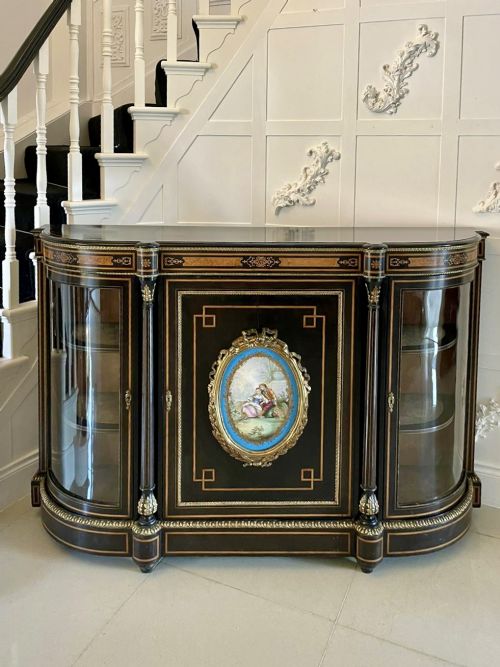
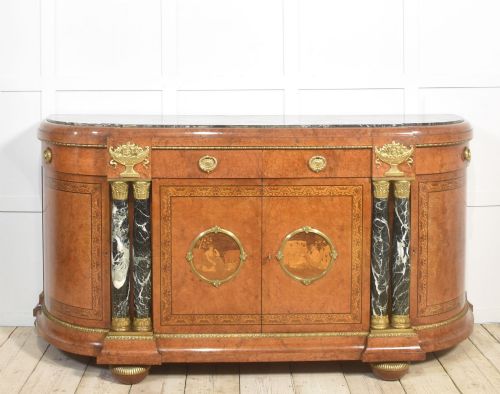
Ormolu mounts, brass details, and marble tops frequently complete French and Victorian pieces. Ebonised finishes and glass doors also appear, pairing decorative metalwork and glazed elements with intricate wood inlay.
The inventory records cabinet forms from English, French, and Spanish workshops, incorporating marble tops, mirror backs, and brass hardware.
Distinguishing quality across examples
The precision of the veneer work and the complexity of the inlaid motifs dictate the standard of execution. Sharp contrasts in wood species and meticulous alignment within the floral or scrollwork patterns signal superior cabinetmaking.
The selection of primary timbers, such as highly figured burr walnut or dense mahogany, alongside the integration of heavy marble tops and cast ormolu mounts, separates standard production from exhibition-grade pieces.
Hewetsons London·Shapland and Petter·Gillow·Gordovil Spain
The Antique Marquetry Buffet Glossary
- Marquetry
- The art of applying decorative pieces of veneer to a structure to form intricate patterns or pictures. This technique defines the visual character of the surface decoration.
- Credenza
- A sideboard or cabinet designed for formal dining rooms or salons, often featuring glass doors and central cupboards. Victorian examples frequently incorporate elaborate floral inlay.
- Ormolu
- Gilded bronze mounts applied to furniture for decorative effect. French pieces from the nineteenth century regularly utilise these metallic accents.
- Burr walnut
- A highly figured timber prized for its swirling grain patterns. It serves as the primary veneer on numerous nineteenth-century cabinets.
- Serpentine
- A curved furniture front that undulates in a convex-concave-convex shape. This contour appears on eighteenth and nineteenth-century storage pieces.
Antique Marquetry Buffet: Frequently Asked Questions
What is an antique marquetry buffet?
An antique marquetry buffet is a decorative storage cabinet featuring detailed wood-inlaid patterns across its doors and surfaces. These pieces function as sideboards, credenzas, or side cabinets within dining rooms and living spaces.
Originating across multiple centuries, they combine practical shelving and cupboard space with elaborate floral or geometric veneer work.
How do I date an antique buffet?
Dating relies on identifying stylistic markers, timber choices, and construction methods associated with specific eras like the Georgian or Victorian periods. For example, burr walnut credenzas with rich marquetry typically point to the mid-to-late nineteenth century.
Secondary indicators include the presence of marble tops, brass mounts, or specific regional cabinetmaking traits recorded in the piece's construction.
Where should I place a sideboard in my home?
These storage cabinets suit dining rooms, grand hallways, or living spaces where they provide both surface display area and concealed interior storage. Their decorative marquetry tops and fronts make them natural focal points against a principal wall.
Consider the clearance needed for opening cabinet doors or drawers when positioning larger credenzas and sideboards in tighter spaces.
How do I care for antique wood furniture?
Maintain antique wood surfaces by keeping them away from direct sunlight and extreme temperature shifts that can dry out old veneers. Regular dusting with a soft, dry cloth preserves the polished finish without building up residue.
Avoid placing damp items directly onto unsealed wood or marble tops to protect the historical patina and delicate marquetry inlay.