
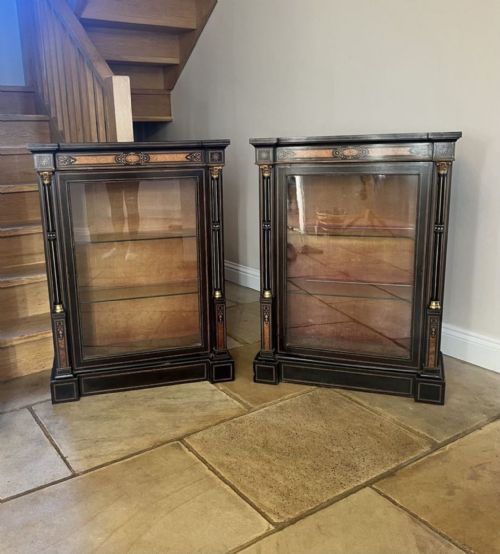
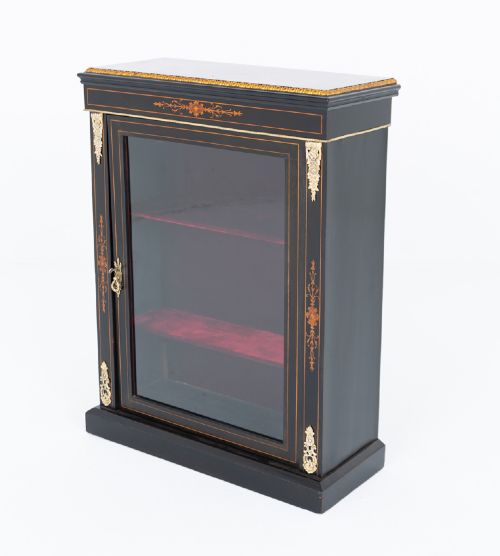
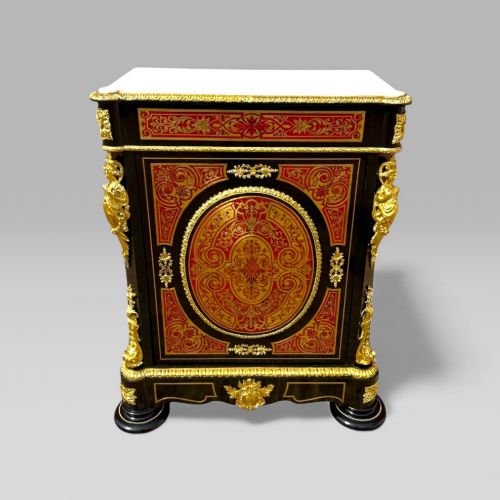


Ebonised Inlay Credenza
An ebonised inlay credenza is a nineteenth-century statement piece defined by dark timber and meticulous decorative detail, prized for grand entertaining and formal display.
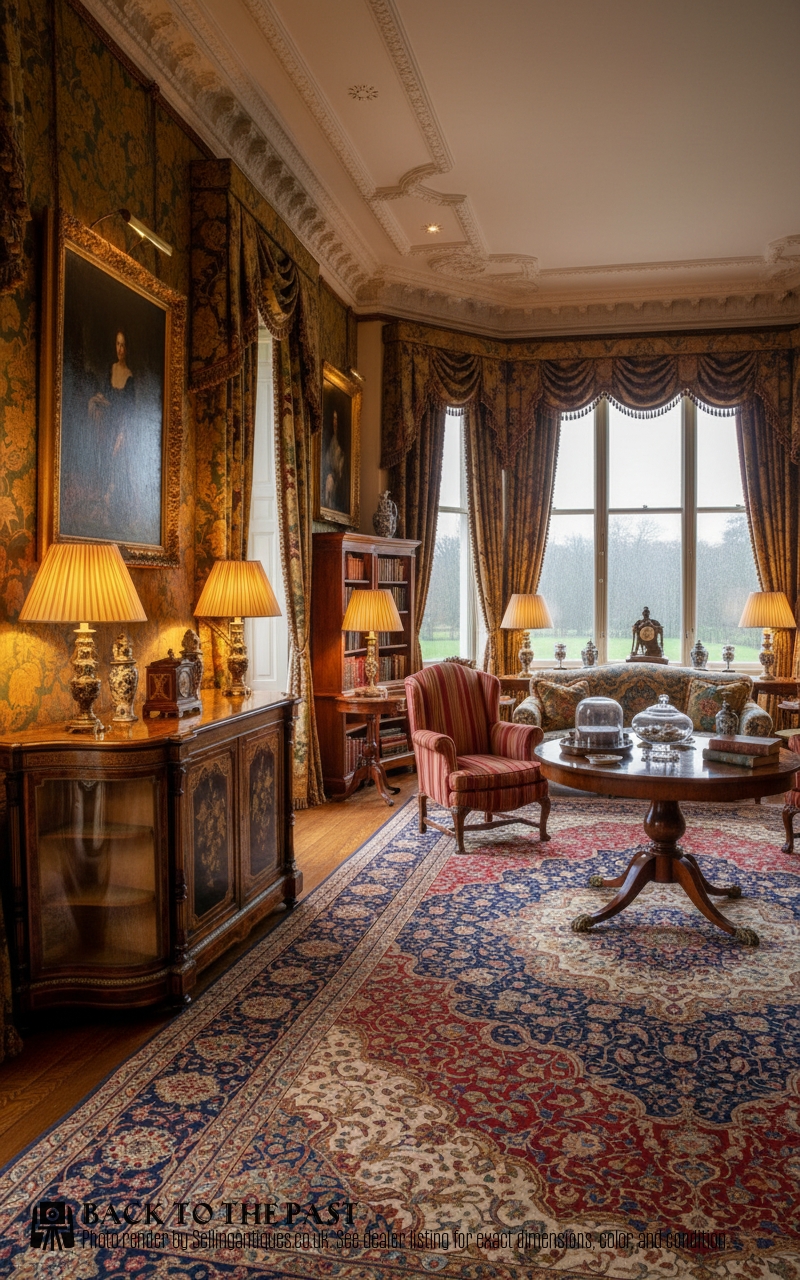
Ebonised Inlay Credenza
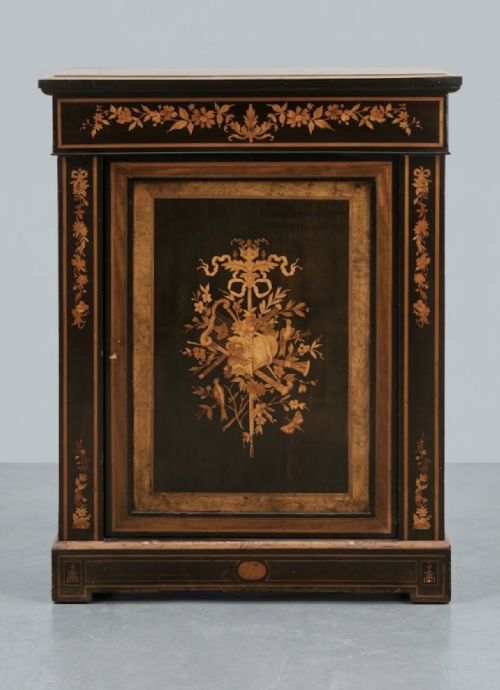
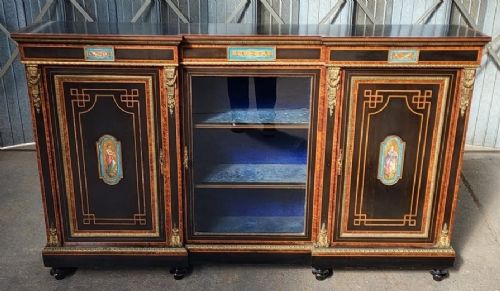
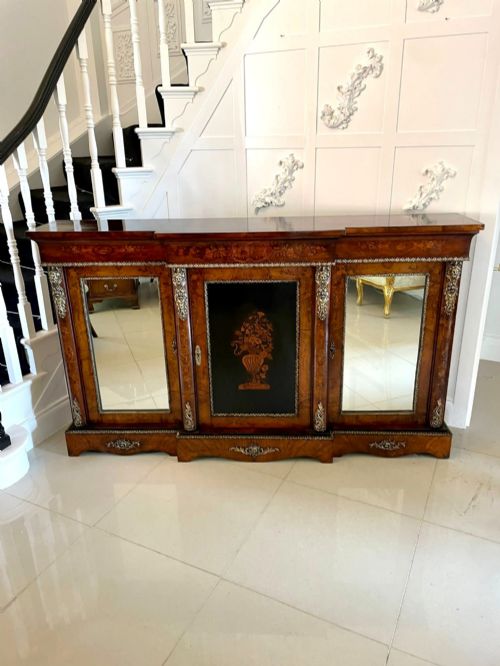
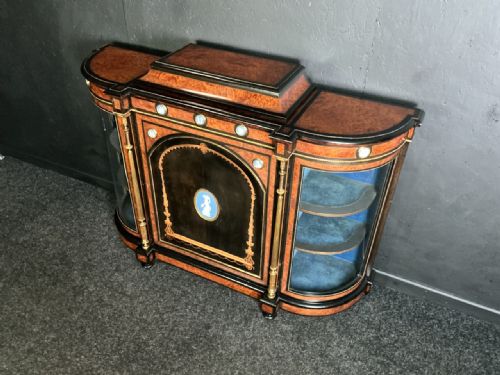
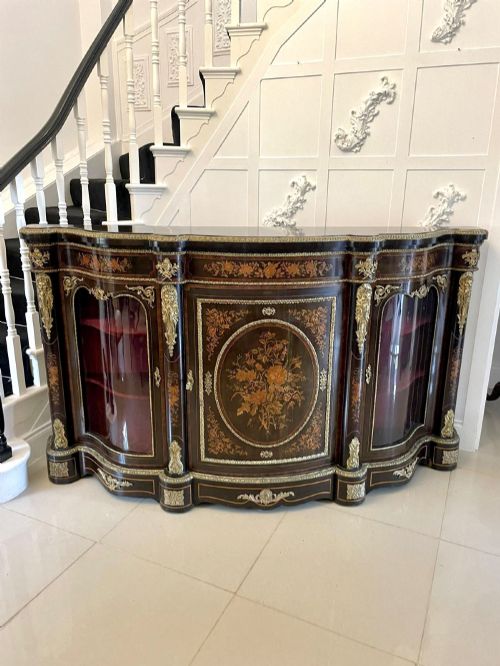
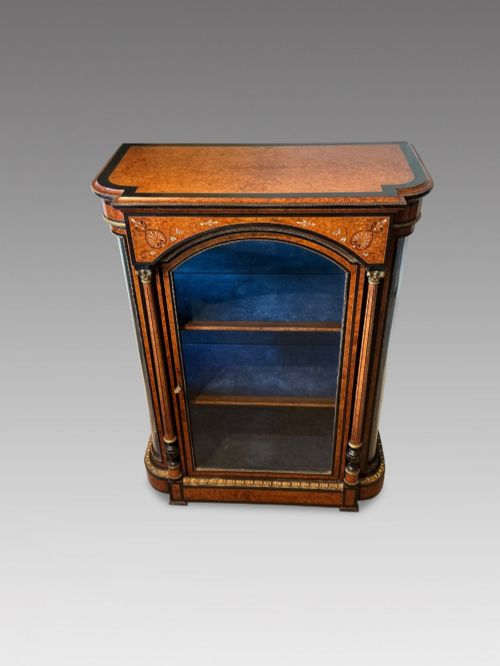
When searching for an ebonised inlay credenza, a buyer explores nineteenth-century low storage furniture designed for formal reception rooms. The most common version met on this page is the Victorian or French Napoleon III cabinet, featuring glazed or mirrored doors and intricate surface decoration.
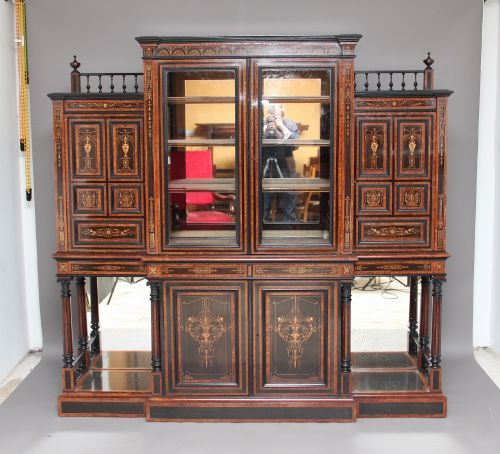
These forms span side cabinets, pier cabinets, and breakfront bookcases alongside traditional credenzas. Origins stretch across British workshops and French ateliers, typically dating from the middle to the late nineteenth century.
How they were made
Cabinet makers utilised dense hardwoods such as walnut or beech, treating the surface to achieve a deep black ebonised finish. This dark ground provided high contrast for delicate marquetry and contrasting timber veneers like amboyna and satinwood.
Metalwork and stone added structural and decorative accents. Ormolu mounts, cast bronze, brass stringing, and tortoiseshell panels were integrated alongside porcelain plaques and occasionally pietra dura work.
Listings span the nineteenth century, with Victorian and French Napoleon III periods dominating the materials and styles.
What varies in quality
The standard of an ebonised inlay credenza rests on the precision of its marquetry and the execution of its mounts. Finer pieces demonstrate crisp, hand-cut floral or geometric inlays set flush into the timber without visible gaps.
Construction methods and secondary materials further define the tier of the piece. Heavy cast ormolu mounts, well-figured internal timbers, and substantial marble tops separate ambitious workshop productions from simpler commercial outputs.
Lamb of Manchester·Gordovil Spain·Gillow
The Ebonised Inlay Credenza Glossary
- Ebonised
- Timber treated with stain, dye, or polish to imitate expensive ebony. This dark finish became popular in nineteenth-century revival furniture to contrast with bright brass and floral marquetry.
- Marquetry
- Decorative patterns formed from thin pieces of wood veneer applied to a carcase. Craftsmen cut intricate floral and scroll designs to adorn cabinet doors and friezes.
- Ormolu
- Gilded bronze mounts applied to furniture for decorative effect. These cast metal details highlight corners, pilasters, and central door panels.
- Boulle
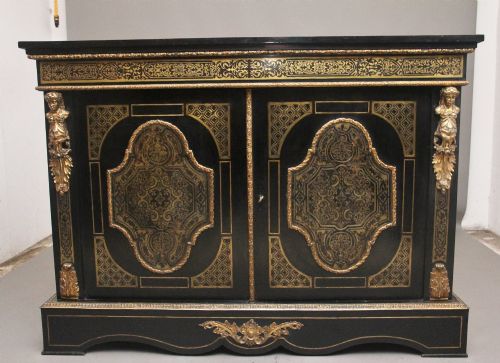
- A technique of inlaying brass and tortoiseshell developed in France. It appears on Napoleon III pieces listed across nineteenth-century cabinets.
- Pier cabinet
- A narrow display cabinet designed to fit the wall space between windows. These upright pieces often feature glazed doors and velvet-lined interiors.
Ebonised Inlay Credenza: Frequently Asked Questions
Where did people place these credenzas?
These cabinets stood against drawing room walls to display porcelain, silver, and glassware behind glass doors. Their flat tops served surfaces for lamps and decorative objects during evening gatherings.
In larger nineteenth-century homes, matching pier cabinets and sideboards completed coordinated reception room schemes.
How do I clean ebonised wood?
Dust surfaces regularly with a soft, dry cloth to prevent particle buildup on the dark finish. Avoid modern aerosol polishes, which can leave silicone residue and dull the historic sheen.
Apply a microcrystalline wax sparingly when the timber appears dry, buffing gently to maintain the soft lustre.
Are these cabinets purely decorative?
While prized for their visual impact, nineteenth-century credenzas offered practical storage behind enclosed cupboards. Shelved interiors accommodated dining accessories, linens, and books.
Glass-fronted display compartments allowed hosts to showcase valuable collections while protecting them from dust.
How do I tell French and English pieces apart?
French Napoleon III examples frequently incorporate elaborate tortoiseshell and brass Boulle work alongside heavy marble tops. They lean towards ornate, curved serpentine shapes.
English Victorian pieces rely more on burr walnut veneers, satinwood banding, and floral marquetry within structured breakfront designs.