
Antique Marble Urns
When you search for antique marble urns, you encounter neoclassical decorative objects, Grand Tour souvenirs, and French bronze-mounted vessels designed to bring classical proportion into a room.
Antique Marble Urns
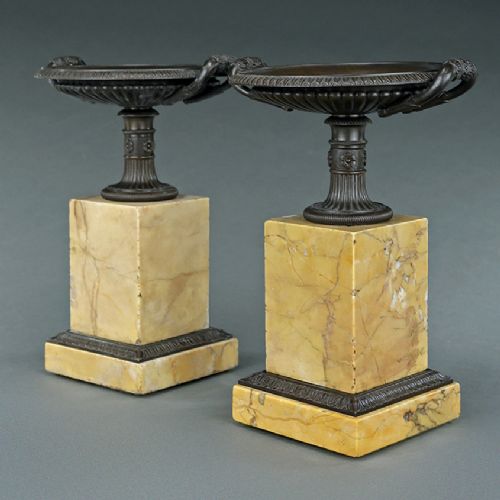
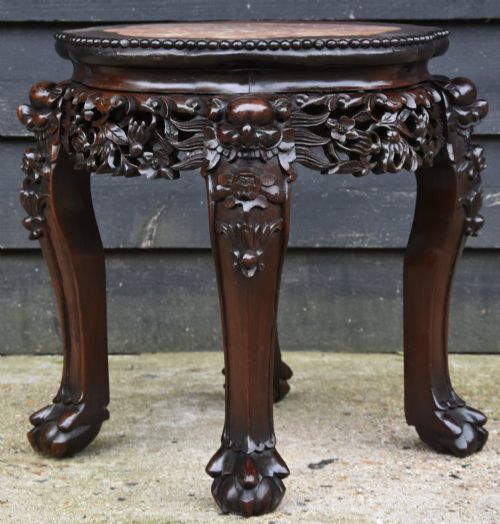
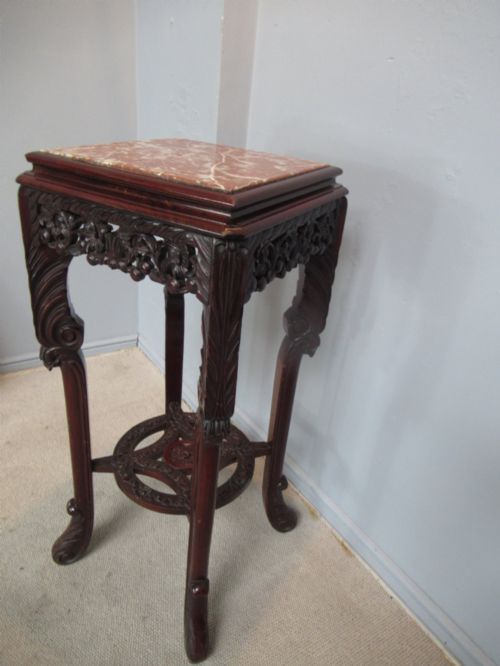
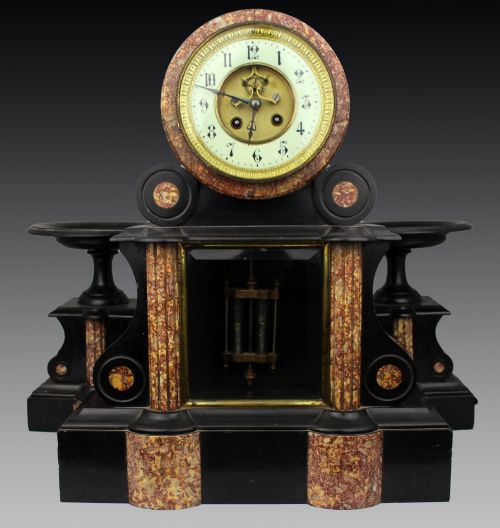
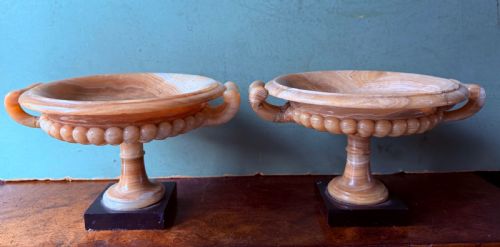
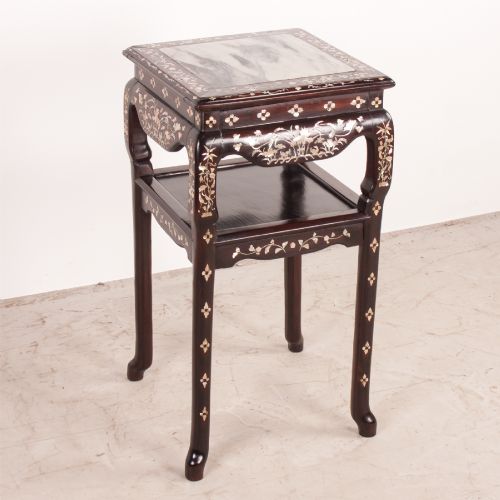
When you search for antique marble urns, you encounter decorative vessels, cassolettes, and tazzas rooted in classical antiquity and reinterpreted through later centuries. The selection centres on 19th-century French and Italian productions, alongside Qing dynasty hardwood stands inset with marble tops.
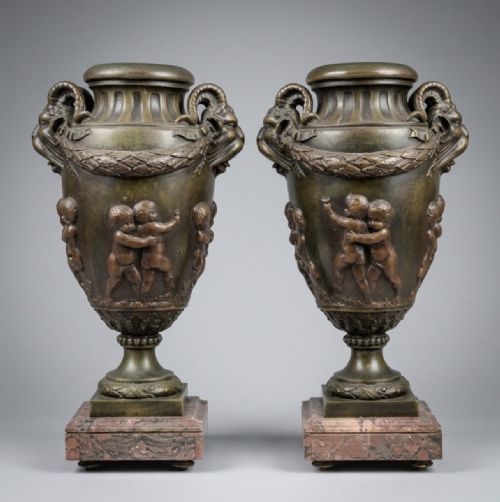
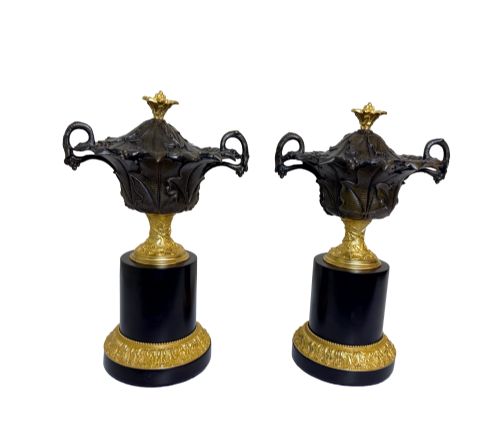
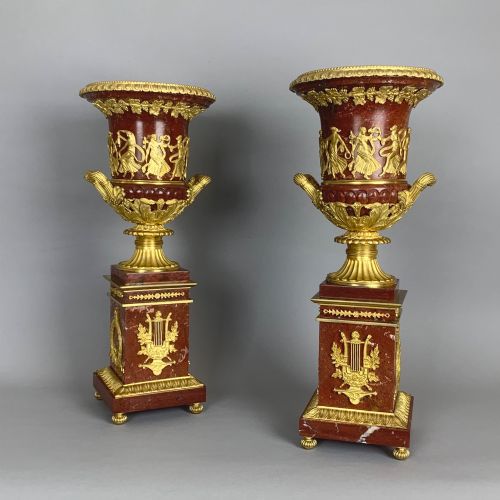
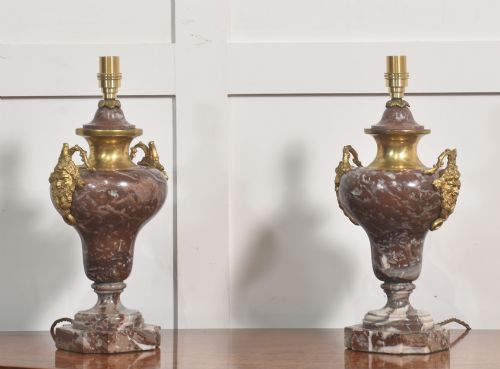
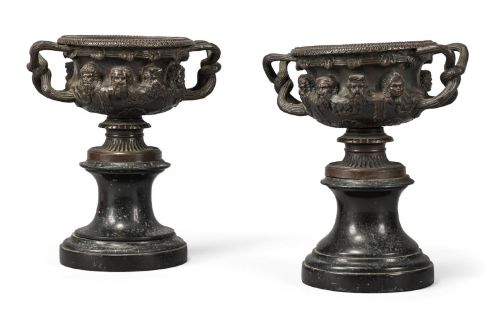
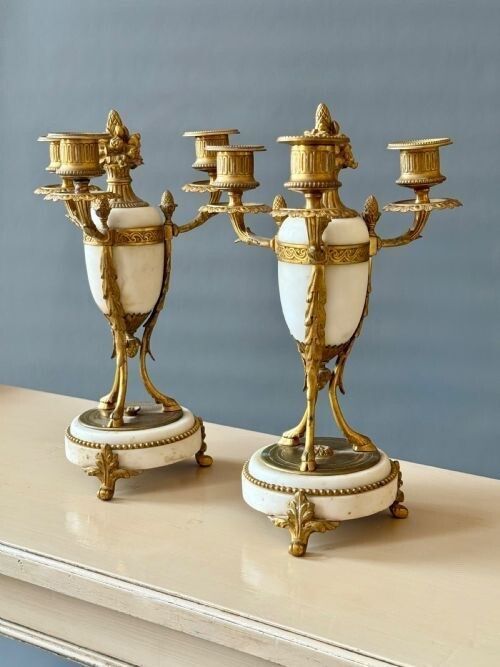
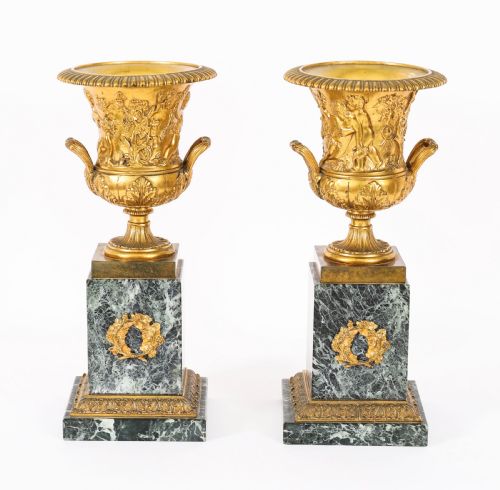
The objects take many forms, from Grand Tour reductions of famous antiquities like the Warwick vase to French Empire and Louis XVI style garnitures mounted with ormolu. You also find practical adaptations, including table lamps and inkwells, where stone bases anchor metal mounts.
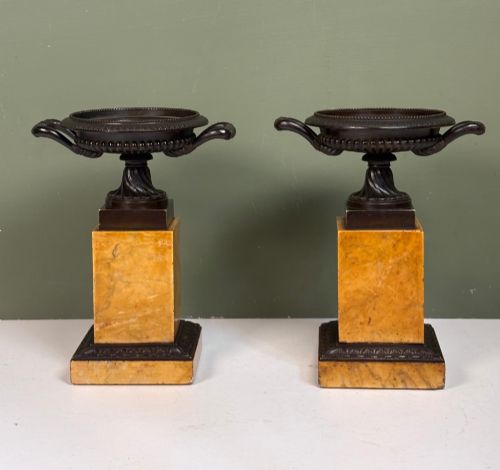
Italian examples frequently utilise specific marbles such as Sienna, Rosso Antico, and black marble, often shaped into campana profiles or shallow tazzas. These vessels served as mantel ornaments or centrepieces in period drawing rooms, prized for their sculptural weight and mineral colour.
How they were made
Makers shaped the stone using lathes and hand-chiselling to achieve smooth profiles, frequently selecting varieties like Carrara, rouge marble, and alabaster for their distinct veining. Artisans then combined the turned stone with cast bronze, gilt brass, and ormolu mounts.
Foundries produced the metal components through lost-wax casting or sand casting, applying patination or mercury gilding to contrast with the polished stone bodies. Threaded rods and nuts typically secure the metal handles, bases, and lids to the central marble shafts.
Antique Marble Urns Retail Price Guide 2026
Typical asking prices for marble urns among the pieces listed under this phrase on Sellingantiques today, from the lower quarter to the upper quarter. They describe what is for sale here now, not the wider market.
Some urns hide a secret life as candleholders, proving the Victorians loved a multitasking piece of stone.
What varies in quality
The refinement of the bronze or ormolu chasing separates standard decorative pieces from exceptional works, with sharper detail in leaf tips, figures, and beadwork indicating superior foundry work. The mineral selection itself dictates grade, particularly the uniformity of the marble veining and the depth of its polish.
Proportion and architectural balance define the upper tiers of production, where handles and bases relate harmoniously to the stone vessel rather than appearing oversized or clunky. The integration between metal mounts and stone surfaces reveals the maker's precision during assembly.
Benedetto Boschetti·Japy Frères·Thomas Hope
The Antique Marble Urns Glossary
- Cassolette
- A dual-purpose decorative vessel featuring a reversible lid that transforms the piece from an urn into a candlestick. These often incorporate gilt bronze mounts and colourful marble bodies.
- Grand Tour
- A cultural journey undertaken by wealthy young Europeans in the 18th and 19th centuries to collect art and antiquities. Souvenirs included miniature marble and bronze urns modelled on classical monuments.
- Campana urn
- A bell-shaped vessel with a flared rim, a constricted neck, and a footed base, derived from ancient Roman pottery and stone prototypes. They frequently appear in bronze and marble combinations.
- Ormolu
- Finely ground high-carat gold applied to a bronze base through a mercury amalgamation technique, producing a bright golden finish. This process creates durable surface decoration on 18th and 19th-century mounts.
- Tazza
- A shallow saucer-like vessel raised on a stem and foot, commonly carved from exotic marbles or cast in bronze. These pieces functioned as decorative tazze for display on sideboards or mantelpieces.
Antique Marble Urns: Frequently Asked Questions
What is a cassolette?
A cassolette is a decorative urn equipped with a reversible lid that conceals or reveals a candle nozzle. This dual function allowed owners to use the vessel either for visual display or for illumination.
Most examples seen from the 19th century pair marble bodies with gilt bronze or ormolu mounts. The lid turns over to transform the decorative profile into a practical candlestick.
What is a Grand Tour souvenir?
Grand Tour souvenirs were portable artworks and miniature monuments purchased by travellers touring Italy and France during the 18th and 19th centuries. Items included reduced-scale bronze and marble replicas of famous antiquities.
These objects allowed collectors to display classical taste within their home interiors. Common subjects include well-known vessels like the Warwick vase and various campana urns.
How do you date marble urns?
Dating relies on stylistic clues found in the metal mounts, casting quality, and the specific type of marble utilised. French Empire and Louis XVI revival pieces exhibit distinct cast ornament patterns associated with the 19th century.
Tool marks left by turning lathes and hand-finishing techniques on the stone interior also offer clues. Heavier patination and construction methods help distinguish older workshop output from later reproductions.
Which marbles are common?
Sienna marble, recognisable by its yellow and ochre tones with dark veining, appears frequently in Italian and French decorative objects. Carrara white marble and deep red rouge marble also dominate the period listings.
Other notable stones include black marble, Ashford black marble, and Blue John. Each variety provided makers with distinctive natural patterns and colour contrasts for their bronze-mounted vessels.