




Antique Cassolettes
Antique cassolettes are reversible decorative vessels that transform from covered urns to candleholders, bringing classical elegance to a room.
Antique Cassolettes
Antique cassolettes function as dual-purpose decorative objects originating from classical forms, designed with a reversible lid that presents either a solid urn top or a socket for a candle.
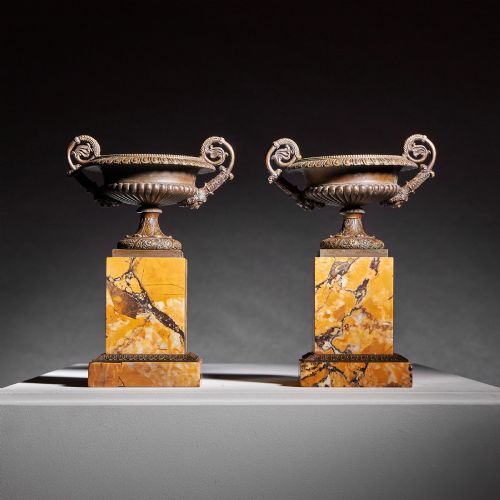
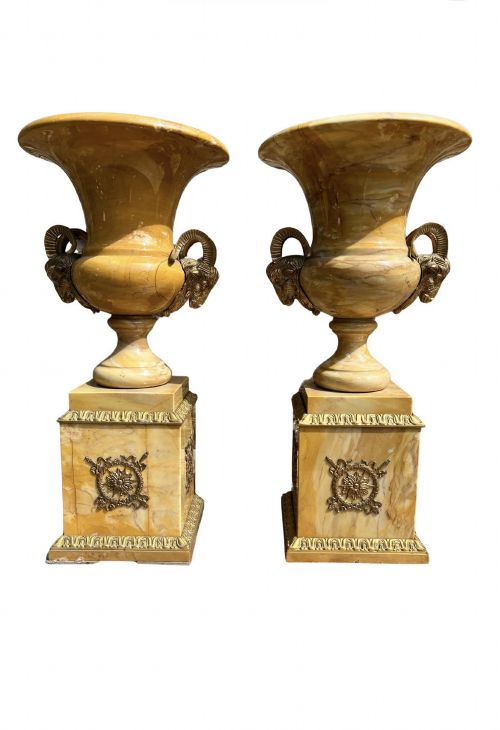
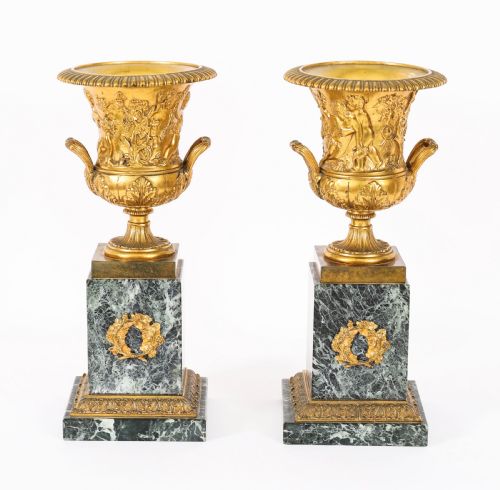
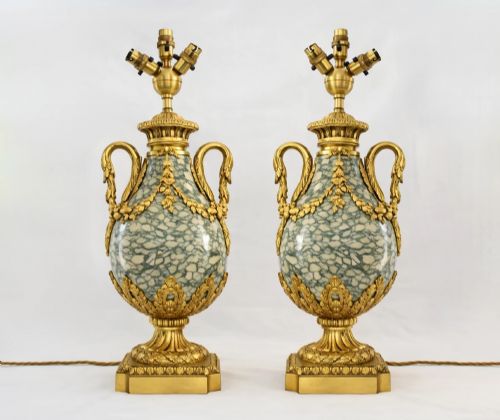
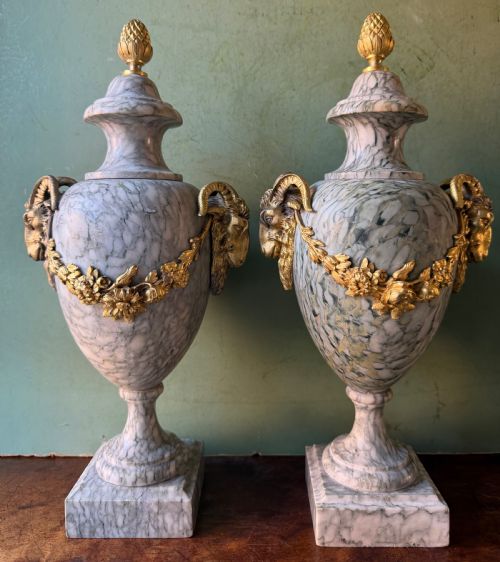
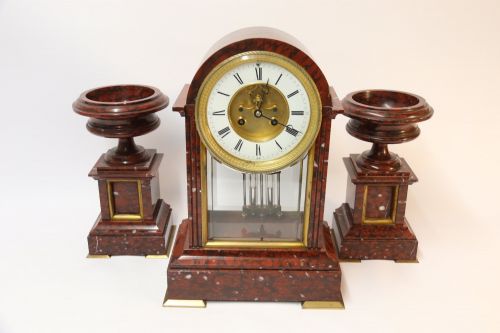
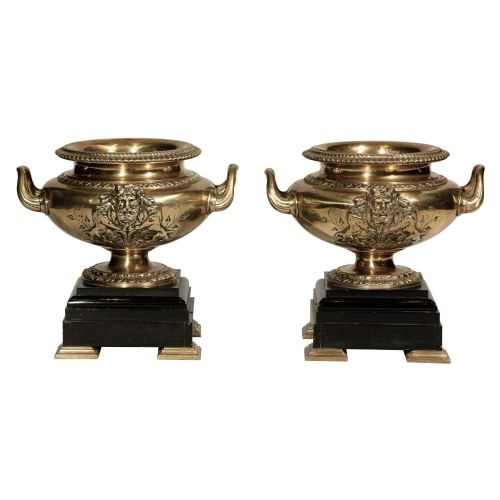
The versions met most frequently on this page belong to the nineteenth century, with French and English makers producing paired decorative objects in marble, bronze, and ormolu.
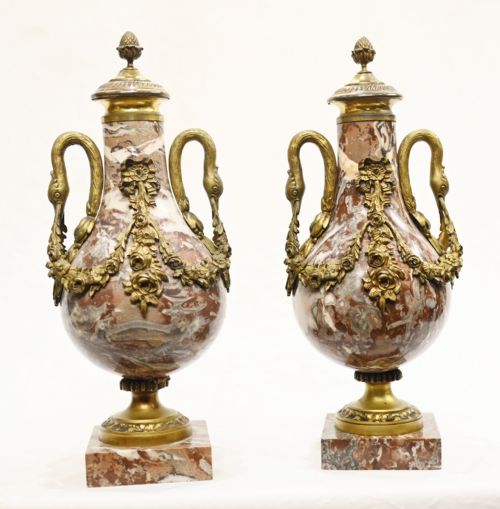
Many examples take the form of campana-shaped urns or amphorae mounted on square pedestals, aligning closely with Neoclassical, Regency, and Louis XVI revival tastes.
Materials and construction
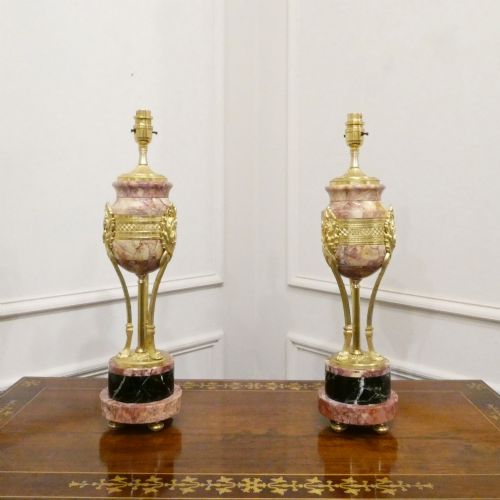
Foundry workers cast mounts, handles, and bases in bronze or brass before applying mercury gilding to create the bright ormolu surface typical of French luxury goods.
Stone-cutters shaped natural minerals such as white onyx, green marble, and rouge marble into bodies and pedestals, often turning them on a lathe to achieve smooth classical proportions.
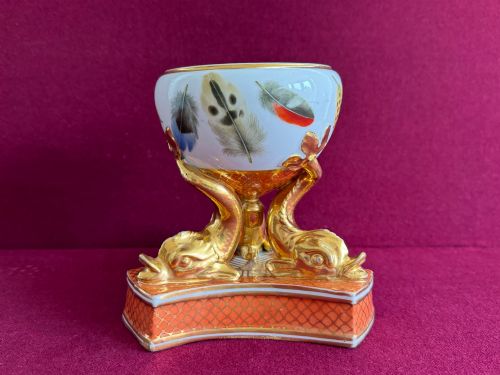
Enamelling, champleve, and porcelain components added colour and pattern to the metallic frameworks, combining ceramic arts with metalwork.
Antique Cassolettes Retail Price Guide 2026
Typical asking prices for cassolettes among the pieces listed under this phrase on Sellingantiques today, from the lower quarter to the upper quarter. They describe what is for sale here now, not the wider market.
Some nineteenth-century users burned scented pastilles inside the hollow bowls, turning these decorative urns into domestic room deodorisers.
Judging quality in cassolettes
The crispness of the bronze chasing dictates the visual success of the piece, separating sharp, hand-finished foliage and masks from soft, sterile machine castings.
The selection and matching of the marble body reveal the ambition of the maker, as uniform veining and dense mineral structure elevate a pair above simpler stone bodies.
Auguste Cain·Chamberlain Worcester·Flight Barr and Barr·Royal Worcester·Samuel Marti
The Antique Cassolettes Glossary
- Cassolette
- A vessel with a reversible lid used interchangeably as a perfume burner, vase, or candlestick. The design dates back to classical antiquity and enjoyed major revivals during the eighteenth and nineteenth centuries.
- Ormolu
- Gilded bronze produced by applying an amalgam of gold and mercury to a bronze base and heating it to vaporise the mercury. This technique yields a deep, enduring golden lustre.
- Grand Tour
- A traditional trip through Europe undertaken by young upper-class men to study classical art and architecture. Souvenirs purchased on these journeys frequently included bronze and marble miniature urns.
- Campana
- A bell-shaped classical vessel form with a flaring rim and a footed base. The shape derives from ancient Roman garden pottery and architectural urns.
Antique Cassolettes: Frequently Asked Questions
Where were antique cassolettes made?
Paris served as the primary centre for gilt bronze and marble examples during the nineteenth century. English potteries also produced ceramic variants.
Workshops in Italy contributed marble and bronze pieces aimed at travellers collecting souvenirs of classical antiquity.
How do I date a cassolette?
Stylistic markers point to specific design revivals, such as the heavy classical proportions of the Regency period or the ornate Louis XVI revival mounts of the late nineteenth century.
Material combinations like champleve enamel paired with ormolu typically indicate production during the late nineteenth century.
How should I display them?
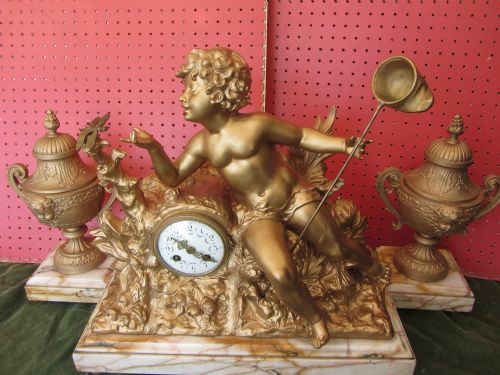
Placed on mantelpieces, console tables, or sideboards, pairs create symmetrical balance in a room. They often form part of a clock garniture flanked by matching candelabra.
Direct sunlight should be avoided to protect sensitive stones and gilded bronze surfaces from gradual degradation.