


Empire Bronze Urns
Empire bronze urns combine cast metalwork with classical forms, offering striking architectural presence for period interiors.
Empire Bronze Urns
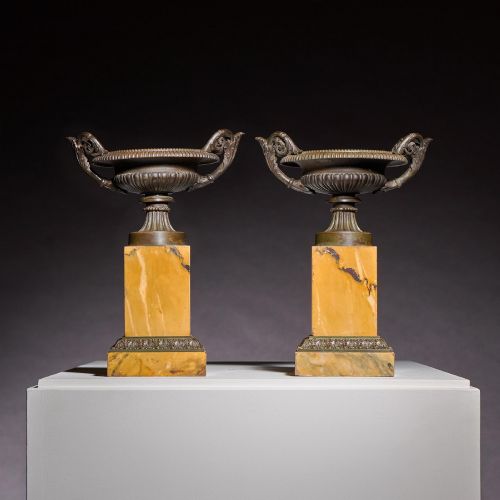
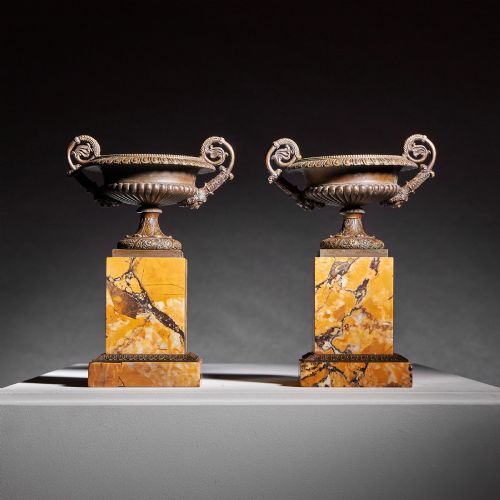
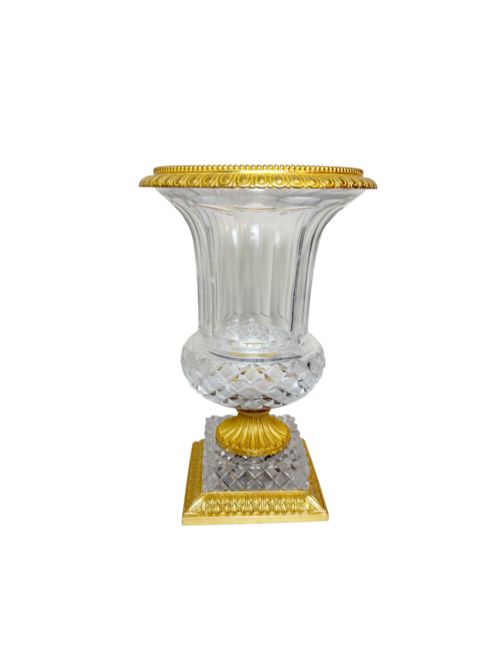
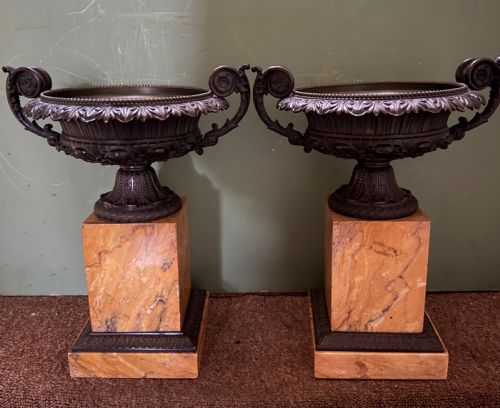
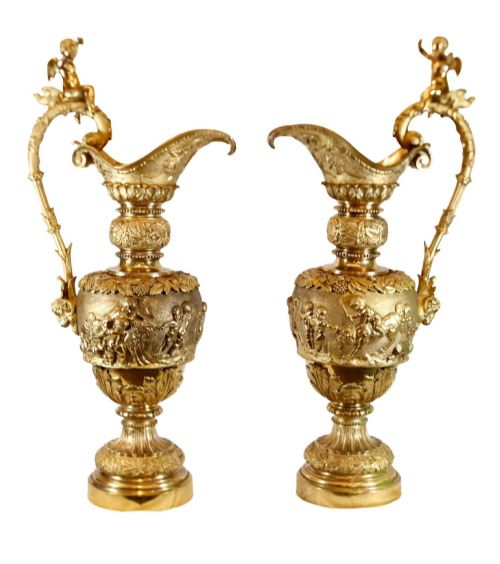
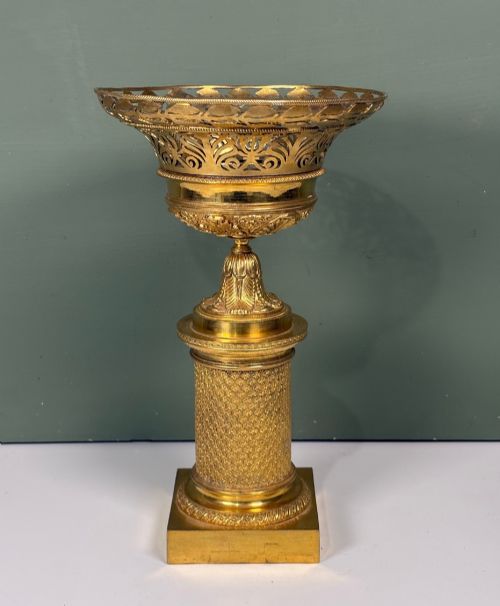
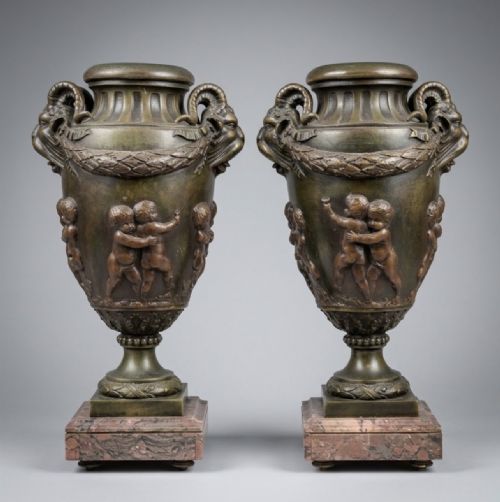
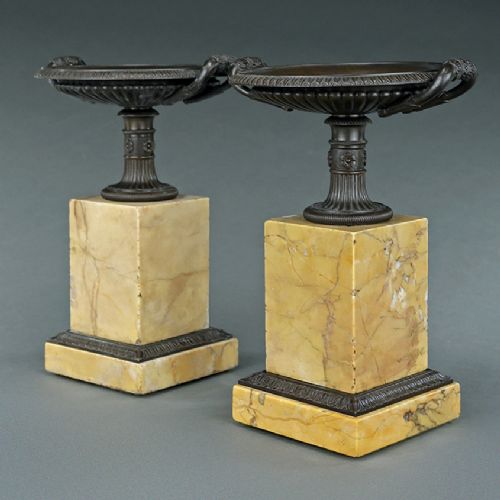
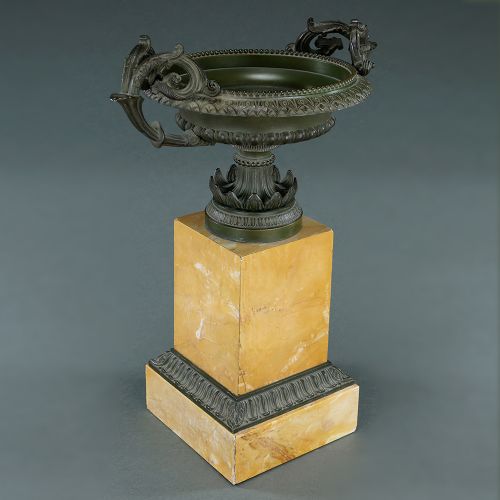
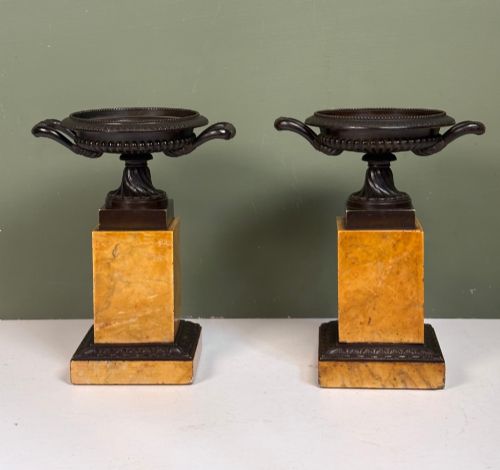
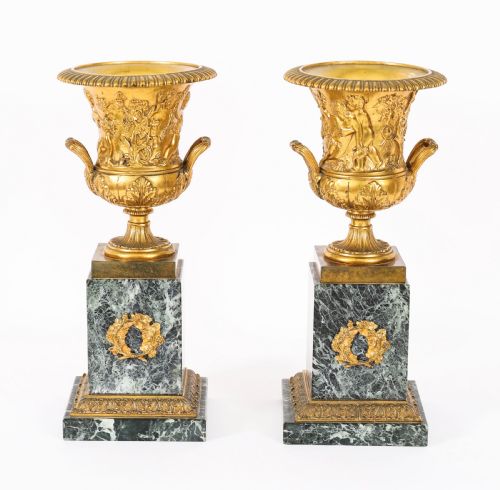
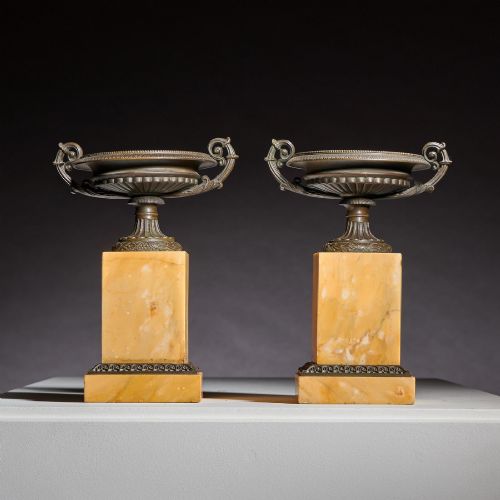
When you examine empire bronze urns, you encounter decorative vessels shaped by neoclassical tastes spanning the nineteenth century. These objects draw heavily on French Empire, Regency, and Louis XVI revival aesthetics, often taking the form of campana urns, tazzas, and mounted vases.
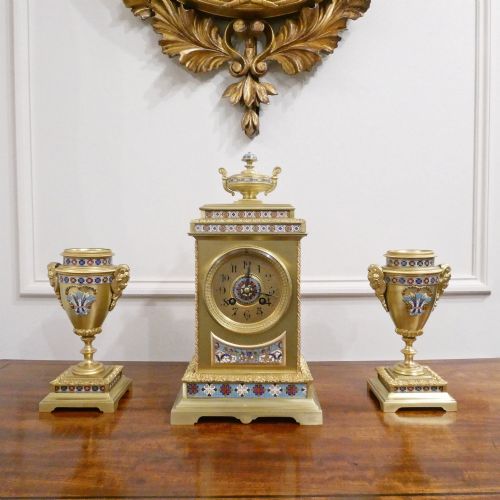
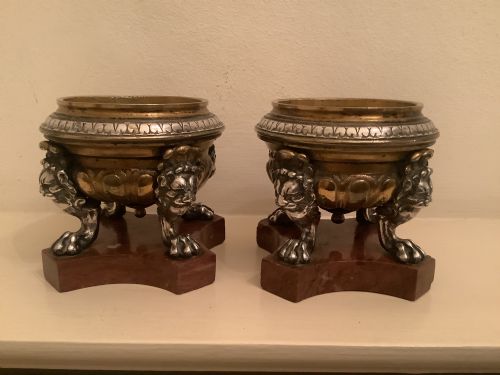
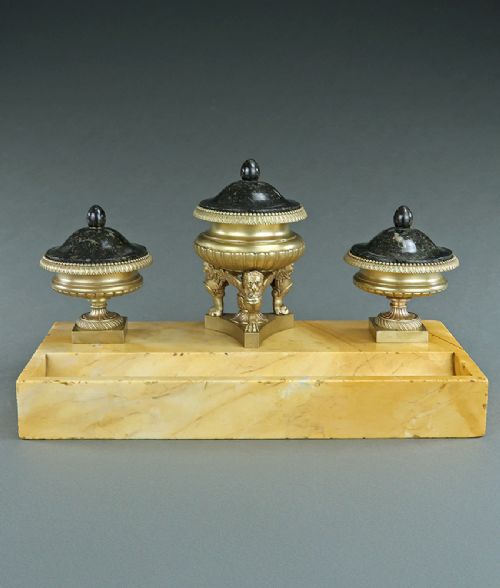
The pieces appearing on this page frequently pair dark patinated or gilded bronze with contrasting stone pedestals. Alongside lidded and open urns, the selection incorporates mantel clocks, inkwells, and candelabra utilising the same classical vocabulary.
Originating largely from French and English workshops, these items reflect Grand Tour influences and Napoleonic design motifs. Collectors find both cabinet-sized examples and monumental decorative pairs designed for prominent display.
Materials and Construction Techniques
Foundries produced these objects by casting bronze, brass, or spelter, often finishing surfaces through mercury gilding or chemical patination to create contrasting tones of ormolu and dark bronze. Skilled metalworkers chased the cast surfaces by hand to sharpen architectural details, foliage, and classical figures.
Carved marble, onyx, and slate plinths provide stable architectural bases for the metal vessels. Plinths frequently incorporate turned columns, stepped pedestals, and cast ormolu mounts fixed via internal threaded rods.
Empire Bronze Urns Retail Price Guide 2026
Typical asking prices for empire bronze urns among the pieces listed under this phrase on Sellingantiques today, from the lower quarter to the upper quarter. They describe what is for sale here now, not the wider market.
Materials documented across the pieces include gilt bronze, ormolu, Sienna marble, white onyx, and patinated bronze.
Judging Quality and Execution
The choice of stone foundation also distinguishes finer pieces, with select white marble, Sienna marble, and rouge marble bases turned and polished with precision. Heavier, more substantial metal casting and tighter joinery between the bronze body and its stone plinth indicate higher grade workmanship.
Lerolle Fres·Pons De Paul·Vincenti of Paris
The Empire Bronze Urns Glossary
- Ormolu
- Gilt bronze produced by applying a mercury and gold amalgam to cast bronze before heating. This technique creates a durable, luminous golden finish characteristic of nineteenth-century decorative arts.
- Campana
- An inverted bell-shaped vessel with a flared rim and footed base. This ancient classical form frequently appears in bronze and marble decorative urns.
- Tazza
- A shallow bowl or cup raised on a stem and footed base, often utilised for display on tables or mantelpieces. These pieces frequently incorporate classical handles and detailed bronze casting.
- Patinated Bronze
- Metal treated with chemical solutions to produce a controlled dark surface colour. This finish highlights the bright details of adjacent ormolu mounts.
- Grand Tour
- Eighteenth and nineteenth-century travel across Europe by young elites who collected classical antiquities and souvenir bronzes. These journeys inspired many of the decorative urns produced in French workshops.
Empire Bronze Urns: Frequently Asked Questions
Where were empire bronze urns displayed?
These decorative vessels were traditionally placed on mantelpieces, pedestals, and sideboards within formal drawing rooms and libraries. Their architectural proportions suited grand nineteenth-century interiors designed for entertaining.
Today, collectors position them on console tables, desks, or architectural brackets where light can catch the polished bronze and stone surfaces.
How do you clean antique bronze and ormolu?
Dusting gently with a dry, soft brush is the safest method to remove particulate matter from intricate chased metalwork. Avoid chemical polishes, which can strip historic gilding and permanent patination.
Professional conservation is recommended if deeper cleaning is required to address stubborn grime on nineteenth-century surfaces.
What is the difference between bronze and spelter?
Bronze is an alloy of copper and tin known for its strength, weight, and capacity to hold sharp chased details. Spelter is a cheaper zinc-based alloy that was frequently used as a substitute for bronze in later nineteenth-century manufacturing.
Examining the underside or weight of a vessel usually reveals the heavier, more resonant character of true bronze compared to softer spelter.
How do you identify a Grand Tour piece?
Grand Tour objects often replicate famous classical sculptures or architectural ruins encountered by travellers in Italy. They are characterised by fine bronze casting mounted on distinct coloured marble or alabaster plinths.
These pieces served as portable reminders of classical antiquity for nineteenth-century collectors returning from European travels.