

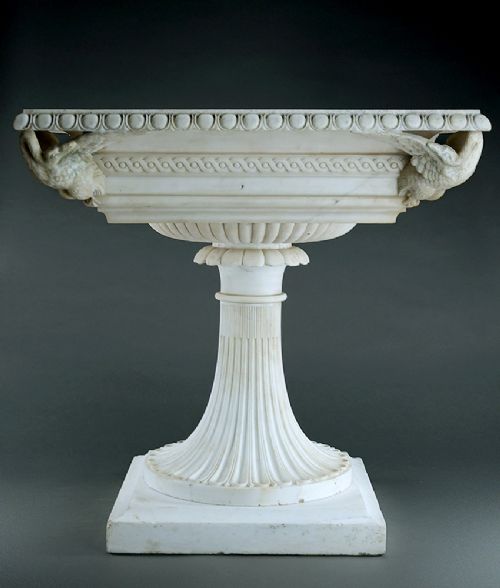

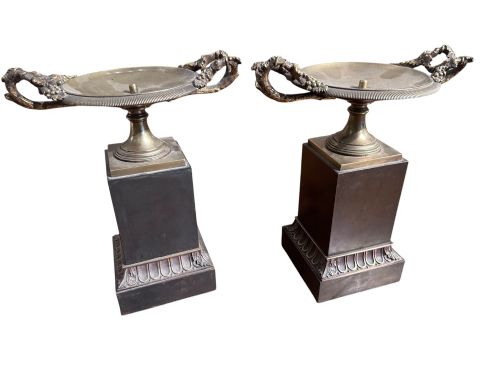
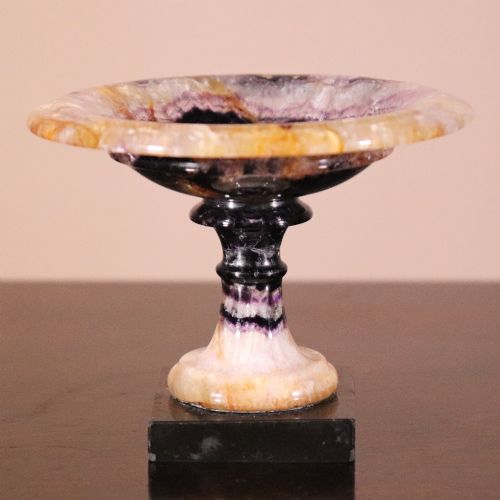
Antique Marble Tazza
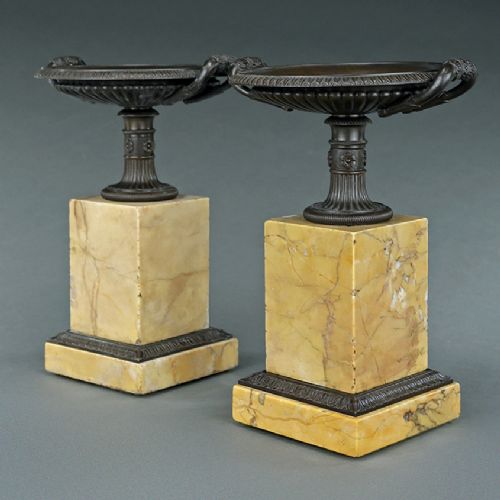
An antique marble tazza brings classical proportion to a room, combining carved stone with bronze or ormolu mounts.
Antique Marble Tazza
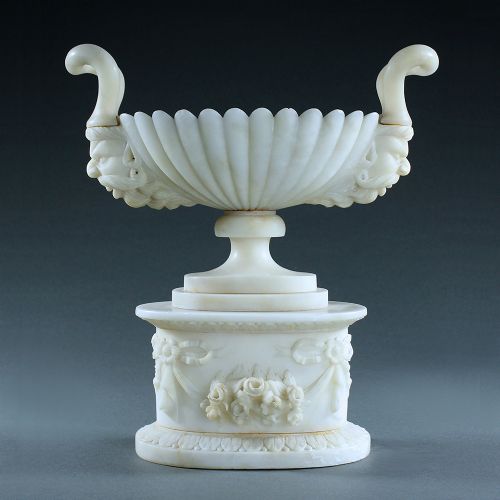
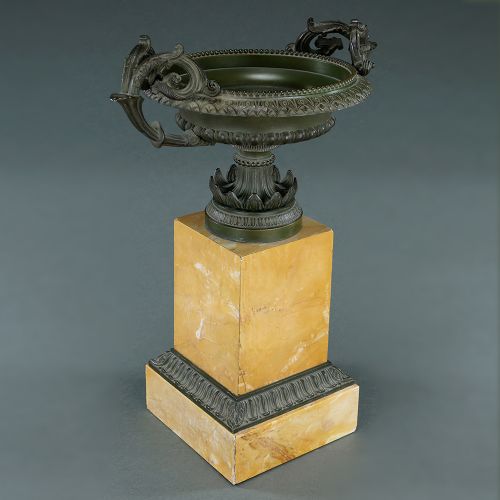
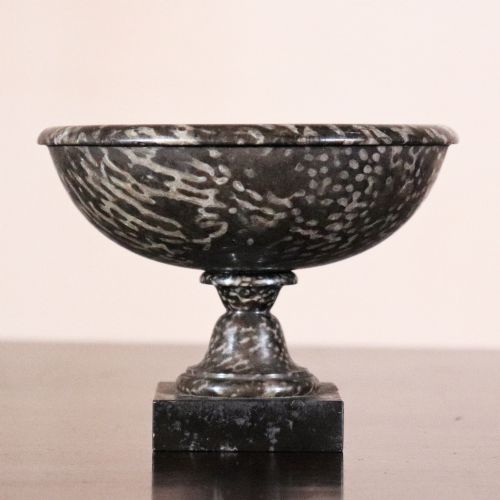
An antique marble tazza takes the form of a shallow bowl or cup raised on a pedestal, echoing classical vessels unearthed during archaeological excavations. These pieces bridge the gap between classical sculpture and domestic display, serving as centrepieces or decorative tazze on mantelpieces and tables.
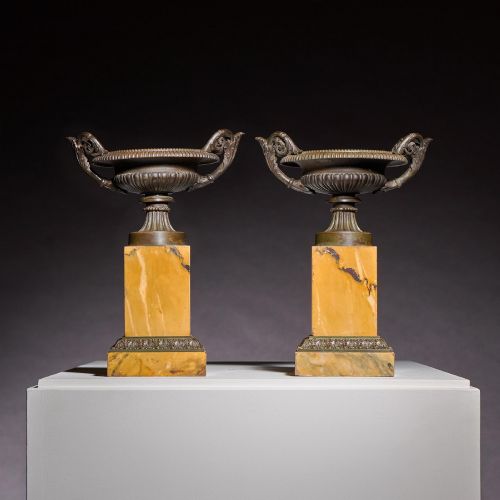
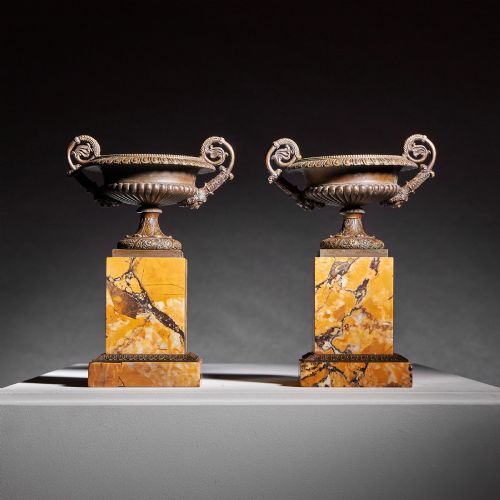
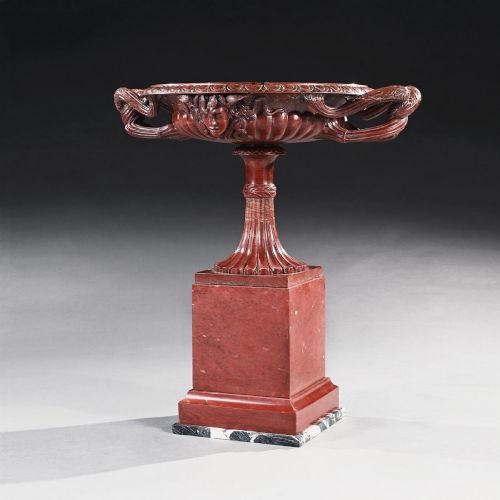
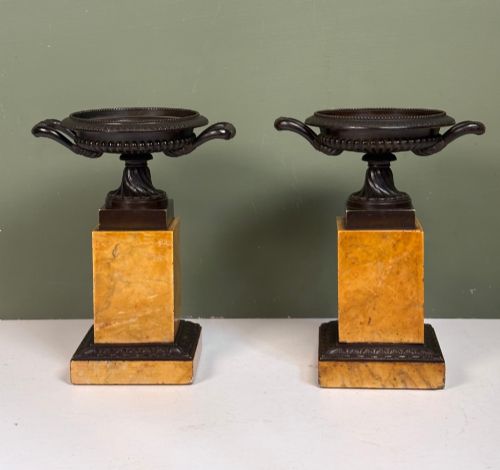
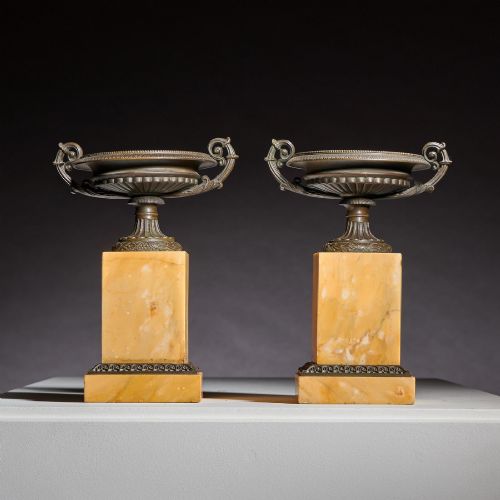
The version most commonly encountered on this page is the 19th-century Grand Tour souvenir, often produced in Italy or France. These pieces utilise distinctive stones such as Sienna marble, black marble, and rosso antico, frequently paired with cast bronze or gilt ormolu.
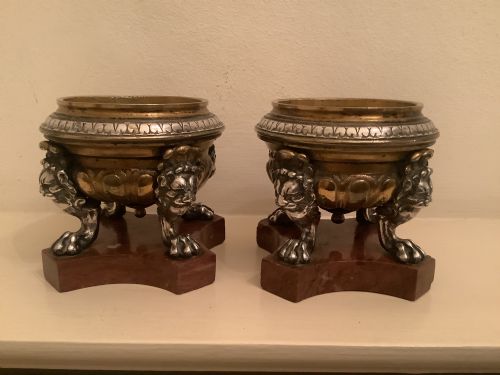
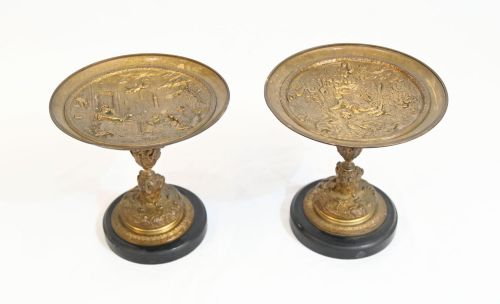
Beyond standalone pedestal bowls, the listings include matched pairs, garniture sets, and lidded vessels. Some examples incorporate specialist decorative elements like Blue John, Ashford coral marble, malachite, or Limoges enamel plaques.
Materials and Technique
Makers shaped the bowls and pedestals from dense mineral blocks, turning variegated and solid marbles on lathes before hand-finishing the profiles. Natural stones like alabastro egiziano and rouge griotte required careful selection to showcase natural figuring within the shallow basin.
Metal components relied on bronze casting and fire-gilding to create ormolu mounts, plinths, and classical handles. Founders joined stone and metal sections mechanically using threaded rods or pins, uniting heavy mineral bases with intricate patinated bronze work.
Antique Marble Tazza Retail Price Guide 2026
Typical asking prices for marble tazza among the pieces listed under this phrase on Sellingantiques today, from the lower quarter to the upper quarter. They describe what is for sale here now, not the wider market.
Some travellers hauled heavy marble pedestals across Europe in horse-drawn carriages just to admire a slice of classical antiquity back home.
Distinctions in Quality
The distinction between standard decorative items and exceptional pieces rests in the choice of mineral and the crispness of the bronze casting. Highly figured stones like malachite, Blue John, and large-scale Sienna marble command attention through their geological rarity and depth of colour.
Execution of the metalwork separates workshop tiers, visible in the sharpness of chased ormolu and the weight of the bronze mounts. Harmonious proportions between the marble basin and its pedestal indicate a deliberate design derived directly from antique precedents.
Japy Frères·Benedetto Boschetti·Ferdinand Preiss
The Antique Marble Tazza Glossary
- Tazza
- A shallow ornamental cup or bowl set on a high foot and pedestal base. This form derives from ancient drinking vessels adapted for decorative display.
- Grand Tour
- A cultural journey undertaken by wealthy Europeans in the 18th and 19th centuries. Souvenirs purchased on these travels frequently included marble and bronze antiquarian models.
- Ormolu
- Gilt bronze created by applying an amalgam of gold and mercury to a bronze object and heating it. This technique produces a durable, rich golden surface finish.
- Sienna marble
- A distinctive yellow and brown quarried limestone from Italy with dark veining. It was highly favoured by neoclassical makers for its dramatic visual warmth.
Antique Marble Tazza: Frequently Asked Questions
What is an antique marble tazza?
An antique marble tazza is a shallow decorative basin raised on a pedestal, designed as an ornamental object rather than tableware. These pieces draw direct inspiration from classical Roman and Greek vessels.
Craftsmen produced them extensively during the nineteenth century, often employing rich marbles paired with cast bronze or ormolu mounts to satisfy demand from collectors.
How were they used historically?
In nineteenth-century interiors, these vessels served primarily as decorative centerpieces on tables, consoles, and mantelpieces. They demonstrated the owner's classical learning and aesthetic refinement.
Many originated as souvenirs purchased by travellers journeying through Italy during the Grand Tour, later displayed in European drawing rooms.
How do I style one at home?
A marble tazza works well placed in the centre of a dining table, upon a stack of art books, or displayed empty on a mantelpiece. Its classical silhouette provides strong architectural contrast in modern or traditional interiors.
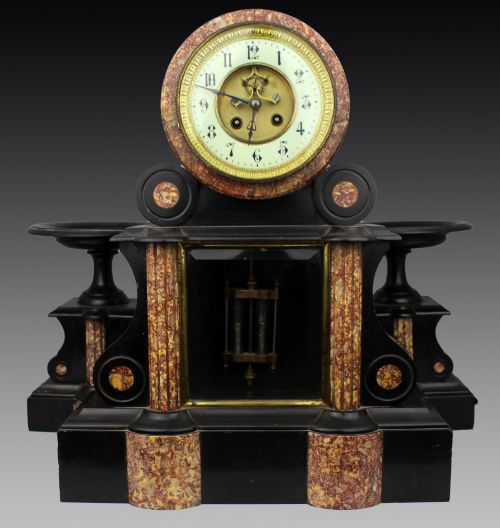
Pairs look balanced when set at opposite ends of a sideboard or used to frame a clock garniture set.
How do I identify a Grand Tour piece?
Grand Tour pieces typically feature specific regional stones such as Sienna marble, rosso antico, or alabaster, combined with patinated bronze. They frequently copy excavated ancient vessels found in Italian museums.
Their construction often involves heavy stone bases turned on a lathe, joined to cast metal mounts using period mechanical fasteners.