


Neoclassical Marble Bowls
Neoclassical marble bowls are monumental carved vessels drawing on antique forms that bring classical dignity to any room.
Neoclassical Marble Bowls
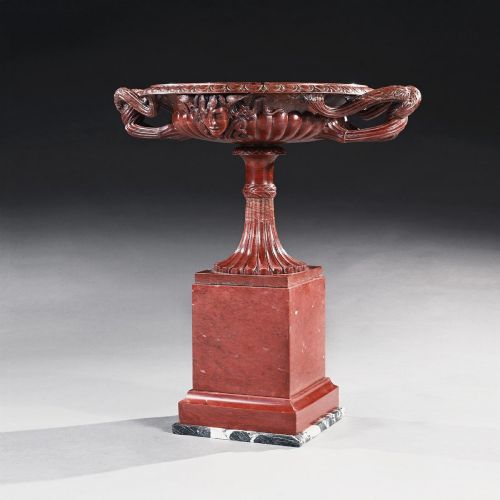
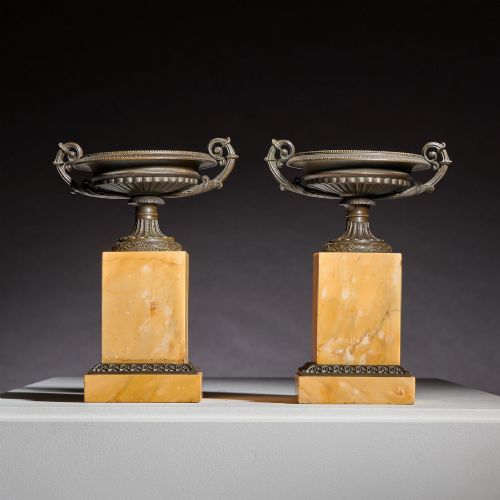
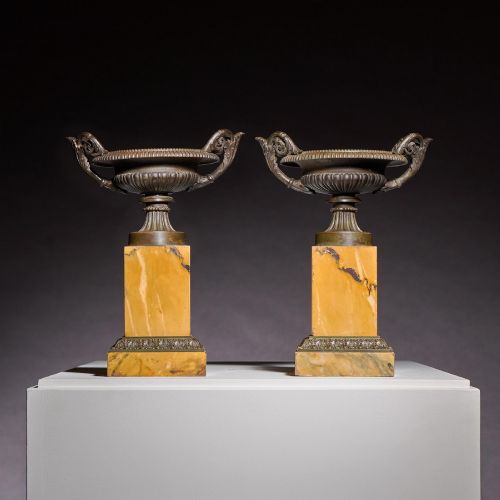
Neoclassical marble bowls appear frequently on this page as pedestal bowls, tazzas, and ornamental urns created in the eighteenth and nineteenth centuries. These decorative objects take inspiration from ancient classical designs, often functioning as Grand Tour souvenirs brought back by travellers from Italy.
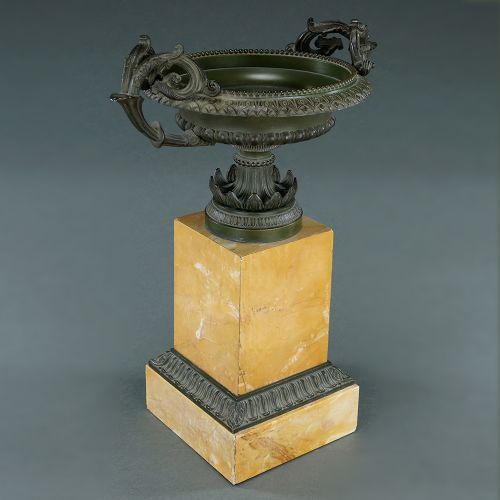
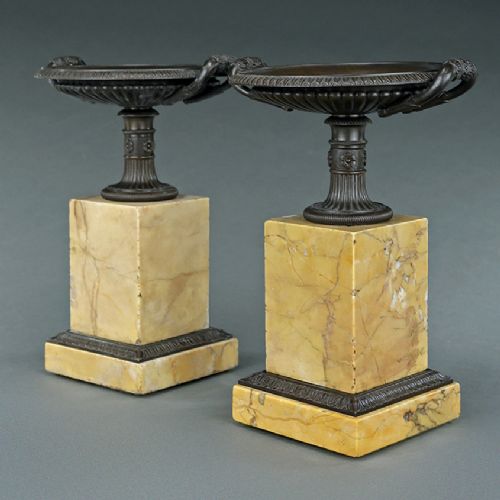
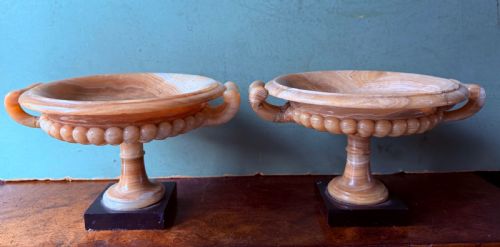
The selection ranges from small-scale souvenir tazze mounted on black marble block bases to monumental urns and fonts. Pieces frequently combine carved stone bodies with cast metal mounts, reflecting French Empire and Italian neoclassical styles.
Materials and construction methods
Makers carved the bodies of these vessels from various marbles including Sienna, Rosso Antico, and black marble, sometimes incorporating highly-figured alabastro egiziano or malachite. Stonework was often paired with cast bronze, gilt bronze, and ormolu mounts.
Many examples utilise contrasting materials, setting warm yellow or deep red stones against dark bases or bright metallic ornamentation to highlight the classical profiles.
Current listings feature nineteenth-century pieces incorporating bronze, ormolu, Siena marble, and Rosso Antico.
Assessing quality and execution
Quality rests upon the precision of the stone carving and the crispness of the bronze or ormolu casting. Finer pieces display sharp detail in the classical motifs and careful selection of figured marble with striking natural veining.
Proportion and scale also dictate distinction, separating standard decorative objects from monumental works attributed to skilled workshops.
Benedetto Boschetti
The Neoclassical Marble Bowls Glossary
- Tazza
- A shallow bowl or cup mounted on a stem and foot, originating from classical antiquity. These vessels often served decorative rather than practical purposes in nineteenth-century interiors.
- Grand Tour
- A traditional trip through Europe, particularly Italy, undertaken by upper-class Europeans to study classical art and architecture. Souvenirs from these journeys included carved marble and bronze antiquities.
- Ormolu
- Gilt bronze ornamentation applied to furniture and decorative objects. The technique involves fusing a gold-mercury amalgam onto a bronze base.
- Rosso Antico
- A deep red marble prized by classical sculptors and later nineteenth-century revivalists. Its rich colour mimics ancient Roman decorative stones.
- Sienna Marble
- A highly decorative yellow marble quarried in Italy, featuring dark purple or brown veining. It was widely utilised in Grand Tour ornamental pieces.
Neoclassical Marble Bowls: Frequently Asked Questions
What are neoclassical marble bowls?
These pieces are decorative vessels carved from stone and cast metal during the eighteenth and nineteenth centuries, emulating ancient Greek and Roman forms.
They were produced primarily as ornamental objects and Grand Tour souvenirs for European collectors.
How were tazzas used?
Tazzas functioned as decorative centrepieces, display objects, and lidded cups within formal rooms.
Their elevated pedestals and shallow basins were designed to showcase the natural grain of marble and the detail of bronze mounts.
Which marbles appear most often?
Listings feature Sienna marble, Rosso Antico, black marble, and malachite, often paired with bronze or ormolu.
These varied stones provide distinct yellows, reds, and greens that contrast with metallic components.
How can I date these items?
Dating relies on stylistic markers from the eighteenth and nineteenth centuries, particularly the influence of French Empire and Italian Grand Tour aesthetics.
Construction techniques in the bronze mounts and the specific type of marble help narrow the period of origin.