


Carved Marble Tazza
A carved marble tazza brings classical proportion and ancient Rome into a room, offering a pedestal bowl shaped for display.
Carved Marble Tazza
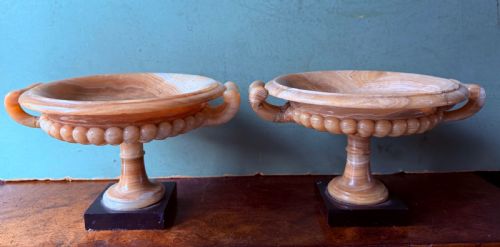
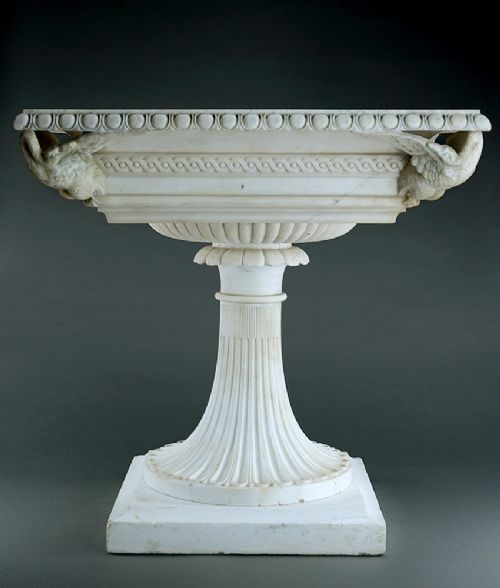
A carved marble tazza takes the form of a shallow pedestal bowl or footed dish derived from classical antiquity. Buyers searching for a carved marble tazza frequently encounter Grand Tour souvenirs, neoclassical centrepieces, and architectural vessels produced in the nineteenth century. The selection spans diminutive cabinet pieces up to monumental proportions, often modelled after archaeological finds in Italy.
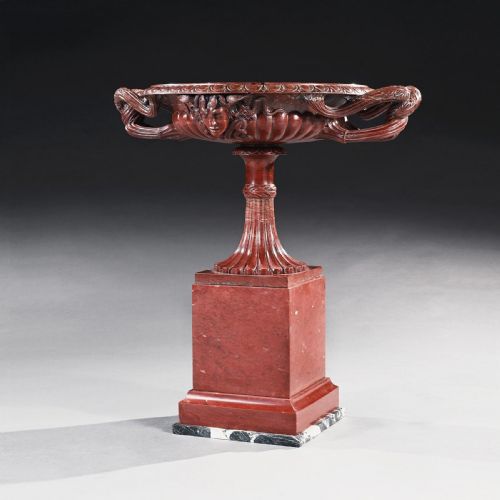
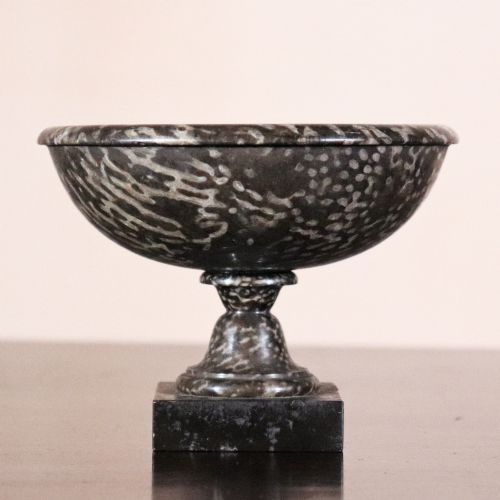
Many items reflect the Neoclassical taste and Grand Tour travels, styled as antique vessels or architectural fragments on block bases. Alongside standard white marble, forms appear in distinctive stones such as Rosso Antico, Sienna, Ashford coral marble, and alabastro egiziano. Pairs of tazze and single monumental bowls make up the core of what circulates on this page.
How carved marble tazza items were produced
Makers shaped these vessels from dense stones and decorative marbles using hand-carving and turning techniques. Workshops selected blocks of coloured marble, alabaster, and limestone, sometimes mounting smaller bowls upon contrasting black marble bases.
Surface treatment relies on polishing the stone to reveal the natural figuring and colour variations within the marble. Certain nineteenth-century pieces integrate bronze elements or combine carved marble with other decorative media.
Listings feature 19th Century, 1850, 18th Century, and 1920 periods, spanning Neoclassical, Grand Tour, Victorian, and Art Deco styles.
What distinguishes quality in a carved marble tazza
Proportion and scale dictate visual impact, distinguishing monumental or finely detailed souvenir vessels from simpler regional items. The integrity of the marble surface and the precision of the pedestal or base shape determine the refinement of the object.
Benedetto Boschetti·Ferdinand Preiss
The Carved Marble Tazza Glossary
- Tazza
- A shallow bowl mounted on a pedestal foot, used historically for display or serving. The term covers ancient vessels and later revival pieces alike.
- Grand Tour
- A cultural journey of Europe undertaken by wealthy young men in the eighteenth and nineteenth centuries. Souvenirs purchased on these trips included miniature marbles and classical bronzes.
- Rosso Antico
- A deep red marble prized by the ancient Romans and revived by nineteenth-century Italian lapidaries. It gives tazze an intense, dark crimson tone.
- Neoclassical
- A style spanning the eighteenth and nineteenth centuries inspired by the art and architecture of classical Greece and Rome. It guides the symmetrical forms and antique motifs seen on these bowls.
Carved Marble Tazza: Frequently Asked Questions
What is a carved marble tazza used for?
These vessels function primarily as decorative centrepieces on tables, consoles, or pedestals. Historically, they served to display precious items or emulate classical antiquity within a domestic interior.
Today, collectors place them to introduce sculptural form and geological colour to a room. Their shallow bowls suit tabletop display rather than practical utility.
How old are most carved marble tazza pieces?
The majority of pieces encountered date from the nineteenth century, coinciding with the height of the Grand Tour and neoclassical revival. Workshops in Italy produced souvenir tazze modelled after ancient artefacts excavated in Rome and Pompeii.
Earlier examples from the eighteenth century appear occasionally, alongside occasional late nineteenth or early twentieth-century variations. Dating relies on the material, turning marks, and stylistic adherence to classical sources.
What materials are used in a carved marble tazza?
Carved stone forms the foundation of every piece, utilising white marble, limestone, and alabaster. Distinctive regional and decorative stones also appear, including Sienna marble, Ashford coral marble, and deep red Rosso Antico.
Some examples incorporate contrasting black marble bases or bronze components. The natural veining and figuring of the stone dictate the visual character of each individual bowl.
How do I care for a carved marble tazza?
Marble and alabaster require gentle dusting with a soft, dry cloth to protect the polished surface. Moisture and chemical cleaners should be avoided, particularly on softer stones like alabaster which absorb liquids easily.
Placement away from direct heat sources and heavy foot traffic keeps the stone stable. Handling the vessel by its main body rather than delicate rims or handles prevents accidental strain.