



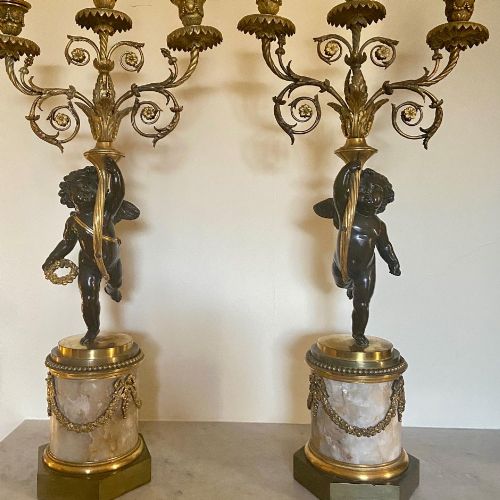
Antique Marble Mantel
These heavy stone surrounds and companion garnitures bring formal nineteenth-century architectural weight to a hearth.
Antique Marble Mantel
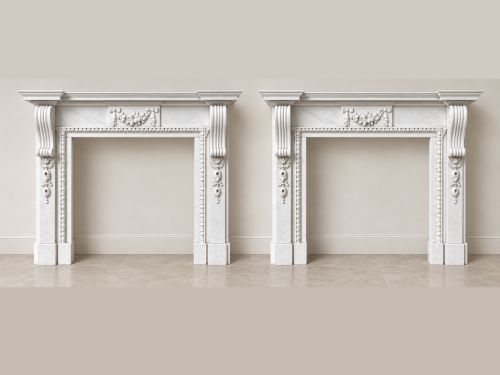
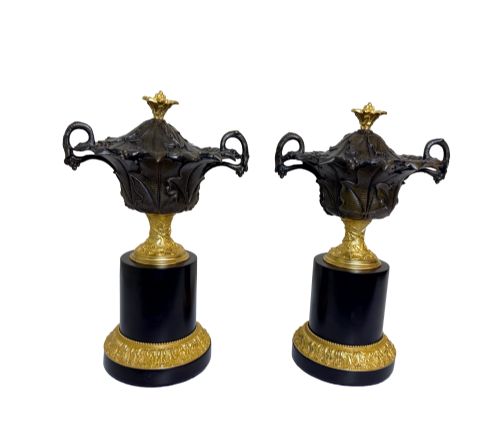
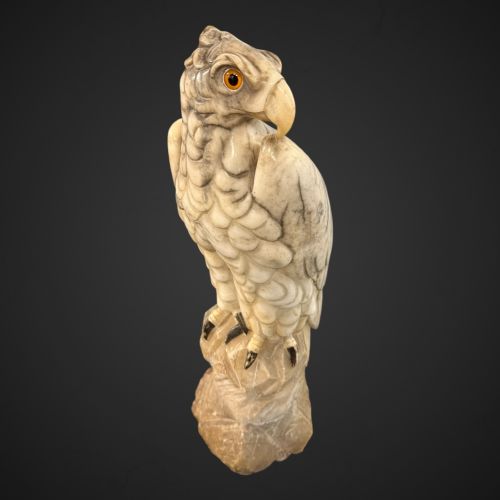
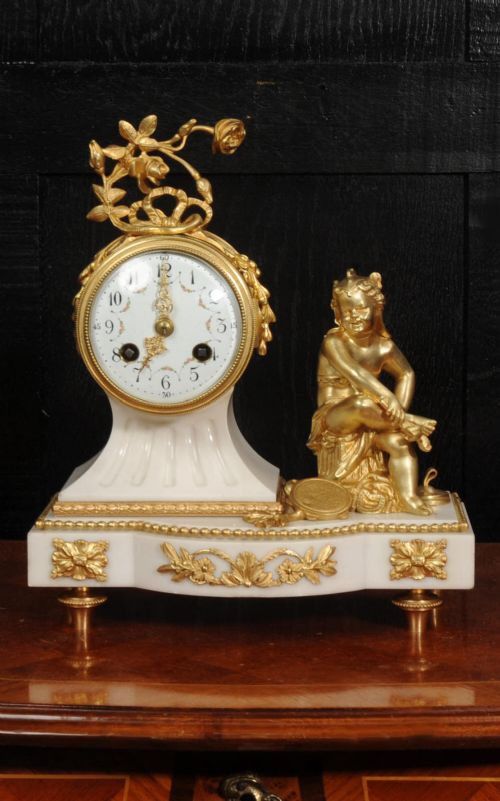
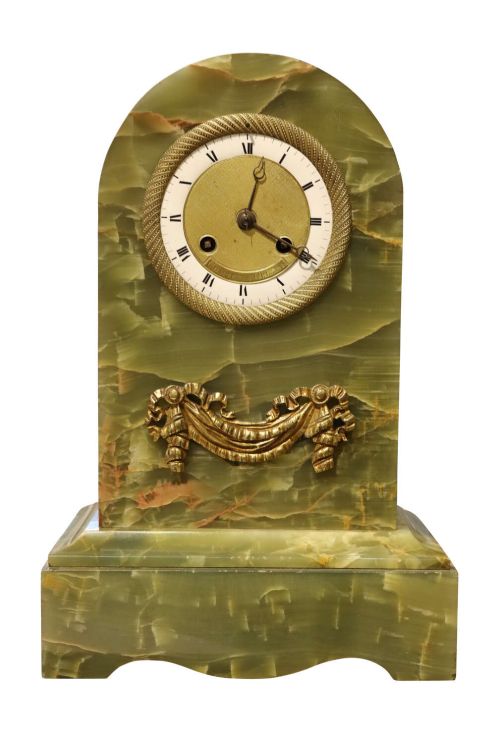
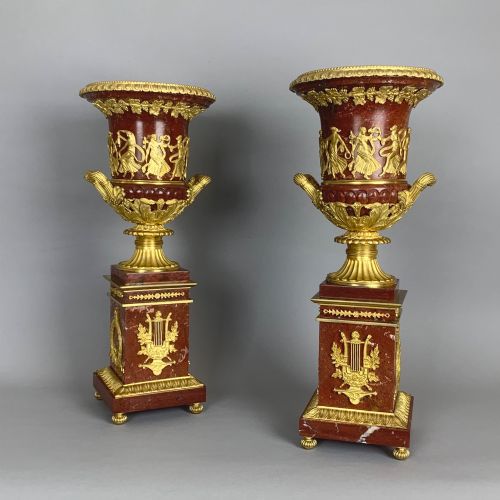
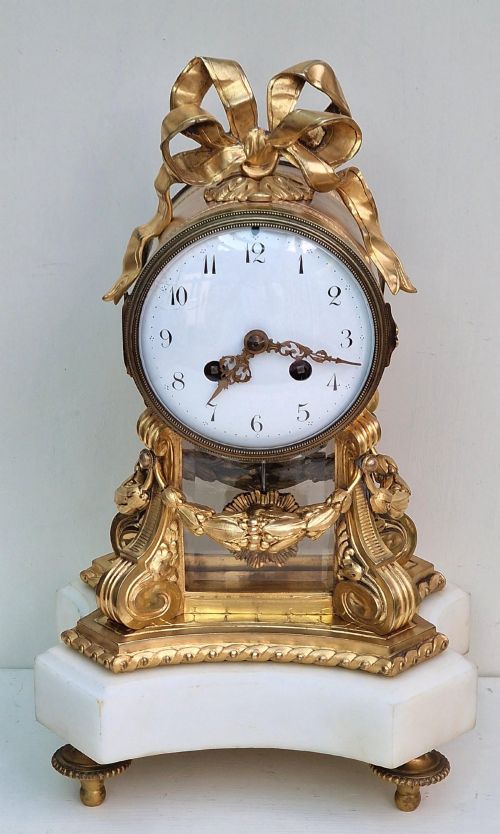
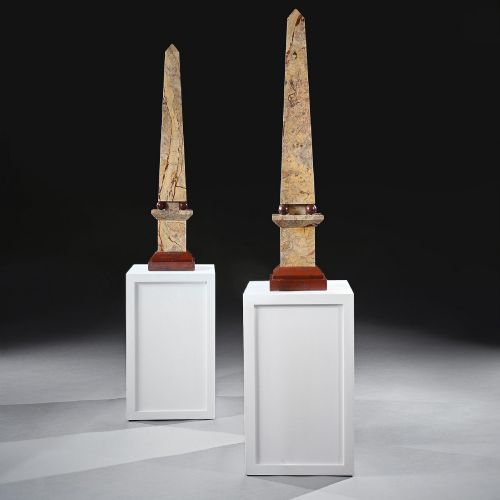
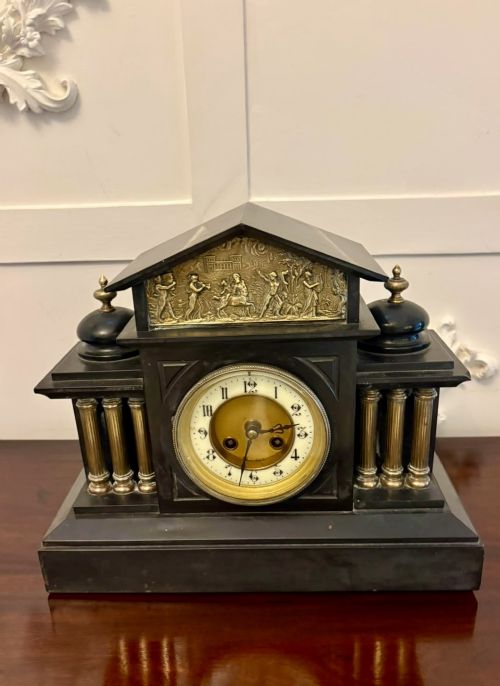
An antique marble mantel serves as the architectural centrepiece of a room, framing a fireplace with substantial carved stone. The selections found here range from substantial Edwardian carved white marble architectural surrounds to polished coloured stone clock garnitures and decorative obelisks.
The material vocabulary spans white Carrara, black marble, green onyx, Portasanta, and Rosso Antico, frequently accented with cast metal mounts. Pieces often follow Neoclassical, Louis XVI, or Victorian design traditions established during the principal periods of manufacture.
Materials and construction methods
Masons and bronze-founders shaped these works using natural quarried stone paired with cast metal elements. Marble blocks were hand-cut, turned, and polished to form architectural columns, urn bodies, and clock plinths, while accompanying figures and mounts utilised cast bronze, ormolu, and gilt brass.
Gilding and patination techniques finished the metal components, with mercury gilding or ormolu applied to bronze mounts. Clock movements housed within these stone housings relied on brass wheels, anchor escapements, and pendulum regulation driven by spring or weight power.
Carved ornament on the stone relied on chiselling and polishing by hand, creating crisp fluting on columns and detailed relief work on mantel friezes. Individual components were then pinned, bolted, or doweled together to support the heavy stone and metal assemblies.
Architectural fireplace surrounds appear alongside table clocks, bronze animal sculptures, and decorative obelisks derived from Grand Tour travels.
Distinctions in craftsmanship and design
The standard of an antique marble mantel depends heavily on the select grade of the stone and the crispness of its hand-carved mouldings. Superior examples display dense, well-figured natural veining without clumsy repairs, alongside deeply cut architectural detailing rather than shallow surface incision.
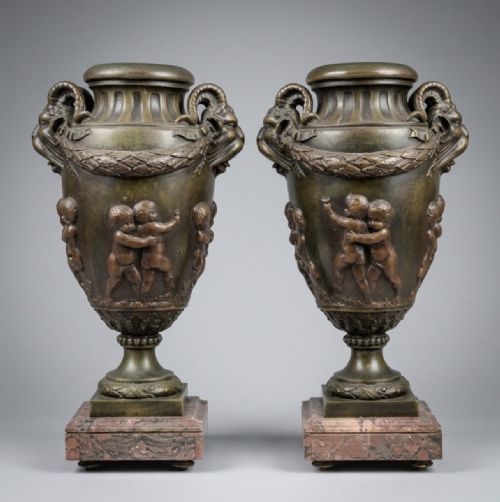
Metal mounts reveal further gradations in execution, separating mass-produced work from finer studio output. Superior gilt bronze or ormolu mounts exhibit sharp chasing and deep relief, whereas lower-tier pieces rely on softer, coarser spelter or simpler brass stampings.
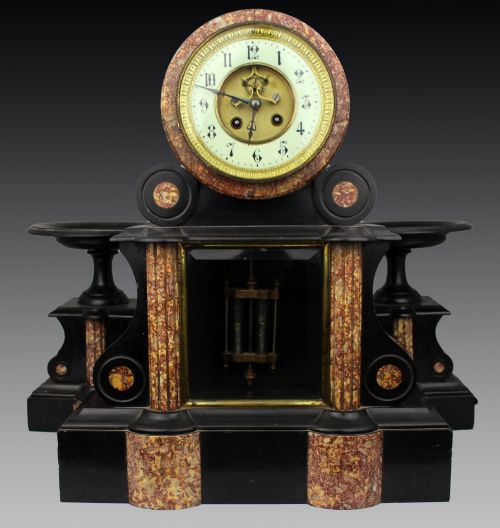
Clock movements and garniture sets demonstrate quality through the signature of the maker and the mechanical finish of the movement plates. Fully intact garniture sets featuring matching candelabra or urns carry greater integrity than single clocks separated from their original flanking pieces.
Japy Frères·Charles à Orléans·Vincenti·Siffel & Cartier·R Varnier·Emile Carlier·Vulliamy London·Nicoll Great Portland St London·Henri Picard
The Antique Marble Mantel Glossary
- Clock garniture
- A set comprising a central mantel clock flanked by matching decorative objects such as urns, vases, or candelabra. These matched groupings were designed to coordinate visually across a mantelpiece.
- Ormolu
- Finely ground high-carat gold applied to a bronze base through a mercury amalgamation technique. This historic process yields a durable, rich metallic lustre found on finer nineteenth-century mounts.
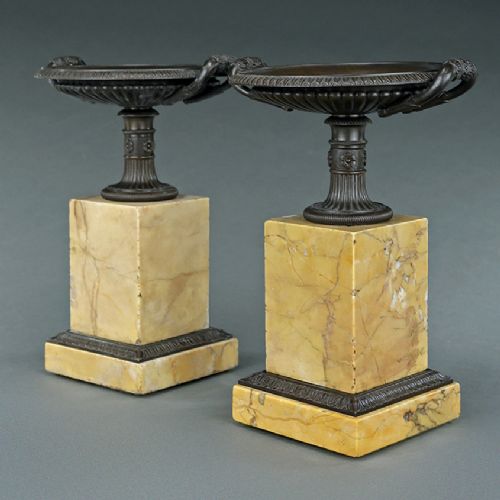
- Tazza
- A shallow ornamental cup or vase raised on a slender stem and footed base. They appear in bronze and marble combinations during the nineteenth century.
- Portasanta
- A distinctive multicolored Italian marble characterised by cloudy red, white, and purple brecciated patches. It was frequently utilised for decorative architectural objects and obelisks.
- Fusee
- A conical pulley used in clock movements to maintain an even pull on the gear train as the mainspring unwinds. This mechanical addition improves timekeeping accuracy across the duration of the winding.
Antique Marble Mantel: Frequently Asked Questions
How do I clean a marble mantel?
Dust the stone regularly with a soft, dry cloth to prevent grime accumulation. Avoid acidic household cleaners, vinegar, or abrasive scouring pads, which etch and dull the polished surface.
For stubborn marks, use a damp cloth with mild, pH-neutral soap, then dry the stone thoroughly. Take care to keep moisture away from any metal mounts or exposed clock movements.
Are these clock movements still working?
Many surviving antique clocks retain their operational mechanical movements, often striking the hours and half-hours on a bell or gong. Listings specify whether a movement is fully working or listed as a decorative timepiece.
Mechanical clocks from the nineteenth century generally require periodic professional servicing and proper levelling to maintain accurate timekeeping. Pendulums should be secured before moving any clock to prevent damage to the suspension spring.
What is a clock garniture set?
A clock garniture set pairs a central mantel clock with two matching side pieces, such as decorative urns, candelabra, or bronze figures. These matching ensembles were created to balance the visual weight of a fireplace mantel.
Set components share identical materials, such as black marble paired with gilt bronze mounts, ensuring a unified decorative scheme across the mantelpiece.
How do I distinguish nineteenth-century marble from later copies?
Nineteenth-century pieces typically display hand-finished surfaces, natural stone variations, and heavy cast bronze or brass mounts secured with threaded pins or old hand-cut screws. The weight of the stone and the depth of the hand-carved mouldings reflect period production methods.
Examine the construction joints and the underside of the base for signs of age, tool marks, and traditional assembly techniques appropriate to the Victorian or Edwardian eras.