



White Marble Mantel
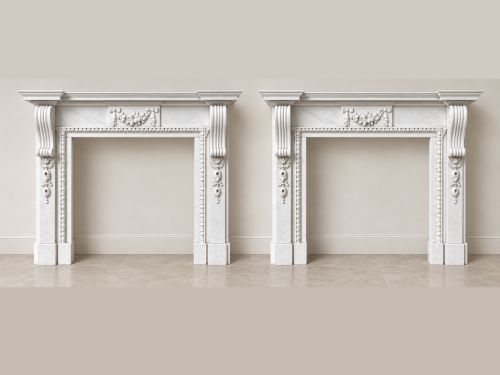
White marble mantel pieces combine carved stone with metal mounts, bringing classical French and Victorian proportion into a room.
White Marble Mantel
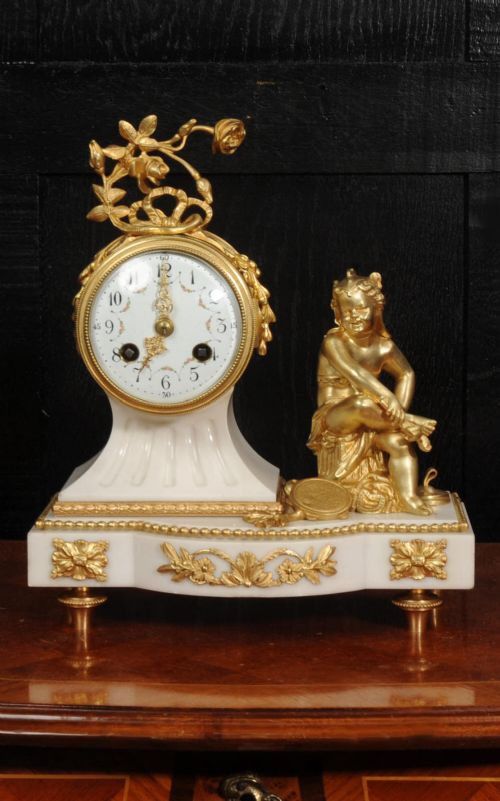
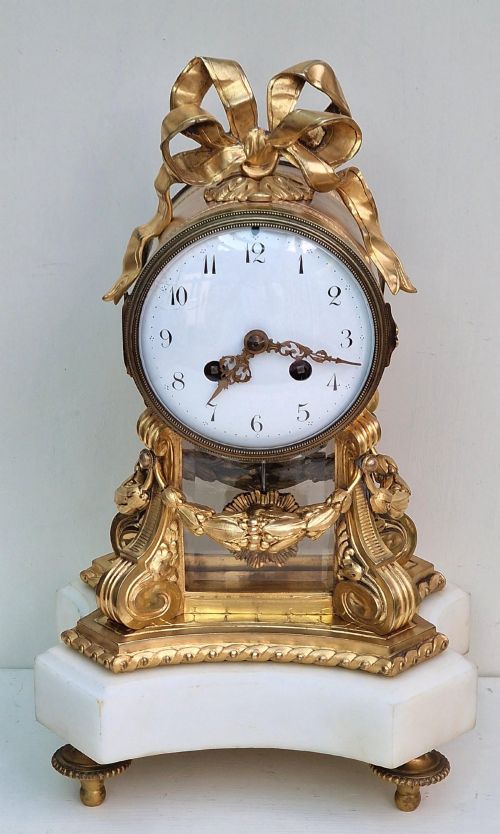
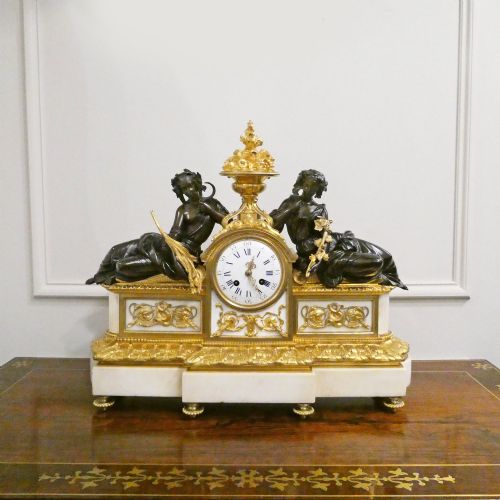
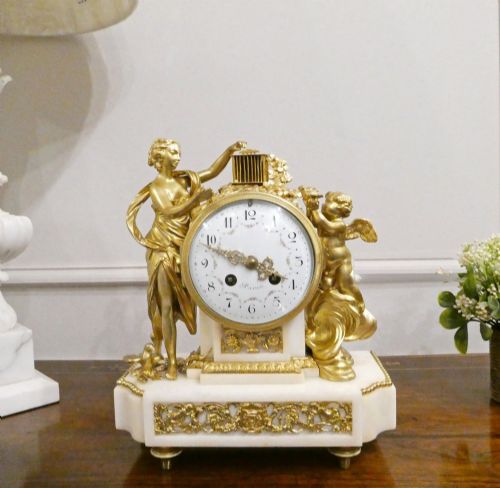
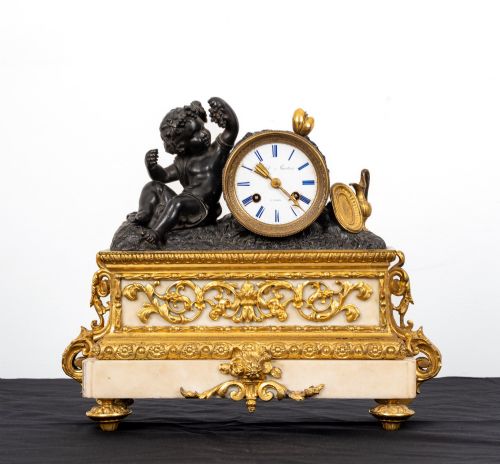
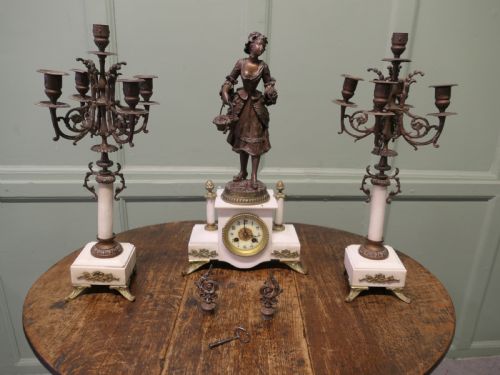
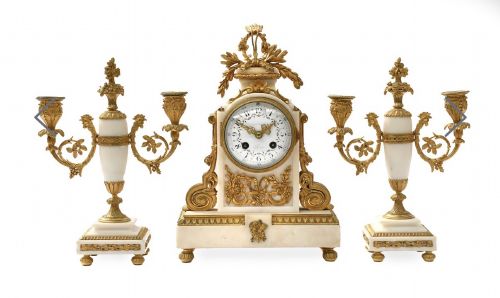
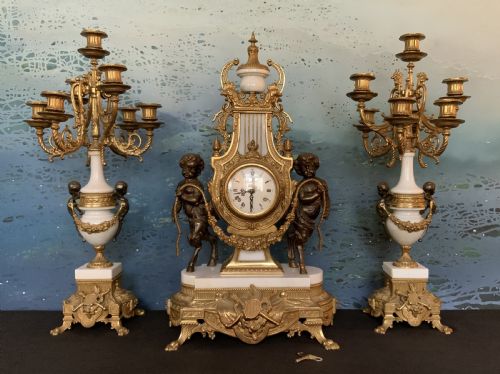
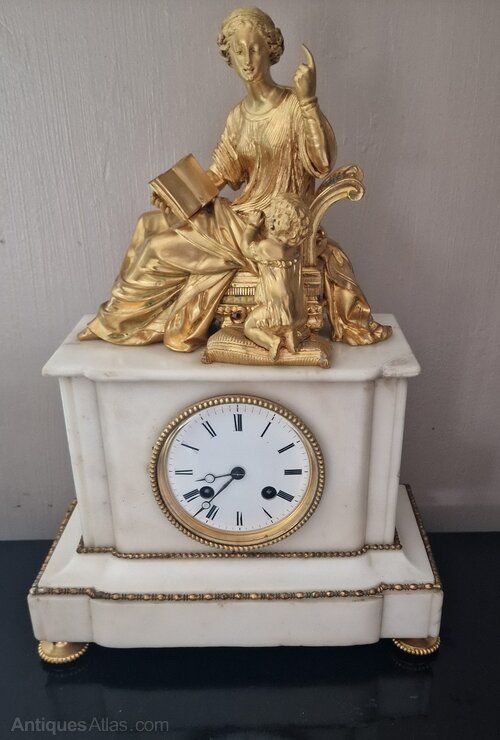
A white marble mantel search yields architectural fireplace surrounds alongside decorative timepieces and matching garnitures. The smaller tabletop objects predominate here, particularly French mantel clocks housed in pale stone.
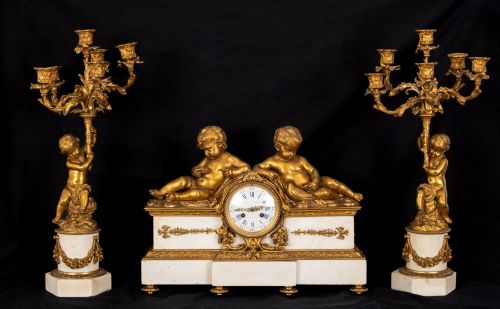
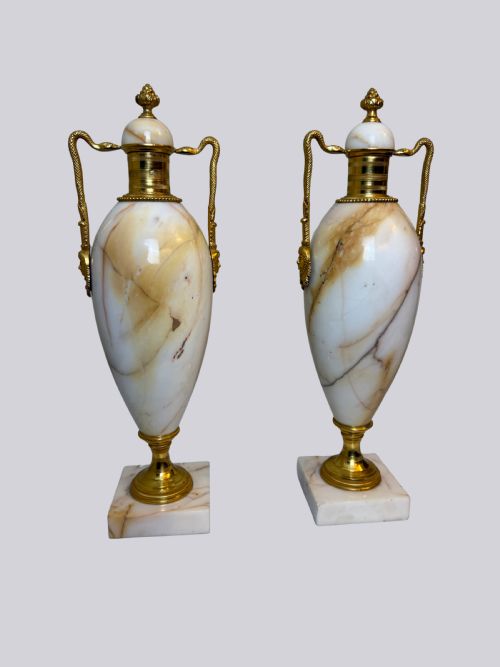
The period styles range across the eighteenth, nineteenth, and early twentieth centuries, with French Louis XVI Revival designs and Victorian productions appearing frequently. These items often incorporate flanking candelabras or bronze urns to complete a three-piece set.
Maker signatures occasionally appear on the dial or movement, pointing to established Parisian workshops and British clockmakers. Enamel dials and cast bronze figures frequently accompany the carved stone bodies.
How they were made
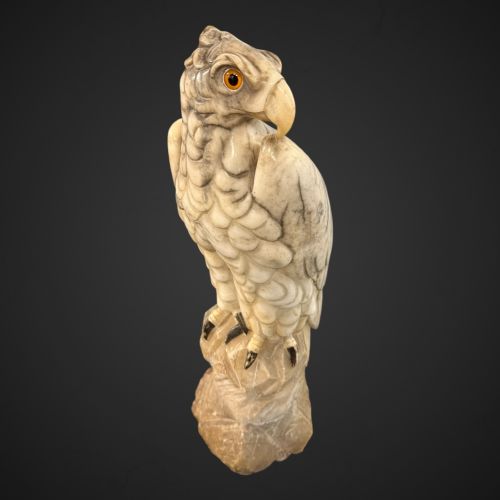
The construction relies on carved white marble blocks, sometimes paired with contrasting veined Carrara varieties or white onyx. Stonecutting created architectural plinths, portico frames, and urn bodies.
Metal ornament was produced through bronze casting and subsequent ormolu gilding to supply mounts, bezels, and figural details. Enamel dials were fired and hand-painted with numerals before integration into the stone housing.
What varies in quality
The sophistication of the clock movement and the weight of the marble housing distinguish standard production items from exceptional workshop examples. Integrated garnitures match the primary clock in stone selection, cast detail, and gilt consistency.
Japy Freres·Vincenti·Thwaites of London·Louis Goret·Samuel Marti
The White Marble Mantel Glossary
- Ormolu
- A gilded bronze technique utilising finely ground gold mercury amalgam applied to cast brass or bronze. This process yields a distinctive warm metallic lustre found on nineteenth-century mounts.
- Garniture
- A matched set of decorative objects, typically comprising a central clock flanked by twin candelabras or urns. These ensembles were designed to sit harmoniously upon a fireplace shelf.
- Portico clock
- A timepiece suspended within a architectural frame supported by four marble pillars. This symmetrical neoclassical style gained popularity during the late eighteenth and early nineteenth centuries.
- Enamel dial
- A metal face coated with powdered glass fused at high temperatures to create a smooth white surface. Numerals are subsequently painted onto the glazed finish.
- Lyre clock
- A mantel clock shaped like the ancient musical instrument, often featuring glass or open brass frames. The pendulum typically swings within the central loop of the bronze body.
White Marble Mantel: Frequently Asked Questions
How do I clean a white marble mantel clock?
Dust the stone regularly with a soft, dry cloth to prevent grime accumulation in carved crevices. Avoid acidic cleaners or household detergents, which etch polished marble surfaces.
Keep moisture away from gilded bronze mounts and painted enamel dials during maintenance. Professional cleaning is recommended for the mechanical movement behind the face.
Were all white marble mantel clocks made in France?
Many surviving examples originated in Parisian workshops, yet English makers also produced stone and metal mantel timepieces. London makers contributed fusee movements and distinct domestic styling.
Continental pieces frequently featured elaborate ormolu mounts and figural garniture sets. Examining the clock movement plates often reveals stamps identifying the country of origin.
What is a clock garniture?
A clock garniture is a decorative set consisting of a primary mantel clock accompanied by matching side ornaments. These matching pieces typically take the form of candelabras, urns, or sculptural figures.
Manufactured as a cohesive group, the set shares identical materials such as white marble and gilt bronze. They provided symmetrical decoration for nineteenth-century mantelpieces.
How can I tell the period of a marble clock?
Neoclassical proportions and portico frames generally point toward the late eighteenth or early nineteenth centuries. Later Victorian and Edwardian iterations often embraced heavier proportions and revivalist detailing.
Maker signatures stamped on the internal brass movement help narrow down the production decade. Dial styles and mounting techniques also shift visibly across the nineteenth century.